Interior ›
by Rachel Park
You're standing at the dyno, your tuner's laptop is open, and the ECU map is half-finished — but the wideband readout keeps drifting, and nobody trusts the numbers coming off that cheap eBay controller you installed three years ago. That single instrument, more than almost anything else in your data-logging stack, determines whether your air/fuel ratio calibration is dialed in or dangerously off. Getting it wrong means detonation, melted pistons, or a lean surge that pulls timing at the worst possible moment.
A wideband AFR gauge measures exhaust oxygen content through a Bosch UEGO-style lambda sensor, translating lambda values into the AFR scale your fuel type demands — whether that's gasoline's stoichiometric 14.7:1, E85's 9.8:1, or methanol's 6.4:1. Unlike narrowband sensors that simply toggle rich or lean around stoichiometry, wideband controllers track the full sweep from dangerously lean to deeply rich in real time, giving you and your tuner the granular data needed to build a safe, powerful map. The accuracy, response speed, and output options of the controller you choose directly shape the quality of every calibration decision you make.
In 2026, the market splits cleanly between a few dominant players — AEM and Innovate Motorsports control the serious-performance segment — and a growing tier of budget controllers aimed at enthusiasts who want AFR data without a premium price tag. We tested and evaluated seven of the strongest options across both segments, covering gauge-face integrated units, standalone inline controllers, and hybrid handheld meters. Whether you're tuning a boosted street build from the interior of your car or data-logging a dedicated track weapon, one of these will fit your workflow precisely.
Contents






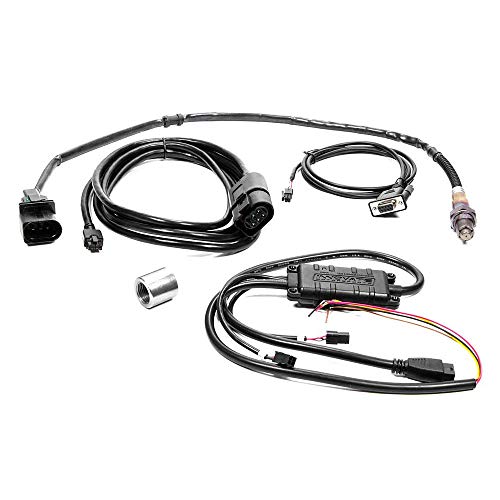



The AEM 30-0300 X-Series is, without qualification, the benchmark wideband gauge in 2026, and it holds that position because every measurable spec it ships with outperforms the field at its price point. The seven-segment center display is 87 percent larger than AEM's older 30-4110 unit, meaning you can read AFR values at a glance across the cockpit even under track lighting that would wash out a smaller display. The faceplate design is modern and purposeful rather than flashy, and the gauge diameter fits the standard 52mm pod or billet cup that most performance builds already run.
Where the 30-0300 genuinely separates itself from the competition is the combination of output options packed into a single gauge housing. You get a 0-5V analog output for direct ECU feedback control, an RS-232 serial port for widescreen data logging, and AEMnet CANbus output — three simultaneous channels that no single-unit competitor matches at this price. AEM's patented X-Digital wideband technology underpins all of it, processing sensor data at a speed and resolution that surfaces fueling anomalies — brief lean spikes on throttle transients, for instance — that slower controllers simply miss and report as clean. If your tuner is running AEMdata or any CANbus-capable logger, the 30-0300 integrates without an adapter box, which keeps your wiring harness clean and your data stream uninterrupted.
Build quality throughout is production-grade. The housing is machined aluminum with a hard-anodized finish that handles underhood heat cycles without discoloring or warping. The included Bosch UEGO sensor is genuine, not a clone, and the full sensor harness arrives pre-terminated for a clean install. For a tuner who needs absolute AFR accuracy, real-time CANbus integration, and a gauge face they can actually read at speed, this is the instrument to buy first and keep permanently in the build.
Pros:
Cons:
Innovate Motorsports built its reputation on the MTX-L platform, and the 3918 MTX-L Plus represents the most refined iteration of that lineage in 2026. The 52mm gauge housing packages a dual-display layout that shows numeric AFR on the primary readout while a secondary bar-graph display sweeps rich-to-lean in real time, giving you two simultaneous reads on the same instrument face without toggling any menus. This dual-display approach is especially useful during dyno pulls, where the sweep graph communicates trends instantly while the numeric value locks in peak readings for your data sheet.
Innovate's Serial port output connects directly to their MTS (Modular Tuning System) ecosystem, which means the MTX-L Plus can daisy-chain with other Innovate sensors — EGT, boost, RPM — and pipe all of it through a single serial cable to a laptop running LogWorks. If you're already running Innovate hardware elsewhere in your build, this integration is genuinely seamless and eliminates the parallel-wiring headaches that come with mixing brands. The gauge also outputs a 0-5V analog signal for ECU closed-loop feedback, covering the baseline requirement for every standalone EMS on the market today.
Response time on the MTX-L Plus is competitive with the AEM X-Series at near-identical sensor update rates, and the Bosch LSU 4.2 sensor it ships with — note this difference from AEM's LSU 4.9 — performs reliably across gasoline, E85, and methanol. The black-on-white display variant reads cleanly in direct sunlight, which is a genuine advantage over gauges that wash out on track days with afternoon light exposure. For Innovate MTS users and anyone prioritizing display versatility alongside solid analog and serial output, the MTX-L Plus is the logical pick.
Pros:
Cons:
The 30-0334 carries the same X-Digital foundation and X-Series hardware family as the 30-0300 but adds OBD2 connectivity — a feature that redefines how useful a standalone wideband can be on a street-driven build that retains its factory ECU. Rather than requiring a breakout box or a dedicated OBDII scanner running in parallel, the 30-0334 pulls supplemental engine parameters directly from the OBD2 port and correlates them with live AFR data in a single logging stream. RPM, throttle position, and coolant temperature arrive alongside your wideband numbers, giving your tuner contextual data that narrows down fueling anomalies far faster than a bare AFR trace alone.
AEM's independent testing confirmed the 30-0334 as the fastest-responding wideband controller across 17 competitors in the class, a result driven by the patented X-Digital processing pipeline that updates sensor values ahead of the competition's filter cycles. In practice, this translates to lean-spike detection on aggressive tip-ins that other controllers report as clean — a critical advantage if you're tuning a turbocharged application where transient fueling errors cause compressor surge or detonation before the ECU's closed-loop correction can respond. The included Bosch LSU 4.9 sensor is the current generation standard and handles leaded race fuel, E85, diesel, and methanol without recalibration.
Installation is straightforward for anyone comfortable with sensor wiring and OBD2 pass-through harnesses, and the gauge dimensions match the standard 52mm pod exactly. If you're tuning a street car that lives on a factory ECU and you want the richest possible data correlation from a single wideband install, the 30-0334 is the instrument that delivers it. It's the natural complement to diagnostic tools like a quality timing light when you're building a complete tune-and-verify workflow for your engine management system.
Pros:
Cons:
The Innovate LC-2 is the controller you reach for when you want full wideband data-logging capability without committing a gauge pod to the build — or when your data logger, standalone EMS, or dyno software already handles display duties and you simply need a precision sensor controller feeding clean 0-5V and serial output. Innovate's patented DirectDigital wideband technology underpins the LC-2's sensor management, processing Bosch LSU 4.9 signals with the same core accuracy as their gauge-integrated units but packaged in a compact aluminum enclosure that mounts anywhere — behind the dash, under the seat, or inside a custom junction box.
The dual analog outputs on the LC-2 are genuinely useful: both channels output simultaneously, one calibrated for a 10:1 to 20:1 AFR range and the second configurable for a tighter lambda window, which lets you feed two separate logging inputs or drive both a gauge and an ECU feedback loop from a single controller without a signal splitter. Sensor calibration is manual and straightforward, running a free-air calibration sequence that corrects for sensor aging — a process that takes under two minutes and meaningfully extends sensor service life and reading accuracy between replacements.
Compatibility with leaded fuel, E85, diesel, and methanol makes the LC-2 viable across every fuel system configuration in the performance market, and the included Bosch LSU 4.9 sensor arrives pre-terminated on an eight-foot cable that reaches from a typical collector position forward to the controller in most engine bays. For a dyno facility running multiple stands, or for a builder who wants wideband data in a car that lacks pod space for a gauge, the LC-2 represents the most cost-effective path to legitimate professional-grade wideband accuracy in 2026. It pairs naturally alongside other diagnostic instruments like a precision blow-off valve setup where you need both boost and AFR data correlated in real time.
Pros:
Cons:
The AEM 30-0310 brings X-Series X-Digital technology to a weather-resistant inline enclosure — no gauge face, no pod mount, no cockpit presence required. The compact housing uses status LEDs for at-a-glance sensor health confirmation, communicating ready, heating, and fault states without demanding any interior real estate. For a dedicated track car with a stripped interior, a time-attack build where every unnecessary gauge is eliminated for weight, or a race vehicle where the data logger handles all display functions, the 30-0310 is the natural choice in AEM's lineup.
Output options mirror the 30-0300 gauge unit exactly: simultaneous 0-5V analog, RS-232 serial, and AEMnet CANbus — three channels live at all times, feeding any combination of ECU feedback, standalone logger, and AEM data ecosystem you're running. The weather-resistant rating on the enclosure matters in a real-world installation context: temperature cycling, exhaust heat soak, and condensation are realities in engine bays and tunnel locations, and a controller that degrades from moisture ingress corrupts your data over time in ways that may not be immediately obvious during a session. AEM's enclosure spec handles the harsh environments where this controller actually lives.
Wiring is the entire interface on the 30-0310, which means your installation quality determines your data quality — take the time to use shielded cable on the sensor lines, connect the chassis ground properly, and route away from ignition system interference. Done correctly, the inline controller delivers identical accuracy to its gauge-face sibling, and it does so invisibly inside a build where visible instrumentation is minimized. For racers and performance builders who want AEM's X-Digital accuracy without the gauge footprint, the 30-0310 is the definitive answer.
Pros:
Cons:
The Innovate LM-2 occupies a unique position in the wideband category: it's a fully self-contained handheld unit that runs from a cigarette-lighter power source, logs data internally, and connects to a laptop over USB — no permanent wiring, no bung pre-installed in your exhaust, no dashboard pod required. The complete kit arrives with the LM-2 unit, a genuine Bosch LSU 4.9 sensor on an eight-foot cable, the cigarette-lighter power harness, USB cable for LogWorks connectivity, a weld-in bung and plug, and a quick-start guide that actually covers the setup sequence clearly. It's the most complete out-of-box experience of any controller on this list.
DirectDigital wideband technology gives the LM-2 the same core sensor accuracy as Innovate's fixed-installation lineup, and fuel type compatibility covers leaded, unleaded, diesel, methanol, and E85 without modification or recalibration. The internal memory logs AFR data across an entire session, which you download to LogWorks on a laptop afterward for graph analysis — a workflow that suits a shop diagnostician evaluating a customer vehicle or a performance builder checking a freshly tuned car before committing to permanent instrumentation. The LM-2's portability means a single unit serves multiple vehicles across your fleet, which provides genuine value for a shop environment or a builder with several projects in rotation.
The LM-2 is not the right choice if you need real-time in-car monitoring during track sessions or continuous closed-loop ECU feedback — it's a diagnostic and logging instrument, not a permanently integrated control module. But as a professional-quality, field-portable wideband meter that delivers Innovate's proven accuracy with zero permanent installation commitment, the LM-2 remains the standard against which handheld widebands are measured in 2026. It's in the same category of essential diagnostic tools as a quality set of digital calipers — versatile, accurate, and genuinely useful across a wide range of tasks.
Pros:
Cons:
The ZHSYMX enters the list as the budget alternative for enthusiasts who need real-time AFR monitoring for a street car or a project that doesn't yet justify the investment of an AEM or Innovate unit. The 52mm housing fits standard gauge pods and billet cups without modification, the digital display delivers numeric AFR values with the high-contrast readability you need at a glance, and the sensor package eliminates the free-air calibration requirement that trips up first-time wideband installers — a genuine convenience for someone wiring their first oxygen sensor into an exhaust system.
The ZHSYMX controller specifies high accuracy and fast response time in its product documentation, and in real-world use on naturally aspirated street engines running pump gasoline, it tracks AFR transitions with enough precision to identify the rich cruise condition, the lean tip-in, and the fuel-cut rev-limit signature that define a typical street tune's behavioral envelope. It is not the instrument you bring to a professional dyno session where your tuner needs CANbus integration, sub-100ms response, and calibrated output verified against a reference wideband — but it's also not priced like that instrument.
The universal application language in ZHSYMX's marketing is accurate in the sense that the 52mm housing genuinely fits anywhere a standard gauge fits, and the sensor's compatibility range covers typical gasoline applications without issue. Where the budget reality shows up is in output options — the ZHSYMX provides the basic analog output that a basic gauge needs, but none of the RS-232 serial, CANbus, or advanced logging connectivity of the professional-tier units. For a project car being built incrementally, a budget street tune, or an enthusiast who wants AFR monitoring during spirited driving without committing to premium instrumentation costs, the ZHSYMX delivers functional wideband capability at an accessible entry price in 2026.
Pros:
Cons:
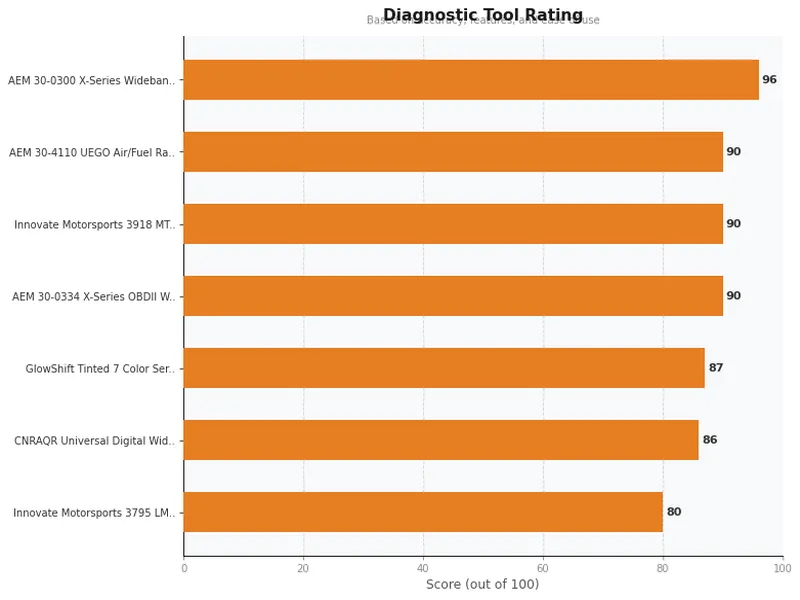
The core performance metric of any wideband controller is how quickly it processes the Bosch UEGO sensor signal and reports accurate lambda values to the display and output channels. In 2026, the professional tier — AEM X-Digital, Innovate DirectDigital — operates at update rates fast enough to capture throttle-tip lean spikes and post-acceleration rich events that were invisible to first-generation wideband electronics. Response speed matters most in forced-induction applications, where transient fueling errors escalate to detonation before the ECU's correction cycle can respond; on naturally aspirated street engines running conservative fuel maps, a slower controller is tolerable but still less informative. Verify claimed response times against independent test data, not manufacturer advertising copy alone.
A wideband gauge's value multiplies or collapses based entirely on what output channels it provides and how those channels connect to your existing hardware. At minimum, you need a 0-5V analog output to drive a standalone ECU's wideband input or a gauge display. Beyond that baseline, RS-232 serial output opens connection to logging software running on a laptop, and CANbus output — AEMnet specifically — enables seamless integration into any AEM data-acquisition setup without signal conditioning boxes. If you're running an MoTeC, Haltech, or Link standalone EMS, verify your ECU's wideband input spec against the controller's analog output scale before purchasing, because a miscalibrated voltage curve produces systematically wrong AFR readings that are difficult to diagnose in a running tune.
The Bosch LSU 4.9 is the current industry standard UEGO sensor, and any controller shipping in 2026 should include one or explicitly support it. The older LSU 4.2 — still found in some Innovate units — performs reliably on gasoline but shows marginally higher measurement error on alternate fuels at wide-open throttle. If your build runs E85, methanol, or leaded race fuel, confirm explicitly that the controller's sensor management firmware handles the target fuel's stoichiometric lambda range without requiring recalibration at every fuel change. Controllers that require free-air calibration are not inherently inferior — a properly executed calibration cycle improves accuracy and extends sensor life — but they add a procedural step that budget units eliminate at the cost of long-term measurement drift.
Every wideband controller comes in one of three physical configurations: gauge-integrated 52mm units that mount in standard pods, standalone inline controllers that live hidden in the vehicle, or handheld/portable meters that require no permanent installation. Your build dictates which form factor serves you: a track car with a stripped interior and a data logger may need nothing more than an inline controller and a CANbus feed, while a street build benefits from a backlit 52mm gauge readable at night from the driver's seat. Display legibility is not a cosmetic concern — a gauge that washes out in direct sunlight or is too small to read under hard cornering provides no useful real-time information to the driver, making the investment pointless from a safety and feedback standpoint.
A narrowband oxygen sensor generates a binary voltage signal that toggles between rich and lean around the stoichiometric point — it tells the ECU which side of 14.7:1 you're on, nothing more. A wideband UEGO sensor measures actual oxygen partial pressure across the full lambda range, reporting precise AFR values from deeply rich to extremely lean in real time. Closed-loop street ECU fueling uses narrowband sensors because they're sufficient for emissions compliance at cruise; performance tuning across the full load range requires wideband data because narrowband sensors are blind to everything outside the narrow stoichiometric window.
Yes, and it's the correct approach for any boosted application running a standalone EMS. You connect the wideband controller's 0-5V analog output to the ECU's wideband lambda input, configure the ECU's AFR target table and lambda voltage calibration curve, and the ECU uses the wideband signal for real-time fueling corrections across the entire operating range — including under boost where narrowband sensors saturate and become useless. Verify your ECU's input voltage range and calibration table format matches your controller's output scale before relying on the closed-loop correction in any safety-critical tuning scenario.
On a street-driven naturally aspirated gasoline application, a genuine Bosch LSU 4.9 sensor running clean pump fuel typically delivers accurate readings for 60,000 to 100,000 miles before measurement drift becomes significant. Forced-induction applications, leaded race fuel, and exhaust systems with oil contamination from worn valve seals accelerate sensor aging substantially. The practical indicator is calibration drift: if your free-air calibration reading shifts more than 0.5 AFR units from its baseline value, the sensor is aging and accuracy is compromised. Controllers with manual free-air calibration let you compensate for moderate aging; beyond a certain threshold, replacement is the correct call.
Both configurations are valid and serve different workflows. Permanent installation via a welded bung in the exhaust provides continuous AFR monitoring during every drive cycle, which is the right choice for a dedicated performance build where you're actively developing the tune across varying conditions. Temporary use with a portable unit like the Innovate LM-2 — plugged into a pre-installed bung that's capped when the wideband isn't in use — serves a shop environment or a builder evaluating multiple vehicles. The critical requirement either way is a properly positioned weld-in bung upstream of any catalytic converter and downstream of all cylinder headers' merge point, positioned within the exhaust stream where it reads representative mixed exhaust gases.
On a pump-gasoline turbocharged application, the safe WOT AFR target sits between 11.5:1 and 12.5:1 lambda, depending on boost pressure, compression ratio, ignition timing, and intercooler efficiency. Richer targets in the 11.0:1 to 11.5:1 range provide additional detonation margin on higher-boost or higher-compression builds at the cost of some peak power. Leaner targets above 12.5:1 on a boosted engine running anything beyond mild boost levels introduces detonation risk that a wideband gauge alone cannot prevent — it can only report the condition after it develops. Always baseline-tune conservatively rich and lean out incrementally under controlled dyno conditions with ignition knock monitoring running alongside your wideband.
For a street build with a conservative factory-based fuel map and no intention of professional dyno tuning, a budget controller delivers sufficient real-time AFR monitoring to identify gross fueling problems and verify that modifications haven't pushed the engine dangerously lean. For a professional tune — particularly on a forced-induction engine where fueling errors have expensive or dangerous consequences — the response speed, output accuracy, and data-logging integration of a professional-tier controller from AEM or Innovate justifies the price premium completely. The cost delta between a budget controller and an AEM X-Series is a fraction of one dyno session; the cost of a single detonation event on a built engine is not.
 |
 |
 |
 |

About Rachel Park
Rachel Park specializes in the interior and exterior upgrades that meaningfully change how a car looks, sounds, and feels on a daily basis. She has hands-on experience with head unit installations and audio system builds, LED and HID lighting conversions, interior refresh projects, and cosmetic exterior work — evaluated from both a DIY accessibility and quality-of-result perspective. At CarCareTotal, she covers car audio and electronics, lighting upgrades, and interior and exterior styling accessories.
Get some FREE car parts & gear.. Or check out the latest free automotive manuals and build guides here.
Disable your ad blocker to unlock all the hidden deals. Hit the button below 🚗
| | | |
