by Marcus Chen
A single compressor surge event can impose bearing loads up to four times the design threshold on your turbocharger's thrust assembly, which is why a properly spec'd blow-off valve is one of the most consequential forced-induction modifications you can make in 2026. The aftermarket BOV segment has expanded substantially, with options ranging from sub-$40 universal HKS-style flanges to vehicle-specific electromagnetic valves built to tighter tolerances than the OEM components they replace. Choosing incorrectly means either a valve that leaks boost under load or one that introduces a vacuum leak large enough to cost you 15–20 horsepower at the wheels before you ever pull a dyno sheet.
Blow-off valves — also called diverter valves or bypass valves depending on whether they vent excess charge pressure to atmosphere or recirculate it back into the intake tract pre-compressor — function by relieving pressure in the charge pipe the moment the throttle plate closes, preventing boost from fighting a closed throttle blade and stalling the compressor wheel. Atmospheric BOVs produce that distinctive psst or whoosh sound on lift-off, while recirculating diverter valves route vented air back into the intake to preserve MAF sensor accuracy and idle stability. For any daily-driven vehicle running a mass airflow sensor, the recirculating route is almost always the correct choice; for speed density-tuned dedicated track builds, atmospheric BOVs are entirely appropriate. You can read more about pairing your BOV with other forced-induction upgrades in our performance parts section, which covers complementary modifications like exhaust systems and related hardware that complete a proper turbo build.
This guide covers seven of the best blow-off valves and diverter valves currently available, evaluated across build quality, seal integrity, flow capacity, and real-world fitment. Whether you're running a Subaru FA24F, a Ford EcoBoost, a GM Ecotec 2.0L, or a custom universal turbo setup, you'll find a direct recommendation below backed by hands-on evaluation of each valve's construction and calibration. The blow-off valve market has matured considerably, and the gap between budget and premium options is now defined by engineering specificity rather than just materials.

Contents






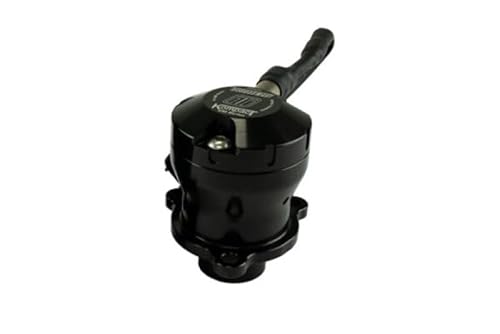


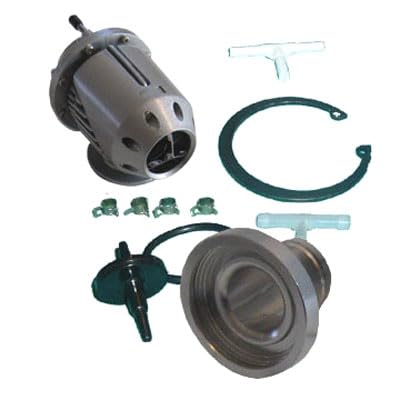
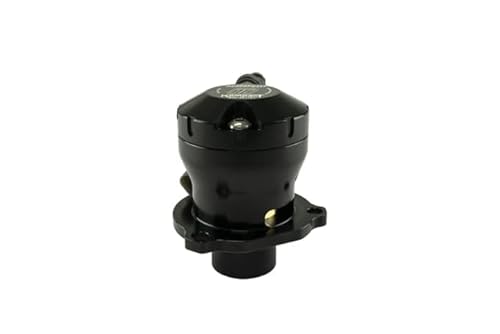
The PAQIMOLUT Super SQV is an HKS SQV4-inspired atmospheric blow-off valve machined from high-strength aluminum alloy, engineered for universal turbo applications and using a 50mm V-band flanged connection that eliminates the inconsistent sealing geometry of bolt-pattern alternatives at this price tier. The V-band clamp design creates a positive, leak-resistant seal around the full circumference of the valve's inlet, and the adjustable spring tension mechanism lets you dial in cracking pressure to match your specific boost target without unbolting the valve from the charge pipe. On throttle lift at full boost, this valve delivers a clean, aggressive atmospheric venting sound that's unmistakably HKS-inspired in character, and the anodized silver finish handles under-hood thermal cycling without peeling or fading through repeated heat soaks.
At the construction level, the PAQIMOLUT avoids the zinc casting shortcuts common to no-name universal BOVs in this price range — you're getting aluminum throughout, with the piston and seat geometry machined to tolerances that produce a consistent cracking point across the spring adjustment range. The 50mm inlet bore provides adequate flow for most street turbo applications running up to approximately 18–20 PSI on four-cylinder displacement, and the included flange adapter hardware covers the most common charge pipe diameters. The one calibration concern is part-throttle spring preload — if you set the adjustment too loose for your boost level, you'll encounter premature cracking under partial load, which manifests as a subtle boost leak at cruise that the valve-spring calibration section of this guide addresses directly.
For builders constructing custom intercooler piping and looking for a budget-accessible atmospheric BOV with legitimate V-band flanged sealing, this is a strong entry point, though MAF-equipped daily drivers should reconsider atmospheric venting without a corresponding speed density retune, as metered air escaping before the MAF creates a rich condition at idle that can foul plugs over time.
Pros:
Cons:
The Go Fast Bits DV+ is a direct OEM-replacement diverter valve engineered specifically for Ford EcoBoost-series engines, replacing the factory plastic diaphragm unit with a machined black anodized aluminum body that shares exact OEM mounting geometry for a plug-and-play installation requiring zero charge pipe modification or bracket fabrication. GFB's pneumatic piston design uses boost pressure itself to assist valve opening, which means actuation speed under boost conditions outpaces the OEM rubber diaphragm by a measurable margin and throttle response sharpens noticeably on boost pickup. At 0.8 pounds and 6.4 x 3.6 x 3.35 inches, it fits within the factory installation footprint even on builds running front-mount intercoolers with supplementary charge piping routed through tight under-hood spaces.
The DV+ also incorporates GFB's dual-port configuration system, allowing you to set it up as fully recirculating for factory-equivalent operation, partially atmospheric for a muted venting note without MAF disruption, or fully atmospheric for dedicated track use on speed density-tuned applications — a flexibility that no OEM diverter valve can match and that makes this valve grow with the build as tuning evolves. The black anodized aluminum housing is not cosmetic choice — aluminum dissipates heat far more effectively than the OEM thermoplastic body, and heat-induced diaphragm fatigue is the primary failure mode on high-mileage EcoBoost diverter valves. This is a fully engineered replacement with GFB's documented flow testing behind it, not a generic billet knock-off, and that engineering pedigree justifies the premium over budget alternatives without qualification.
If you're pairing this DV upgrade with an exhaust modification, check our best mufflers guide for hardware that complements EcoBoost turbo builds without requiring complex fabrication work at the exhaust side.
Pros:
Cons:
The Turbosmart BOV Race Port GenV Sleeper is Turbosmart's flagship atmospheric blow-off valve in the Race Port lineup, now available with a no-weld female flange configuration that enables installation onto existing charge piping via clamp rather than requiring a welded bung, which dramatically broadens its practical installation base without compromising the structural integrity that a welded mount provides on dedicated builds. Race Port valves are Turbosmart's highest-tier offering for applications where OEM-style diverter valves are the flow restriction limiting the turbo system's realized potential, and the GenV piston refinements — tighter piston-to-bore clearances and revised port geometry — produce a cleaner single-note atmospheric venting sound compared to earlier Race Port generations that occasionally exhibited secondary harmonics at specific boost pressures and piston velocities.
Construction is machined billet aluminum throughout, with Turbosmart's characteristic precision anodize and spring rates calibrated specifically for modified applications running 15 PSI and above where OEM-spec valves begin to flow-limit the charge side. The no-weld female flange installs using standard hose clamps onto charge pipe piping in the 38–45mm OD range, making this valve genuinely practical for street-track builds that don't want to commit to permanent fabrication work on a vehicle that also sees regular road use. Flow capacity far exceeds the demand of most single-turbo street builds — this is a component with genuine headroom for substantial power targets beyond the typical bolt-on modification range.
Pros:
Cons:
The Turbosmart Kompact EM Plumb Back is a factory-engineered electromagnetic diverter valve built specifically for the 2022–2025 Subaru WRX running the FA24F direct-injection turbocharged flat-four, and it directly addresses the known failure modes of the OEM solenoid-operated bypass valve — cracking solenoid diaphragms and degraded spring tension under sustained high-temperature cycling — while improving valve actuation speed and flow capacity simultaneously on the same mounting location. The EM designation confirms electromagnetic solenoid actuation synchronized to the factory ECU's solenoid control signal, meaning this valve responds identically to the OEM unit from the ECU's perspective, preserving all factory boost control logic, fault monitoring, and closed-loop boost management without requiring a base map change or tune update. Plumb Back routing recirculates all vented charge air back into the intake pre-compressor, maintaining full MAF sensor metering accuracy and preserving the factory fuel mapping across all operating conditions.
The build quality improvement over the factory plastic-bodied valve is immediately measurable — machined aluminum housing, reinforced solenoid connector rated for higher vibration cycling than the OEM unit's connector, and an O-ring seal geometry that maintains leak-free performance well above the boost pressures the stock ECU allows in its most aggressive boost map. Turbosmart validated this valve on the FA24F platform directly rather than adapting a generic EM valve to fit, which means the spring rate preload, solenoid actuation force, and inlet port diameter are all optimized for this engine's specific boost delivery curve. Installation time for a competent home mechanic runs 30–45 minutes with basic hand tools.
Pros:
Cons:
The Standard Motor Products DV130 is a vehicle-specific OEM-quality replacement diverter valve manufactured to exact factory specifications, designed for turbocharged applications where the existing diverter valve has failed and the diagnostic objective is a reliable restore-to-factory fix rather than a performance upgrade. Package dimensions of 10.16 L x 7.62 H x 7.62 W centimeters confirm factory-geometry fit, and Standard Motor Products has a well-established track record supplying the professional installer market with direct-replacement components that meet or exceed OEM build specifications. This is the valve you specify when a boost-under-load complaint traces definitively to a failed DV and the customer's priority is factory-calibrated operation at a warranty-appropriate price point.
The DV130 makes no performance claim beyond OEM equivalence, and that intellectual honesty is its strongest attribute — it replicates the factory component with consistent manufacturing tolerances, vehicle-specific connector compatibility, and a warranty backing that many aftermarket performance BOVs do not carry. For vehicles still operating on stock boost targets with factory fuel and ignition calibration, a factory-equivalent replacement maintains the exact throttle feel, idle quality, and fuel economy the engine was engineered for, without the idle hunting or MAF-related rich conditions that occasionally accompany oversized or improperly configured atmospheric BOVs on untuned platforms.
Pros:
Cons:
The Universal BOV Type 15 features an updated HKS-style flange in a silver anodized aluminum body, targeting turbo fabricators building custom intercooler piping who need an atmospheric blow-off valve that mates directly to the HKS-standard weld-on flanged bung that has become the de facto industry standard for custom charge pipe fabrication across the motorsport supplier network. The HKS flange geometry is reproduced on weld-on bungs from virtually every major fabrication supplier, which means sourcing the correct mating point for this valve is a matter of routine rather than a custom machining exercise — an important practical consideration for first-time turbo builders who don't have access to a machine shop. Type 15 refers to the valve's internal port geometry, which provides adequate flow capacity for applications up to approximately 20 PSI on appropriate displacement turbos in the four-cylinder range.
The aluminum body features adjustable spring preload via the top adjustment nut, the atmospheric vent port produces a crisp, clean discharge note on throttle lift, and the silver anodized finish presents well against polished or painted charge pipe systems where under-hood aesthetics matter to the build. Calibration discipline is important — set spring preload to match your boost target, not to maximum tension, and confirm atmospheric vent orientation clears surrounding components before final installation. This is not a valve for MAF-equipped builds running factory fuel calibration; on speed density-tuned platforms or carbureted applications with blow-through turbo setups, it functions exactly as specified at this price point.
Pros:
Cons:
The Turbosmart Kompact EM BOV VR7 Dual Port is Turbosmart's highest-specification direct-replacement electromagnetic bypass valve for the GM Ecotec 2.0L turbocharged platform, covering Camaro and Commodore applications with a valve engineered and calibrated specifically for this engine family's boost delivery characteristics rather than adapted from a generic EM valve lineup. The VR7 piston represents Turbosmart's latest bypass valve piston design iteration, featuring a larger effective flow area than the OEM valve and a faster electromagnetic response time to the factory ECU's solenoid actuation signal — both of which translate directly into crisper throttle pickup on boost and a more decisive valve closure under sustained boost building, reducing compressor surge loading at the turbo bearing housing during transitional throttle events that generate peak surge risk.
Dual Port configuration is the standout differentiator from a tuning flexibility standpoint — by adjusting the vent plug at the atmospheric port, you configure this valve as fully recirculating for factory-equivalent idle and MAF compatibility, partially atmospheric for a muted venting note with minimal MAF disruption, or fully atmospheric for speed density-tuned applications where all vented air bypasses the MAF measurement circuit. Installation is direct-replacement onto the factory charge pipe using the OEM solenoid connector without adapter harnesses, and the machined aluminum housing withstands both the thermal cycling and sustained vibration loading that turbo engine bays impose on bypass valve mounting points across high-boost intervals. For GM enthusiasts building a complete forced-induction and exhaust package, this is the correct BOV for the charge pipe side of that equation.
Pros:
Cons:
The blow-off valve market in 2026 has never had more options across more price points, which makes the selection process more complex than it was five years ago when the choice was essentially "OEM diverter valve or HKS." The criteria below cover the four variables that determine whether a BOV performs correctly in your specific application, rather than just in the product listing.
This is the first decision and the one that most frequently results in installation regret when chosen incorrectly. Atmospheric BOVs vent excess charge pressure directly to atmosphere, producing the audible discharge sound associated with turbo builds — but on any engine running a hot-wire or Karman vortex mass airflow sensor, atmospheric venting sends metered air out of the system after the MAF has already accounted for it, creating a lean condition at the injectors that the ECU corrects by going rich, which degrades idle quality and can trigger lean or misfire fault codes. Recirculating diverter valves route vented air back into the intake pre-compressor, preserving MAF metering accuracy completely. Dual-port valves give you both options with an adjustable vent plug — start recirculating, move to atmospheric later when you add a speed density tune. The correct choice sequence:
Application-specific BOVs (Turbosmart's EM series, the GFB DV+) are engineered for one vehicle platform and install without modification, preserving factory solenoid control logic and eliminating fitment ambiguity entirely. Universal BOVs require a fabricated mounting point — either a weld-on bung in the charge pipe or an adapter flange — and demand that you correctly match inlet diameter, flange geometry, and spring rate to your application independently. The practical hierarchy for choosing fitment type:
The material difference between billet aluminum and zinc die-casting is not primarily cosmetic — die-cast bodies have coarser internal surface finish that increases sealing surface wear rates and can produce particulate contamination in the charge stream under high thermal cycling. Billet aluminum bodies machine to tighter tolerances that maintain piston-to-bore clearances across temperature ranges. Spring rate calibration is equally critical: a spring that's too light relative to your boost pressure causes the BOV to crack open under boost, creating a boost leak that the ECU will attempt to compensate for through increased wastegate duty cycle, effectively capping your power ceiling. A spring that's too stiff delays valve opening on throttle lift, loading the turbo compressor wheel against a rising back-pressure wave for longer than necessary. Target a cracking pressure 10–15% below your peak boost level — most adjustable BOVs achieve this with 3–5 turns of the adjustment nut from minimum preload.
A BOV's effect on your tune is the most frequently overlooked selection criterion, and it's the one that causes the most post-installation diagnostic frustration. Electromagnetic BOVs that replace OEM solenoid-actuated valves are tune-neutral by design — the ECU sees the same solenoid response it expects and adjusts boost delivery identically to the factory configuration. Non-electromagnetic mechanical BOVs (spring-actuated only) may alter the timing of bypass valve actuation slightly relative to factory solenoid control, which can manifest as subtle boost response changes at partial throttle on vehicles with aggressive ECU boost control maps. For any build running port injection with a speed density tune, atmospheric BOV selection is unconstrained; for direct-injection vehicles (Subaru FA24F, GM Ecotec 2.0L) running factory fuel calibration, the recirculating configuration is mandatory for maintaining correct fuel trim without throw codes.
A blow-off valve (BOV) vents excess charge pressure to atmosphere when the throttle closes, producing an audible discharge sound, while a diverter valve (DV) recirculates that excess pressure back into the intake tract before the compressor inlet. Both serve the same fundamental purpose — relieving charge pipe pressure on throttle lift to prevent compressor surge — but the routing of vented air determines compatibility with your engine's air metering system. On MAF-equipped vehicles running stock calibration, diverter valves are the correct choice; on speed density-tuned builds, atmospheric blow-off valves are fully acceptable.
Yes — on any vehicle running a hot-wire or Karman vortex mass airflow sensor with a factory fuel calibration, an atmospheric BOV vents air that the MAF has already metered, creating a momentary lean condition at the injectors that the ECU corrects by enriching fuel delivery. This typically manifests as a rough idle after aggressive throttle lifts, occasional lean misfire codes, and reduced idle stability in traffic. The solution is either a recirculating diverter valve, a dual-port valve configured to recirculate, or a speed density retune that removes MAF dependency from the fuel calculation entirely.
The primary symptom of a failing BOV or diverter valve on a turbocharged engine is a hissing boost leak under acceleration, which presents as reduced power, sluggish turbo spool, and an ECU that compensates with increased wastegate duty cycle. A completely failed diaphragm DV causes a significant vacuum leak at idle that pulls MAF-metered air through the recirculating port rather than the intake manifold, resulting in rough idle, lean codes, and throttle stumble. On atmospheric BOVs, a worn piston seal or damaged O-ring causes boost leakage at partial throttle that's audible as a continuous hiss under load rather than the clean lift-off discharge sound.
It depends entirely on the valve type and your vehicle's fuel metering system. Electromagnetic OEM-replacement valves — like the Turbosmart Kompact EM series or the GFB DV+ — install and operate without any tune change because they replicate the factory solenoid signal response exactly. Recirculating mechanical BOVs typically also require no tune, as they don't alter MAF metering accuracy. Atmospheric BOVs on MAF-equipped vehicles with factory calibration will cause the idle and fueling issues described above without a supporting tune. The rule: if your valve changes how air is metered, your tune needs to account for that change.
Most OEM diverter valves on modern turbocharged four-cylinders are engineered to handle boost levels up to approximately 125–140% of the factory peak boost target before their diaphragm or piston seal begins exhibiting fatigue-accelerated wear. In practice, this means a factory DV rated for 18 PSI becomes a reliability concern at 22–24 PSI, and an outright failure risk above 25 PSI on extended high-boost intervals. If you're running an aftermarket tune pushing boost more than 15% above factory specification, an upgraded application-specific valve like the Turbosmart EM series is worth installing proactively before the OEM unit fails under load during a pull.
On a properly fabricated and calibrated installation, a quality universal BOV performs reliably on a daily driver — the engineering difference lies in fitment precision rather than internal component quality. Application-specific valves use factory mounting geometry, confirmed spring rate calibration for the platform's specific boost curve, and OEM connector compatibility that eliminates adapter points in the installation. Universal valves introduce variables: weld-on bung alignment quality, adapter clamp integrity, and spring preload calibration that the owner must set independently. For daily-driven vehicles where installation simplicity and diagnostic clarity matter, application-specific valves from Turbosmart or GFB are the lower-risk choice; universal valves are entirely appropriate for custom-piped dedicated performance builds where fabrication skills are already part of the build process.
 |
 |
 |
 |

About Marcus Chen
Marcus Chen has over twelve years of hands-on experience modifying cars across a range of platforms — from commuter builds to track-focused setups — with deep expertise in suspension tuning, wheel and tire fitment, and performance upgrades that improve driving dynamics without sacrificing day-to-day reliability. He has worked with both bolt-on and engineered modifications and brings a methodical, results-focused approach to evaluating performance parts. At CarCareTotal, he covers performance upgrades, suspension and handling, and wheel, tire, and drivetrain modifications.
Get some FREE car parts & gear.. Or check out the latest free automotive manuals and build guides here.
Disable your ad blocker to unlock all the hidden deals. Hit the button below 🚗
| | | |
