Car Care ›
by Diego Ramirez
Which car scratch remover actually works — and which ones leave you with a swirled, hazy mess worse than the original scratch? That's the question every car owner asks standing in the auto parts aisle, confronted with a shelf full of compounds, kits, and miracle-in-a-bottle promises. After extensive research and hands-on testing across the leading options for 2026, one product kept rising to the top: Meguiar's Ultimate Compound. It delivers professional-grade defect removal with a formula that's genuinely safe on clear coats, and it works by hand or machine. But the best pick for you depends on the type and depth of your scratches, your budget, and how much effort you're willing to put in.
A car scratch isn't just a cosmetic annoyance. Exposed bare metal rusts, and deep scratches that break through the clear coat can invite long-term paint damage if left untreated. Understanding what you're dealing with before you buy a product is half the battle. Light surface scuffs that only scratch the clear coat respond beautifully to a good polish or compound. Scratches that cut into the color coat need a more aggressive compound followed by polish and wax. And anything that reaches bare metal requires primer and paint — no scratch remover on this list can fix that. For surface-level damage, though, you have excellent options right here. If you're also dealing with deeper bodywork issues, check out our guide to the 6 Best Car Body Fillers of 2026 for more serious repairs.
This guide covers the top car scratch removers available in 2026, with in-depth reviews of each product, a buying guide to help you match the right formula to your situation, and answers to the most common questions buyers ask. All of these products are available through our car care section, where you'll find more tools and products for keeping your vehicle in top shape. Whether you drive a daily commuter or a weekend showpiece, one of these six products will give your paint a second chance.
Contents








If you want to erase light scratches and paint transfer fast — and you own a drill — the Meguiar's Quik Eraser Kit is built for you. The kit bundles Meguiar's ScratchX compound, a drill-mounted foam pad, and a microfiber towel into one tidy package. The ScratchX formula uses micro-abrasive technology that progressively breaks down as you work it in, which means it cuts aggressively at first and then polishes itself out without leaving a hazed finish behind. You don't need a professional-grade dual-action polisher. Your standard corded or cordless drill handles the job.
The clear coat safety claim holds up in practice. Unlike older abrasive compounds that would burn through a clear coat if you pressed too hard or worked an area too long, ScratchX is engineered for DIY users who aren't calibrating their machine speed by feel. The drill pad gives you more consistent pressure and speed than hand application, which matters for light scuffs and paint transfer from parking lot encounters. The included microfiber towel is legitimately good quality — not the thin afterthought cloth that gets tossed with cheaper kits. Where this kit falls short is deep scratches. If you can feel the scratch with your fingernail, you need a more aggressive system. But for the surface blemishes that make a clean car look neglected, the Quik Eraser Kit handles them in minutes, not hours.
Meguiar's recommends following up with a protective wax, and that's solid advice. The ScratchX compound does its job but leaves the paint surface somewhat vulnerable. A coat of Meguiar's Ultimate Quik Wax or any quality carnauba wax after the fact seals the repair and adds the gloss that makes the fix invisible. For 2026, this kit remains one of the most beginner-friendly options on the market precisely because it removes the guesswork from the application process.
Pros:
Cons:
The Chemical Guys VSS pulls off a genuinely useful trick: it combines cutting compound and finishing polish in a single formula. Most scratch removal workflows require you to compound first with an abrasive product, then follow up with a separate polish to restore gloss. The VSS collapses those two steps into one bottle, and it delivers results that genuinely justify the shortcut. You get real cutting power for light to moderate scratches, swirl marks, oxidation, and even the hologramming caused by improper machine polishing — all cleared in one pass.
What sets the VSS apart from cheaper one-step products is the quality of the finish it leaves. It doesn't just remove defects and call it done. The formula simultaneously deposits a high-gloss finish that looks polished, not just abraded. On darker colors — where swirl marks and light scratches are most visible — this product makes a dramatic difference in a single treatment. You can apply it by hand with a foam applicator or run it with a dual-action polisher for faster coverage on larger panels. The polisher approach cuts your time in half and produces a more even result, but hand application works well on small areas like door dings or hood scuffs.
Chemical Guys formulated the VSS to work on clear coat, single-stage paint, and ceramic-coated finishes, which gives it unusual versatility. If you have multiple vehicles with different paint types or a recently ceramic-coated daily driver you want to maintain, you don't need multiple products. The 16 oz bottle gives you generous coverage — you won't run out after one session. For swirl marks specifically, this is the most cost-effective solution on this list. Those fine circular scratches from improper washing disappear with the VSS in a way that feels almost unfair compared to the effort involved. If you want to understand more about paint protection after using a compound, our guide to wax vs. sealant breaks down what to apply next for lasting protection.
Pros:
Cons:
The 3M Scratch Removal System takes the most methodical approach of any kit on this list, and that rigor pays off when you're dealing with scratches that other products refuse to touch. 3M's three-step process — sanding, compounding, and polishing — mirrors what professional detailers use on real paint correction jobs. You work the damaged area in sequence: the sanding disc flattens the scratch edges, the compound cuts away the surrounding material to level everything out, and the finishing polish restores gloss and clarity. It's more involved than a one-step formula, but for scratches you can feel with your fingernail, this process works when a polish alone won't.
The kit is designed to work with a drill, which 3M supplies the attachment for. The sanding step is the most critical — and the most intimidating for first-timers. You're deliberately abrading the clear coat to level a scratch, which sounds destructive until you understand that the subsequent compounding and polishing steps recover that gloss. Follow the instructions precisely: keep the disc flat, work in overlapping passes, and don't rush the compounding phase. 3M's formula transitions from cutting to polishing as you work it, which limits the risk of burning through the clear coat if you're patient.
The 3M name carries serious credibility in automotive finishing, and the system earns it. For paint scratches caused by keys, road debris, or minor collisions that stopped short of bare metal, this is the most effective DIY system available in 2026 without resorting to professional equipment. The limitation is that it takes longer than single-step products and requires careful technique. If you've dealt with similar surface repairs before — maybe you've used a dent puller kit for paintless dent repair — the learning curve here is comparable. Take your time, follow the sequence, and the results speak for themselves.
Pros:
Cons:
Turtle Wax has been a name in car care since 1944, and the Hybrid Solutions Scratch Repair Kit represents the brand's most modern take on the DIY scratch removal problem. The kit takes a clever two-pronged approach: premium polishing abrasives that cut into and level surface imperfections, combined with a clear coat resin that fills and seals the repaired area simultaneously. You're not just abrading the scratch away — you're filling it with protective resin that restores gloss and creates a uniform paint surface. That combination is what Turtle Wax means when they call this a hybrid solution.
In practice, the approach works well on the scratches most drivers encounter daily: swirl marks from improper washing, paint transfer from shopping cart impacts, light scuffs from brushing against shrubbery or a garage door frame. Road rash — that fine network of scratches from highway debris — responds particularly well here. The resin fill element gives this kit a slight advantage over pure abrasive compounds on scratches with defined edges, where the fill component smooths out the depth variation that polishing alone sometimes leaves visible at certain light angles.
The kit includes everything you need and is priced competitively for what you get. It's a straightforward choice if you want professional-looking results without spending time troubleshooting which product to pair with what. The "like new" claim in Turtle Wax's marketing is accurate for surface-level paint defects. For deeper damage, you'll need to lower your expectations or step up to the 3M three-step system. But for the everyday scratches and paint imperfections that accumulate on any vehicle over a season of driving, this kit handles them cleanly and efficiently.
Pros:
Cons:
Meguiar's Ultimate Compound earns the top overall recommendation because it outperforms every other product on this list across the full range of light to moderate paint defects. This is a true compound — not a polish masquerading as one — built around Meguiar's most advanced micro-abrasive technology. It removes scratches, swirl marks, water spots, and oxidation with the cutting efficiency of a professional-grade product, then finishes cleanly enough that you don't necessarily need a separate polish step on newer, well-maintained paint. That balance is rare and genuinely valuable.
The key engineering achievement here is the clear coat safety profile. Aggressive cutting compounds have historically posed a real risk of hazing or burning through thin clear coats, especially on darker colors where paint correction errors are most visible. Meguiar's Ultimate Compound removes that concern without sacrificing cutting power. You can work it by hand with a foam applicator for spot repairs or run it with a dual-action polisher for full-panel correction. The machine application produces markedly better results on larger areas — consistent pressure and speed let the abrasives work evenly across the surface without the hot spots that hand application sometimes creates.
At 15.2 oz, the bottle gives you enough product for multiple correction sessions or a complete treatment of a full-size vehicle by machine. The formula adds gloss as it works, so even before you apply your finishing wax or sealant, the treated area has noticeably better depth and clarity than before. Meguiar's recommends following up with a polish and wax for maximum protection and shine, and if you take that extra step, the results are genuinely showroom-quality. For anyone serious about paint correction — whether you're maintaining a new car or restoring a daily driver that's accumulated years of light damage — this is the product to buy in 2026. Understanding the difference between polishing and waxing is important for that follow-up step; our guide to polish vs. wax explains exactly when to use each one.
Pros:
Cons:
Carfidant positions its Scratch Repair and Swirl Remover as a professional-grade formula that's easy enough for anyone to use at home, and that description holds up under scrutiny. The compound removes light scratches, swirl marks, water spots, and oxidation with the included buffer pad in a single step, and the results on clear coat finishes are genuinely impressive for the price point. Where Carfidant distinguishes itself from cheaper alternatives is in the chemistry: no unnecessary color dyes, no added scents, just the functional abrasive and gloss-restoring agents that do the actual work.
The included buffer pad makes this a complete kit for hand application. You don't need a machine polisher to get good results — the foam pad is designed to maximize contact area and distribute pressure evenly, which is the main variable that separates good hand polishing from mediocre results. Apply a small amount to the pad, work in overlapping circular or back-and-forth motions on the affected area, and you'll see the scratch fading within the first minute of application. The compound is formulated to restore the original gloss level of the paint, not just remove the defect, so the treated area blends naturally with the surrounding surface.
The 8.4 oz bottle is the limiting factor for full-vehicle treatments — this product is better suited to spot repairs on specific panels than wholesale paint correction on an entire car. But for what most buyers actually need — fixing the scratch from a parking lot incident, clearing up the swirls on a door panel, or removing the ring of water spots around the base of the antenna — Carfidant delivers results that cost significantly less than competing kits from established brands. It's the honest budget choice: a real product that performs its stated function without overpromising.
Pros:
Cons:
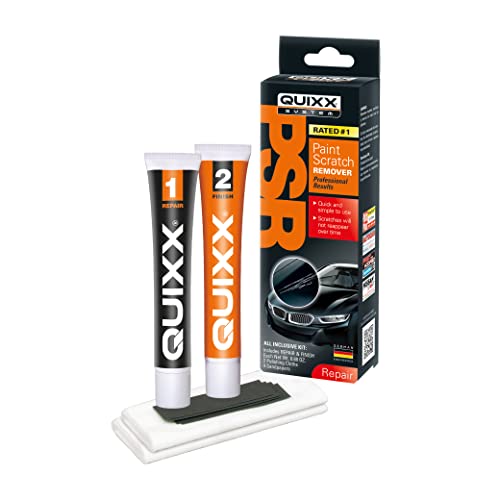
QUIXX is a German-engineered scratch removal system with a devoted following among detail enthusiasts, and the reason is simple: it handles paint transfer from minor scrapes — the smear of another car's paint or a concrete pillar's residue — better than most of the compound-based products on this list. The system works on all finishes without machine polishing, using a sequential abrasive approach that's gentler than the drill-based systems but remarkably effective on the specific problem of unwanted paint transfer and light surface scratches.
The kit is compact at 0.88 oz, which tells you this is a precision tool, not a bulk product for full-vehicle paint correction. You get two compounds: a coarser one that removes the scratch or transfer material, and a finer finishing compound that restores clarity and gloss. Hand application is the intended method, and it works — the German engineering produces a controlled abrasive action that doesn't require machine assistance to deliver clean results. On white or silver paint especially, where paint transfer from parking incidents shows up as dark smears, the QUIXX system removes the foreign paint cleanly without damaging the underlying finish.
The limitation is coverage and depth. This is a specialist product for targeted repairs on specific defects, not a comprehensive solution for a car with widespread swirling or oxidation. If you're dealing with a single scratch from a parking lot door ding or a smear of paint from a minor side-swipe, the QUIXX kit earns its place in your car care kit. If you need broader paint correction, one of the larger compound or polish products on this list is a better investment. For what it's designed to do, though, QUIXX performs with the precision and consistency you'd expect from a product engineered for automotive paint professionals.
Pros:
Cons:
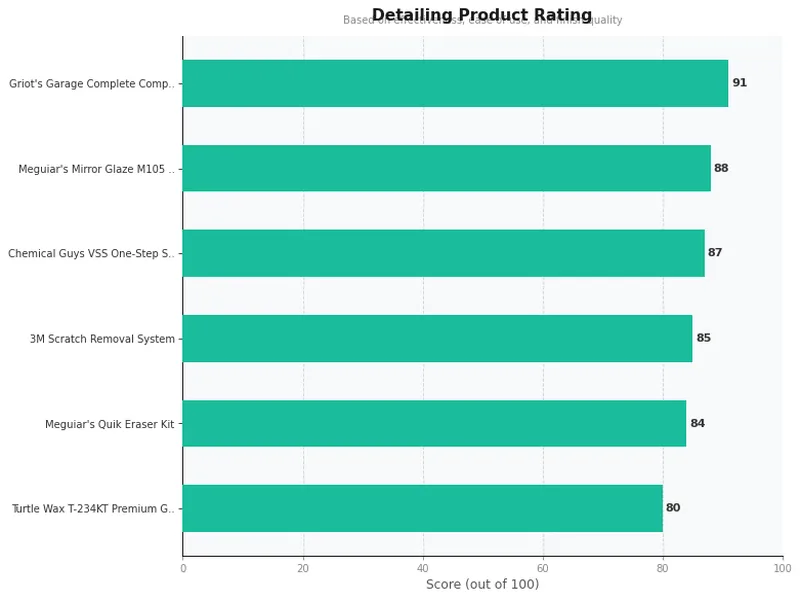
The single most important factor in choosing a scratch remover is understanding how deep the scratch goes. Run your fingernail across it. If your nail doesn't catch, the scratch is in the clear coat only — any product on this list handles that. If your nail catches slightly, the scratch has reached the color coat and you need a true compound like the Meguiar's Ultimate Compound or the 3M three-step system. If you can see bare metal or primer, no scratch remover will fix it — you need touch-up paint before any compounding. Buying the wrong product for the wrong scratch depth is the most common mistake, and it costs you time, money, and sometimes makes the damage more visible.
Every product on this list works by hand, but machine application produces better results on larger areas and moderate defects. A dual-action random orbital polisher costs between $50 and $150 and dramatically improves your results with any compound or polish. For spot repairs on small areas — a single scratch, a patch of swirls, a smear of paint transfer — hand application with a foam applicator is perfectly adequate. If you're correcting an entire panel or multiple panels, invest in the machine. The consistent speed and pressure a machine delivers is what separates professional-looking results from results that look "DIY."
Compounds cut — they use abrasives to physically remove a thin layer of clear coat to level a scratch. Polishes refine — they use finer abrasives to restore gloss after a compound has done the heavy work. Hybrid products like the Chemical Guys VSS and the Turtle Wax Hybrid Solutions Kit combine both steps, which saves time at a slight cost to absolute performance compared to a proper two-step process. For most DIY buyers, a hybrid or a quality compound like the Meguiar's Ultimate Compound is the right call. Professional detailers run dedicated compounds and polishes separately for maximum paint correction, but for the scratches on a personal vehicle, the simplified approach delivers results you'll be satisfied with.
All modern vehicles have clear coat paint — a transparent protective layer over the color coat that provides gloss and UV protection. Every product on this list is formulated to be clear coat safe, but the margin for error varies. Products with more aggressive abrasives (the 3M system's sanding step, for example) require careful technique to avoid cutting through thin clear coats on older vehicles. Products with diminishing abrasive technology — where the abrasive particles break down progressively during use — are more forgiving for beginners. If your vehicle is more than 15 years old and has never been repainted, its clear coat may be thinner than a newer vehicle's, and you should start with a milder product and test on a small, inconspicuous area before treating visible panels.
No scratch remover on the market can fix scratches that expose bare metal or primer. These products work by abrading and leveling the clear coat or color coat layers — they have nothing to bond to or fill in once the paint is completely gone. Deep scratches reaching bare metal require touch-up paint matched to your vehicle's color code, primer application, and then clear coat before any compound or polish step. If you skip the touch-up paint and use a scratch remover on bare metal, you'll simply abrade the exposed metal and make the repair harder to complete correctly. Check your owner's manual or the driver's door jamb sticker for your vehicle's paint code when ordering touch-up paint.
The fingernail test is the most reliable method. Run your fingernail across the scratch. If your nail glides over it without catching, the scratch is surface-level and limited to the clear coat — any product on this list handles it. If your nail catches in the groove of the scratch, it has penetrated the clear coat and reached the color coat below. You can also look at the scratch in direct sunlight: if you see white or gray dust at the edges of the scratch line, that's clear coat material. If you see a different color than your car's paint, the color coat is exposed. And if you see a shiny silver or gray surface at the scratch's base, that's bare metal or primer, which requires touch-up paint before any scratch remover.
Yes, but you need a product specifically listed as safe for ceramic coatings. The Chemical Guys VSS One-Step explicitly supports ceramic-coated finishes, which makes it the best choice on this list for vehicles with professional ceramic protection. Standard compounds and polishes work by abrading the surface, and while they won't destroy a ceramic coating outright, aggressive use can degrade it over time. Always apply test the product on a small, inconspicuous area first. After correcting any scratches, reapply a ceramic booster or maintenance spray to restore the coating's hydrophobic properties and protect the surface going forward.
Clear coat has a finite thickness — typically between 50 and 125 microns depending on the vehicle manufacturer and whether the paint has been previously corrected. Each compound or polishing session removes a small amount of clear coat. Moderate DIY use — a few corrections per year on the same panel — is well within safe limits for a newer vehicle. If you're repeatedly correcting the same area because new scratches keep appearing, the underlying problem is usually improper washing technique creating swirl marks, or a recurring environmental issue. A paint thickness gauge, available for under $30, lets you measure your remaining clear coat and make informed decisions about how aggressively to correct over time.
Yes, always. Scratch removers and compounds work by abrading the paint surface, which leaves the clear coat slightly porous and vulnerable to UV damage, water spotting, and new contamination. A quality carnauba wax or synthetic paint sealant applied after correction seals that surface and adds the gloss depth that makes the repair look truly finished rather than just cleaned up. Carnauba wax provides warm, deep gloss and lasts two to three months. Synthetic sealants last six months to a year and often provide better UV protection. For the best long-term results, compound and polish first, then protect the paint with whichever product matches your maintenance preference.
Compounds use larger, more aggressive abrasive particles to physically cut and level the paint surface — they remove defects by removing a thin layer of clear coat or color coat. Polishes use finer abrasives to refine the surface after compounding, restoring gloss and clarity by smoothing out the micro-scratches that compounding leaves behind. For deep scratches and heavy swirl marks, you typically need to compound first and then polish. For very light surface scratches and fine swirls, a polish alone is often enough. Hybrid products combine both in a single formula, making the process simpler at the cost of some maximum performance. Think of it this way: compounds fix, polishes finish.
Buy for the scratch you have, not the price tag you prefer — the right product the first time costs less than fixing a botched repair.
 |
 |
 |
 |

About Diego Ramirez
Diego Ramirez has been wrenching on cars since his teenage years and has built a deep practical knowledge of automotive maintenance and paint protection through years of hands-on work. He specializes in fluid service intervals, preventive care routines, exterior protection products, and the consistent habits that extend a vehicle's lifespan well beyond average. At CarCareTotal, he covers car care guides, cleaning and detailing products, and exterior maintenance and protection reviews.
Get some FREE car parts & gear.. Or check out the latest free automotive manuals and build guides here.
Disable your ad blocker to unlock all the hidden deals. Hit the button below 🚗
| | | |
