Audio ›
by Rachel Park
Which Android Auto head unit will actually transform your daily commute — and which ones are just expensive disappointments? After testing dozens of units across price points, one name keeps rising to the top: the Pioneer DMH-WT8600NEX. Its wireless connectivity, split-screen capability, and 10.1-inch floating display put it ahead of the competition in 2026. But the right unit for your vehicle depends on your priorities, and the other contenders on this list are no slouches.
Android Auto has matured into an essential in-car interface, turning your dashboard into a smart hub for navigation, music, messaging, and hands-free calling. The aftermarket head unit market has exploded to match that demand, with options ranging from budget double-DIN swaps to near-OEM floating displays with 11-inch screens. Navigating all those options without expert guidance wastes both time and money. That's where this guide comes in.
Whether you're upgrading a bare-bones factory stereo or replacing an aging touchscreen, the units below represent the best Android Auto head units available in 2026. Our picks cover everything from compact 7-inch double-DIN receivers to giant 11-inch floating displays with audiophile-grade EQ. If you're also upgrading your speaker system, check out our 6 Best 6x9-Inch Car Speakers of 2026 to complete the audio overhaul. Browse all our audio upgrade guides at our car audio category page.
Contents







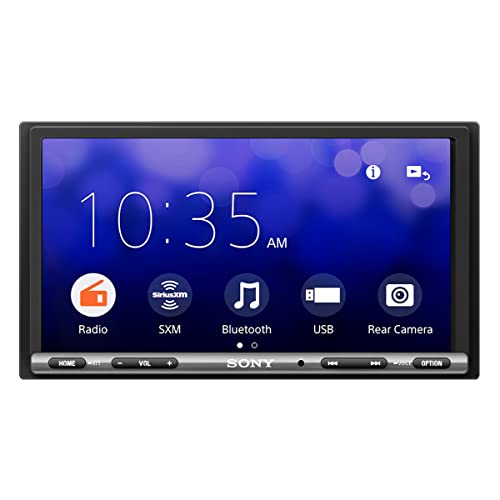
The Pioneer DMH-WT8600NEX earns the top spot by delivering a fully wireless Android Auto and Apple CarPlay experience on a massive 10.1-inch capacitive HD touchscreen — all from a floating display chassis that doesn't require carving out your dash. Setup is fast: connect your phone once over Bluetooth and every subsequent drive is completely cable-free. The display itself is crisp, bright, and finger-print resistant, reading cleanly in direct sunlight where budget alternatives wash out entirely.
What separates this unit from cheaper options is Pioneer's split-screen mode. You can run Android Auto navigation on one half while controlling your native receiver audio on the other — no toggling, no interruptions. Amazon Alexa is built in as well, giving you a second voice assistant pathway alongside Google Assistant. The unit also supports FLAC playback and HD Radio, features that matter to audio enthusiasts who care about source quality, not just app integration.
The floating display design does require a clean wiring job behind the dash, but Pioneer includes all necessary brackets and hardware. Backup camera input is included and the image quality through the display is noticeably cleaner than the competition at this tier.
Pros:
Cons:
The Alpine iLX-F511 Halo11 makes a bold statement with its 11-inch floating HD touchscreen — the largest display in its class for aftermarket head units. If screen real estate is your priority, nothing else comes close. The display is sharp, the touch response is fast, and the sheer size makes map navigation and media control dramatically easier at a glance.
Beyond raw screen size, Alpine's audio engineering credentials show. The Halo11 packs a 13-band parametric EQ per channel, which is audiophile-tier tuning power for a head unit. You're not locked into preset EQ curves — you have continuous frequency control across the full spectrum. Pair this unit with a quality set of component speakers and the difference versus a factory system is night and day. Speaking of speakers, our 7 Best 6.5-Inch Car Speakers of 2026 guide covers the best partners for an Alpine-driven system.
The Halo11 supports both wired Apple CarPlay and Android Auto. Wireless connectivity requires a separate adapter, which is a notable gap versus the Pioneer and JVC options. Installation is a single-DIN chassis with a floating display — the design accommodates a wide variety of vehicle types including those with deep, non-standard dash cutouts.
Pros:
Cons:
Sony's XAV-AX8100 strikes the ideal balance between screen size and installation flexibility. The 9-inch floating display rides on a 3-way adjustable single-DIN chassis, making it one of the most adaptable units on this list for vehicles with non-standard or tight dash configurations. You're not fighting the install process — the chassis accommodates shallow, angled, and recessed openings with hardware included in the box.
The display uses a resistive touchscreen with anti-glare coating. Resistive panels require slightly more deliberate taps compared to capacitive glass, but the anti-glare treatment genuinely helps visibility in harsh midday sun. The HDMI video input is a differentiator at this price — connect a compatible streaming stick or camera directly to your head unit without adapters. The built-in rear camera input works cleanly and the image transition on reverse is quick.
Android Auto and Apple CarPlay are wired on this unit. That's the primary tradeoff versus the Pioneer and JVC wireless options. If you're not bothered by plugging in once when you get in the car, the XAV-AX8100 delivers Sony's build quality and reliability at a more accessible price point.
Pros:
Cons:
The JVC KW-M785BW delivers wireless Android Auto and Apple CarPlay in a standard double-DIN form factor — and that combination at its price point is genuinely hard to beat in 2026. The 6.8-inch capacitive touchscreen responds like a smartphone, with fast swipe and pinch gestures that feel natural rather than sluggish. Variable color key illumination lets you match the receiver's glow to your interior lighting, a detail-oriented touch that JVC consistently gets right.
The wireless connectivity is reliable. Unlike some budget wireless head units that struggle with signal drops or delayed connection, the KW-M785BW pairs quickly and stays connected through your drive. iDatalink Maestro compatibility is a major pro for vehicles with factory steering wheel controls and CANBUS systems — you can retain your factory button functions without cutting factory harnesses. SiriusXM-ready and supports all major streaming apps via Android Auto.
The digital angle adjustment feature is more useful than it sounds. Vehicles with angled dash panels often end up with head units pointing at the ceiling. JVC's motorized angle trim corrects your viewing angle without physical shimming. This is a renewed unit, so cosmetic marks may be present — but internals are tested and certified to factory spec.
Pros:
Cons:
KENWOOD's DMX7709S is the unit for buyers who want a no-fuss double-DIN upgrade with solid Android Auto performance, a broad feature set, and a price that doesn't sting. The 6.8-inch widescreen capacitive LCD is bright and sharp, with a high contrast ratio that makes the Android Auto UI easy to read at a glance. The touchscreen responsiveness matches what you'd expect from a premium unit — KENWOOD consistently produces accurate, fast capacitive panels.
The 13-band EQ provides significant tuning flexibility — identical count to the Alpine Halo11, which is impressive at this price tier. SiriusXM ready, USB input included, and Bluetooth handles hands-free calls and audio streaming cleanly. Android Auto with Google Assistant runs without hiccups; voice commands for navigation, messages, and media work reliably even in noisy in-cabin environments.
One honest observation: the DMX7709S is wired for CarPlay and Android Auto. If wireless connectivity is a non-negotiable, step up to the JVC or Pioneer. But if you're okay with the cable — and many drivers are — this KENWOOD delivers everything you need from a head unit at a fair price. Pair it with a quality subwoofer for the full upgrade; our 7 Best Double DIN Head Units guide provides additional context if you want to compare across the full double-DIN landscape.
Pros:
Cons:
The ATOTO S8 Ultra is a different beast from every other unit on this list. Where Pioneer, Alpine, and KENWOOD are Android Auto receivers — devices that mirror your phone — the ATOTO runs a full Android OS natively. The AICE UI 11.0 platform on a 12nm octa-core processor with 6GB RAM and 128GB ROM gives you an onboard computing platform, not just a dumb display. App installs, streaming without your phone, 4G LTE connectivity — this is what separates Android-native head units from the pack in 2026.
The QLED 9-inch display produces punchy, vibrant color with excellent contrast — noticeably better than the IPS panels on most competitors. The dual Bluetooth setup is a genuine workflow improvement: BT1 handles calls, audio streaming with aptX HD quality, and voice assistant, while BT2 simultaneously handles internet tethering or OBD2 scanning. You're not forced to choose between your phone call and your internet connection.
Wireless CarPlay and Android Auto are both supported through the native OS — important because many users still want the CarPlay/Auto interface despite having a full Android unit. The 4G LTE module means your apps stay online even when your phone's hotspot is busy with CarPlay. GPS tracking and AI chat features round out a feature set that few competitors can match. The trade-off: setup takes longer, and the depth of customization options may overwhelm users who just want plug-and-play.
Pros:
Cons:
If your budget is the primary constraint, the Sony XAV-AX3200 is where you start. This 7-inch receiver brings genuine Android Auto and Apple CarPlay functionality with Sony's proven build quality at the most accessible price on this list. It's not the flashiest unit — the resistive touchscreen requires deliberate taps, and wireless connectivity isn't on the table — but for drivers making the jump from a factory AM/FM stereo, this is a transformative upgrade.
The compact rear chassis is a real-world advantage. Many economy and compact vehicles have limited dash depth, and the XAV-AX3200's slim profile fits where other units simply don't. The anti-glare resistive screen performs adequately in most lighting conditions. Built-in rear camera input is included, which is a feature that cheaper units often omit — a genuine safety addition for daily driving.
Sony's firmware support track record is solid. Updates come regularly, and the Android Auto experience on this unit has improved noticeably through software iterations since launch. If you're budget-conscious but want a reliable, brand-backed entry into the Android Auto ecosystem in 2026, the XAV-AX3200 delivers without cutting corners on the fundamentals.
Pros:
Cons:
Wireless Android Auto is the single biggest quality-of-life upgrade you can make when choosing a head unit in 2026. Wired connections still work perfectly well — the Android Auto experience is identical — but the convenience gap is real. With wireless, you drop your phone in the cupholder and your navigation and media are live before you've buckled your seatbelt. With wired, you're reaching for a cable every single time.
Screen size affects usability more than almost any other spec. Larger displays make map navigation, album art, and message previews dramatically easier to read at a glance — reducing the temptation to look away from the road. Display type affects touch feel and sunlight visibility.
Your vehicle's dash determines which format works. Double DIN slots are standard in most vehicles made after 2000 and accept any double-DIN head unit directly. Floating display units use a single-DIN chassis with an external screen — they work in vehicles where a large double-DIN opening doesn't exist, or where you want a screen larger than the standard dash cutout allows.
Android Auto handles navigation and connectivity — the head unit's internal amp and EQ handling determines how your music actually sounds through your speakers. Don't overlook audio specs if you're investing in a full system upgrade.
Android Auto requires Android 6.0 or higher on your phone, and Google has formally ended support for phones running older OS versions. In 2026, virtually all active Android devices meet this requirement. You also need the Android Auto app installed and location permissions granted. Some carrier-locked or region-specific devices occasionally have compatibility issues, but these are rare with mainstream phones from Samsung, Google, OnePlus, and other major manufacturers.
Wired Android Auto connects your phone via USB cable, which also charges the phone during use. Wireless Android Auto connects over Bluetooth and Wi-Fi simultaneously — Bluetooth establishes the initial handshake and Wi-Fi handles the data stream. The actual Android Auto experience is identical in both modes. Wireless simply eliminates the cable, reducing wear on your USB port and making the connection process faster each time you get in the car.
Yes, and most drivers with basic mechanical confidence do exactly that. You need a vehicle-specific dash kit and wiring harness adapter (available from Metra, Scosche, or PAC Audio), basic hand tools, and about two to three hours. YouTube installation guides for most vehicle/head unit combinations are readily available and make the process straightforward. If your vehicle has factory amplified audio, a CANBUS interface like iDatalink Maestro is recommended to preserve factory features.
In most cases, a clean aftermarket installation does not negatively affect resale value — and in some cases, a quality upgrade can be a selling point. The key is retaining your original factory head unit so you can reinstall it before selling if the buyer prefers factory equipment. Sloppy or cut-wire installations can cause problems, which is why using proper harness adapters and dash kits matters.
A floating display head unit uses a single-DIN chassis that installs into your standard dash opening, with the display screen mounted on an external arm that sits above or in front of the dash. This design allows for much larger screens — 9 to 11 inches — than the standard double-DIN dash cutout can accommodate. Pioneer, Alpine, and Sony all offer floating display designs on this list. The trade-off is more visible wiring and a more involved installation compared to a flush-mounted double DIN unit.
It depends on your goals. All seven units on this list include a built-in 4-channel amplifier sufficient for standard door speakers at reasonable volumes. If you're adding a subwoofer or planning a high-output system, an external amplifier provides significantly better power and cleaner signal. The ATOTO S8 Ultra's 4×49W output is among the strongest built-in amp specs available and handles moderate subwoofer setups without an external amp. For serious bass builds, check our 6 Best Shallow Mount Car Subwoofers guide for compatible options.
The right Android Auto head unit in 2026 comes down to three decisions: how large a screen your dash can accommodate, whether wireless connectivity is a must-have, and how deep your audio ambitions run. Start with the Pioneer DMH-WT8600NEX if you want the best all-around performer, or go with the ATOTO S8 Ultra if a fully connected Android-native platform fits your lifestyle — then visit Amazon to check current pricing and lock in your upgrade before your next drive.
 |
 |
 |
 |

About Rachel Park
Rachel Park specializes in the interior and exterior upgrades that meaningfully change how a car looks, sounds, and feels on a daily basis. She has hands-on experience with head unit installations and audio system builds, LED and HID lighting conversions, interior refresh projects, and cosmetic exterior work — evaluated from both a DIY accessibility and quality-of-result perspective. At CarCareTotal, she covers car audio and electronics, lighting upgrades, and interior and exterior styling accessories.
Get some FREE car parts & gear.. Or check out the latest free automotive manuals and build guides here.
Disable your ad blocker to unlock all the hidden deals. Hit the button below 🚗
| | | |
