Audio ›
by Rachel Park
What's the best shallow mount car subwoofer you can buy right now — and does it actually deliver the bass you're chasing? If you're working with a hatchback, a truck cab, or a factory spare-tire well, you've already run into the problem: standard subwoofers won't fit, but you refuse to give up on deep, punchy bass. The answer is a purpose-built shallow mount sub, and our top pick for 2026 is the KICKER 48CWRT102 CompRT 10" — a thin-profile driver that punches far above its mounting depth.
Shallow mount subwoofers, sometimes called slim or low-profile subs, are engineered to operate with a mounting depth that typically falls under four inches. That design philosophy opens up installation locations that a standard sub could never reach — behind rear seats, in factory enclosure slots, under truck benches, and in shallow hatch floors. According to Wikipedia's overview of subwoofer technology, dedicated low-frequency drivers below 200 Hz represent one of the most impactful single upgrades in any audio system, and that principle holds just as true in a car. The engineering challenge is getting real excursion and thermal headroom into a shallow basket — which is exactly where the best brands separate themselves from the pack. Browse our full car audio category for guides on every component in your system.
We've tested and researched six of the most competitive shallow mount subwoofers available in 2026, covering everything from compact 6.75-inch drivers to complete amplified enclosure systems. Before you finalize your build, make sure your power delivery is up to the task — our guide to the best amp wiring kits of 2026 will help you match gauge, fusing, and connectors to your new sub's demands. Whether you're looking for a raw driver to pair with an existing amp or a complete plug-and-play solution, this list covers every scenario.

Contents








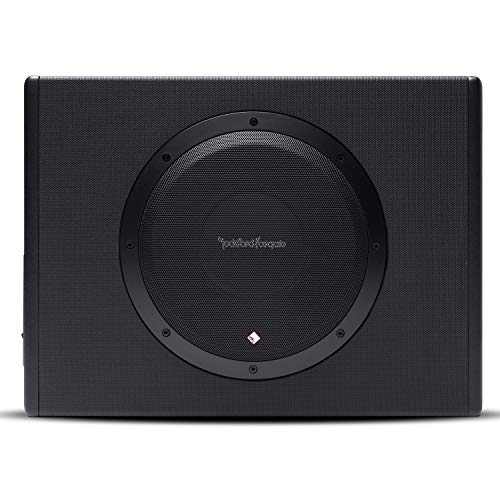

When you're dealing with a truly cramped installation — think a factory 6x9 location converted to a sub slot, or a motorcycle saddlebag application — the KICKER 48CWRT672 is the driver that makes the impossible possible. At just 6.75 inches, this CompRT is the smallest sub on our list, but KICKER's engineering team didn't cut corners to get there. The high-mass solid pole piece is the key differentiator: it serves as a heat sink, pulling thermal energy away from the voice coils during extended listening sessions. That matters more in a shallow mount than in a standard sub, because the reduced basket depth limits the amount of airflow available for cooling.
The dual voice coil configuration at 2 ohms gives you real wiring flexibility. You can wire it to 1 ohm for maximum power from a compatible mono amp, or run it at 4 ohms for a more controlled load. KICKER's unique heat management system — a combination of vented pole piece geometry and the high-mass design — keeps this sub running clean even when you push it hard. Output is obviously limited by cone area compared to a 10" or 12", but the bass texture is tight and musical rather than boomy. If you need to fit a sub where nothing else will go, this is your driver.
The 48CWRT672 is rated at 300W RMS, which is honest and achievable with a quality compact amplifier. The basket diameter is standard enough that it fits most aftermarket enclosure brackets designed for 6.75" drivers, and the mounting depth is shallow enough for locations that would reject any other sub. This is a specialty product for a specific problem — and it solves that problem better than anything else in 2026.
Pros:
Cons:
Pioneer built the TS-A2000LD2 to slot seamlessly into systems already running A-series full-range speakers, and that design intent shows in the sound signature. The frequency response is tuned to complement Pioneer's midrange drivers, which means you get smooth integration rather than the boomy, detached bass that plagues poorly matched component systems. With 700W max and 250W nominal power, this 8-inch sub sits in a sweet spot for daily drivers that want meaningful bass extension without dedicating an entire trunk to an enclosure.
The cone material is one of the most important specs here. Pioneer uses a Glass-Fiber and Mica Reinforced IMPP (Injection Molded Polypropylene Compound) cone that delivers high rigidity without adding excessive mass. That combination translates to fast transient response — you hear the attack on kick drums and bass guitar notes rather than just a low-frequency rumble. The passive design means you'll need an external amplifier, but that's actually an advantage: you choose the amp, you choose the sound quality, and you can upgrade either component independently down the road.
The shallow mount profile makes installation straightforward in rear deck locations and under-seat applications in smaller SUVs and sedans. For the price point, the TS-A2000LD2 delivers honest, accurate bass reproduction that outperforms plenty of deeper budget drivers. If you're already invested in the Pioneer A-series ecosystem, this sub is a natural evolution of your audio system rather than an afterthought add-on.
Pros:
Cons:
Skar Audio has built its reputation on delivering serious power handling at competitive prices, and the VS-10 D4 continues that tradition in shallow mount form. The headline numbers are hard to ignore: 1000W peak and 500W RMS from a 10-inch driver with a mounting depth of just 3.89 inches. That's a lot of excursion capability packed into a very slim profile. The dual 4-ohm voice coil configuration gives you wiring options — wire in series for an 8-ohm load or parallel for a 2-ohm load — making it compatible with a wide range of mono amplifiers.
What you're buying with the VS-10 is brute-force capability in a small package. Skar's engineering on this driver prioritizes output and power handling over nuanced musicality, which makes it an excellent choice for listeners who want to feel the bass as much as hear it. The 3.89-inch mounting depth is genuinely shallow — you can fit this sub in sealed custom enclosures built into factory void spaces that would turn away anything with more depth. At 500W RMS, you're also looking at a driver that needs a quality amplifier capable of delivering clean power at that level. Don't underpowered this one and expect it to sing.
The VS-10 targets the listener who's upgrading from a factory subwoofer system or a low-power aftermarket setup and wants a dramatic step up in impact. This is a high-excursion driver and it rewards proper enclosure design — a sealed box tuned to the VS-10's Thiele-Small parameters will give you tight, controlled bass. Ported tuning is possible but requires more volume than most shallow-mount applications allow. If you want the most output per dollar in the 10-inch shallow mount category, this Skar delivers exactly that.
Pros:
Cons:
The KICKER 48CWRT102 CompRT 10" earns the best overall title because it gets the full equation right: power handling, thermal management, installation flexibility, and sound quality all land at or above the competition. This is the 10-inch version of the same CompRT platform we reviewed in the 6.75" format, and scaling up to a 10-inch cone makes a significant difference in output capability and bass extension. KICKER rates this sub at 400W RMS, which is a conservative and achievable number that pairs well with a quality mono amplifier in the 500-600W range.
The high-mass solid pole piece is the engineering centerpiece of the CompRT line. In a standard sub, heat dissipation happens through a combination of vented pole pieces, the motor structure, and ambient airflow around the basket. In a shallow mount sub, that thermal pathway is compressed — there's simply less structure to dissipate heat. KICKER's solution is to make the pole piece itself a high-mass thermal reservoir, absorbing heat from the voice coil and distributing it through the motor assembly. The result is a sub that holds its rated power handling during extended listening sessions without the thermal compression that degrades lesser shallow mount designs. You can push this driver hard at a track day event or a long highway run and it stays composed.
The DVC 2-ohm configuration gives you the most wiring options in the shallow mount class. Wire both coils in series for 4 ohms, parallel for 1 ohm, or use a single coil for 2 ohms — your amplifier compatibility options are essentially unlimited. The mounting depth is tight enough for most sealed custom applications, and the basket geometry is clean enough that professional installers consistently recommend it. If you're serious about car audio and want a shallow mount sub that performs like a standard-depth driver in all the ways that matter, this is the one to buy. We also recommend checking out our roundup of the best car subwoofers of 2026 if you have the trunk space for a full-depth driver.
Pros:
Cons:
The Rockford Fosgate Punch P300-10 solves a problem that trips up a lot of first-time sub buyers: it eliminates the need to match a driver, enclosure, and amplifier separately. This is a complete, self-contained system featuring a Punch 10-inch subwoofer mounted in a custom sealed enclosure, powered by a built-in 300-watt amplifier. You run power, ground, and a signal from your head unit — that's it. The entire system ships as one wedge-shaped unit that fits in most trunk corners and under rear decks.
The built-in amplifier section is more sophisticated than you might expect from an all-in-one system. You get an adjustable 12dB/octave low-pass crossover so you can dial in the frequency cutoff to complement your existing speakers, a built-in bass EQ for boosting or cutting low-frequency response to match your taste, and a 0°/180° phase switch to time-align the sub with your main speakers. A remote bass level control is included, so you can adjust the sub's output from the driver's seat without reaching around to the enclosure. The wedge dimensions — 13.3" H x 18" W x 8.9" x 5.9" D — fit most mid-size sedan trunks at an angle without consuming the entire cargo area.
What you sacrifice with an all-in-one system is upgrade flexibility. The amplifier and sub are married to each other, and if one fails or if you want to upgrade one component, you're replacing the whole unit. That's a real limitation for audio enthusiasts who want to grow their system over time. But for the driver who wants a set-it-and-forget-it bass upgrade without studying impedance matching and gain structure, the P300-10 is the most logical purchase on this list. The Rockford Fosgate Punch lineage ensures the components inside are legitimate — this isn't a budget amplified sub with a generic driver. The 10-inch Punch driver in this enclosure genuinely outperforms the standalone budget competitors in the same price tier.
Pros:
Cons:
Everything that makes the P300-10 compelling also applies to the P300-12 — with the added advantage of a 12-inch cone that moves significantly more air and extends lower with authority. If you can fit this system in your vehicle (dimensions: 15" H x 19.8" W x 11" x 7" D), the jump from a 10" to a 12" driver is immediately audible. Bass that just tickled your seat back with the smaller driver now fills the cabin with genuine presence. The same complete, self-contained design philosophy applies: power, ground, and signal in — deep bass out.
The built-in feature set is identical to the P300-10: a 12dB/octave adjustable low-pass crossover, built-in bass EQ, 0°/180° phase switch, and the same remote bass level control. Rockford Fosgate didn't handicap the 12-inch version's electronics to save money — you get the same tuning capability at a larger scale. The 300W amplifier powering the system is the same unit, which means you're getting slightly more efficiency from the larger cone relative to the same power input. The 12-inch Punch driver generates more acoustic output per watt in its optimal passband, so in practical listening terms the P300-12 does sound louder and fuller even though the amplifier rating is identical to the 10-inch model.
The enclosure volume is larger, which is the primary decision point between these two Rockford models. Measure your trunk carefully before you order — the 15-inch height is the limiting dimension in most hatch and sedan applications. If you're in a full-size sedan, an SUV with a spare-tire well, or a pickup truck with a back seat, the P300-12 almost certainly fits and rewards the extra effort with noticeably better bass output. For context on how a 12-inch driver's performance scales in different enclosures, our guide to the best 12-inch car subwoofers of 2026 covers the full landscape of 12" options if you're also considering separate driver and amplifier builds.
Pros:
Cons:
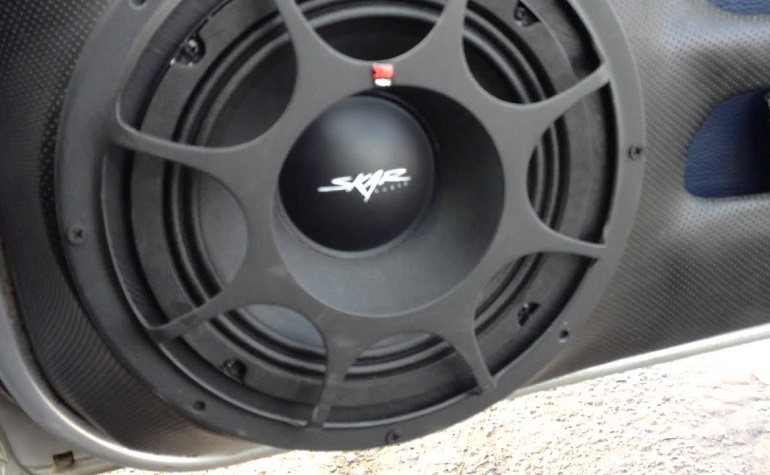
Mounting depth is the defining specification in this category — it's the reason you're buying a shallow mount sub in the first place. Measure the available depth in your target installation location before you shop, not after. Account for any wiring, connectors, or hardware that will sit behind the driver. A sub with a 3.89" mounting depth isn't going to fit if your available cavity is 3.5" deep. Most manufacturers publish mounting depth as a specification alongside cutout diameter and overall frame diameter, and all three numbers matter for your installation to work.
Don't assume that cutout diameter is the only thing that needs to fit. The frame diameter of the sub needs to clear any structural members, and the depth needs to clear whatever is behind the mounting surface — whether that's a spare tire, a wiring harness, or the vehicle's floor pan. Physical fitment is the first filter, and it eliminates candidates before you evaluate anything else.
The RMS power rating is the number that actually matters. Peak power ratings exist for marketing purposes — no subwoofer, no matter how well-engineered, operates at peak power continuously. You match your amplifier's RMS output to the subwoofer's RMS rating, ideally with the amplifier delivering somewhere between 75% and 150% of the sub's RMS spec. Underpowering a subwoofer causes clipping distortion from the amplifier, which is the leading cause of subwoofer voice coil failures. More subs are killed by underpowered amplifiers clipping than by overpowering.
For shallow mount subs specifically, thermal management at rated RMS power is more demanding than in a standard-depth driver. The CompRT's high-mass pole piece design exists precisely to address this. When you're evaluating shallow mount options, look for any mention of thermal management features — vented pole pieces, high-mass motor structures, or aluminum former voice coils — as indicators of sustained power handling capability.
Single voice coil (SVC) subwoofers are simpler and less expensive. Dual voice coil (DVC) subwoofers give you wiring flexibility that can determine your entire amplifier selection. A DVC 2-ohm sub like the KICKER CompRT line can be wired at 1 ohm, 2 ohm, or 4 ohm depending on how you connect the coils and whether you're using one or two channels. That means you can match it to a class-D mono amplifier's most efficient operating point, extract maximum power from a lower-rated amp, or run a conservative high-impedance load for longevity.
If you're starting your build from scratch and you don't yet own an amplifier, a DVC sub gives you more amplifier options. If you already own an amplifier, check its rated output at different impedances before selecting a sub — some class-D amplifiers nearly double their output as impedance drops from 4 ohms to 2 ohms to 1 ohm, and a DVC sub lets you target that output point deliberately.
The Rockford Fosgate P300 series represents a fundamentally different purchasing philosophy from the bare drivers in this list. An all-in-one amplified system removes the need to buy, match, and install a separate amplifier — and it eliminates the need for a separate wiring kit, RCA interconnects, and a turn-on signal wire. The total cost of a P300-10 or P300-12 often comes in lower than the equivalent separate components when you price everything out.
The tradeoff is upgrade flexibility. With a bare driver like the KICKER or Skar Audio options, you can upgrade your amplifier independently, swap the sub into a new vehicle without replacing the amp, or add a second sub to your existing system. With an all-in-one, the components are permanently mated. For a daily driver where simplicity matters more than future scalability, the all-in-one wins. For an enthusiast build that will evolve over time, buy the components separately.
A shallow mount subwoofer is engineered to operate with a reduced mounting depth — typically under 4 inches — compared to the 5 to 8 inches required by standard subwoofers. The trade-off is that the motor structure must work harder to achieve the same excursion and output, which is why thermal management features like high-mass pole pieces and vented structures are more common in quality shallow mount designs. The benefit is installation flexibility in tight spaces that a standard sub could never occupy.
At equivalent cone sizes and power levels, a shallow mount sub will generally produce slightly less output than a standard-depth driver due to reduced motor travel and thermal headroom. However, the gap has narrowed dramatically with modern engineering. High-quality shallow mount drivers like the KICKER CompRT series and the Skar Audio VS-10 produce bass performance that most listeners find indistinguishable from standard-depth competitors in the same price range. For the majority of everyday listening applications, a quality shallow mount is entirely sufficient.
Size your sub to match your available mounting space first, then your power and output goals. A 6.75-inch shallow mount is for extremely tight spaces where nothing else fits — expect moderate bass impact. An 8-inch delivers solid everyday bass and works well under seats. A 10-inch hits the sweet spot for most builds: good extension, meaningful output, and fitment in the majority of factory enclosure slots. A 12-inch all-in-one system like the Rockford P300-12 requires more trunk space but rewards you with noticeably more bass presence and lower extension.
Most shallow mount subwoofers are designed and optimized for sealed enclosures. Sealed boxes require less internal volume than ported designs, which aligns perfectly with the space constraints that drive shoppers to shallow mount subs in the first place. Sealed enclosures also produce tighter, more accurate bass that suits music listening. Some shallow mount drivers can work in ported enclosures if you have the volume available, but the standard recommendation is sealed. Always check the manufacturer's recommended enclosure volume and type before building a custom box.
Bare driver subs like the KICKER CompRT and Pioneer TS-A2000LD2 require a separate external amplifier — they are passive drivers with no built-in amplification. The Rockford Fosgate P300-10 and P300-12 are the exceptions: both are complete, self-contained systems with a built-in amplifier. If you don't want to buy, wire, and configure a separate amplifier, choose one of the Rockford Fosgate all-in-one systems. If you already own an amplifier or want maximum control over your system's sound, buy a bare driver and pair it accordingly.
Match your amplifier's RMS output rating to the subwoofer's RMS rating, targeting between 75% and 150% of the sub's spec. For the KICKER CompRT 10" at 400W RMS, an amplifier delivering 400 to 600W RMS into the appropriate impedance load is ideal. For the Skar Audio VS-10 at 500W RMS, you need an amplifier that delivers at least 375W RMS to avoid chronic underpowering. Never try to use a head unit's internal amplifier to drive a subwoofer directly — the internal power sections in head units are not designed to run subwoofers and will deliver poor performance at best and component damage at worst.
Buy the shallowest sub that fits your space and the most power it can honestly handle — everything else is just noise.
 |
 |
 |
 |

About Rachel Park
Rachel Park specializes in the interior and exterior upgrades that meaningfully change how a car looks, sounds, and feels on a daily basis. She has hands-on experience with head unit installations and audio system builds, LED and HID lighting conversions, interior refresh projects, and cosmetic exterior work — evaluated from both a DIY accessibility and quality-of-result perspective. At CarCareTotal, she covers car audio and electronics, lighting upgrades, and interior and exterior styling accessories.
Get some FREE car parts & gear.. Or check out the latest free automotive manuals and build guides here.
Disable your ad blocker to unlock all the hidden deals. Hit the button below 🚗
| | | |
