by Joshua Thomas
Contents
Dents and dings are an unavoidable part of car ownership — a stray shopping cart, a hailstorm, or a tight parking lot can leave your vehicle looking worse for wear in seconds. Paintless Dent Repair (PDR) has become the go-to fix for most minor body damage because it preserves your original factory paint and costs a fraction of traditional bodywork. The right dent puller kit lets you tackle most dings at home in under an hour, without an appointment at a body shop.
In 2026, the dent puller market is more mature than ever, with a wide range of kits available from dedicated PDR brands like GLISTON, Manelord, AUTOPDR, YOOHE, VEVOR, and Super PDR. The best kits combine high-adhesion glue tabs, durable pulling tools, and enough variety in tab sizes to handle dents from small door dings through major hail damage. This guide covers 6 of the best dent pullers on Amazon, with detailed reviews, specs, pros and cons, and a buying guide to help you choose the right kit.
Whether you are a first-time DIYer or an experienced hobbyist looking to upgrade your tools, paintless dent removal is a skill that pays off across the life of any vehicle. Read on for our top picks and expert guidance on what to look for when shopping.
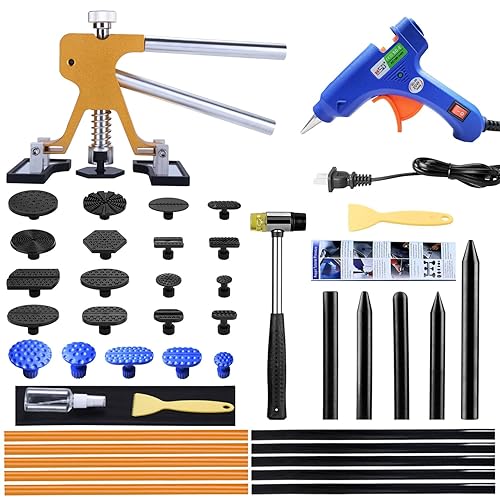



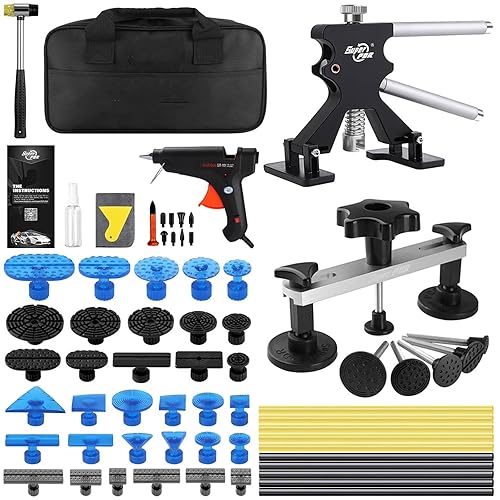


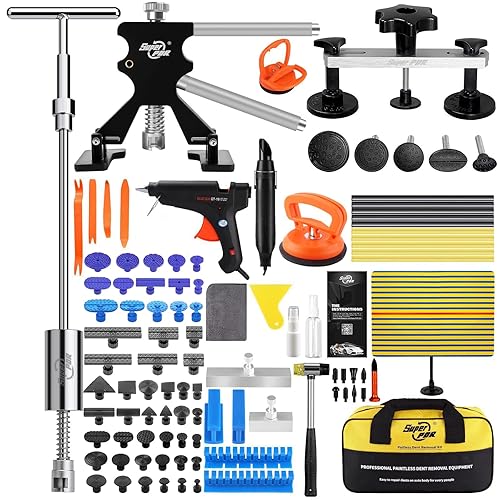

The GLISTON Car Dent Puller Kit is the go-to choice for DIYers who want professional-grade results without professional-level cost. The adjustable golden dent lifter fits a wide range of dent sizes and shapes, making it versatile enough for door dings, hail damage, and minor creases across most vehicle panels.
At the heart of the kit is a high-carbon stainless steel lifter with a rubber base that protects your car's paint during the pulling process. The adjustable bridge design lets you rotate the pull button to better center over deep dents, which significantly improves pulling efficiency compared to fixed-width tools.
The included hot glue gun heats quickly and the specially formulated glue sticks bond firmly to most car surfaces. The 21-size tab variety means you can match the pulling tab to the exact size of the dent, which is critical for a clean, even result. Cleanup is simple with the included isopropyl alcohol and removal tools.
The main limitation is that this kit works best on thin metal body panels and is not suitable for surfaces thicker than 1 cm. Deep structural dents may require multiple pulls. That said, GLISTON has an established track record in this category and the kit ships with everything needed for a first repair.
Pros
Cons
The Manelord Auto Body Dent Repair Kit has earned its place as one of the most reviewed dent pullers on Amazon, backed by over 6,800 customer ratings. It combines a classic bridge puller with a golden dent lifter, giving you two effective methods to tackle different types of dents in a single package.
The golden dent lifter uses leverage principles to create steady, controlled upward pressure on the dent. The adjustable feature lets you rotate the pull button to better seat over the low point of a dent, which is key for getting a centered lift rather than pulling one edge first. High-quality rubber on all contact points means no worries about scratching the paint.
The bridge puller included in the kit works in tandem for larger dents where single-point pulling is insufficient. Both tools are built from tempered high-carbon stainless steel and standard stainless steel, giving you a durable kit that holds up across many repairs. The glue sticks in the kit bond strongly and release cleanly with isopropyl alcohol.
The Manelord kit performs best on thin sheet metal and may struggle with very deep or hard-to-access dents. Some buyers note the learning curve for getting the tab perfectly centered, but this is a general PDR challenge rather than a product flaw. For everyday door dings and hail dents, this kit delivers solid value.
Pros
Cons
The AUTOPDR Paintless Dent Repair Kit is designed with a practical repair range of 0.6 inches to 8 inches, making it one of the more versatile options for tackling everything from small parking lot dings to larger hail damage. The 33-tab assortment covers a wide variety of dent profiles without requiring additional purchases.
AUTOPDR's glue sticks are specifically engineered for automotive dent repair, with a higher adhesion formula than standard hot glue. This means the pulling tabs stay locked onto the dent during the pull, reducing the frustrating tab-slip issues common with cheaper kits. The improved adhesion also allows for cleaner tab removal after the repair.
The kit includes two puller types to handle different dent geometries. One puller works well on flat-panel dents while the second handles curved surfaces more effectively. Both are built from durable materials and connect securely to the glue gun tip without wobble. The included cleaning supplies make post-repair glue residue removal easy.
As with all glue-pull PDR systems, this kit is not suitable for dents with sharp creases or damage to the paint itself. It also requires a heat source to release the tabs cleanly. AUTOPDR includes a solid warranty and their customer support is responsive to issues that arise during shipping or first use.
Pros
Cons
The YOOHE 53pcs Dent Puller Kit stands out by including both a slide hammer T-bar and an adjustable gold dent lifter — two fundamentally different pulling mechanisms in one package. This dual-method approach makes it adaptable to a wider range of dent scenarios than single-method kits, and the 53-piece count means you have backup tabs and glue sticks on hand.
The slide hammer T-bar is particularly effective for dents where you need to apply force along the surface rather than pulling straight up. It is a common professional PDR technique that lets you knock down high spots while simultaneously lifting the low ones. The YOOHE T-bar design is solid and the head threads securely onto the glue tabs without unwanted play.
The adjustable gold dent lifter is the companion tool for smaller, more precise repairs. The adjustable bottom distance lets you position the lift point exactly over the deepest part of the dent, which is critical for achieving a flush result. Silicone pads on contact points replace the rubber found on many budget kits, offering better grip on painted surfaces.
The kit is well-suited to beginners who want to learn proper PDR technique without buying tools piecemeal. The main limitation is the learning curve associated with the slide hammer — getting the hammer weight and angle right takes practice. YOOHE includes a straightforward instruction guide to help first-time users get oriented.
Pros
Cons
The VEVOR 117 PCS Dent Removal Kit is the most comprehensive option on this list for anyone who wants to handle the full spectrum of automotive dent types in a single purchase. At 117 pieces, it includes every core PDR tool — a golden dent lifter, bridge puller, slide hammer T-bar, and a separate suction cup puller — so you are not limited to a single removal technique.
The suction cup puller is the standout addition that smaller kits omit. For fresh, shallow dents on smooth panels (especially common after minor parking impacts), a suction cup pull is often the fastest and cleanest approach. VEVOR's suction cup is sized for car panels and delivers enough grip to handle most door-level dings without any glue required.
The slide hammer T-bar and bridge puller work together for medium-to-large dents where the leverage approach is more effective. The 100-watt glue gun heats up quickly and works with the included standard PDR glue sticks. The golden lifter rounds out the kit for precise, single-point repairs on smaller dings where a full bridge setup would be overkill.
With 117 pieces there is an inevitable trade-off in portability — the kit is best stored at home or in a workshop rather than carried daily. A few buyers note that some of the smaller tab connectors benefit from a test fit before your first real repair. Overall, VEVOR delivers strong value for money at this piece count.
Pros
Cons
Super PDR is a dedicated paintless dent repair brand, and the Super PDR Paintless Dent Repair Kit reflects that specialization. The kit's 2-in-1 slide hammer T-bar combines two pulling modes in a single handle, which reduces the number of tool swaps needed during a repair session and makes the kit feel more professional than similarly priced alternatives.
The dent lifter in this kit is optimized for medium-to-large dents where a simple golden lever is insufficient. Combined with the bridge puller, you have the flexibility to approach a dent from different angles and with varying amounts of pulling force. The included glue removal tool — often missing from budget kits — makes post-repair cleanup significantly faster.
Super PDR's glue sticks are formulated for a strong initial bond and a clean break when heated for removal, which minimizes the residue left on the paint. The 100W glue gun reaches working temperature in under 2 minutes and handles all standard PDR glue stick sizes. The kit is compact enough to store in a trunk emergency kit.
The trade-off is that the tab count is lower than larger kits, so extended multi-session repairs may require purchasing additional glue sticks. Super PDR sells replacement sticks separately at a reasonable price. The tool quality consistently exceeds expectations for the price point, and the customer support from Super PDR is responsive.
Pros
Cons
Before choosing a kit, it helps to understand the three main dent repair methods available to DIYers. Each approach works best on different dent types, and many quality kits combine two or more methods for maximum versatility.
Glue pull PDR is the most popular approach for home use. A hot glue gun bonds a pulling tab to the center of the dent, and then a lifter or slide hammer applies upward force to pop the dent flush. Modern kits use automotive-grade glue that bonds strongly to painted metal and releases cleanly with isopropyl alcohol. Glue pull systems work on dents up to several inches wide and are safe on factory paint when used correctly.
The key variable is tab size — using a tab that is too small for a large dent results in uneven pulling, while a tab that is too large for a small ding can pull surrounding metal instead of the target area. Quality kits include 15 or more tab profiles to match the repair to the dent.
Suction cup pullers are the simplest and fastest option for fresh, shallow dents on smooth, clean panels. There is no glue involved — the cup adheres to the panel via vacuum and a sharp pull or lever action pops the dent out. Suction cup pullers work best on dents without a sharp crease and on smooth painted surfaces with no texture. They are ideal for quick fixes on flat door panels and hoods.
The limitation is that suction cups lose grip on curved surfaces, dirty panels, and any area with texture coating. For most hail damage and deeper dings, a glue pull system is more reliable.
Push-from-behind PDR uses rods and picks inserted through access holes (often via the door jamb or under body trim) to push the dent outward from behind the panel. This technique delivers the cleanest results for sharp creases and deeper dents but requires significant skill and knowledge of the vehicle's panel structure. Most consumer-oriented kits do not include the full rod set needed for professional push-from-behind work, though some premium kits like the AUTOPDR Pro include a starter rod set.
With dozens of dent puller kits available on Amazon, knowing what separates a quality tool from a cheap one can save you time, money, and a ruined paint job. Here are the four factors that matter most when choosing a dent puller kit for home use.
The size of the pulling tab or suction cup needs to match the dents you plan to repair. For small door dings (under 2 inches), a small tab gives you precise control. For large hail craters or body panel dents, you need a larger footprint to distribute pulling force evenly. The best kits include a range of tab sizes — look for 20 or more profiles in the package. Single-tab kits are only suitable for one specific type of dent.
For glue pull systems, the adhesive quality of the glue and the surface contact quality of the tabs determine whether your pull works or the tab pops off prematurely. Look for kits that specify automotive-grade glue sticks and tabs with a textured bonding surface. For suction cup kits, the seal quality of the rubber cup edge determines maximum pulling force — thicker, softer rubber holds better on slightly irregular surfaces.
The dent lifter or slide hammer handle needs to be sturdy enough to apply consistent force without flexing under load. Quality lifters are made from tempered stainless steel. Avoid kits where the lifter shaft shows visible play or wobble when loaded — this signals inferior metal quality that will fatigue quickly and deliver inconsistent pulls. Weight and balance also matter for the slide hammer; a properly balanced hammer lets you develop a rhythmic technique more easily.
A complete kit should include everything you need for the first repair without additional purchases: a hot glue gun, glue sticks (at least 10), isopropyl alcohol for tab removal, a cleaning cloth, and a pry tool or knock-down rod for leveling any over-pulls. Kits that omit the glue gun are cheaper upfront but require you to source a compatible gun separately. Also check whether the kit includes a reflector board — seeing the reflection in the panel dramatically improves your ability to judge dent depth and repair progress.
GLISTON Car Dent Puller Kit - Walmart Link
Manelord Auto Body Dent Repair Kit - Walmart Link
AUTOPDR Paintless Dent Repair Kit - Walmart Link
YOOHE Dent Puller Kit 53pcs - Walmart Link
VEVOR 117 PCS Dent Removal Kit - Walmart Link
Super PDR Paintless Dent Repair Kit - Walmart Link
GLISTON Car Dent Puller Kit - eBay Link
Manelord Auto Body Dent Repair Kit - eBay Link
AUTOPDR Paintless Dent Repair Kit - eBay Link
YOOHE Dent Puller Kit 53pcs - eBay Link
VEVOR 117 PCS Dent Removal Kit - eBay Link
Super PDR Paintless Dent Repair Kit - eBay Link
Choosing the right dent puller comes down to the types of dents you face most often and your experience level with PDR. For beginners, the GLISTON Car Dent Puller Kit offers the best balance of ease of use and versatility, with an adjustable golden lifter that accommodates a wide range of dent sizes. The Manelord Auto Body Dent Repair Kit has the largest real-world track record with over 6,800 customer reviews, making it a reliable choice if you want proven performance.
For those who want more tools in a single purchase, the VEVOR 117 PCS Dent Removal Kit covers every core PDR technique and is excellent value at its price point. The YOOHE 53pcs Kit offers the dual slide-hammer-plus-lifter approach that professional technicians prefer, while the AUTOPDR Kit shines on its wide 0.6-to-8-inch repair range. If you want a specialist PDR brand with a clean, compact kit, the Super PDR Paintless Dent Repair Kit delivers professional-quality tools without the clutter of a 100-piece set.
Whichever kit you choose, remember that PDR results improve dramatically with practice. Start with smaller, low-visibility dents to build your technique before tackling prominent panels. With patience and the right tools, most minor car dents can be repaired at home for under 120 dollars — a fraction of what a body shop would charge.
Yes, dent pullers work effectively on most minor dents and hail damage where the paint has not been cracked or chipped. Paintless dent repair (PDR) kits are a proven method used by professionals and DIYers. Results depend on the dent depth, panel access, and tool quality. Shallow, round dents on flat panels respond best, while sharp creases or dents near panel edges are more difficult.
When performed correctly, PDR is a permanent repair. The metal is manipulated back to its original position without weakening the surrounding area. Unlike body filler, which can crack or shrink over time, a properly executed PDR repair restores the panel to factory condition. The key is avoiding over-pulling, which can create a high spot that is harder to correct than the original dent.
Not all dents can be removed with a dent puller. PDR works best on dents where the paint is intact, the metal has not been stretched or creased sharply, and the damage is accessible from behind the panel or from the surface. Deep structural dents, dents at panel edges, and any damage involving paint cracks or chips require traditional body filler and repaint rather than PDR.
Yes, paintless dent repair is safe for car paint when performed correctly. Modern glue pull systems bond to the painted surface without abrading it, and the adhesive releases cleanly with isopropyl alcohol. The pulling tools are designed with rubber or silicone pads to avoid direct metal-to-paint contact. The risk of paint damage is low for shallow dents, though over-pulling can cause paint to crack on older or brittle finishes.
Professional PDR for a single door ding typically costs $75 to $150. More extensive hail damage can run $500 to over $2,000 depending on the number of dents and panel complexity. A quality DIY kit costing $30 to $100 pays for itself after a single repair. For severe collision damage involving paint cracks or structural deformation, a traditional body shop is still necessary.
PDR is learnable at home, but it has a steeper learning curve than most DIY car tasks. The fundamentals — gluing the tab precisely over the dent low point, applying steady pulling force, and reading the metal with a reflector board — can be learned from YouTube tutorials and practice on scrap panels. Most beginners achieve good results on simple round dings within a few practice sessions. Complex repairs like sharp creases or crumple damage are best left to a professional PDR technician.
 |
 |
 |
 |

About Joshua Thomas
Joshua Thomas just simply loves cars and willing to work on them whenever there's chance... sometimes for free.
He started CarCareTotal back in 2017 from the advices of total strangers who witnessed his amazing skills in car repairs here and there.
His goal with this creation is to help car owners better learn how to maintain and repair their cars; as such, the site would cover alot of areas: troubleshooting, product recommendations, tips & tricks.
Joshua received Bachelor of Science in Mechanical Engineering at San Diego State University.


Get some FREE car parts & gear.. Or check out the latest free automotive manuals and build guides here.
Disable your ad blocker to unlock all the hidden deals. Hit the button below 🚗
| | | |
