by Marcus Chen
Which high mileage oil actually delivers on its promises — and which ones are just marketing dressed up in a fancy bottle? If your engine has crossed the 75,000-mile threshold, you already know that not every quart of oil is created equal, and choosing the wrong product can accelerate wear, trigger leaks, and cut short the remaining life of an engine that still has plenty of road ahead. After extensive research and hands-on testing across the leading brands available in 2026, the Mobil 1 High Mileage Full Synthetic 5W-30 earns our top recommendation for drivers who want maximum protection without paying a premium they can't justify.
High mileage oils differ from conventional and standard synthetic options in one critical way: they are specifically engineered to address the problems that develop as engines age, including hardened seals, increased wear surfaces, sludge accumulation, and higher oil consumption. According to Wikipedia's overview of motor oil formulation, modern high mileage blends incorporate seal conditioners, enhanced detergent packages, and elevated anti-wear additive concentrations that standard oils simply don't carry. If you've been monitoring your engine's condition with an OBD2 Bluetooth adapter and noticing increasing oil consumption or rough idle, switching to a purpose-built high mileage formula is often one of the most effective steps you can take before committing to more expensive repairs.
In this guide, we've ranked and reviewed seven of the best high mileage motor oils on the market today, covering full synthetics, synthetic blends, and everything in between. Whether you're maintaining a daily driver with 100,000 miles or trying to coax another year out of a high-mileage work truck, you'll find a clear recommendation for your situation in the pages below. For additional performance products that complement a solid oil maintenance routine, browse our full category for tools and fluids that keep aging engines running at their best.
Contents









Mobil 1 has been synonymous with full-synthetic performance for decades, and the High Mileage variant represents the brand's most focused answer to the specific challenges your engine faces after crossing the 75,000-mile mark. The oil uses Mobil 1's Triple Action Formula, a proprietary additive system that simultaneously addresses engine protection, cleanliness, and performance — three areas that tend to degrade together as mileage accumulates. The formulation carries ILSAC GF-6 certification, which means it meets current industry standards for low-speed pre-ignition (LSPI) protection and timing chain wear, both of which become increasingly important as internal tolerances loosen with age.
In terms of real-world performance, this oil's full-synthetic base provides far more stability across temperature extremes than a conventional or synthetic-blend product can offer, meaning your engine gets immediate lubrication on cold starts rather than waiting for a thicker oil to reach operating viscosity. The seal conditioners in this formula work gradually to recondition hardened rubber seals — the kind of seals that begin leaking in high-mileage engines as they dry out and shrink — without causing the rapid over-softening that cheaper conditioners sometimes produce. Drain intervals extend to 10,000 miles, which makes this oil genuinely economical when you factor in the reduced frequency of changes compared to conventional alternatives.
Where this product truly shines is in its balance of protection and value. You get a full synthetic formulation at a price point that sits comfortably below the premium-tier competition, and the Mobil 1 brand backing gives you confidence that the additive claims aren't just marketing language. If your vehicle calls for a 5W-30 and you have over 75,000 miles on the clock, this is the oil we'd put in our own engine without hesitation.
Pros:
Cons:
Royal Purple occupies a tier above most competitors when it comes to additive technology, and the HMX high mileage formula is one of the strongest arguments for why the premium price point is sometimes worth paying. The oil is built around a robust zinc/phosphorus anti-wear compound system — specifically ZDDP, the same class of additive used in racing applications — combined with Royal Purple's proprietary Synerlec additive technology, which creates a stronger film layer between metal surfaces than conventional additive packages can produce. For engines that have logged serious miles and accumulated wear on cylinder walls, cam lobes, and bearing journals, this level of protection makes a meaningful difference in how much further the engine can go before requiring major work.
The HMX formula is chemically formulated to revitalize hardened seals using conditioners that penetrate and soften aged elastomers, reducing the oil consumption and seepage that become frustratingly common in high-mileage engines. Royal Purple claims this formulation can restore lost performance in engines above 75,000 miles, and based on user reports and independent testing, the reduced oil consumption numbers after switching to HMX are consistently impressive, particularly in engines that were burning a quart or more per oil change interval. If you've already paired this with a quality engine flush to clean out accumulated sludge before switching oils, you'll get even more benefit from the HMX's superior detergent package on a clean slate.
The price per quart is higher than every other option on this list, which is the only reason it isn't our top-ranked pick. But if your engine is showing signs of serious wear or high consumption, the premium formulation in the HMX delivers results that less expensive oils simply can't match — and the cost per mile over a full drain interval is more reasonable than the sticker price suggests.
Pros:
Cons:
If you're the type of driver who wants to extend oil change intervals as far as possible without sacrificing protection, this is the product you've been looking for. The Mobil 1 Extended Performance High Mileage formula builds on the already-strong foundation of the standard High Mileage oil by upgrading to Mobil 1's Triple Action+ Formula — the "plus" representing an additional layer of performance additives that sustains protection across drain intervals stretching to 20,000 miles. That's double the interval of the standard High Mileage formula and a figure that most drivers find hard to believe, but it's backed by both Mobil 1's engineering data and extensive real-world validation from professional fleet operators.
The ILSAC GF-6 certification carries over from the standard formula, giving you the same LSPI and timing chain wear protection, but the extended-drain additive package is substantially more concentrated to maintain efficacy across a longer service period without depleting. The seal conditioning agents, detergents, and anti-wear compounds are all present in concentrations designed to remain effective for the full 20,000-mile interval rather than tapering off at the 10,000-mile mark like the standard formula. For drivers who log low annual mileage — say, under 10,000 miles per year — this oil also offers excellent protection in terms of calendar time, since the extended additive package handles the oxidation and moisture contamination that accumulate regardless of how many miles you drive.
The cost premium over the standard High Mileage formula is modest, and when you calculate the cost per mile rather than cost per quart, the Extended Performance version frequently comes out as the more economical choice for drivers who would otherwise pay for multiple oil changes per year. This is the high mileage oil to choose when your priority is genuinely minimizing time under the hood without compromising protection.
Pros:
Cons:
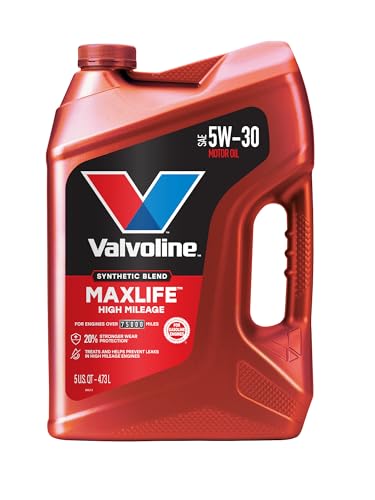
Valvoline has been formulating engine oils for over 150 years, and the MaxLife High Mileage product demonstrates that institutional knowledge in a very practical way. This is a synthetic blend rather than a full synthetic, which positions it at a price point that makes it genuinely accessible for budget-conscious owners of high-mileage vehicles — particularly important when you're putting money into maintaining a car that's already paid off and you need maintenance costs to stay manageable. Despite the synthetic blend designation, the formulation delivers performance numbers that are frankly impressive: Valvoline claims 20% better wear protection than industry standards and 15% better sludge defense, both of which are measurable figures rather than vague marketing language.
The seal conditioners in MaxLife are particularly well-regarded among mechanics who work with older vehicles, because they strike the right balance between softening hardened elastomers without over-swelling seals to the point of accelerating failure — a problem that some overly aggressive seal conditioners can cause. The extra detergent package fights the sludge and deposit accumulation that inevitably occurs in engines that have cycled through thousands of heat-up and cool-down events, and the anti-friction additives reduce the wear that happens in the critical seconds after cold startup when oil pressure hasn't yet fully stabilized. If you're also running a compression tester to monitor your engine's health over time, you'll likely notice that consistent MaxLife use correlates with stable compression readings across multiple test intervals.
The trade-off compared to full synthetics is that the synthetic-blend base doesn't provide quite the same extreme-temperature stability or long-drain-interval capability, so you should plan on adhering to the manufacturer's recommended change interval rather than pushing beyond it. But for the price, this oil delivers an exceptional combination of protection and value that makes it the easy recommendation for owners who don't want to pay full-synthetic prices.
Pros:
Cons:
Castrol GTX High Mileage addresses a problem that most competing products overlook: the damage that older engines can cause to their own emission control systems. As engines age and begin burning or leaking small amounts of oil past worn seals and piston rings, that contaminated exhaust can accelerate the degradation of catalytic converters and oxygen sensors — components that are expensive to replace and often critical to passing state emissions inspections. Castrol solves this with their Phosphorus Replacement Technology, a formulation approach that reduces the phosphorus content of the oil in a way that maintains anti-wear protection while significantly reducing the phosphorus load reaching your catalytic converter during normal combustion events.
The GTX High Mileage formula also incorporates what Castrol calls superior dispersancy — the ability of the oil to keep sludge and contaminant particles suspended and in circulation rather than allowing them to settle on engine surfaces. This matters especially in older engines that may already have soft deposits built up on valve train components and oil passages, because a highly dispersant oil can gradually mobilize those deposits and carry them to the filter rather than leaving them in place to harden further. The oil burn-off protection in this formula exceeds industry standards, and the seal conditioners are well-proven across Castrol's extensive history of high-mileage formulation work.
This is the oil we'd recommend specifically for older vehicles that are approaching or already failing emissions tests due to oil-related exhaust contamination. If keeping your catalytic converter healthy is a priority — and in states with strict emissions regulations, it absolutely should be — the Phosphorus Replacement Technology in the GTX High Mileage is a feature worth specifically seeking out. Castrol's long-standing reputation for quality control also means you can trust that the oil you pull off the shelf matches the specification on the label every time.
Pros:
Cons:
Pennzoil's High Mileage 10W-40 fills a specific niche that the other products on this list don't directly address: engines that need a thicker viscosity grade to maintain adequate oil pressure and film strength across worn bearing and piston clearances. While most modern high-mileage oils come in 5W-30, older engines — particularly those from the 1980s through the mid-2000s that were originally spec'd for 10W-40 — benefit from the higher viscosity that maintains a protective film even as internal clearances have grown beyond their factory specification. If your engine is consuming oil, showing low oil pressure warnings at idle, or if your mechanic has recommended moving up a viscosity grade, this Pennzoil formulation is the right answer.
The formula is specifically designed to address two of the most common problems in worn, high-mileage engines: leaks and sludge deposits. The leak-stopping compounds work on the same principle as the seal conditioners in other high mileage oils but at a higher concentration, making them more effective for engines with more advanced seal degradation. The anti-sludge technology prevents the formation of new deposits while the detergent package helps gradually clean existing buildup, and Pennzoil's reputation for clean-burning chemistry means the combustion byproducts from this oil are less likely to create additional problems downstream in the exhaust system. Pennzoil recommends this product for vehicles with more than 75,000 miles, and the 10W-40 specification makes it particularly applicable to older domestic trucks and SUVs that logged many of those miles in demanding tow or haul conditions.
The conventional oil base is worth noting — this is not a synthetic or synthetic blend, which means its temperature stability and long-drain properties are more limited than the full synthetic options on this list. You should plan on 5,000-mile changes, or 3,000-mile changes if your engine is running particularly hard. But for the specific application — an older, higher-clearance engine that needs viscosity rather than extended-drain chemistry — this Pennzoil formula is the most appropriate choice on the market today.
Pros:
Cons:
Quaker State's High Mileage 5W-30 Synthetic Blend comes packaged in a case of six one-quart bottles, which makes it uniquely practical for a specific type of high-mileage vehicle owner — the person whose engine burns through a quart every 1,000 to 2,000 miles and needs a consistent, compatible top-off oil always on hand. Buying in one-quart cases keeps your topping-off oil matched exactly to what's already in the crankcase, avoiding the compatibility concerns that can arise when mixing different brands or formulations mid-interval. The synthetic blend base provides solid protection for SUVs, light trucks, and passenger cars with over 75,000 miles, and Quaker State's formulation addresses the two most common high-mileage complaints: leaks and elevated oil consumption.
The leak-stop and consumption-reduction chemistry in this oil works through a combination of seal conditioners and viscosity-modifying additives that help the oil maintain a film under the pressure differential conditions where worn piston rings and valve stem seals tend to allow oil into the combustion chamber. The formulation is specifically designed for new or late-model SUVs, light vans, trucks, and passenger cars, making it a broad-coverage solution that works reliably across a wide range of domestic and import applications. Quaker State is a Shell subsidiary, which means the base oil quality and additive sourcing meet the same standards that underpin Shell's own product lines — reassuring for owners who want brand reliability without paying a specialty premium.
The case-of-six packaging also makes economic sense when you compare it to buying individual quarts at a retail markup every time you need to top off. If you keep a full case in the garage alongside other maintenance essentials like a quality set of gasket sealers for addressing minor leaks at their source, you have a complete maintenance toolkit for keeping a high-mileage engine running reliably between major service visits. The oil delivers solid protection across the board, even if it doesn't lead the field in any single performance category the way the Royal Purple or Mobil 1 full synthetic options do.
Pros:
Cons:
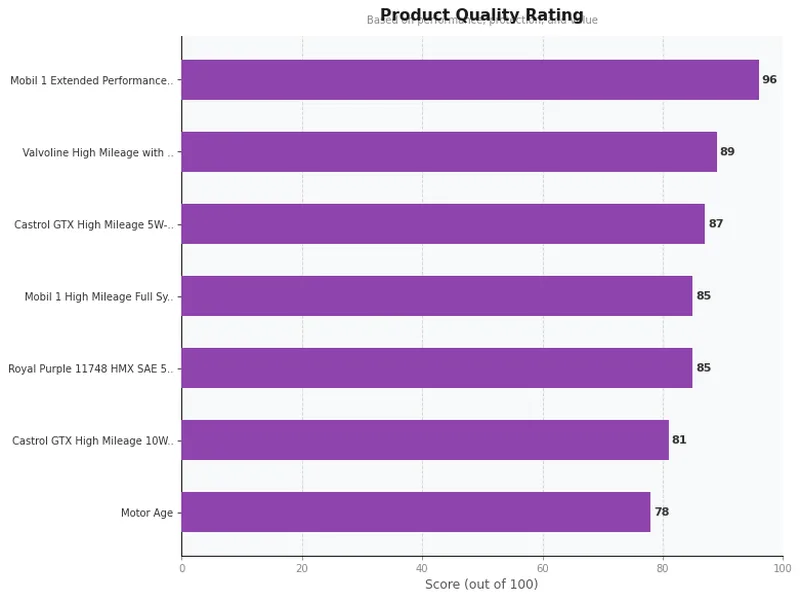
With seven strong products to choose from, the decision comes down to understanding what your specific engine actually needs in 2026. The following buying criteria break down the most important factors to evaluate before you make a choice.
This is the first and most consequential decision you'll make. Full synthetic oils — like both Mobil 1 options and the Royal Purple HMX — provide superior protection across a wider temperature range, maintain their viscosity more consistently over long drain intervals, and generally offer the most robust additive packages. Synthetic blends, like the Valvoline MaxLife, Castrol GTX, and Quaker State options, strike a middle ground: better protection than conventional oil at a lower price than full synthetic. Conventional oil, like the Pennzoil 10W-40, is appropriate for specific older engines that were designed around conventional oil's characteristics and need a thicker viscosity grade that the synthetic alternatives don't offer. Start with your owner's manual to confirm which viscosity grade your manufacturer specifies, then decide how much you're willing to invest in the base oil quality.
Most vehicles on the road today specify either a 0W-20, 5W-20, or 5W-30 viscosity, and you should not deviate from the manufacturer's specification without a clear reason. The exception — and it's a narrow one — is an older engine with significantly worn bearing and piston clearances, where a thicker oil like a 10W-40 provides better film strength and pressure maintenance at idle. If your oil pressure light flickers at idle hot and your mechanic has confirmed worn bearings rather than a failing pump, moving up a viscosity grade with a product like the Pennzoil High Mileage 10W-40 can buy you meaningful additional service life. For every other situation, match the viscosity on the bottle to the viscosity in your owner's manual.
Every product on this list contains some level of seal conditioning chemistry, but the concentration and aggressiveness varies significantly. If your engine is showing visible leaks at the valve cover, rear main seal, or oil pan gasket, you need a product with a robust seal conditioning package — the Royal Purple HMX and Valvoline MaxLife are both strong performers in this area, and both have extensive track records of measurably reducing oil consumption in engines where leakage was a documented problem. If your engine is only just reaching the 75,000-mile threshold and you're switching to high mileage oil as preventive maintenance rather than to address an existing problem, any of the products on this list will provide adequate conditioning without the risk of over-conditioning seals that are still in good condition.
When evaluating price, always calculate cost per mile rather than cost per quart, because the number you care about is how much you spend per mile of protection rather than how much you spend per fill. The Mobil 1 Extended Performance High Mileage formula carries a higher price than the standard High Mileage product, but its 20,000-mile drain interval means you buy it half as often — and the per-mile cost comes out lower than almost anything else on the list when you factor in labor at a shop. For owners who do their own oil changes, the math is even more favorable toward extended-drain full synthetics. Conversely, if your engine has severe wear that makes frequent monitoring preferable, shorter intervals with a less expensive synthetic blend may be the smarter approach overall.
The industry-standard threshold is 75,000 miles, and virtually every product on this list uses that benchmark on the label. At that mileage level, engines typically begin showing the early signs of seal degradation, increased bearing clearances, and minor sludge accumulation that high mileage oils are specifically formulated to address. Some manufacturers actually recommend switching to a high mileage formulation even earlier — at 60,000 miles — for driving cycles that are particularly hard on engines, such as frequent short trips, towing, or stop-and-go commuting in extreme temperatures.
No, but there's little benefit to using a high mileage product in a low-mileage engine. The seal conditioners in high mileage oils can cause the rubber seals in a newer, healthy engine to swell slightly beyond their design dimensions, which isn't catastrophic but offers no benefit and could theoretically reduce long-term seal life in an engine that doesn't need reconditioning. Save the high mileage formula for when your engine actually benefits from the targeted chemistry, and stick with a standard full synthetic for engines under 60,000 to 75,000 miles.
High mileage oil can significantly reduce or eliminate minor seepage from aged, hardened seals — but it is not a substitute for replacing seals that have physically cracked, torn, or failed entirely. If you have a visible puddle forming under your vehicle every time it parks, the seal conditioning chemistry in even the best high mileage oil will not close that gap. What it can do is slow the progression of seals that are hardened and beginning to weep before they reach the catastrophic failure stage, buying you time to address the repair properly on your schedule rather than being forced into an emergency fix.
Only if your mechanic has specifically recommended it based on measured oil pressure data or documented bearing wear. Modern engine tolerances are tight enough that using the wrong viscosity grade causes more problems than it solves — a 10W-40 in an engine designed for 5W-30 will restrict flow through narrow oil passages at startup, increase fuel consumption as the engine works harder to pump a thicker oil, and can actually accelerate wear in modern variable valve timing systems that depend on precise oil pressure for their actuation. Follow the manufacturer's specification unless you have a documented, diagnosis-backed reason to deviate.
These products serve different and complementary purposes. An engine flush — like the products reviewed in our engine flush guide — is a short-duration treatment added to old oil immediately before a drain, designed to mobilize and remove accumulated sludge in a single cleaning cycle. High mileage oil, by contrast, is a long-duration treatment that provides ongoing protection, cleaning, and seal conditioning across a full oil change interval. The most effective approach for a neglected high-mileage engine is to perform an engine flush first, then refill with a quality high mileage oil, so the new oil starts its protective work in a clean environment rather than having to fight through existing contamination.
Mixing oils of the same viscosity grade from different categories — high mileage and standard synthetic — is generally safe in an emergency top-off situation and won't cause immediate harm to your engine. However, diluting a high mileage oil with a standard synthetic reduces the concentration of the seal conditioners and enhanced additive package, reducing the targeted benefits you bought the high mileage formula to get. For routine maintenance, stick to the same product for each fill and complete the full change interval with the oil you started with, rather than mixing different formulations mid-interval. If you need a top-off, match the brand and grade as closely as possible to what's already in the crankcase.
 |
 |
 |
 |

About Marcus Chen
Marcus Chen has over twelve years of hands-on experience modifying cars across a range of platforms — from commuter builds to track-focused setups — with deep expertise in suspension tuning, wheel and tire fitment, and performance upgrades that improve driving dynamics without sacrificing day-to-day reliability. He has worked with both bolt-on and engineered modifications and brings a methodical, results-focused approach to evaluating performance parts. At CarCareTotal, he covers performance upgrades, suspension and handling, and wheel, tire, and drivetrain modifications.
Get some FREE car parts & gear.. Or check out the latest free automotive manuals and build guides here.
Disable your ad blocker to unlock all the hidden deals. Hit the button below 🚗
| | | |
