by Marcus Chen
Engine grease buildup can reduce cooling efficiency by as much as 20 percent — a statistic that surprises most vehicle owners who treat engine bay cleaning as optional. Accumulated oil, road grime, and carbon deposits trap heat against engine components. That trapped heat accelerates wear on gaskets, hoses, and electrical connectors. A quality engine degreaser addresses all of these problems at once.
The benefits extend well beyond appearance. A clean engine bay makes leak detection far easier. It allows coolant and oil systems to operate within designed temperature ranges. It also preserves rubber and plastic components that degrade rapidly under prolonged heat exposure. Buyers who invest in regular performance maintenance consistently report longer engine life and lower repair costs over time. According to the U.S. Environmental Protection Agency, selecting low-VOC cleaning products is also an important environmental consideration for automotive maintenance.

The 2026 engine degreaser market spans a wide range of formulations — from concentrated foaming sprays to professional aerosol cans and gallon-size bulk containers. Each approach carries different strengths depending on use case, surface type, and desired frequency of application. This guide evaluates six of the most well-regarded options currently available. Buyers maintaining a complete vehicle care arsenal may also benefit from reviewing the best wheel bearing greases of 2026, as engine bay cleanliness directly affects grease longevity in nearby components.
Contents







The Chemical Guys Signature Series Orange Degreaser has established a strong reputation among both professional detailers and serious DIY enthusiasts. Its citrus-based formula dissolves grease, oil, and road grime on contact. The 16-ounce spray bottle provides a ready-to-use concentration that requires no dilution for most engine bay applications. The orange-scented formulation is noticeably more pleasant to work with than solvent-heavy alternatives.
Performance on heavily soiled engines is impressive. The degreaser breaks down baked-on residue within 3 to 5 minutes of application. Agitation with a soft-bristle brush accelerates results on stubborn deposits. Rinsing is straightforward — the product lifts cleanly without leaving a heavy film. Beyond engine bays, the formula performs equally well on wheels, tires, undercarriages, garage tools, and shop equipment. This cross-application flexibility makes the 16-ounce bottle go further than comparable single-purpose products.
The Signature Series Orange Degreaser is pH-balanced and safe for use on aluminum, plastic, rubber, and painted surfaces when properly rinsed. It is not recommended for bare magnesium components without spot testing first. For users cleaning both the engine bay and the exterior in the same session, it pairs naturally with a quality paint degreaser step. The formula is water-based, which means it requires thorough rinsing before any moisture-sensitive electrical components are exposed to prolonged contact.
Pros:
Cons:
WD-40's Specialist line has earned credibility as a significant upgrade over the brand's traditional penetrating oil products. The 18-ounce foaming spray produces a thick, clinging foam that adheres to vertical surfaces without dripping immediately. This matters considerably for engine bays — vertical engine walls, firewall surfaces, and transmission housings benefit from extended contact time. The foam penetrates deep into crevices where liquid sprays would simply run off.
The water-based low-residue formula is well-suited for both automotive and industrial applications. It cleans auto and truck engines, farm equipment, and industrial machinery with equal effectiveness. Contact time of 3 to 5 minutes is sufficient for light to moderate buildup. Heavily fouled diesel engines or equipment that has gone years without cleaning may require multiple applications. The foam rinses cleanly, leaving surfaces dry and residue-free after a standard water rinse.
One notable advantage of the WD-40 Specialist formulation is its low-residue composition. Many engine degreasers leave a faint film that attracts new dust and road grime quickly. This product's water-based chemistry minimizes that effect. The 18-ounce aerosol can provides good coverage for a full engine bay cleaning on a compact to mid-size vehicle. Buyers cleaning larger trucks or vans should plan for two cans per session to achieve thorough results.
Pros:
Cons:
Gunk is one of the oldest names in engine cleaning, and the FEB1 Engine Brite Foam Degreaser reflects decades of product refinement. The 18-ounce aerosol delivers a dense foam that works effectively on accumulated grease, carbon deposits, and oil film. The Gunk name carries genuine credibility among professional mechanics who have used the brand reliably for routine shop maintenance over many years.
The foam formula applies evenly and clings to engine surfaces for a working contact time that rivals premium alternatives. Performance on grease-heavy surfaces is consistent. The product is designed for use on both warm and cold engines, which adds practical flexibility for shop environments. After a standard dwell period, a targeted water rinse removes the loosened grime without excessive effort. The clean result is comparable to products priced significantly higher.
The primary appeal of the Gunk FEB1 is its cost-per-use value. At its price point, it represents one of the most economical options for regular engine bay maintenance. Buyers maintaining multiple vehicles — or running small automotive shops — will find the economics particularly favorable. The 18-ounce can is single-use oriented, making it practical for seasonal cleaning rather than high-frequency professional detailing. Those seeking a reliable, no-frills engine degreaser that performs consistently will find this product difficult to fault at its price.
Pros:
Cons:
CRC Industries is a well-established name in automotive and industrial chemical products. The 05025CA Heavy Duty Engine Degreaser is sold in a 12-can case, making it the strongest bulk-value option in this category. Professional shops, fleet maintenance facilities, and serious home mechanics who clean engines frequently will find the case format highly cost-effective. The per-can price drops significantly compared to single-unit retail purchases.
The formula lifts grease and grime quickly from engine surfaces. The spray-on, rinse-off application requires no extensive scrubbing on standard dirt loads. This simplicity is a genuine advantage in professional shop environments where time is constrained. CRC's formulation is engineered to leave no residue after rinsing, which reduces the cleaning time further. The product carries California compliance certification — it meets low-VOC requirements and ships to all U.S. states without restriction.
The 12-can case is best suited to buyers with high cleaning volume needs. A single-vehicle owner cleaning the engine twice per year would find the case format impractical. For automotive shops maintaining 10 or more vehicles monthly, the bulk format changes the economics favorably. The CRC formula also works well on motorcycle engines, RV drive systems, and marine outboard motors, broadening the useful scope of a single case purchase. Buyers interested in comprehensive vehicle maintenance may also find value in reviewing the best carnauba waxes of 2026 for post-cleaning exterior protection.
Pros:
Cons:
Image Wash positions its All Purpose Foaming Degreaser at the intersection of automotive and household cleaning. The formula is engineered for use on engine bays, tires, stainless steel appliances, sealed granite countertops, vinyl, and plastic surfaces. This multi-surface compatibility sets it apart from single-purpose engine degreasers. Buyers who prefer using a single product across multiple cleaning contexts will find its versatility genuinely useful.
The clinging foam technology is the product's most significant technical feature. The foam adheres to surfaces and penetrates baked-on grease before mechanical agitation is applied. Advanced emulsifiers in the formula lift grease without requiring abrasive particles. This is particularly important for painted engine components and sealed stone or stainless surfaces where scratching is a real concern. The formula is safe for multiple surface types when used at the recommended dilution ratio and rinsed properly.
Performance on heavy automotive grease is solid rather than exceptional. For moderately soiled engine bays and mixed-surface cleaning applications, it performs well. For very heavy industrial grease or diesel engine soot, buyers may need a purpose-formulated heavy-duty aerosol as a first-pass option. The foaming pump spray format generates less aerosol waste than canister alternatives, which is a relevant consideration for environmentally conscious buyers. Surface compatibility testing on unfamiliar finishes before full application is always recommended.
Pros:
Cons:
Griot's Garage has built a loyal following among automotive enthusiasts who demand professional-grade results without professional-shop overhead. The Engine Cleaner is sold in a one-gallon container — a format that immediately signals its target audience. Serious detailers, car show participants, and enthusiasts who clean their engine bays quarterly or more frequently will appreciate the gallon volume and the cost per application it delivers.
The formula breaks down tough oil, grease, and grime efficiently. Application requires a simple spray, light agitation with a brush on stubborn areas, and a clean wipe or rinse. The product does not require heavy scrubbing, which reduces the risk of surface damage during cleaning. Coverage extends naturally to engine components, wheel wells, and undercarriages — making the gallon container a practical all-bay degreaser. Performance on show-grade engine bays is particularly well-regarded within the enthusiast community.
The gallon format creates a meaningful cost-per-use advantage for high-frequency users. The formula can be diluted for lighter maintenance cleanings and used at full concentration for deep degreasing sessions. This dilution flexibility extends the effective life of each gallon considerably. Griot's Garage products carry a premium brand positioning, and the Engine Cleaner delivers on that positioning with consistent, repeatable results across vehicle types. Cars, motorcycles, boats, RVs, and trucks all fall within its effective operating range. Those who maintain a motorcycle alongside their car may find the best motorcycle covers of 2026 a useful complement to their maintenance routine.
Pros:
Cons:
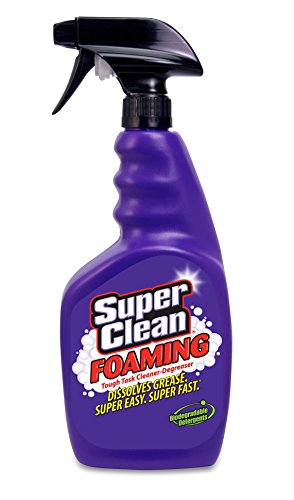
Super Clean's Foaming Multi-Surface Degreaser is a full-concentrate product packaged in a 32-ounce spray bottle. The concentrate design is its defining commercial advantage. A single bottle, when diluted appropriately for lighter cleaning tasks, can yield several times its volume in usable product. Buyers who clean engine bays, garage floors, kitchen surfaces, and outdoor equipment with a single product will find the concentrate format an economical choice.
The formula is biodegradable, which distinguishes it from petroleum-solvent alternatives. The foaming action provides the surface cling necessary for engine bay work. At full concentration, the product handles heavy grease and oil deposits effectively. At diluted ratios, it functions as a capable all-purpose surface cleaner. The 32-ounce bottle provides substantial volume even before factoring in dilution potential. Performance on engine components, wheel wells, and garage tools is reliable.
Super Clean occupies a practical middle ground between dedicated engine degreasers and household cleaners. Buyers seeking one product for multiple cleaning environments will find it genuinely versatile. Those requiring maximum strength for very heavy industrial grease or diesel engine cleaning may find specialized aerosol formulas more effective for that specific application. For typical passenger vehicle engine maintenance and broad household use, the concentrate format and biodegradable chemistry make Super Clean a sound and environmentally responsible choice in 2026.
Pros:
Cons:
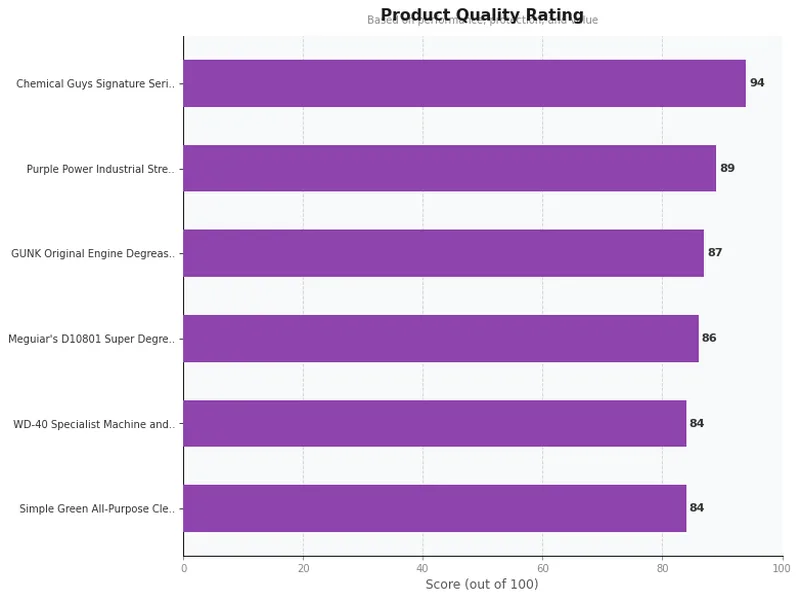
Choosing the right engine degreaser requires evaluating several variables beyond cleaning power alone. Formulation type, surface compatibility, dilution flexibility, and environmental profile all influence which product delivers the best practical results for a given application. The following criteria define the most important purchase considerations in 2026.
Engine degreasers are available in three primary delivery formats. Aerosol cans produce a pressurized foaming spray that clings well to vertical surfaces. They are convenient and ready-to-use, but each can provides a finite volume of product. Pump spray bottles require no pressurization and reduce aerosol waste. Concentrate formats — like Griot's Garage and Super Clean — require the buyer to manage dilution ratios but provide significantly more effective volume per dollar spent.
Aerosol formats suit buyers who clean engines occasionally and prioritize convenience. Concentrate formats suit buyers who clean frequently or maintain multiple vehicles. Pump spray bottles balance both priorities adequately. The choice should reflect cleaning frequency first, then environmental preferences, then price sensitivity.
Not all engine bays carry equal contamination. A well-maintained passenger vehicle cleaned twice per year requires a moderate-strength degreaser. A diesel truck, farm equipment engine, or vehicle that has not been degreased in several years carries heavy soil loads requiring a purpose-built heavy-duty formula. Selecting a product calibrated to the actual soil load avoids wasted product on light applications and unsatisfying results on heavy ones.
Foaming formulas generally outperform liquid sprays on vertical surfaces because foam extends contact time. Products with listed dwell times between 3 and 10 minutes are typical. Buyers dealing with extremely heavy grease accumulation should allow full dwell time and repeat applications rather than expecting a single pass to fully remove years of buildup.
Modern engines contain a mix of aluminum, plastic, rubber, painted metal, and electrical connectors. Not all degreasers are safe across all of these materials. Water-based, pH-balanced formulas carry the widest surface compatibility. Solvent-based formulas may be more aggressive on grease but carry higher risk of degrading rubber seals and plastic components on extended contact. Buyers should always review the manufacturer's surface compatibility guidance before applying any degreaser to unfamiliar materials.
Electrical components require particular care. Directing concentrated spray into exposed fuse boxes, open connectors, or sensor housings is not advisable regardless of formula type. Pre-covering sensitive electronics with plastic bags before degreasing is a standard professional precaution. Water-based formulas are generally more forgiving in these contexts than aerosol solvents.
Environmental regulations governing volatile organic compounds (VOCs) have tightened in several U.S. states in recent years. California, in particular, applies strict VOC limits to automotive cleaning products. Buyers in regulated states should confirm that any product purchased is certified for sale in their jurisdiction. Low-VOC and biodegradable formulas have improved considerably in cleaning performance since earlier generations. The gap between eco-conscious and conventional formulas has narrowed significantly by 2026.
Allow the engine to cool to a warm — not hot — temperature before applying. Cover exposed fuse boxes and electrical connectors with plastic bags. Apply the degreaser evenly, allow the recommended dwell time, agitate stubborn areas with a soft-bristle brush, then rinse with low-pressure water. Avoid directing high-pressure water at sensors, injectors, or air intake openings.
For most passenger vehicles, degreasing the engine bay once or twice per year is sufficient. Vehicles used in dusty, muddy, or high-heat environments — including farm equipment and off-road vehicles — benefit from more frequent cleaning. Engines with active oil leaks or gasket seep should be cleaned more regularly to prevent accelerated buildup.
Harsh solvent-based degreasers can degrade rubber seals, hoses, and painted metal if left in prolonged contact. Water-based, pH-balanced formulas carry significantly lower risk. Following manufacturer dwell time recommendations and rinsing promptly after cleaning minimizes damage risk across all surface types. Testing on a small inconspicuous area is always advisable when using a new product for the first time.
Solvent-based degreasers use petroleum-derived compounds to dissolve grease through chemical dissolution. They tend to be more aggressive on very heavy deposits. Water-based degreasers use surfactants and emulsifiers to lift grease and suspend it in water for rinsing. Water-based formulas are generally safer for plastics, rubber, and painted surfaces. Most modern automotive degreasers — including all products reviewed here — use water-based chemistry.
Yes, rinsing is required for all degreasers listed in this guide. Residual degreaser left on engine components can attract new dust and grime and may degrade sensitive materials over time. A thorough low-pressure rinse after the recommended dwell time removes loosened deposits and any remaining chemical residue. Allow the engine bay to dry fully — or use compressed air on sensitive areas — before starting the vehicle.
Most water-based engine degreasers are suitable for motorcycle engine cleaning with appropriate precautions. Chain drives, exposed electrical connectors, and non-sealed bearings require careful masking or avoidance. Products specifically tested on automotive engines — including Chemical Guys, Griot's Garage, and WD-40 Specialist — confirm motorcycle engine compatibility in their product literature. Always consult the specific product's compatibility guidance for the motorcycle make and model in question.
The best engine degreaser is not the most powerful one — it is the one matched precisely to the soil load, surface materials, and cleaning frequency of the engine at hand.
 |
 |
 |
 |

About Marcus Chen
Marcus Chen has over twelve years of hands-on experience modifying cars across a range of platforms — from commuter builds to track-focused setups — with deep expertise in suspension tuning, wheel and tire fitment, and performance upgrades that improve driving dynamics without sacrificing day-to-day reliability. He has worked with both bolt-on and engineered modifications and brings a methodical, results-focused approach to evaluating performance parts. At CarCareTotal, he covers performance upgrades, suspension and handling, and wheel, tire, and drivetrain modifications.
Get some FREE car parts & gear.. Or check out the latest free automotive manuals and build guides here.
Disable your ad blocker to unlock all the hidden deals. Hit the button below 🚗
| | | |
