by Sarah Whitfield
If you need one recommendation right now, grab the Bar's Leaks HDC Radiator Stop Leak Tablet — it's compact, fast-acting, and trusted by mechanics for decades. A leaking radiator isn't just an inconvenience; it's a countdown to serious engine damage. Overheating destroys head gaskets, warps cylinder heads, and can turn a $30 fix into a $3,000 repair if you ignore it long enough.
Radiator stop leaks have come a long way since the days of crushed black pepper and egg whites. Today's formulas — liquid sealants, powder tablets, and heavy-duty block sealers — use advanced polymers and corrosion inhibitors to close cracks permanently without clogging your cooling system. Knowing which product fits your situation is the difference between a quick roadside fix and a repair that lasts years. Whether you're dealing with a pinhole leak in an aging radiator, a weeping head gasket, or a slow drip from a heater core, the right stop leak product can save your engine and your wallet.
In this guide, we've reviewed the seven best radiator stop leaks available in 2026, covering everything from budget-friendly tablets to heavy-duty block sealers. We've evaluated each one on formula type, compatibility, ease of use, and real-world sealing performance. If you're also dealing with other maintenance issues, check out our guides on the best AC recharge kits and best spark plug wire sets — keeping your whole cooling and ignition system in shape goes hand in hand. You can also browse our full troubleshooting section for more repair guidance.
Contents
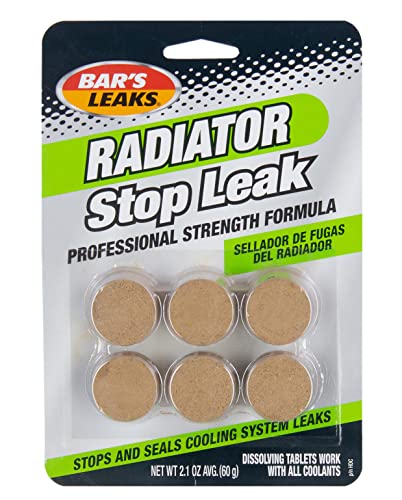






Bar's Leaks has been the go-to name in cooling system repair for over 70 years, and the HDC tablet proves exactly why. At just 60 grams, this compact brown tablet dissolves quickly in your coolant and gets to work sealing leaks from the inside. It's engineered specifically for heavy-duty applications — diesel engines, towing rigs, and fleet vehicles — but works just as well in everyday passenger cars that need a reliable fix.
What sets this product apart is its three-in-one approach. It seals active leaks, conditions deteriorating hoses and gaskets to prevent new ones, and actively inhibits rust and corrosion buildup. Drop it into your coolant reservoir, run the engine, and let it circulate. No draining required, no special tools needed. The tablet format also means precise dosing — you're not guessing how much liquid to pour in.
Real-world feedback consistently praises how fast it works. Many users report visible leak reduction within 15–20 minutes of running the engine. It's compatible with all antifreeze types and colors, making it a genuine no-hassle solution for most cooling systems.
Pros:
Cons:
BlueDevil is the product mechanics reach for when they need a permanent fix, not a temporary patch. This 16 oz liquid formula is engineered to bond chemically with the metal, plastic, and rubber components in your cooling system, creating a seal that holds up to the pressure and temperature cycles of everyday driving. It works on plastic radiators, aluminum radiators, and traditional metal cores — whatever your vehicle runs.
The standout feature here is what's NOT in the formula. BlueDevil contains no solids, fibers, or particulates that could lodge in narrow coolant passages or clog your radiator cores. Many stop leak products rely on suspended solids to physically block leaks — that approach works short-term but can cause bigger problems later. BlueDevil's chemical bonding approach avoids that risk entirely, making it safe for even modern vehicles with tight-tolerance cooling systems.
Pour it directly into your coolant system, run the engine for about 50 minutes with the heater on, and let the formula cure. It addresses not just radiator leaks but also engine block leaks — a versatile tool if your cooling system has multiple trouble spots. For vehicles with chronic overheating issues, this is the product to reach for first.
Pros:
Cons:
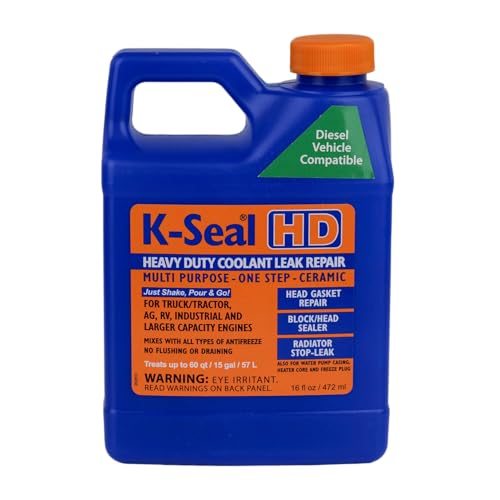
K-Seal earns its reputation with one of the simplest application processes on the market. Shake the bottle, pour it into your coolant system, and drive normally. That's it. No draining, no flushing, no 50-minute idle procedure. If you're on the road and need a fast fix, K-Seal is your best friend — it works in minutes to seal leaks across a surprisingly wide range of components.
The coverage list is impressive. K-Seal addresses leaks in the radiator, head gasket, freeze plugs, engine block, heater matrix, and water pump. That's essentially every major component in a water-cooled engine's cooling circuit. The formula uses micro-particles that circulate freely until they contact a temperature differential at a leak point — then they bond and seal. Because the particles are sized to seal gaps without blocking narrow passages, you don't get the clogging risk that plagues cheaper stop leak products.
K-Seal mixes with all antifreeze types and colors — green, orange, pink, red, yellow — without contaminating or degrading your existing coolant. According to the EPA, maintaining a properly sealed and functioning cooling system is also a factor in overall vehicle emissions performance, making a product like K-Seal a smart choice beyond just preventing overheating. If you're the kind of driver who wants a single product that handles multiple potential failure points, K-Seal is the most versatile option in this lineup.

Pros:
Cons:
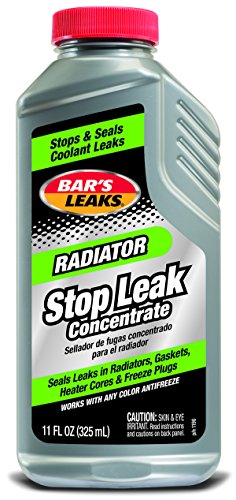
The Bar's Leaks 1196 is the classic liquid formula from the same trusted brand — a no-frills, proven performer that gets the job done on minor coolant leaks without breaking the bank. This grey liquid is specifically designed to stop minor cooling system leaks caused by normal wear and age, targeting radiators, head gaskets, heater cores, and freeze plugs. It's the ideal choice if you're dealing with a slow drip rather than an active gusher.
Dosing is straightforward. Use the full 11 oz bottle for 6- and 8-cylinder vehicles with standard-size cooling systems. Use half the bottle for 4-cylinder engines. This kind of clarity in the instructions matters — you're not guessing how much product to add, which reduces the risk of over-treating your coolant. Over-treating with stop leak products is a real concern, and Bar's Leaks addresses it directly with their recommended quantities.
Universal antifreeze compatibility is another strong point. This formula works with yellow, orange, pink, red, blue, purple, and green silicate-based and non-silicate-based (OAT/HOAT) antifreeze in 50/50 mix or straight water. You don't have to drain your system first — just pour and run. For the price, you're getting a reliable, brand-name solution that's been trusted since the 1940s.
Pros:
Cons:
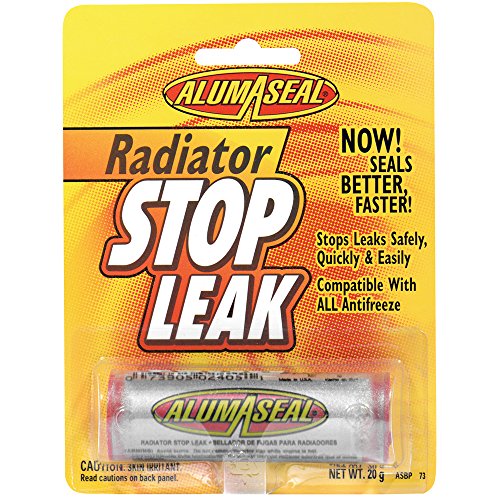
AlumAseal takes a different approach with its powder formula — and it works. This 20-gram powder packet is one of the smallest, lightest stop leak products you can carry in your glove box, making it the ultimate emergency preparedness item for any driver. At a fraction of the size and cost of liquid alternatives, AlumAseal delivers targeted sealing action that's safe for aluminum, plastic, and metal radiator components.
The powder dissolves quickly once added to the coolant system and circulates to locate leak points. It's particularly well-regarded for aluminum radiators — a critical feature in 2026 when the overwhelming majority of vehicles run aluminum or composite cooling systems rather than the copper-brass radiators of decades past. The formula won't damage seals, hoses, or water pump impellers, which is the primary concern most mechanics have with cheaper stop leak products.
Where AlumAseal earns its spot in this list is simplicity and portability. If you're managing a vehicle fleet or simply want a backup for road trips, a few of these blister cards take up almost no space. They're not the solution for a catastrophic head gasket failure, but for small pinholes and slow seeps, they deliver fast, clean results.
Pros:
Cons:
Prestone's AS145 is the only stop leak product in this lineup with a patented formula, and that distinction matters. The combination of natural and synthetic components is engineered to seal leaks up to 0.020 inches by 0.5 inches — a specific, measurable claim that most competitors don't make. That precision tells you exactly what you're getting: a product designed for moderate-sized leaks across radiators, water pumps, and heater cores.
Beyond sealing, Prestone's formula actively boosts the corrosion inhibitors already present in your antifreeze. This is especially valuable in older vehicles where the coolant hasn't been flushed on schedule — the inhibitor boost helps protect aluminum components from pitting and galvanic corrosion, which are leading causes of radiator leaks in the first place. You're not just fixing the current problem; you're helping prevent the next one.
The heater core coverage deserves special mention. Heater cores are notoriously difficult and expensive to replace — the repair often requires pulling the entire dashboard on many vehicles. A product that reliably seals heater core leaks without a shop visit is genuinely valuable. Prestone's formula has a strong track record here, making it the top pick for anyone dealing with that telltale sweet antifreeze smell inside the cabin. If you're doing a broader maintenance overhaul, pair this with our guide to the best oil filter wrenches to keep your whole service routine dialed in.
Pros:
Cons:
Permatex is a brand built on industrial-grade sealing chemistry, and the 30301 brings that engineering DNA to radiator stop leak. This 16 oz liquid formula is specifically formulated to address head gasket seepage alongside the usual radiator and heater core targets — making it one of the more comprehensive options in this category. If you're seeing milky oil or white exhaust smoke (early head gasket symptoms), this is a logical first intervention before committing to a full engine teardown.
The formula protects against coolant loss from multiple failure points: the radiator itself, the heater core, engine block core expansion plugs, and head gasket seepage. Permatex didn't build this as a panic fix — it's a deliberate, engineered solution designed to be both reliable and cost-effective for the DIY mechanic who doesn't want to haul their vehicle to a shop every time they see a drop on the garage floor.
Application is straightforward with no special tools required. Pour it into the cooling system and run the engine as normal — the formula circulates and self-locates at leak points. For 2026 vehicles with complex aluminum engine blocks and tight coolant passages, the non-clogging design is critical. Permatex's chemistry background means this formula has been tested to ensure it doesn't interact negatively with modern OAT or HOAT antifreeze formulations.
Pros:
Cons:
Not all radiator stop leaks are built for the same problem. Buying the wrong product can either fail to seal your leak or — in worse cases — cause additional damage to your cooling system. Here's what to look at before you buy.
The physical format of stop leak products affects both application ease and dosing accuracy.
For everyday drivers who want the simplest experience, liquid formulas with a "pour and go" application — like K-Seal — eliminate the guesswork. If you need something to keep in the trunk for emergencies, an AlumAseal powder packet or Bar's Leaks tablet takes up almost no space.
Matching the product to the leak location is the most important factor in your buying decision. Here's a quick breakdown:
For severe structural failures — large cracks, catastrophic head gasket failures with heavy white smoke — stop leak products are a temporary bridge, not a permanent solution. They buy you time to get to a shop, but you still need professional repair.
This is where many cheap stop leak products cause long-term damage. Products that rely on suspended fibers, pellets, or large particulates to physically block leaks can accumulate in narrow coolant passages — especially in modern vehicles with slim radiator cores and tight water pump clearances.
Avoid any stop leak product that isn't clearly labeled as safe for aluminum radiators and modern cooling systems. Just as you'd be selective when choosing the best mechanic tool sets for quality and longevity, the same precision mindset applies to chemical products for your vehicle.
Modern vehicles run a range of antifreeze chemistries — conventional green (IAT), orange extended-life (OAT), and various HOAT (hybrid OAT) formulations in yellow, pink, red, blue, and purple. Your stop leak product needs to be compatible with what's already in your cooling system.
Yes — for minor to moderate leaks, quality stop leak products from brands like Bar's Leaks, BlueDevil, and K-Seal are genuinely effective. They work by circulating through your cooling system and chemically bonding or physically sealing at leak points. They won't fix a cracked engine block or a catastrophically failed head gasket, but for pinhole leaks, heater core seeps, and minor head gasket weeping, they deliver real results that can last months or years.
Cheap stop leaks with suspended fibers or large particulates can clog coolant passages, restrict flow, and ultimately cause overheating — which is far worse than the original leak. The products reviewed here all use either fully dissolving formulas or micro-particle chemistry that won't block your cooling system. Stick to reputable brands and you won't have this problem.
For minor leaks sealed by a quality product like BlueDevil or K-Seal, the repair can be permanent — meaning it holds for the remaining life of that cooling system component. For more moderate leaks or temporary applications, you can realistically expect 6–12 months of reliable sealing before the leak may return. Results depend heavily on the size and cause of the original leak.
Some products — particularly Bar's Leaks HDC with its corrosion inhibiting formula — are useful as preventative treatments in high-mileage vehicles where cooling system components are beginning to show their age. Adding a tablet to a healthy cooling system helps condition hoses and gaskets and inhibit rust before a leak develops. That said, most stop leak products are designed for active leaks rather than prevention.
Most of the products reviewed here — including K-Seal, Bar's Leaks 1196, and Prestone AS145 — explicitly state that no flushing is required before use. You simply add them to your existing coolant. BlueDevil requires a longer idle procedure but also doesn't need a pre-flush. Always read the specific product instructions, as some formulas perform better in a clean system.
Radiator stop leaks target external coolant leaks from the radiator, hoses, heater core, and water pump. Head gasket sealers are formulated to handle the extreme pressure and temperature differentials at the combustion chamber boundary — a fundamentally different sealing challenge. Products like BlueDevil Radiator & Block Sealer and Permatex 30301 bridge both categories, making them the better choice when you suspect head gasket involvement.
 |
 |
 |
 |

About Sarah Whitfield
Sarah Whitfield spent ten years as an ASE-certified automotive technician before transitioning to full-time automotive writing, giving her a diagnostic skillset that goes well beyond what most reviewers bring to the subject. She specializes in OBD-II code analysis, electrical system troubleshooting, and the intermittent failure modes that frustrate owners and confound general mechanics. At CarCareTotal, she covers car troubleshooting guides, diagnostic tools, and repair resources for drivers dealing with warning lights, strange symptoms, and hard-to-diagnose problems.
Get some FREE car parts & gear.. Or check out the latest free automotive manuals and build guides here.
Disable your ad blocker to unlock all the hidden deals. Hit the button below 🚗
| | | |
