by Joshua Thomas
Wheel spacers are aftermarket devices that mount over the wheel hub to push your wheels outward, creating extra clearance between the wheel and suspension components. Whether you are fitting wider tires, clearing larger brake calipers, or simply want a more aggressive stance, the right set of spacers makes a noticeable difference in both looks and handling.
With the best wheel spacers installed, you can expect improved cornering stability, better tire clearance, and a wider track width that helps your vehicle feel planted on both paved roads and rough terrain. Because wheel spacers interact directly with your vehicle’s hub and braking system, choosing a high-quality hub-centric design from a reputable manufacturer is critical to safety.
To help you find the right set, we reviewed the top models currently available on Amazon in 2026, covering options for popular trucks, Jeeps, and SUVs. Below you will find our picks along with a buying guide that explains what to look for before you order.
Contents
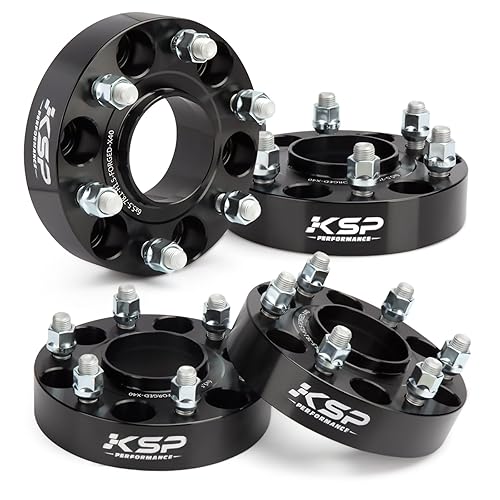







These KSP spacers are an excellent choice for Silverado and Sierra owners who want a proven hub-centric fit with premium forged aluminum construction. They are machined to OEM tolerances and include all the hardware needed for a straightforward installation.
Each spacer is forged from 6061-T6 aluminum and CNC-machined to precise specifications, resulting in superior strength and long-term durability compared to die-cast alternatives. The 78.1mm hub bore and M14x1.5 stud pattern match the factory spec exactly, eliminating any wheel vibration caused by off-center fitment.
The package includes high-strength 10.9-grade bolts that are heat-treated and hardened. The anodized finish resists corrosion over time, making these spacers suitable for year-round use in wet or salty conditions.
One limitation is that some F150 owners report the 6x5.5 bolt pattern does not match their truck (F150 uses 6x135mm), so always confirm your vehicle’s bolt pattern before ordering. KSP backs this product with a solid warranty and responsive customer support.
Pros
Cons

FLYCLE designed these spacers specifically for the latest-generation Toyota trucks and SUVs, including the 2024-2025 Tacoma and third-generation Tundra. They are machined to match the exact hub bore and bolt pattern for a seamless fitment that requires no modification.
Made from forged 6061-T6 aluminum with a black anodized finish, these spacers offer a combination of light weight and high tensile strength. The 95.2mm hub-centric bore ensures perfect concentric alignment with the factory hub, preventing the wheel vibration that plagues lug-centric designs.
The kit includes M14x1.5 studs, lug nuts, and a thread locker, so everything needed for installation is in the box. The bolt-on design means a typical installation takes under an hour with basic hand tools.
Because FLYCLE focuses their fitment list on late-model Toyota applications, owners of older vehicles or non-Toyota trucks should verify compatibility carefully. The spacers perform exceptionally when matched correctly but are not a universal fit.
Pros
Cons
Rough Country is one of the most recognizable names in lift kits and suspension upgrades, and their 2-inch wheel spacers bring the same build philosophy to wheel fitment. They are sold as a pair and are designed specifically for the long-running Chevy and GMC 1500 platform.
Each spacer is machined from aircraft-grade billet aluminum and features pre-installed studs so you can go straight to mounting without any extra assembly. The bold red colorway makes them a popular choice for builds where the spacers are visible behind an open-spoke wheel design.
The 2-inch offset pushes wheels out far enough to clear wider tires and aftermarket fender flares while also improving the truck’s cornering stability. Preinstalled studs are heat-treated for strength and resist loosening under heavy vibration or off-road flex.
These are sold as a pair rather than a set of four, so you will need to purchase two sets to cover all four corners. The price per pair is reasonable given the brand’s reputation, but the total cost for four corners is higher than some other options on this list.
Pros
Cons
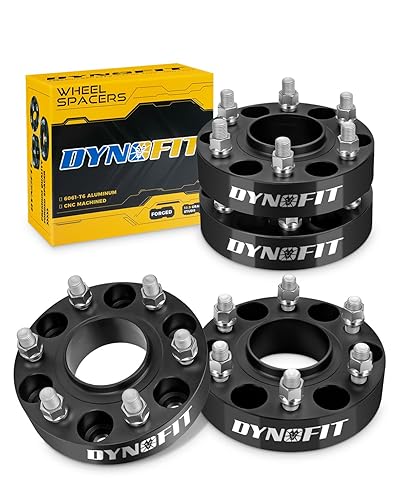
The Dynofit spacers are a well-regarded choice for GM full-size truck and SUV owners who want hub-centric precision without paying a premium price. They use forged rather than die-cast aluminum, which is a meaningful upgrade in structural integrity for a safety-critical component.
The 78.1mm hub-centric bore matches the factory spec for GM 6x5.5 applications, providing a perfectly centered fit. Combined with M14x1.5 pre-installed studs and supplied lug nuts, the setup process is clean and repeatable without sourcing extra hardware.
Dynofit includes thread-locker fluid in the box, which is a thoughtful touch that helps ensure the studs remain torqued correctly over time. The spacers have a clean silver finish that holds up well against road grime and seasonal salt exposure.
Some owners note the center bore fitment is very precise, requiring a rubber mallet to seat initially. This is expected with hub-centric spacers machined to tight tolerances and is not a defect – but first-time installers should be prepared for a snug fit.
Pros
Cons
For GM truck owners who need a full 2-inch offset across all four wheels, this set of four hub-centric spacers provides significant track width gain at a competitive price point. The 50mm thickness creates enough clearance for wider aftermarket wheels and tires to clear the fender without rubbing.
The forged T6 aluminum construction meets the strength requirements for both daily driving and weekend off-roading. Hub-centric alignment ensures the load is transferred through the center bore rather than relying on the lug nuts alone, which is the safer and more stable design.
The package includes four spacers with pre-installed studs and matching lug nuts, making the installation self-contained. The 2-inch spacing improves the stance of GM trucks and SUVs noticeably, giving a more aggressive look with a wider track.
With 2 inches of spacing, some owners may need to verify that the wider track width fits within their factory or aftermarket fender flares. It is also recommended to re-torque the lug nuts after the first 50-100 miles following installation, as with any wheel spacer.
Pros
Cons
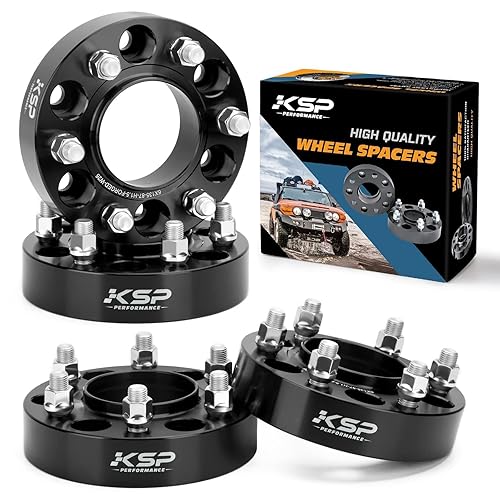
Ford F150 owners with a 6x135mm bolt pattern have a narrower selection of hub-centric spacers compared to GM truck buyers, and the KSP 6x135 set stands out as a precision-matched solution for the 2004-2014 platform. These 38mm spacers are CNC-machined from forged 6061-T6 aluminum and carry a durable black anodized finish.
The 87.1mm hub-centric bore matches the F150’s factory specification precisely, and the M14x1.5 stud pattern aligns with OEM hardware. KSP supplies 10.9-grade hardened bolts that meet or exceed factory torque specifications, providing confidence for both daily driving and towing applications.
The black anodized finish is more than cosmetic – it adds a layer of corrosion protection that extends the service life of the spacers in regions with road salt or high humidity. Each kit includes 24 lug nuts, thread locker, and a detailed installation guide.
These spacers are specific to the 6x135mm bolt pattern, so they are not interchangeable with 5-lug or 6x5.5 applications. Owners should double-check the model year and trim level to confirm the bolt pattern before ordering, as some F150 variants across different years used different patterns.
Pros
Cons
The Orion Motor Tech 5x4.5 spacers address a popular need in the Jeep and classic Ford community: a clean, bolt-on way to widen the track on 5-lug vehicles without expensive wheel changes. They are compatible with Jeep Wrangler TJ and YJ, Grand Cherokee, and select Ford models including the Explorer and Mustang from 1982 to 2018.
Machined from T6 aircraft-grade aluminum, these spacers are lightweight without sacrificing load capacity. Each spacer adds 1 inch of track width per side, for a total axle widening of 2 inches. The 82.5mm center bore and 10 zinc-coated, heat-treated 1/2x20 studs provide a secure, centered fitment on the 5x4.5 bolt circle.
Zinc-coated studs resist rust better than bare steel, which matters for Jeep owners who spend time in mud, water crossings, or snowy conditions. Installation is straightforward for both TJ and YJ owners who frequently swap wheels for trail use.
These are sold as a set of two rather than four, so a complete four-corner installation requires two packages. They are lug-centric rather than hub-centric, which means careful torque sequencing is more important during installation to ensure even seating.
Pros
Cons
Wheel spacers look simple, but picking the wrong ones can cause vibration, handling problems, or even unsafe wheel fitment. Here are the key factors to evaluate before purchasing.
The bolt pattern (e.g., 6x5.5 or 5x4.5) must match your vehicle exactly. Most manufacturers list compatible vehicles in the product description, but it is worth cross-referencing your owner’s manual or the door jamb sticker. Equally important is the hub bore – the center hole of the spacer. Hub-centric spacers have a bore that matches your hub diameter precisely, while lug-centric spacers rely on the lug nuts to center the wheel.
Always prioritize hub-centric spacers. They transfer the vehicle load through the center bore the same way the factory wheel does, reducing bearing stress and eliminating the vibration that often accompanies lug-centric designs.
Hub-centric spacers are machined to match the factory hub flange diameter and provide a centered, vibration-free fit. They are the correct choice for most street and light off-road applications. Lug-centric spacers have a larger, generic center bore and depend on the lug nuts for centering. They are generally found at lower price points and are adequate for light-duty use when installed carefully.
For trucks and SUVs that see regular highway driving or towing, always select hub-centric spacers. The small price premium is worth it for the improved ride quality and reduced bearing wear over time.
Wheel spacer thickness is measured in millimeters or inches. Common sizes range from 5mm (thin shims for brake clearance) all the way to 50mm (2 inches) for aggressive stance builds. For most truck owners fitting wider tires, 1 to 1.5 inches (25–38mm) is the practical sweet spot. It provides meaningful clearance without requiring longer wheel studs or putting excessive stress on the outer wheel bearings.
Before selecting a thickness, measure the gap between your current wheel and the suspension or brake components you need to clear. Also confirm that the total wheel protrusion after adding the spacer remains within the width of your fender or fender flare.
Quality wheel spacers are made from forged 6061-T6 aluminum. Forging aligns the grain structure of the metal, producing a stronger, more fatigue-resistant part than casting or billet cutting from extruded stock. Look for products that specify “forged 6061-T6” rather than just “aluminum alloy” or “die-cast.”
The hardware matters too. Look for pre-installed studs rated at grade 10.9, which is the high-strength metric equivalent to SAE grade 8. Avoid spacers that include studs with no grade marking, as these may be made from lower-strength steel and can fatigue over time under load and vibration.
KSP 6X5.5 Wheel Spacers for Silverado Sierra, 1.5”(38mm) Real Forged Spacers with 78.1mm Hub Bore M14x1.5 Studs fit for... - Walmart Link
FLYCLE 6x5.5 Hubcentric Wheel Spacers for 2024 2025 Tacoma with M14x1.5, 1.5 inch 6x139.7mm Wheel Spacer 95.2mm Center... - Walmart Link
Rough Country 2” Wheel Spacer for 88-21 Chevy/GMC 1500 | Pair - 1101RED - Walmart Link
Dynofit 1.5 inch 6x5.5 Wheel Spacers for Chevy Silverado GMC Sierra 1500 Yukon XL Avalanche, 4pcs 6x139.7 M14x1.5 Studs... - Walmart Link
6x5.5 Wheel Spacers 2 Inch, Set of 4-6 Lug 50mm Wheel Centric Adapter - Fits Chevy Silverado, GMC Sierra, Yukon,... - Walmart Link
KSP 6x135 to 6x135 Wheel Spacers for F150, 1.5in 38mm Hubcentric 6 Lug Wheel Adapters with 87.1mm Hub Bore M14x1.5... - Walmart Link
Orion Motor Tech 5x4.5 Wheel Spacers 1 inch, Set of 2, T6 Aircraft-Grade Aluminum, Zinc-Coated Studs, Compatible with... - Walmart Link
KSP 6X5.5 Wheel Spacers for Silverado Sierra, 1.5”(38mm) Real Forged Spacers with 78.1mm Hub Bore M14x1.5 Studs fit for... - eBay Link
FLYCLE 6x5.5 Hubcentric Wheel Spacers for 2024 2025 Tacoma with M14x1.5, 1.5 inch 6x139.7mm Wheel Spacer 95.2mm Center... - eBay Link
Rough Country 2” Wheel Spacer for 88-21 Chevy/GMC 1500 | Pair - 1101RED - eBay Link
Dynofit 1.5 inch 6x5.5 Wheel Spacers for Chevy Silverado GMC Sierra 1500 Yukon XL Avalanche, 4pcs 6x139.7 M14x1.5 Studs... - eBay Link
6x5.5 Wheel Spacers 2 Inch, Set of 4-6 Lug 50mm Wheel Centric Adapter - Fits Chevy Silverado, GMC Sierra, Yukon,... - eBay Link
KSP 6x135 to 6x135 Wheel Spacers for F150, 1.5in 38mm Hubcentric 6 Lug Wheel Adapters with 87.1mm Hub Bore M14x1.5... - eBay Link
Orion Motor Tech 5x4.5 Wheel Spacers 1 inch, Set of 2, T6 Aircraft-Grade Aluminum, Zinc-Coated Studs, Compatible with... - eBay Link
The best wheel spacers give you better tire clearance, an improved stance, and enhanced cornering stability – all without modifying your suspension or swapping to new wheels. For most GM truck owners, the KSP 6x5.5 Forged Wheel Spacers offer the best combination of hub-centric precision and value. If you drive a newer Toyota Tacoma or Tundra, the FLYCLE 6x5.5 Hubcentric Spacers are purpose-built for your platform.
Ford F150 owners should go straight to the KSP 6x135 Spacers to get the correct bolt pattern fitment. Jeep Wrangler and classic Ford Mustang or Explorer owners will find the Orion Motor Tech 5x4.5 spacers to be a solid and affordable choice. Whichever set you choose, always verify the bolt pattern and hub bore match your vehicle before installation, torque to spec, and re-check after the first drive.
Yes, when properly installed and matched to your vehicle's bolt pattern and hub bore, quality wheel spacers from reputable brands are safe for daily driving and moderate off-road use. Always use hub-centric spacers, torque lug nuts to spec, and re-torque after the first 50-100 miles.
A hub-centric wheel spacer has a precisely machined center bore that matches your vehicle's hub flange diameter. This means the spacer (and by extension, the wheel) is centered on the axle hub rather than hanging from the lug studs alone, which eliminates vibration and reduces stress on the wheel bearings.
For most passenger trucks and SUVs, 1 to 2 inches is the common range. Thin spacers (0.25-0.5 inch) are used to correct minor clearance issues, while 1.5 to 2-inch spacers are used to fit wider tires or achieve a more aggressive stance. Going beyond 2 inches may require extended wheel studs.
Wheel spacers can alter the scrub radius and increase the load on wheel bearings slightly, which in some cases can cause minor steering changes. It is recommended to have your alignment checked after installing spacers, especially if you notice any pull or uneven tire wear.
Your vehicle’s bolt pattern is printed in the owner’s manual and listed on the door jamb sticker. You can also measure it directly: count the number of lugs and measure the distance between opposing lugs (for even-count patterns like 6-lug) or use a lug pattern gauge. Common patterns include 5x4.5, 6x5.5, and 6x135 for trucks and SUVs.
 |
 |
 |
 |

About Joshua Thomas
Joshua Thomas just simply loves cars and willing to work on them whenever there's chance... sometimes for free.
He started CarCareTotal back in 2017 from the advices of total strangers who witnessed his amazing skills in car repairs here and there.
His goal with this creation is to help car owners better learn how to maintain and repair their cars; as such, the site would cover alot of areas: troubleshooting, product recommendations, tips & tricks.
Joshua received Bachelor of Science in Mechanical Engineering at San Diego State University.


Get some FREE car parts & gear.. Or check out the latest free automotive manuals and build guides here.
Disable your ad blocker to unlock all the hidden deals. Hit the button below 🚗
| | | |
