by Joshua Thomas
What's the single best tire you can bolt onto your Jeep Wrangler in 2026 — one that holds its own on rocky trails without punishing you on the highway? That's the question every Wrangler owner asks before dropping serious money on a new set. After testing and researching dozens of options, the BFGoodrich All-Terrain T/A KO2 stands out as the clear top pick for most drivers. But the right tire for your build depends on how you wheel, where you drive, and what you're willing to trade off between tread life and off-road aggression.

The Jeep Wrangler is built for adventure — pavement is just a means to get to the trailhead. That means your tires carry a heavier burden than on almost any other vehicle. They need to grip in mud, claw over rocks, bite through snow, and still deliver a reasonable highway ride at 70 mph. The tire and wheel category is loaded with options, but not all of them are engineered with the Wrangler's specific demands in mind. Sidewall strength, tread compound, void ratio, and load rating all matter more here than on a standard passenger car or crossover.
In this guide, we've broken down the 6 best tires for Jeep Wranglers in 2026 — from the legendary KO2 to the extreme-duty Cooper STT Pro. Whether you're a weekend wheeler who spends 90% of your miles on pavement or a dedicated trail rat who eats rock gardens for breakfast, there's a perfect tire on this list for you. We've also put together a buying guide and answered the most common questions Wrangler owners ask before making this decision. And if you want to go even deeper, check out our full roundup of the best all-terrain tires of 2026 for a wider look at the category.
Contents








The BFGoodrich All-Terrain T/A KO2 has held the top spot in the all-terrain tire segment for years, and in 2026 it still earns that reputation. The KO2 is built on a CoreGard technology sidewall that's 20% stronger than its predecessor, the original KO. That matters enormously on a Wrangler because sidewall punctures are the number one trail failure — and the KO2's thick, rock-resistant sidewall lugs are genuinely different from what the competition offers at this price point. On the highway, you'll notice the tire tracks straight, resists road noise reasonably well, and delivers a stable feel even in crosswinds — a known weakness of aggressive AT tires.
Off-road, the KO2's interlocking tread pattern provides excellent lateral stability in mud, and the self-cleaning grooves throw debris efficiently. The tire carries a Three-Peak Mountain Snowflake rating, which means it's certified for severe winter conditions — not just "all-season" in name only. For Wrangler owners who live in the mountain west or the upper Midwest, that rating is the difference between a tire that's genuinely useful in February and one that just looks the part. Tread life comes in around 50,000 miles for most users, which is competitive for an AT tire used on a vehicle that sees real off-road use.
The KO2 is the benchmark. It's the tire most experienced Wrangler owners recommend first, and it's the one that delivers the best all-around balance of tread life, off-road capability, and on-road manners. If you're building your first set of ATs for a daily-driven Wrangler, start here.
Pros:
Cons:
The Falken Wildpeak AT3WA has quietly become one of the most recommended all-terrain tires in Wrangler communities, and in 2026 it's cemented its reputation as the best bang-for-buck option in the category. Falken engineers the AT3WA with a silica-enhanced tread compound that improves both wet braking and cold-weather grip — two areas where cheaper all-terrain tires fall apart. The aggressive shoulder blocks and dual biting edges give this tire a visual profile that looks the part on a Wrangler, but the real story is how well it actually performs once you leave the asphalt.
On-road behavior is where the AT3WA surprises most buyers. It rides noticeably smoother than tires at its price point, and highway noise levels are tame for an aggressive all-terrain. The heat diffuser technology built into the lower sidewall is a genuine engineering detail — it dissipates heat buildup during high-speed highway running, which extends tread life and reduces blowout risk when you're running a heavy Wrangler at speed. Off-road, the AT3WA grips well in moderate mud, handles rocky terrain with confidence, and clears debris effectively from its open tread pattern.
If you're working with a tighter budget but refuse to compromise on capability, the Wildpeak AT3WA is the tire to buy. It doesn't quite match the KO2's sidewall protection in extreme rocky terrain, but for 90% of Wrangler drivers, the performance gap is smaller than the price gap suggests.
Pros:
Cons:
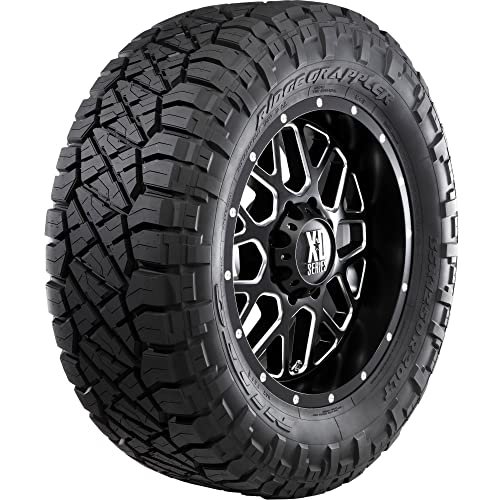
The Nitto Ridge Grappler occupies a unique space in the market — it's not quite an all-terrain and not quite a mud-terrain. It's a hybrid, and that's exactly what a lot of Wrangler owners need in 2026. If you want more off-road aggression than the KO2 delivers but can't live with the on-road noise and wear penalties of a true mud-terrain tire, the Ridge Grappler is your answer. The alternating tread block geometry is specifically engineered to reduce road noise while maintaining the kind of void ratio you need to actually dig in when conditions get serious.
The reinforced block foundation reduces tread flex under load — a critical feature for heavier Wranglers running larger tire sizes. When your tire flexes under cornering or braking, tread blocks squirm, which generates heat, noise, and accelerated wear. Nitto's solution keeps blocks stable so you get a cleaner contact patch. The stone ejectors built into the grooves are another practical feature — they prevent rocks from lodging in the tread and drilling through the casing over time. On rocky trails, the staggered shoulder lugs reach where standard AT tires can't, improving grip on the edges of ledges and between boulders.
The Ridge Grappler also looks aggressive in a way that appeals to Wrangler owners who care about aesthetics. The sidewall styling is bold, and the tire fills a lifted wheel well properly. For drivers who straddle the line between weekend trail use and daily driving, this is the tire that doesn't force you to choose. It pairs especially well with 35-inch setups on JL and JK builds.
Pros:
Cons:
Goodyear built the Wrangler DuraTrac for exactly the driver who needs to wheel in cold, snowy, and icy conditions without switching to dedicated winter tires every November. The name is a direct nod to the Wrangler's identity, and this tire backs it up with a specialized tread compound and design that genuinely excels in winter conditions that would challenge most all-terrain tires. The TractiveGroove technology cuts into the tread blocks to create additional biting edges on compacted snow and ice — this isn't just marketing language, it's a measurable improvement in low-temperature traction.
The DuraTrac carries a Three-Peak Mountain Snowflake designation, but it goes further than just meeting that standard. The self-cleaning shoulder blocks shed snow and mud efficiently, and the overall tread design generates enough lateral bite to keep a heavy Wrangler moving in conditions where other ATs spin out. On dry pavement, the DuraTrac performs respectably — it's not the most nimble tire in dry handling tests, but it's stable, tracks well, and delivers reasonable tread life for a tire that does so much in severe conditions.
Where the DuraTrac slightly trails the KO2 is in pure rock-crawling performance. The tread compound optimized for cold conditions isn't as sticky on sun-warmed granite, and the tread pattern doesn't grip ledges quite as aggressively as the KO2 or Ridge Grappler. But if you live in Colorado, Montana, the Pacific Northwest, or anywhere that sees serious winter weather and you still want to run your Wrangler year-round, the DuraTrac is the tire that keeps you moving when others get stuck.
Pros:
Cons:
Mickey Thompson is a name synonymous with high-performance off-road tires, and the Baja Boss A/T represents the company's answer to drivers who want serious capability wrapped in a tire that's genuinely comfortable to drive every day. The asymmetric tread pattern is the standout engineering detail here — it's specifically optimized to reduce road noise, a problem that plagues most aggressive all-terrain tires. The outer tread focuses on road stability and noise reduction while the inner tread blocks handle off-road grip and water evacuation. The result is a tire that's noticeably quieter at 65 mph than you'd expect given its aggressive appearance.
The S1 compound used in the Baja Boss A/T is engineered for excellent wet handling and braking — two critical metrics for a daily driver in regions with regular rain. Many all-terrain tires sacrifice wet performance for off-road capability, but the S1 compound maintains a strong grip on wet asphalt, which matters every time you drive to work in the rain. The Three-Peak Mountain Snowflake designation on narrower sizes means you also get legitimate winter capability without a dedicated winter tire. Tread life is competitive, and the tire's wear pattern stays even across its life when properly rotated.
Off-road, the Baja Boss A/T performs confidently in most terrain — dirt, gravel, moderate mud, and light rocky trails. It's not as aggressive as the Ridge Grappler in deep mud or tight rock crawling, but for a Wrangler that spends 70% of its time on paved roads with weekend trail runs, it hits the sweet spot. This is the tire for the Wrangler owner who commutes Monday through Friday and hits trails on Saturday.
Pros:
Cons:
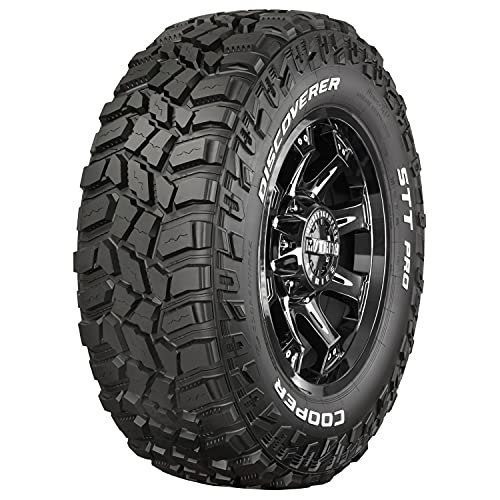
The Cooper Discoverer STT Pro is Cooper's most extreme all-season off-road offering, and it earns that title without qualification. This tire is built for Wrangler owners who take trail conditions seriously — drivers who run Moab's Fins and Things, crawl Rubicon, or navigate Colorado's Black Bear Pass as a weekend habit rather than a bucket list item. The Mud+Snow rated compound bites into loose terrain, compacted mud, and mixed off-road conditions with the kind of aggression that most all-terrain tires can only approximate. The dual compound construction uses a harder inner compound for tread life and a softer outer compound for off-road grip — it's genuinely clever engineering that other brands charge premium prices to match.
The STT Pro's shoulder scoops — Cooper's patented design — grab and throw debris more aggressively than a standard shoulder block. In deep mud, this is the difference between forward momentum and getting stuck. The Armor-Tek3 casing technology wraps three layers of steel-reinforced polyester around the carcass, delivering the kind of sidewall puncture resistance that lets you run lower air pressures on the trail without fear of a flat. That's a meaningful advantage on sharp rock terrain where airing down to 15 psi is standard practice.
On-road, you pay a price. The STT Pro is loud at highway speeds — louder than anything else on this list. Tread wear is accelerated compared to standard all-terrains, especially if most of your miles happen on pavement. This tire makes the most sense for Wrangler owners who specifically build their rigs for trail use and accept the on-road penalties as the cost of serious off-road performance. Pair it with the best mud tires guide if you're considering a dedicated mud setup for even more extreme conditions.
Pros:
Cons:
The Toyo Open Country R/T Trail sits at the aggressive end of the rugged-terrain spectrum — Toyo built it specifically to outperform standard all-terrain tires in rock, gravel, and technical off-road terrain while maintaining more on-road manners than a full mud-terrain. The LT285/75R16 sizing in a 10-ply E-rated load range is engineered for heavy Wranglers that carry gear, tow trailers, and see serious use. The shoulder lugs on the R/T Trail are notably chunky and extend further down the sidewall than most AT competitors, which gives you grip in the places that matter most when you're sidehilling on loose rock.
The R/T Trail's stone ejectors are aggressively placed and effective — this is a tire that handles rock-strewn terrain without accumulating debris that leads to casing damage. The tread compound has enough flex at low temperatures to maintain grip in cold conditions without becoming slippery, and the overall construction handles airing down to trail pressures without the sidewall deformation that plagues cheaper tires. Toyo's reputation for build quality and consistency shows up in the R/T Trail's uniformity — these tires run true with minimal vibration, which reduces the mechanical stress on your Wrangler's front axle and steering components over time.
On the highway, the R/T Trail is usable — it's not the quietest tire on this list, but it's not punishing either. The 10-ply construction transmits more road feel than a lighter-rated tire, which you either interpret as feedback or harshness depending on your preference. For a dedicated trail Wrangler that needs maximum rock-crawling traction and the load rating to carry serious gear, the R/T Trail delivers. It's particularly well-matched to JK and TJ builds running larger lifts and heavier bumper/armor packages.
Pros:
Cons:

Buying tires for a Jeep Wrangler is more complex than buying tires for a standard vehicle. Your Wrangler's use case, lift height, wheel size, and load requirements all influence which tire actually works for your situation. Here's what to consider before you commit.
The first decision is the most important. Off-road tires fall into distinct categories with genuine performance tradeoffs, not just marketing differences. All-terrain tires like the KO2 and Wildpeak AT3WA are designed for drivers who spend most of their time on pavement but want real capability off-road. They balance tread life, noise, and handling alongside off-road grip. Hybrid terrain tires like the Ridge Grappler sit between AT and MT — more void, more aggression, more noise, but still manageable on daily drives. Full mud-terrain tires maximize off-road traction at the cost of tread life, wet braking, and on-road noise. Most Wrangler owners are best served by a quality all-terrain tire unless they specifically wheel in demanding mud or rock conditions weekly.
Don't overlook load rating when sizing tires for your Wrangler. A standard Wrangler with factory equipment and no heavy accessories can run a standard load (SL) or light truck (LT) rated tire without issue. But if you're running heavy aftermarket bumpers, a winch, skid plates, and a roof rack, the added weight demands a higher load rating — C, D, or E ply depending on your setup. Running an undersized load rating on a heavily built Wrangler leads to premature sidewall failure, especially when you air down on the trail. The Toyo R/T Trail's 10-ply E-rating is overkill for a stock JL but ideal for a fully built trail rig.
Every Wrangler platform has clearance limits for tire diameter. A stock JL Wrangler can typically accommodate a 33-inch tire without rubbing. Moving to 35 inches usually requires a 2-inch lift minimum. Running 37s pushes most builds to a 3.5-inch or higher lift with trimmed fender flares. Running a tire that's too large for your lift setup causes rubbing on the body, control arms, and sway bar links — it's not just a cosmetic issue, it causes real mechanical damage. Always verify your specific model year's clearance before ordering a larger size. Our guide to the best all-terrain tires of 2026 covers sizing considerations across multiple platforms if you need a broader reference.
The Three-Peak Mountain Snowflake (3PMS) symbol on a tire means it has passed a standardized test for acceleration traction in packed snow. It's a meaningful certification — not just a marketing claim. If you drive in winter conditions regularly, look for 3PMS-rated tires rather than relying on "all-season" labeling alone. The BFGoodrich KO2, Goodyear DuraTrac, Falken Wildpeak AT3WA, and Mickey Thompson Baja Boss A/T all carry this rating. The Cooper STT Pro and Toyo R/T Trail are focused on off-road capability in mixed conditions rather than certified severe winter performance — keep that in mind if you're in a region with regular snowfall. You might also want to complement your tire setup with quality jumper cables for winter readiness.
A stock Jeep Wrangler JL or JK can fit up to 33-inch tires without any lift or body modifications. Most factory Wranglers come with 31- or 32-inch tires, so upgrading to 33 inches is a direct swap that improves capability without requiring suspension work. If you want to run 35-inch tires, plan on at minimum a 2-inch lift and possibly minor trimming of the factory bump stops. Running larger tires than your lift supports causes rubbing and long-term mechanical wear on steering and suspension components.
Yes — for the majority of Wrangler drivers, a quality all-terrain tire is more than capable for typical off-road use. Trails rated up to moderate difficulty, dirt roads, gravel, compacted mud, sand, and rocky terrain are all well within the capability of tires like the BFGoodrich KO2 or Falken Wildpeak AT3WA. You only need to move to hybrid terrain or mud-terrain tires if you regularly tackle rated trails with deep mud pits, serious rock obstacles, or extreme technical sections as a consistent part of your wheeling.
Rotate your Wrangler's tires every 5,000 to 7,500 miles. Wranglers put uneven stress on tires due to their heavy front axle, boxy aerodynamics, and the torque distribution of their 4WD systems. If your Wrangler has a full-size spare on a matching rim, include it in a 5-tire rotation pattern — this spreads wear across all five tires and significantly extends the life of the full set. Skipping rotations on aggressive all-terrain tires accelerates cupping and feathering, which creates road noise and shortens usable tire life.
Airing down to 15–20 psi for off-road use is standard practice on a Wrangler. Lower pressure increases the tire's contact patch with the terrain, improving traction on rocks, sand, and mud. The appropriate floor depends on your tire size, load rating, and terrain type — heavily loaded rigs on sharp rock terrain should stay closer to 18–20 psi to avoid pinch flats and bead separation. Always air back up to highway pressure (typically 32–36 psi depending on your setup) before returning to pavement. Running low highway pressure on aggressive LT tires generates excessive heat and can cause rapid tread wear or sidewall failure.
Expect 40,000–55,000 miles from a quality all-terrain tire on a Wrangler that sees a mix of on-road and moderate off-road use. Actual mileage varies based on your lift height, vehicle weight, rotation frequency, trail use intensity, and driving style. A heavily built Wrangler with 37-inch tires that sees weekly trail use will wear tires faster than a factory-lift JL used primarily for highway commuting and occasional weekend trails. Proper inflation, regular rotations, and alignment checks are the most effective ways to maximize tread life on any tire.
For a Wrangler, LT (Light Truck) rated tires are almost always the better choice. LT tires are built with stronger construction, higher load ratings, and better sidewall resistance to the stresses of off-road use. P-metric (passenger) tires are engineered for lighter vehicles with lower load requirements — they typically have thinner sidewalls and lower ply ratings that make them more vulnerable to off-road damage. Most of the tires on this list are LT-rated for exactly this reason. If you're running any kind of meaningful trail use or carrying extra weight with aftermarket gear, LT construction is the right call.
The right tire transforms your Wrangler from a capable machine into the right tool for wherever you're headed — whether that's a daily commute, a mountain pass in February, or a technical trail that demands every bit of grip your setup can deliver. Start with the BFGoodrich KO2 if you want the proven all-rounder, or use this guide to match your specific driving style to the tire that earns its place on your rig. Check current pricing on Amazon and get your 2026 build sorted before trail season peaks.
 |
 |
 |
 |

About Joshua Thomas
Joshua Thomas holds a Bachelor of Science in Mechanical Engineering from San Diego State University and has spent years applying that technical foundation to hands-on automotive work — from routine maintenance to full mechanical repairs. He founded CarCareTotal in 2017 to give car owners the kind of clear, practical guidance that helps them understand what is happening under the hood and make smarter decisions about upkeep and repairs. At CarCareTotal, he oversees editorial direction and covers automotive fundamentals, maintenance guides, and troubleshooting resources for everyday drivers.
Get some FREE car parts & gear.. Or check out the latest free automotive manuals and build guides here.
Disable your ad blocker to unlock all the hidden deals. Hit the button below 🚗
| | | |
