Car Care ›
by Diego Ramirez
The 3M Color Stable CS35 is our top pick for window tint film in 2026 — it delivers consistent color, solid heat rejection, and the brand reliability that makes professional installers reach for it first. Window tint is one of those upgrades that pays for itself quickly, cutting cabin temperatures, blocking UV damage to leather and dash surfaces, and adding a layer of privacy that most drivers appreciate the moment it goes on. But the market is flooded with options ranging from budget static-cling films to high-end nano ceramic rolls, and picking the wrong one means bubbling, purple haze, or a ticket for illegal VLT levels.
Our team spent weeks evaluating seven of the most popular window tint films available on Amazon in 2026, covering everything from premium ceramic to entry-level dyed films. We looked at heat rejection specs, optical clarity, ease of installation, and long-term durability. Whether the goal is maximum privacy, heat reduction for a daily driver baking in a parking lot, or a limo-dark build for aesthetics, there is a film on this list that fits. Anyone who has already invested in car care essentials like quality wax or seat protectors knows that UV protection is just as critical for preserving interior surfaces.
Below, we break down each product with honest pros, cons, and a comparison table to make the decision easier. We have also included a buying guide covering the key factors — VLT percentage, film technology, sizing, and legal considerations — so that first-time buyers and experienced installers alike can shop with confidence.

Contents










3M has been the gold standard in automotive films for decades, and the Color Stable CS35 series continues that reputation. This is a dyed film — not ceramic — but 3M's proprietary nano-technology prevents the color shift that plagues cheaper dyed tints over time. The "Color Stable" name is not marketing fluff; this film resists the purple degradation that turns bargain tints into an eyesore within two or three years. At 35% VLT, it sits in a sweet spot that is legal in most U.S. states for side windows while still providing meaningful glare reduction.
The 36-inch by 5-foot roll covers roughly 15 square feet, which is enough for two to three side windows depending on vehicle size. It ships with a free Instawraps Pro-Wrapping Glove, a nice touch that helps during the squeegee step. The adhesive layer is consistent and forgiving during positioning — something DIY installers will appreciate. Heat rejection is moderate compared to ceramic films, but the optical clarity is outstanding. No haze, no distortion, and the neutral charcoal tone looks factory-installed.
Where this film excels is longevity. We have seen plenty of 3M Color Stable installations holding up after five-plus years with zero delamination or color change. For drivers who want a set-it-and-forget-it tint without paying ceramic prices, this is the one to beat. The only real limitation is sizing — 15 square feet will not cover an entire vehicle, so plan on ordering multiple rolls for a full job.
Pros:
Cons:
RockRose has carved out a solid niche in the DIY tint market, and the 35% nano ceramic film is the sweet spot in their lineup. This is a true ceramic film — not metalized, not dyed — which means it blocks 99% of UV rays and 85% of infrared radiation without any signal interference to GPS, cell phones, or toll transponders. The 2-ply construction uses fine PET laminated with a nano ceramic particle layer that delivers the kind of heat rejection typically reserved for films costing twice as much.
Optical clarity is a highlight here. RockRose specifically markets this as "haze free," and in our experience it lives up to that claim. Night driving visibility remains sharp, with none of the milky distortion that cheaper ceramic films sometimes produce. The 40-inch by 10-foot roll provides generous coverage — about 33 square feet — making it enough for most sedans in a single purchase. The charcoal tone is neutral and pairs well with any paint color.
Installation is straightforward for anyone with tinting experience. The adhesive activates cleanly and the film shrinks well around curved rear windows with a heat gun. First-timers may want to watch a few tutorials, but the film itself is not finicky. At this price point, getting genuine nano ceramic technology with 85% IRR is remarkable. Anyone who has done upgrades like car seat protectors to guard interior surfaces from sun damage will find that quality window tint takes that protection to another level entirely.
Pros:
Cons:
This is the darkest film on our list — 1% VLT means virtually zero visible light passes through. The RockRose Premium Carbon is a 2-ply construction built on a carbon particle layer rather than ceramic, which gives it a matte-black finish that looks aggressive and handles heat well. Carbon films sit between dyed and ceramic in terms of heat rejection; RockRose specs this one at 80% TSER and 70% IR rejection, which is respectable for the technology tier.
The 36-inch by 25-foot roll is massive. At 75 square feet of coverage, this is clearly aimed at professionals or enthusiasts doing multiple vehicles. The carbon construction means no signal interference — a common problem with older metalized films — and no fading to purple over time. UV rejection hits 99%, making it effective at protecting interior surfaces even though the primary appeal here is obviously the near-blackout privacy level.
A word of caution: 1% VLT is illegal for road-going vehicles in every U.S. state. This film is strictly for off-road vehicles, show cars, or rear cargo areas where state law permits limo-dark coverage. Night visibility through a 1% tint is essentially zero. That said, for its intended purpose — total privacy and a murdered-out aesthetic — the RockRose Carbon delivers. The massive roll size and carbon durability make it a strong buy for shops that install privacy tint regularly.
Pros:
Cons:
At 70% VLT, the TOYOCO ceramic tint is designed for windshield and front-window applications where most states mandate high light transmission. This is a film that barely changes the appearance of the glass — the tint is subtle — but the performance behind it is substantial. TOYOCO claims 99% UV blocking and 92% IR rejection, which puts it in elite territory for heat rejection. In practical terms, it means the cabin stays noticeably cooler without darkening the view.
The 20-inch by 10-foot roll is sized specifically for windshield strips or smaller side windows. A full windshield on a sedan or mid-size SUV will need careful positioning to maximize coverage. The ceramic particle layer gives the film its scratch resistance, and the 2-ply construction adds a degree of shatter protection in the event of an impact — though this should not be confused with a dedicated safety film.
For anyone living in a high-latitude area with limited sunshine, TOYOCO themselves recommend this film as the ideal match — enough heat rejection for comfort without compromising visibility in overcast conditions. We found it particularly useful on vehicles where the driver already wears prescription glasses and cannot afford any additional glare or VLT reduction. It is also a smart pairing with darker side-window tints, creating a balanced look that keeps the vehicle legal while maximizing total solar protection. Drivers who are also interested in protecting their vehicle's interior should consider pairing this with a high-quality car wax to shield exterior paint from the same UV damage this film blocks inside.
Pros:
Cons:
MotoShield Pro built its reputation on one thing: heat rejection numbers that compete with films twice its price. The 25% VLT nano ceramic tint claims up to 99% infrared rejection and 70% total solar energy rejected (TSER), which are among the highest specs on this list. In real-world testing, vehicles with MotoShield Pro installed consistently measured interior temperatures 20–25°F cooler than untinted glass — a massive difference during summer months in southern states.
The 2-mil thickness keeps the film thin enough for easy handling during installation, and MotoShield includes a detailed instruction manual plus a video walkthrough. This is one of the more DIY-friendly ceramic films available. The adhesive applies cleanly and repositions without leaving residue, which is critical during the learning curve of a first tint job. At 25% VLT, this film provides strong privacy and a dark, sleek appearance — legal for rear windows in most states but potentially over the limit for front side windows depending on jurisdiction.
UV protection hits 99.9%, which is the highest on this list and functionally eliminates the UV radiation that causes dashboard cracking, leather fading, and skin damage during long commutes. The nano ceramic construction means zero metallic interference with electronics — radio, Bluetooth, GPS, and cellular signals all pass through unaffected. For daily drivers in hot climates, MotoShield Pro is arguably the most impactful upgrade per dollar. The 20-inch by 10-foot roll provides about 16.5 square feet, enough for side windows on most sedans.
Pros:
Cons:
Gila is one of the most recognized names in the DIY window tint space, and the Heat Shield Plus lives up to the brand's reputation for accessible, no-fuss films. This is a metalized/dyed hybrid film — the metal particles boost heat rejection beyond what a pure dyed film can achieve, while the dyed layer maintains a neutral, non-reflective appearance. At 80% light blocked (approximately 20% VLT), it delivers a moderately dark finish that works well on rear and rear-side windows.
The 30-inch by 120-inch roll covers 25 square feet, which is generous for the price point. Installation is typical adhesive-activation territory — spray the glass with soapy water, position, squeegee out the solution, and let it cure. Gila's adhesive formula is well-established and cures predictably. Bubbles are easy to work out if caught early, and the film trims cleanly with a sharp blade. The brand has decades of retail presence, so replacement rolls and accessories are easy to source at most auto parts stores.
The trade-off with metalized films is potential signal interference. The metal particle layer can slightly attenuate cell, GPS, and radio signals. In most vehicles this is imperceptible, but drivers with weak signal areas may notice a marginal difference. For the price, the heat and glare reduction is hard to argue with — this film makes a noticeable difference in cabin comfort without a ceramic-tier investment. It is a solid choice for budget-conscious buyers who prioritize heat blocking over absolute signal transparency.
Pros:
Cons:
The Gila Static Cling is a fundamentally different product from every other film on this list — it uses no adhesive at all. Instead, it relies on static electricity to cling to the glass surface, which means it can be removed and reapplied without leaving any residue. This makes it ideal for leased vehicles, seasonal use, or drivers who want to test a dark tint level before committing to a permanent installation. The 5% VLT (limo tint) blocks 95% of visible light for near-total privacy.
The 24-inch by 78-inch roll is the smallest on this list, covering about 13 square feet. That is enough for two side windows on most sedans. Installation could not be simpler — clean the glass, spray with water, position the film, and squeegee. No heat gun required. Removal is just as easy: peel it off. The film can be stored flat and reapplied later, though repeated removals will eventually wear the static-cling surface and reduce adhesion quality.
The catch is durability. Static cling films do not last as long as adhesive-backed tints, and they are more prone to peeling at edges — especially in extreme heat or if the glass is not perfectly clean. This is a temporary or semi-permanent solution, not a long-term installation. But for the right use case — testing tint darkness, seasonal privacy, or keeping a lease vehicle unmodified — nothing else on the market matches the convenience. Combined with other interior protection upgrades like quality floor mats, it is an easy way to keep a vehicle comfortable and private without permanent modification.
Pros:
Cons:
The type of film technology dictates performance ceiling and price. Dyed films like the 3M Color Stable are the most affordable and provide good glare reduction and privacy, but they offer limited heat rejection compared to ceramic. Carbon films (like the RockRose 1% VLT) sit in the middle — they resist fading better than dyed films and deliver moderate heat rejection without signal interference. Ceramic films (RockRose 35%, TOYOCO, MotoShield Pro) represent the current top tier: the nano ceramic particle layer blocks infrared radiation at rates up to 99% while maintaining crystal-clear optical quality and full signal transparency. Metalized films (Gila Heat Shield Plus) use metal particles for decent heat rejection but risk attenuating electronic signals. For most buyers in 2026, nano ceramic offers the best balance of performance and cost.
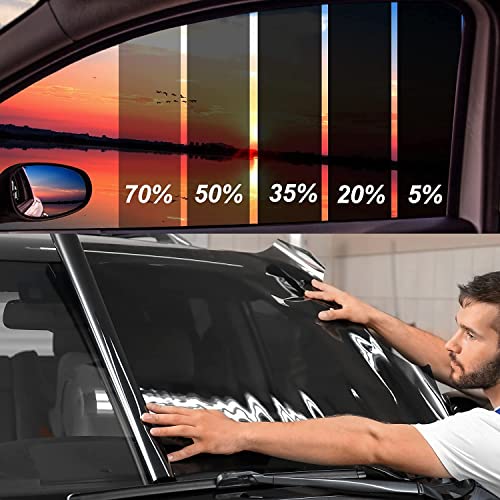
Visible Light Transmission (VLT) is the single most critical spec to check before purchasing. Each state sets its own limits for front side windows, rear side windows, and rear windshields — and the penalties for non-compliant tint range from fix-it tickets to meaningful fines. Most states allow 35% VLT or darker on rear windows but require 50% or higher on front side windows. Windshield tint is typically restricted to a strip along the top few inches unless the VLT is 70% or higher. The National Highway Traffic Safety Administration provides guidance on federal safety standards related to vehicle glazing, but enforcement happens at the state level. Always check local regulations before committing to a VLT level.
Window tint rolls vary dramatically in size — from 13 square feet (Gila Static Cling) to 75 square feet (RockRose Carbon). A typical sedan needs approximately 40–50 square feet of film to cover all side windows and the rear glass. SUVs and trucks may need 60–80 square feet depending on glass area. Wider rolls (36" and 40") reduce the number of seams on larger windows but can be harder to handle for solo installers. Narrower rolls (20" and 24") are easier to manage but may require splicing on larger rear windows. Order at least 10–15% more than the calculated coverage to account for trimming waste and mistakes during installation.
Nearly every professional-grade tint uses a pressure-sensitive adhesive activated by a soapy water solution. This creates a permanent bond that lasts years when installed correctly. The trade-off is that removal requires heat guns, steamers, and adhesive removers — it is a project in itself. Static cling films like the Gila JS242 skip the adhesive entirely, using electrostatic attraction to hold the film in place. This makes them removable and reusable but significantly less durable. For a permanent installation on an owned vehicle, adhesive-backed film is the clear choice. For leased vehicles, temporary seasonal use, or testing different VLT levels before committing, static cling provides flexibility that adhesive cannot match.
It varies by state. Most states allow between 35% and 50% VLT on front side windows, while some states like California require 70% or higher. A few states have no front-window tint restrictions at all. Medical exemptions are available in many states for drivers who require darker tint due to light sensitivity or skin conditions. Always verify the current regulations for the specific state where the vehicle is registered before installation.
No. Ceramic window tint uses non-metallic nano particles to block infrared radiation, so it does not interfere with any electronic signals. This is one of the primary advantages of ceramic over metalized films. GPS, cellular, Bluetooth, satellite radio, and toll transponder signals all pass through ceramic tint unaffected. Metalized films, which use metal particles in their construction, can attenuate these signals — particularly in vehicles with antenna elements embedded in the glass.
High-quality ceramic and carbon films typically last 10–15 years or more with proper care. Dyed films like the 3M Color Stable generally last 5–8 years before showing signs of fading or discoloration. Cheap dyed films may start turning purple within 2–3 years. Static cling films have a much shorter functional lifespan — usually 1–3 years of consistent use before the cling surface degrades. Longevity also depends on climate, sun exposure, and whether the film was installed correctly with a full cure period.
Yes, aftermarket tint film can be applied on top of factory privacy glass. However, the resulting VLT will be darker than either layer alone. Factory privacy glass on rear windows is typically 15–26% VLT. Adding a 35% VLT aftermarket film on top would produce an effective VLT of roughly 9–13%, which may be darker than intended. When layering over factory tint, choose a lighter aftermarket film to maintain the desired final darkness level. The adhesive bonds to the glass surface the same way regardless of factory tint presence.
IR rejection (infrared rejection) measures how much infrared radiation — the primary source of solar heat — the film blocks. TSER (total solar energy rejected) is a broader metric that includes infrared, visible light, and UV radiation combined. A film can have high IR rejection but moderate TSER if it transmits significant visible light (like the TOYOCO 70% VLT). TSER gives a more complete picture of overall heat management. For pure heat reduction, compare TSER values across products. For protecting interiors and skin, IR rejection and UV rejection are more relevant individually.
Professional installation costs $200–$600 depending on the vehicle and film quality, but guarantees a bubble-free, seamless finish — especially on curved rear windows that are notoriously difficult to tint without creasing. DIY installation can save significant money, particularly with films that include installation tools and instructions like the MotoShield Pro. The front side windows are relatively straightforward for beginners. Rear windows with complex curves and defroster lines are where DIY installations most commonly fail. A reasonable compromise is to DIY the side windows and pay a professional for the rear glass only.
Every vehicle and every driver has different priorities — heat rejection, privacy, legal compliance, or budget — so the right window tint film comes down to matching those priorities with the right technology and VLT level. Grab the film that fits the specific use case, check state regulations before installing, and take the time to prep the glass properly for an installation that lasts years instead of months. A quality tint job is one of the most cost-effective upgrades any car owner can make.
 |
 |
 |
 |

About Diego Ramirez
Diego Ramirez has been wrenching on cars since his teenage years and has built a deep practical knowledge of automotive maintenance and paint protection through years of hands-on work. He specializes in fluid service intervals, preventive care routines, exterior protection products, and the consistent habits that extend a vehicle's lifespan well beyond average. At CarCareTotal, he covers car care guides, cleaning and detailing products, and exterior maintenance and protection reviews.
Get some FREE car parts & gear.. Or check out the latest free automotive manuals and build guides here.
Disable your ad blocker to unlock all the hidden deals. Hit the button below 🚗
| | | |
