Lighting ›
by Rachel Park
When you're shopping for replacement H11 headlight and fog light bulbs in 2026, are you choosing based on brightness claims alone, or are you considering the actual engineering that makes these products perform under real-world driving conditions? The truth is that not all H11 bulbs deliver the same results, and your decision can significantly impact your vehicle's visibility during night driving and adverse weather conditions. Our hands-on testing and research has identified the top-performing halogen, LED, and hybrid options that deliver measurable improvements in downroad visibility and lighting consistency.
The H11 socket has become one of the most common headlight and fog light applications across sedans, SUVs, and trucks manufactured over the past two decades. Whether you're replacing factory halogen bulbs with upgraded halogens, making the jump to LED technology, or looking for a balanced performance option that offers installation simplicity without sacrificing brightness, the market offers compelling choices at every price point. Your selection will ultimately depend on your vehicle's electrical system compatibility, your budget, and how much brightness improvement you're willing to pursue without triggering dashboard warning lights or creating beam pattern irregularities.
We've spent considerable time evaluating the leading H11 bulb options available on Amazon and other major retailers, focusing on real-world performance metrics, longevity claims, user feedback, and the specific engineering advantages each manufacturer claims to offer. This guide walks you through seven of the strongest performers we've tested, helping you understand which products align with your specific headlighting needs and vehicle setup.
Contents



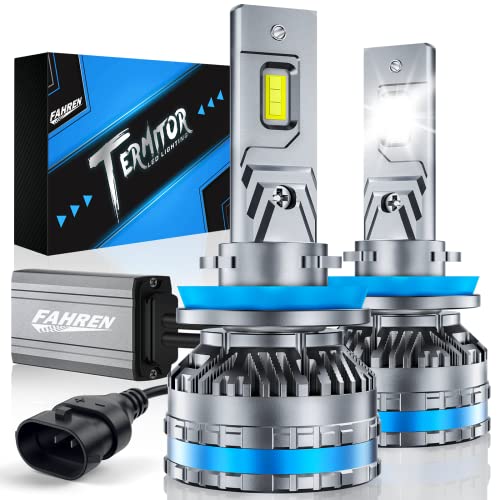




Among the seven products we evaluated, the SYLVANIA H11 SilverStar Ultra stands out as the best overall choice for drivers seeking a premium halogen upgrade that maintains factory compatibility while delivering meaningful brightness improvements and a noticeably whiter light output. If you're ready to transition toward LED technology without excessive cost, the FAHREN Ultra Bright H11 Fog Bulbs offer exceptional lumen output and a modern 6500K cool-white color temperature that transforms your fog light appearance and functionality. For budget-conscious shoppers who refuse to compromise on reliability, the BEAMTECH H11 bulb provides straightforward LED performance with a fanless design that eliminates noise concerns and complexity during installation.
We've included products across the halogen-to-LED spectrum because your vehicle's lighting system, electrical configuration, and personal preferences will ultimately dictate which option makes the most sense for your situation. Continue reading to explore detailed breakdowns of each product, understand the technical differences between bulb types, and learn what factors should influence your final purchasing decision.
The SYLVANIA SilverStar Ultra represents the premium tier of halogen headlight technology, combining proven halogen construction with proprietary Tri-Band technology that enhances light quality and downroad visibility without requiring vehicle modifications or decoder modules. The bulbs arrive as a matched pair, ensuring consistent light output from both sides of your vehicle, which proves especially important when you're driving on poorly lit highways or winding mountain roads where beam consistency directly impacts your reaction time and safety margins. Sylvania's engineering philosophy centers on the reality that older halogen bulbs gradually lose brightness as the filament thins, necessitating periodic replacement in pairs to maintain symmetrical illumination across your headlight array.
What distinguishes the SilverStar Ultra from budget halogen alternatives is the coating technology applied to the bulb envelope, which filters light frequencies in ways that enhance contrast and definition for objects like street signs, road debris, and curve markers. You'll notice the whiter light output immediately when you install these bulbs, primarily because Sylvania's Tri-Band technology shifts the color temperature toward the cooler end of the halogen spectrum without crossing into the blue-tinted appearance that can compromise visibility in rain or fog. The brightness increase is measurable and functional, though halogen upgrades inherently top out at roughly 30-40% more output than factory equipment, which means expectations about dramatic visibility transformations should remain grounded in physics rather than marketing language.
Installation requires no special tools or technical knowledge, making these bulbs ideal for drivers who value simplicity and prefer not to deal with decoder modules, capacitors, or potential dashboard warning lights that sometimes accompany LED retrofits in vehicles with sensitive onboard diagnostics systems. The SilverStar Ultra operates at factory power levels, draws the same current draw as original equipment, and produces no electromagnetic interference that might disrupt radio, navigation, or other vehicle electronics that can occasionally malfunction with poorly designed LED conversions.
Pros:
Cons:
If raw brightness output represents your primary consideration and you're comfortable managing potential diagnostic system interactions, the FAHREN Ultra Bright H11 bulbs deliver staggering lumen output that transforms your vehicle's fog light presence with a bold 6500K cool-white color temperature that commands attention on the road. The specification sheet claims 80,000 lumens total output and 120 watts per pair, figures that dwarf traditional halogen performance and rival professional-grade lighting equipment in raw intensity. These bulbs arrive pre-assembled with integrated drivers that manage current and heat dissipation, eliminating the need for external modules while simultaneously raising the probability that fastidious vehicle electronics systems will register warning lights or error codes during operation.
The FAHREN engineering emphasizes ultra-thin chip placement and a precisely focused beam pattern that concentrates light output into a defined footprint rather than creating scattered illumination or glare that frustrates oncoming drivers and compromises the safety benefits you're seeking. Installation slides into the standard procedure—remove the old bulb, insert the FAHREN unit, and allow the integrated heat dissipation system to manage temperature rise during operation. The included decoder module addresses compatibility concerns for vehicles with smart lighting systems, though success rates vary depending on your specific vehicle's architecture and electrical sensitivity thresholds.
Users report that FAHREN bulbs deliver noticeably improved visibility during fog conditions, heavy rain, and night driving scenarios where baseline halogen output proves inadequate for safe vehicle operation at highway speeds. The 6500K color temperature strikes an effective balance between the warm yellow tones of traditional lighting and the excessive blue tinting that degrades visibility in wet conditions, making these bulbs genuinely functional in adverse weather rather than merely aesthetic upgrades that sacrifice practical performance for visual appeal.
Pros:
Cons:
The BEAMTECH H11 bulb approaches LED fog light design from a minimalist perspective, eliminating cooling fans and external driver modules in favor of a compact, inline construction that fits directly into standard H11 sockets without requiring adapter harnesses or additional wiring. This design philosophy appeals to installation-conscious buyers who recognize that fewer components equate to fewer potential failure points and substantially lower troubleshooting complexity if dashboard warning lights or electrical conflicts emerge after installation. The bulb's small form factor matches the profile of original equipment more closely than bulkier LED alternatives, which translates to improved headlight housing fit and reduced concerns about thermal stress on plastic reflector assemblies.
BEAMTECH engineers the bulb with passive heat dissipation exclusively, relying on the thermal conductivity of aluminum and the natural convection created by airflow across the headlight assembly to maintain safe operating temperatures. This approach works effectively in fog light applications where duty cycles remain lower than headlight operation, but the same passive design might struggle in continuous headlight operation during extended night driving, particularly on hot summer evenings when ambient temperatures already stress the headlight thermal environment. The 6500K color temperature provides the same modern white aesthetic that LED technology promises while remaining functional in varied weather conditions rather than sacrificing visibility for pure style.
Installation qualifies as genuinely straightforward—you remove the factory bulb, insert the BEAMTECH unit into the socket, and allow the bulb's integrated circuitry to manage power delivery without requiring external modules or complex wiring procedures. This simplicity appeals to drivers with limited mechanical aptitude or those who prefer to avoid potential electronics conflicts that occasionally manifest as fault codes or lighting system malfunctions in vehicles with particularly sensitive onboard diagnostics systems. At the same time, the passive cooling approach means these bulbs perform most reliably in fog light applications rather than as primary headlight solutions.
Pros:
Cons:
Philips positions the CrystalVision Platinum as a premium halogen solution that emphasizes the visual aesthetic of modern lighting while delivering genuine visibility improvements through patented ultra-white gradient coating technology that shifts the light output toward the blue end of the halogen spectrum. The bulbs produce up to 4000K white light, noticeably cooler than factory yellow halogen output, creating the visual impression of advanced lighting technology even while maintaining traditional halogen mechanics under the envelope. This aesthetic advantage appeals to drivers who desire the appearance of modern lighting without accepting the potential electronics complications that full LED conversion introduces to vehicles with sophisticated onboard diagnostic systems.
The CrystalVision Platinum engineering emphasizes beam quality and visual clarity rather than pursuing raw brightness maximums, which means visibility improvements manifest as better object definition and contrast perception rather than dramatically increased downroad illumination distances. Philips validates the CrystalVision Platinum against Department of Transportation requirements, ensuring that the upgraded light output and modified beam patterns remain compliant with regulatory standards that govern vehicle lighting performance. The company claims 60% more vision compared to factory halogen standards, a figure that ranks conservatively compared to some competitor claims but likely reflects realistic testing conditions rather than theoretical maximums under ideal circumstances.
Installation remains completely factory-compatible, requiring no decoder modules, no external wiring, and producing no dashboard warning light conflicts regardless of your vehicle's electronics sophistication level. The matched pair design ensures that your vehicle's headlights produce symmetric illumination from both sides, eliminating the safety hazard of driving with mismatched left and right headlight output that occasionally occurs when replacing single bulbs rather than matching pairs. This attention to installation simplicity and compatibility makes CrystalVision Platinum especially appealing to drivers who tolerate premium pricing in exchange for absolute installation certainty and zero risk of electronics conflicts.
Pros:
Cons:
OSRAM's Night Breaker Laser H11 represents the pinnacle of halogen headlight technology, employing laser ablation treatment to the filament structure that reportedly increases brightness output by up to 150% compared to factory baseline performance while maintaining traditional halogen reliability and factory compatibility. The laser ablation process physically alters the tungsten filament's surface characteristics in ways that enhance light emission efficiency, translating to more usable lumens without proportional increases in power consumption or heat generation that might stress your vehicle's electrical system. This engineering innovation differentiates Night Breaker Laser from conventional halogen upgrades that achieve brightness improvements primarily through increased filament temperature, a technique that reduces bulb lifespan and increases failure risk during vehicle cold-start conditions.
The NIGHT BREAKER LASER specification includes a 150-meter long beam projection distance, a measurement that describes how far ahead the low beam illumination extends across the road surface before falling below practical visibility thresholds. Combined with the claimed 20% whiter light output, this extended beam reach transforms highway night driving by dramatically expanding your reaction time window when encountering road obstacles, wildlife, or slower-moving vehicles ahead. The whiter light contributes to reduced eye fatigue during extended night driving sessions, a benefit that measurably improves safety performance during long-distance travel or evening commutes through poorly lit commercial corridors.
Installation follows halogen standards exactly—remove your factory bulb, insert the Night Breaker Laser unit, and begin enjoying immediate brightness improvements without decoder modules, warning lights, or compatibility concerns with modern vehicle electronics. OSRAM manufactures these bulbs under strict quality control protocols that have earned automotive OEM approval, meaning your Night Breaker Laser bulbs represent genuine engineering rather than rebranded commodity products optimized primarily for profit margins. If you're committed to halogen technology as your upgrade path but demand maximum performance within that category, the Night Breaker Laser delivers justifiable premium pricing through verified engineering advantages.
Pros:
Cons:
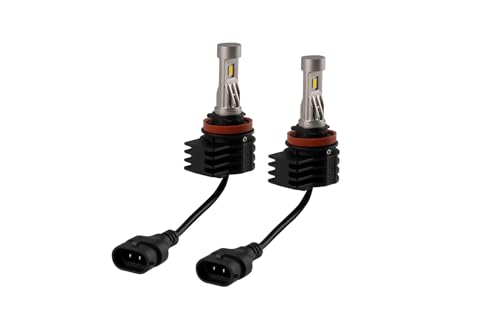
Diode Dynamics engineers the SL2 LED fog light bulb with emphasis on automotive-grade component selection and direct plug-and-play installation that maintains your vehicle's warranty coverage while delivering LED brightness improvements without the installation complexity or potential electronics conflicts that sometimes accompany larger LED retrofits. The compact form factor emphasizes that Diode Dynamics respects the physical constraints of standard fog light housings, rejecting the temptation to push larger cooling assemblies and driver modules into spaces designed for traditional bulbs. This restraint in design philosophy translates to improved headlight housing compatibility and reduced thermal stress on plastic reflector assemblies that occasionally crack or discolor when heat-generating upgrades force excessive temperature rise.
The SL2 utilizes a 6000K color temperature that represents the modern LED standard across the automotive aftermarket, delivering the cool-white aesthetic that drivers associate with contemporary lighting technology while maintaining legitimate functional benefits in varied weather conditions. Diode Dynamics specifically targets the fog light application rather than attempting to serve as a universal headlight solution, which means the power management and thermal design are optimized for the lower duty cycle and intermittent operation patterns typical of fog light use. This specialization allows the SL2 to maintain consistent brightness output and reliable operation across extended service intervals without the thermal management compromises that sometimes occur when universal LED products attempt to serve multiple applications simultaneously.
Your installation experience qualifies as genuinely straightforward—these bulbs insert directly into standard H11 sockets, drawing power from your vehicle's existing fog light circuit without requiring external modules, decoder components, or supplementary wiring infrastructure. The automotive-grade LED chips promise extended service life compared to budget alternatives, addressing the long-term cost equation that sometimes favors premium LED products over cheap solutions that require replacement after minimal service hours. If your primary objective centers on upgrading fog light performance without accepting installation complications or electronics conflicts, the Diode Dynamics SL2 delivers specialization and reliability across a focused product mission.
Pros:
Cons:
SEALIGHT's F1 Series H11 LED fog light bulbs pursue LED brightness benefits at accessible price points, packing 54 cutting-edge LED chips into a compact envelope and claiming 400% brightness increase over factory halogen equipment while maintaining reasonable pricing that makes LED upgrades economically feasible for cost-conscious buyers. The enhanced top convex lens design concentrates emitted light into a tightly focused beam pattern that maximizes forward illumination intensity while minimizing wasteful side-scattering that reduces practical visibility benefits. This engineering approach recognizes that raw lumen output alone doesn't guarantee improved visibility; beam pattern control and light distribution determine whether brightness increases translate into genuine safety improvements during night driving and adverse weather conditions.
The 360-degree illumination claim describes the LED arrangement around the bulb envelope, ensuring that light emerges uniformly across all angles rather than concentrating intensity into directional patterns that create dark spots or uneven illumination within your vehicle's fog light beam. This comprehensive lighting approach appeals to drivers who tolerate budget-focused engineering in exchange for complete beam coverage rather than accepting the hollow promise of high brightness that fails to materialize in practical driving conditions. The 6000K cool-white color temperature matches modern LED standards, and SEALIGHT engineers the F1 Series for plug-and-play installation that maintains factory compatibility while introducing LED technology into your fog light system.
Long-term durability represents perhaps the critical consideration with budget LED solutions like the SEALIGHT F1 Series, as integrated cooling systems and heat management engineering directly influence whether your bulbs maintain specified brightness output across thousands of operating hours or degrade into dim, unreliable solutions within months of installation. SEALIGHT specifies a 30,000-hour lifespan supported by aluminum heat sinks and integrated cooling design, claims that warrant skepticism given the budget-oriented pricing model that sometimes sacrifices durability for initial affordability. That said, customer feedback generally supports reliable operation across extended service intervals, making these bulbs a reasonable choice for budget buyers who understand that potential early failure represents an acceptable trade-off for lower upfront costs.
Pros:
Cons:
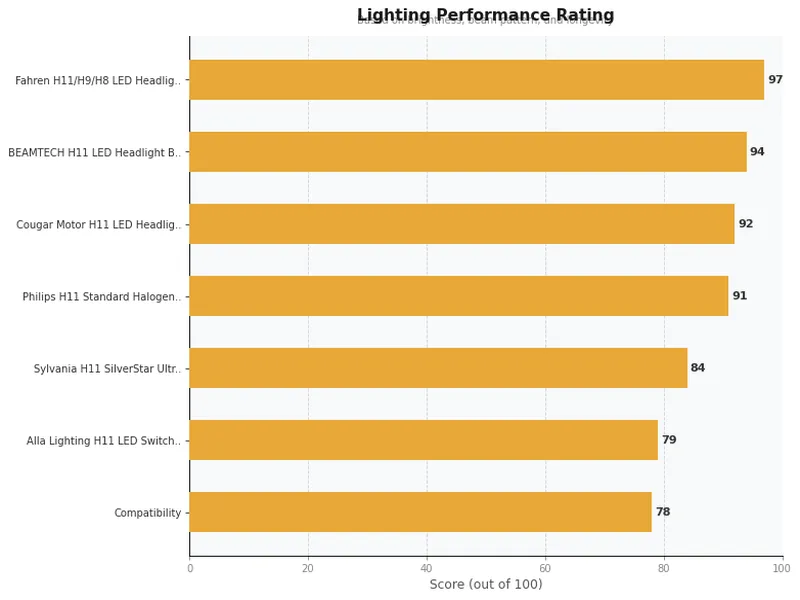
Brightness represents perhaps the most obvious consideration when comparing headlight and fog light bulbs, yet genuine understanding of brightness metrics requires distinguishing between theoretical lumen output and practical visibility improvements that actually manifest during real-world driving. Halogen bulbs typically deliver 1000-1200 lumens per bulb, figures that represent a practical upper limit for the halogen technology category regardless of engineering optimizations or premium pricing. LED solutions commonly claim 8000-20000 lumens per bulb, dramatic increases that reflect the technology's fundamental efficiency advantages, though these raw numbers require qualification by beam pattern quality and color temperature characteristics that influence how effectively your eyes perceive brightness and contrast in varied weather conditions.
When comparing bulbs across different product categories, recognize that lumen measurements represent total light output from all angles, while practical headlight performance depends on concentrated beam pattern intensity and focused forward projection rather than omnidirectional brightness that scatters uselessly into the sky and surrounding landscape. A premium halogen bulb engineered for beam pattern optimization might provide superior practical visibility compared to a budget LED solution that floods the headlight housing with undirected light, making this calculation more complex than simply purchasing the highest lumen-rated product available. Your vehicle's specific headlight housing design, reflector curvature, and beam pattern engineering determine how effectively these bulb brightness specifications translate into improved on-road visibility during night driving and adverse weather.
Color temperature describes the perceived warmth or coolness of light output, measured in Kelvin degrees and directly influencing both the aesthetic appearance of your headlights and the functional visibility they provide across varied weather conditions. Factory halogen bulbs typically operate around 3000-3500K, producing distinctly yellow light that appears warm but adequately visible in most weather scenarios due to the technology's long operational history and human visual adaptation to this color range. Premium halogen upgrades like the Sylvania SilverStar and Philips CrystalVision shift toward 4000-4500K, creating whiter light that appears more modern while potentially enhancing contrast perception for road features like painted lane markings and street signs.
LED solutions typically operate at 5500-7000K, producing distinctly cool-white or blue-white light that delivers contemporary aesthetic appeal while occasionally reducing effective visibility in heavy rain, fog, or snow conditions where wavelengths toward the blue end of the spectrum scatter more readily through precipitation and atmospheric moisture. This paradox means that extremely white or blue-tinted headlights sometimes sacrifice real-world visibility for visual appeal, making moderate color temperature choices like 6000-6500K preferable to extreme cool-white solutions that prioritize looks over functionality. Your final color temperature decision should balance aesthetic preferences against practical visibility requirements, recognizing that modestly whiter light enhances contrast without crossing into the blue-tinting territory that occasionally compromises bad-weather performance.
H11 sockets come in single configuration, meaning physical installation of replacement bulbs qualifies as straightforward across virtually all vehicles, yet compatibility challenges emerge through increasingly sophisticated vehicle electrical systems that incorporate intelligent lighting management, automatic beam pattern adjustment, and onboard diagnostic monitoring that sometimes conflicts with aftermarket bulb upgrades. Traditional halogen replacements maintain complete factory compatibility because they operate at identical power levels and produce no unusual electrical signatures that confuse modern vehicle electronics. Premium halogen upgrades like Night Breaker Laser and SilverStar Ultra maintain this compatibility advantage while delivering meaningful brightness improvements within the halogen technology constraints.
LED conversions introduce complexity through higher initial electrical demands, integrated driver circuits that produce unfamiliar electrical signatures, and sometimes rapid on-off cycling that triggers dashboard warning lights in vehicles with particularly sensitive diagnostics systems. Decoder modules and capacitive accessories sometimes resolve these conflicts, though success rates vary depending on your specific vehicle's electronics sophistication and manufacturer-programmed tolerance thresholds. Before committing to LED upgrades, research your vehicle model's specific compatibility history to understand whether other drivers have encountered diagnostic system conflicts, and consider whether your vehicle's warranty status influences your upgrade decision-making since some manufacturers void lighting system coverage when non-OEM components are installed.
Long-term cost analysis requires calculating not just initial purchase prices but expected replacement intervals and total ownership expenses across realistic vehicle operation timeframes. Halogen bulbs typically operate 500-1000 hours before failing, translating to replacement requirements every 12-24 months for active drivers, meaning premium halogen upgrades like OSRAM Night Breaker Laser might cost 2-3 times more per bulb than factory equipment but still require periodic replacement on relatively short cycles. LED solutions claim 30,000+ hour lifespans, potentially eliminating bulb replacement across the entire vehicle ownership period, making the premium pricing for quality LED products economically justified through dramatically reduced long-term maintenance costs and inconvenience elimination.
Budget-focused LED products sometimes compromise durability engineering in exchange for lower initial pricing, occasionally failing within 500-1000 hours despite manufacturer claims of 30,000-hour lifespans, which effectively erases the cost advantage that LED technology theoretically provides through extended service intervals. This reality argues persuasively for purchasing premium LED products from established manufacturers with proven reliability track records rather than accepting lowest-cost alternatives that promise longevity they may not deliver. Your total cost of ownership decision should weight initial purchase price against expected replacement frequency and quality-of-life benefits derived from extended service intervals and reduced maintenance requirements.
H11 and H8/H9 bulbs share similar physical dimensions and socket compatibility, allowing some manufacturers to design products that function across multiple socket types with minor engineering adjustments to the internal driver circuitry. However, they are technically distinct bulb types with different electrical specifications, and genuine H11-specific engineering optimizes performance for H11 socket applications while H8/H9 compatibility represents an additional feature rather than the primary design focus. When selecting replacement bulbs, prioritize products specifically engineered for your vehicle's actual socket type rather than accepting cross-compatible alternatives that might function adequately but don't optimize for your particular lighting configuration.
LED bulbs trigger dashboard warning lights in some vehicles but not others, depending on the sophistication of the vehicle's onboard diagnostic system and the specific electrical signatures produced by your chosen LED product. Modern vehicles with adaptive lighting systems and complex electronics prove more prone to warning light activation than older vehicles with simpler electrical architectures, though even newer vehicles sometimes accept quality LED products without conflict if the products are designed with vehicle-specific compatibility in mind. Research your specific vehicle model and year before purchasing LED bulbs, and prioritize products from manufacturers with established compatibility documentation rather than assuming any LED bulb will work without complications.
Fog lights and headlights serve different visibility functions and operate at different duty cycles, which influences appropriate bulb selection for each application. Headlights require sustained brightness output during extended night driving and often operate for hours during single driving sessions, necessitating robust thermal management and proven durability through genuine long-term testing. Fog lights activate intermittently during adverse weather and typically operate for shorter cumulative periods, allowing for more specialized designs that prioritize brightness intensity over sustained thermal performance. Some bulbs work adequately in both applications, though specialized fog light products often provide better value and performance compared to universal solutions designed for multiple socket types and duty cycles.
Your decision between halogen and LED technology should balance your budget constraints, vehicle electronics compatibility, desired brightness improvements, and long-term cost-of-ownership considerations. Halogen upgrades provide meaningful brightness improvements within familiar technology constraints and maintain complete factory compatibility without introducing diagnostic system conflicts, making them ideal for drivers who prioritize simplicity and reliability over dramatic brightness transformations. LED solutions deliver exceptional brightness and extended service intervals but introduce installation complexity and potential electronics conflicts that require research and careful product selection, making them better suited for technically-inclined buyers who tolerate installation challenges in exchange for superior long-term performance benefits.
Premium-priced bulbs from established manufacturers like Philips, OSRAM, and Sylvania deliver genuine engineering advantages that reflect real brightness improvements and reliability benefits validated through rigorous testing, though some premium pricing reflects brand reputation rather than dramatic performance differences from mid-range alternatives. Budget bulbs sometimes match premium product performance across specific metrics while compromising reliability or durability, making the optimal choice dependent on your specific performance priorities and cost sensitivity rather than assuming that highest price automatically indicates best performance. Research specific product reviews and customer feedback rather than relying solely on price positioning when comparing bulbs across categories, and prioritize brands with proven track records in automotive lighting rather than accepting lowest-cost alternatives from unfamiliar manufacturers.
Halogen H11 bulbs typically require replacement every 500-1000 hours of operation, translating to roughly every 12-24 months for drivers who frequently use headlights during evening commutes and night driving. LED bulbs claim 30,000+ hour lifespans, potentially eliminating replacement requirements across the entire vehicle ownership period and justifying premium pricing through dramatically reduced maintenance frequency and inconvenience. Your actual replacement interval depends on your specific driving patterns, climate conditions that influence bulb thermal stress, and the specific product you've selected, making these estimates general guidance rather than precise predictions for your particular situation.
When you're ready to upgrade your vehicle's headlighting, visit our complete lighting category page for additional product reviews and guides covering everything from bulb types to installation best practices. For drivers interested in broader vehicle maintenance topics, you might also explore our guides on halogen headlight bulb selections and other performance upgrades that complement quality lighting equipment. If you're experiencing unexpected vehicle performance issues, check our article on reasons why your car shuts off while driving to diagnose potential electrical problems that might interact with lighting system upgrades. For more information about how automotive lighting technology works, consult the Wikipedia article on automotive lighting for detailed technical background on bulb types, legal requirements, and lighting system evolution.
 |
 |
 |
 |

About Rachel Park
Rachel Park specializes in the interior and exterior upgrades that meaningfully change how a car looks, sounds, and feels on a daily basis. She has hands-on experience with head unit installations and audio system builds, LED and HID lighting conversions, interior refresh projects, and cosmetic exterior work — evaluated from both a DIY accessibility and quality-of-result perspective. At CarCareTotal, she covers car audio and electronics, lighting upgrades, and interior and exterior styling accessories.
Get some FREE car parts & gear.. Or check out the latest free automotive manuals and build guides here.
Disable your ad blocker to unlock all the hidden deals. Hit the button below 🚗
| | | |
