by Joshua Thomas
Paint sealants provide paint care and protection while removing road grime, debris, and fingerprints. They protect the car's paint job against the elements — UV rays, acid rain, bird droppings, and industrial fallout — while giving it a mirror-like shine that lasts far longer than traditional wax.
A quality paint sealant can last 6–12 months from a single application, which makes it one of the most cost-effective ways to maintain your vehicle's finish. Unlike wax, which simply sits on top of the paint, a sealant bonds to the clearcoat at a molecular level and forms a hard, resilient shell. According to Detailing Wiki, synthetic polymer sealants consistently outperform carnauba wax in durability tests.
This guide reviews the 6 best paint sealants of 2026 — each chosen based on protection performance, ease of application, durability, and value for money. Whether you want the longest-lasting protection, the highest gloss, or the easiest spray-and-wipe application, there is a sealant in this list that fits your needs.
Contents





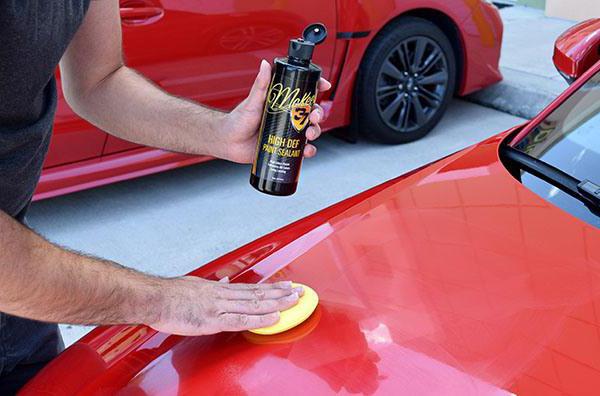
The Meguiar's M2116 Professional Synthetic Sealant 2.0 is the go-to choice for detailers and car enthusiasts who demand the highest level of paint protection. Engineered with advanced synthetic polymer technology, it bonds directly to the paint surface to form a hard, resilient shield against UV rays, road grime, and environmental fallout.
This sealant delivers outstanding gloss enhancement alongside serious hydrophobic properties, causing water to bead and roll off the surface. The synthetic formula provides up to 12 months of durable protection, far outlasting traditional waxes. It can be applied by hand or by machine polisher, making it accessible for beginners and professionals alike.
The formula goes on smoothly and buffs off easily, leaving a mirror-like, glass-clear finish with no greasy residue. The 16 oz bottle offers enough product for up to 3 full applications on an average-sized vehicle, giving excellent value per ounce compared to ceramic sprays.
The main downside is that it requires a clean, contaminant-free surface before application — any embedded fallout or swirl marks will be preserved under the sealant. Meguiar's backs this product with their well-established brand reputation and customer support.
Pros
Cons
The Chemical Guys JetSeal is one of the most popular and trusted paint sealants on the market, offering an anti-corrosion formula originally developed for aircraft and aerospace applications. This heritage gives it an edge in protecting against harsh environmental conditions including acid rain, UV radiation, and industrial fallout.
JetSeal forms a durable synthetic polymer barrier over the paint that lasts up to 12 months with a single application. It is compatible with nearly every type of paint, clearcoat, gel coat, and fiberglass surface, making it ideal for cars, trucks, motorcycles, SUVs, RVs, and boats.
The sealant applies easily by hand or machine and wipes off with minimal effort. It produces a slick, high-gloss finish with strong water-beading behavior that keeps the car cleaner between washes. Chemical Guys includes detailed application instructions and recommends applying 2 layers for maximum protection on daily drivers.
One limitation is that it can leave slight streaking if applied too thickly on hot paint in direct sunlight. Always apply in a shaded area at a moderate temperature for the best results. Chemical Guys offers solid customer service and a satisfaction guarantee.
Pros
Cons
Nu Finish Once a Year Polish and Sealant is a unique 3-in-1 product that simultaneously repairs minor surface imperfections, seals the paint, and repels contaminants in a single application. The updated formula incorporates ceramic SiO2 technology for a modern upgrade over the original Nu Finish product that detailers have trusted for decades.
The ceramic technology creates a hard, durable shell over the paint that resists UV rays, water spots, bird droppings, and road salt. The repair function tackles light oxidation and fine surface scratches, while the sealant layer bonds to the paint for up to 12 months of protection. The result is a bright, rejuvenated finish with noticeably enhanced depth and gloss.
Application is simple and forgiving — the liquid formula spreads easily by hand with an applicator pad, and excess wipes off cleanly once cured. The 3-in-1 approach saves significant time for those who normally use separate polishing, sealing, and protective steps.
Nu Finish is not a substitute for a dedicated machine polish on heavily oxidized or deeply scratched paint. For best results, wash and clay-bar the paint before application. It is best suited for vehicles in good condition that need routine annual protection.
Pros
Cons
The Wolfgang Deep Gloss Paint Sealant 3.0 is a premium polymer sealant that has built a cult following among serious car enthusiasts for its exceptional depth of gloss and crystal-clear finish. It uses an advanced polymer chemistry that bonds to the clearcoat to create a protective barrier with a noticeably wet-looking shine.
The formula delivers 3–6 months of protection against UV rays, bird droppings, acid rain, and environmental contaminants. Its hydrophobic properties encourage aggressive water beading, which helps rinse away road grime and reduces water spotting. The sealant works equally well on all paint colors but truly shines on dark colors where depth and reflectivity are most visible.
Application is straightforward — apply a thin even layer with a foam applicator, allow to cure for 20–30 minutes, then buff off with a microfiber towel. Wolfgang recommends applying 2 layers for maximum durability, with a 30-minute cure time between coats. A little product goes a long way — one 16 oz bottle yields 3–5 full applications on most vehicles.
The main trade-off is durability — while 3–6 months is respectable for a pure polymer sealant, it falls short of some ceramic-enhanced formulas that promise up to 12 months. For show cars or vehicles that are washed and waxed regularly, the longer reapplication cycle may be worth considering.
Pros
Cons
The CERAKOTE Platinum Rapid Ceramic Paint Sealant brings professional-grade ceramic protection into an effortless spray-and-wipe format. CERAKOTE is best known for their firearm and industrial coatings, and that materials science expertise translates directly into one of the most effective ceramic spray sealants available to consumers.
The Platinum formula uses a high-concentration SiO2 ceramic solution that bonds to the clearcoat on contact, creating a rigid protective shell that repels water, UV rays, and chemical contaminants. The hydrophobic effect is exceptionally strong — water sheets off almost instantly rather than forming beads, which is a characteristic of true ceramic chemistry rather than simple wax.
Application requires no special equipment: spray onto a clean, dry panel and wipe off with a microfiber towel. The entire car can be done in under 30 minutes. Unlike traditional polymer sealants, the ceramic bond continues to harden over 24–48 hours after application, reaching its full protective strength during that cure window.
The spray format means coverage per bottle is more limited than liquid sealants applied with a pad. It is also more sensitive to application temperature — avoid using below 50°F or above 90°F for proper bonding. CERAKOTE stands behind the product with a straightforward satisfaction guarantee.
Pros
Cons
The P&S Defender SiO2 Protectant is a professional-grade ceramic spray formulated by renowned detailer Renny Doyle for his Double Black detail product line. It is one of the most versatile products in this list, functioning equally well as a standalone paint sealant or as a maintenance topper to refresh and boost an existing ceramic coating.
The SiO2 chemistry bonds to any smooth surface — paint, glass, wheels, and trim — delivering a high-gloss, slick finish with excellent hydrophobic properties. As a standalone sealant on bare paint, it provides 3–4 months of protection from a single application. When used as a ceramic coating topper, it extends the life of the base coat and dramatically restores its water-beading performance after it begins to degrade.
Application is simple: spray onto a panel, spread with a microfiber applicator, and buff off the excess after 30–60 seconds. The product levels out beautifully and leaves no streaks or high spots when worked correctly. The 16 oz bottle is generous and provides enough product for many applications.
The main limitation as a standalone sealant is that it provides less durability (3–4 months) compared to a dedicated liquid polymer sealant. It performs best as part of a layered detail system where a base sealant or ceramic coating is already in place. P&S backs this product as part of their professional Renny Doyle line.
Pros
Cons
With dozens of paint sealants on the market, it can be difficult to know which one is right for your vehicle and situation. The most important factors to consider are the type of chemistry, how long the protection lasts, how easy the product is to apply, and what surfaces it is compatible with. Here is a breakdown of each factor to guide your decision.
Traditional paint sealants use synthetic polymer chemistry to bond to the clearcoat. Polymer sealants provide excellent gloss and solid durability — typically 3–12 months depending on the formula. They are forgiving to apply and easy to correct if you make a mistake. Wolfgang Deep Gloss and Meguiar's M2116 are classic examples of high-performance polymer sealants.
Ceramic or SiO2-enhanced sealants incorporate silicon dioxide particles that bond even more aggressively to the paint surface. They offer superior hardness, better chemical resistance, and stronger hydrophobic performance. CERAKOTE Platinum and P&S Defender are ceramic spray sealants that deliver near-coating-level protection in a simple spray-and-wipe format. For most daily drivers, a ceramic-enhanced sealant offers the best combination of protection and convenience.
Durability is measured in months of protection before the sealant degrades and needs reapplication. Polymer sealants typically last 3–6 months, while ceramic-enhanced sealants can last 6–12 months or more. Environmental factors matter significantly: vehicles parked outdoors in harsh climates will see shorter sealant life than garage-kept cars.
The water-bead test is the easiest way to check if your sealant is still active — run a hose over the hood and look for tight, fast-rolling beads. When water starts to sheet or flatten instead of bead, it is time to reapply. Some products like Nu Finish are marketed as once-a-year treatments, which simplifies the maintenance schedule for most owners.
Ease of application ranges from spray-and-wipe (the easiest) to machine-polish application (requiring a DA polisher). Spray sealants like CERAKOTE Platinum and P&S Defender are the most accessible — no special tools required, and the entire car can be done in under 30 minutes. Liquid polymer sealants like Meguiar's M2116 and Wolfgang Deep Gloss are applied with a foam applicator by hand or machine and require a 20–30 minute cure time before buffing off.
Whichever product you choose, surface preparation is critical. The paint must be clean, dry, and free of wax, grease, or contamination before applying any sealant. A thorough wash, clay bar treatment, and panel wipe-down with an IPA solution will ensure the sealant bonds properly and delivers its full rated durability.
Most paint sealants are designed for painted automotive surfaces, but many also work on glass, wheels, chrome, and plastic trim. Chemical Guys JetSeal is one of the most versatile, working on virtually any non-porous surface including gel coat, fiberglass, and vinyl. P&S Defender is another multi-surface option that performs well on glass to reduce rain streaking.
Never apply a gloss-enhancing polymer or ceramic sealant to matte or satin paint finishes — the product will create unwanted shine and permanently alter the appearance. For matte finishes, use only products specifically labeled for matte paint care.
Meguiar's M2116 Professional Synthetic Sealant 2.0 - Walmart Link
Chemical Guys JetSeal Anti-Corrosion Sealant - Walmart Link
Nu Finish Once a Year Polish and Sealant - Walmart Link
Wolfgang Deep Gloss Paint Sealant 3.0 - Walmart Link
CERAKOTE Platinum Rapid Ceramic Paint Sealant - Walmart Link
P&S Defender SiO2 Protectant Coating - Walmart Link
Meguiar's M2116 Professional Synthetic Sealant 2.0 - eBay Link
Chemical Guys JetSeal Anti-Corrosion Sealant - eBay Link
Nu Finish Once a Year Polish and Sealant - eBay Link
Wolfgang Deep Gloss Paint Sealant 3.0 - eBay Link
CERAKOTE Platinum Rapid Ceramic Paint Sealant - eBay Link
P&S Defender SiO2 Protectant Coating - eBay Link
Applying a paint sealant correctly makes a significant difference in how long it lasts and how well it protects. Follow these steps for the best results regardless of which product you choose.
Wash the car thoroughly using a pH-neutral car wash shampoo to remove all loose dirt and grime. Follow with a clay bar treatment to remove embedded contaminants — tar, iron fallout, and industrial dust — that washing alone cannot remove. After claying, wipe down each panel with an isopropyl alcohol (IPA) spray to remove any oils or wax residue. The surface should squeak slightly when you run a clean microfiber towel across it, indicating it is perfectly clean and ready for sealant.
For liquid polymer sealants, apply a thin, even layer to one panel at a time using a foam or microfiber applicator pad. Use light, overlapping straight-line passes rather than circular motions to ensure even coverage. Less is more — a thin layer bonds better and buffs off more easily than a thick one. For spray sealants, mist 2–3 sprays per panel and spread immediately with a clean microfiber towel before it begins to dry.
Cure time varies by product — most liquid sealants require 20–30 minutes before buffing, while spray sealants like CERAKOTE Platinum are ready to buff within 30–60 seconds. Buffing too early removes product that has not bonded; waiting too long makes it harder to remove. Work in a shaded area at temperatures between 60°F and 85°F for optimal results. Avoid applying in direct sunlight or in temperatures below 50°F.
Once sealed, maintain the protection by washing regularly with a pH-neutral shampoo. Avoid automated car washes with abrasive brushes, which can strip sealant prematurely. Use the two-bucket wash method to minimize swirl marks. When the water-beading effect begins to diminish — typically after 3–6 months for polymer sealants or 6–12 months for ceramic sealants — it is time to reapply.
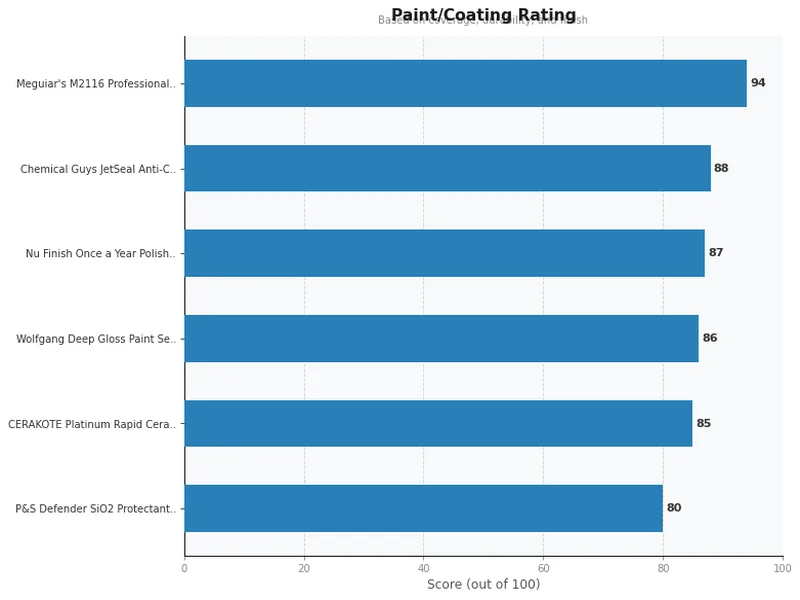
Most polymer paint sealants last 3–6 months, while ceramic-enhanced sealants can provide 6–12 months of protection. Durability depends on the product formula, how well the surface was prepared before application, environmental conditions (outdoor parking vs. garage), and how frequently the car is washed. To maximize longevity, always apply to a thoroughly clean, contamination-free surface and maintain with pH-neutral car wash shampoo.
You should not apply a paint sealant directly over wax. Wax creates a barrier on the paint surface that prevents the sealant from bonding to the clearcoat properly, significantly reducing its durability and effectiveness. Always remove all wax residue with an IPA panel wipe or dedicated wax remover before applying sealant. The correct order is: clean paint first, then sealant, then optionally a light coat of carnauba wax on top of the cured sealant for added gloss.
Paint sealant is generally considered superior to traditional carnauba wax for protection and durability. Sealants last 3–12 months versus 1–3 months for wax, and they offer better resistance to UV rays, acid rain, bird droppings, and chemical contamination. Wax tends to produce a slightly warmer, more organic-looking shine that some enthusiasts prefer, particularly on older or darker paint. For daily drivers, a sealant provides better long-term protection with less frequent reapplication.
The easiest test is the water-bead test: after a wash, observe how water behaves on the hood. A freshly sealed surface will cause water to form tight, fast-rolling spherical beads. When the sealant begins to degrade, water will flatten into larger, slower-moving droplets or start to sheet across the surface. At that point it is time to reapply. You can also check by running a clean wet hand across the paint — a well-sealed surface will feel noticeably slick.
You should not use a standard gloss-enhancing paint sealant on matte or satin finish paint. These products are formulated to increase surface reflectivity and will permanently add unwanted shine to a matte finish. If you have matte paint, use only products specifically labeled as matte-safe, such as dedicated matte paint sealants or spray detailers. These products protect without altering the flat appearance of the finish.
Paint sealant and ceramic coating both protect the paint but differ significantly in chemistry, durability, and cost. A paint sealant is a synthetic polymer product applied by hand or machine that provides 3–12 months of protection. Ceramic coatings use SiO2 or TiO2 chemistry to form a semi-permanent bond with the clearcoat, providing 2–5 years of protection. However, ceramic coatings require professional preparation and application, cost significantly more, and are difficult to correct if applied incorrectly. For most car owners, a high-quality paint sealant provides excellent protection with far less complexity and cost.
Finding the best paint sealant for your vehicle comes down to matching the product's strengths to your specific situation. If you want maximum gloss and professional-grade protection from a trusted brand, the Meguiar's M2116 Professional Synthetic Sealant 2.0 is our top pick — it delivers outstanding results with straightforward application and up to 12 months of durability.
For drivers who want the convenience of a spray-and-wipe application without sacrificing protection quality, the CERAKOTE Platinum Rapid Ceramic Paint Sealant and P&S Defender SiO2 are excellent choices that bring genuine ceramic chemistry to a no-fuss format. The Chemical Guys JetSeal remains one of the most versatile options, working on virtually every surface type and backed by a trusted brand with wide availability.
Whichever product you choose, the key to getting the most from your sealant is thorough surface preparation. A clean, contamination-free surface allows the sealant to bond properly and deliver its full rated protection. Pair that with regular pH-neutral washes and you will have a paint surface that looks great and stays protected year-round.
 |
 |
 |
 |

About Joshua Thomas
Joshua Thomas just simply loves cars and willing to work on them whenever there's chance... sometimes for free.
He started CarCareTotal back in 2017 from the advices of total strangers who witnessed his amazing skills in car repairs here and there.
His goal with this creation is to help car owners better learn how to maintain and repair their cars; as such, the site would cover alot of areas: troubleshooting, product recommendations, tips & tricks.
Joshua received Bachelor of Science in Mechanical Engineering at San Diego State University.


Get some FREE car parts & gear.. Or check out the latest free automotive manuals and build guides here.
Disable your ad blocker to unlock all the hidden deals. Hit the button below 🚗
| | | |
