Car Care ›
by Diego Ramirez
The Liquid Rubber RV Roof Sealant takes the top spot for 2026 thanks to its professional-grade elastomeric membrane that works across EPDM, TPO, fiberglass, and aluminum surfaces. A leaking RV roof is one of the fastest ways to destroy an interior — water intrusion rots subfloor, delaminates walls, and breeds mold behind panels long before visible staining appears.
Modern RV roof coatings have evolved well beyond the basic tar-and-patch approach. Today's formulations offer solar reflectivity that measurably lowers interior temperatures, UV stabilizers that prevent chalking and cracking across years of sun exposure, and elastomeric properties that flex with thermal cycling instead of cracking at the seams. Whether dealing with an aging EPDM membrane, a TPO roof showing its first signs of weathering, or a fiberglass cap that needs a fresh protective layer, the right coating extends roof life by years and eliminates the costly alternative of a full car care and RV maintenance overhaul. For those outfitting an RV for extended trips, pairing a solid roof coating with a reliable RV water hose and water pressure regulator covers the most common maintenance pain points.
This guide breaks down the seven best RV roof coatings available in 2026, covering everything from single-gallon touch-up cans to five-gallon full-roof systems. Each product has been evaluated on waterproofing performance, UV resistance, ease of application, substrate compatibility, and long-term durability.
Contents








Dicor is the OEM supplier for a significant portion of the RV industry, and the RP-CRC-1 reflects that pedigree. This acrylic coating is purpose-built as a Part 2 protective layer for EPDM rubber membranes — it goes on after thorough cleaning with Dicor's Rubber Roof Cleaner/Activator (sold separately). The white finish restores that factory-fresh look while adding a reflective barrier against UV degradation. One gallon covers approximately 125 square feet at the recommended mil thickness.
Application is straightforward with a standard 3/8-inch nap roller. The acrylic formula self-levels reasonably well and dries to a bright white finish within 8–12 hours under normal conditions. It bonds chemically with the EPDM membrane surface, creating a unified protective layer rather than just sitting on top. This is a maintenance coating, not a repair product — it won't bridge gaps or seal active leaks the way a self-leveling sealant would.
Where Dicor excels is in the specificity of its formulation. Because it's designed exclusively for EPDM and PVC, there's no compromise in the chemistry to accommodate multiple substrates. That single-purpose engineering translates to superior adhesion and longevity on compatible surfaces.
Pros:
Cons:
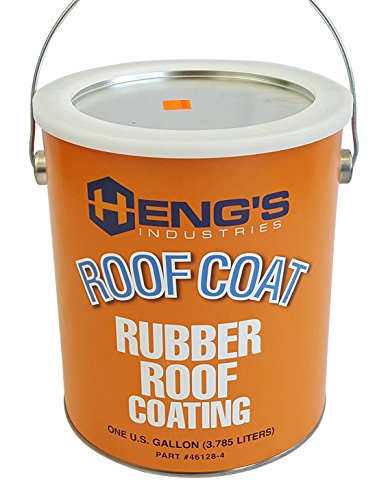
HENG'S has been manufacturing RV components for decades, and their rubber roof coating delivers reliable protection without the premium price tag. This one-gallon formula is designed for direct application over existing rubber roofs, with particular strength at seams, tears, and around penetrations like vents and air conditioner mounts. It's a versatile repair-and-protect product rather than a dedicated maintenance coating.
The formulation emphasizes flexibility. It expands and contracts with the roof substrate through thermal cycling — a critical trait given that an RV roof can swing from sub-freezing overnight temperatures to 160°F+ surface temps under direct sun. UV resistance is built into the chemistry, not reliant on a topcoat. The coating resists cracking under repeated flex cycles, which is the primary failure mode for cheaper alternatives that harden and flake over time.
HENG'S also gets points for being non-toxic and non-polluting. For buyers who apply coatings in enclosed areas or work without heavy ventilation, the low-VOC formula reduces health concerns during application. It cleans up with water before curing, which simplifies tool maintenance.
Pros:
Cons:
The Liquid Rubber RV Roof Sealant is the standout performer in this roundup. Sold in a five-gallon bucket, it creates a professional-grade flexible waterproof membrane that handles the full spectrum of RV roof substrates: EPDM, TPO, fiberglass, and aluminum. That multi-surface versatility eliminates the guesswork for buyers who aren't 100% certain of their roof material or who have mixed substrates across different sections.
Solar reflectivity is where this product really separates from the pack. The brilliant white elastomeric formula actively reflects solar radiation, measurably reducing interior temperatures during summer travel and stationary camping. For full-timers in southern climates, this translates directly to lower air conditioning loads and reduced energy costs. The coating maintains its reflective properties over time rather than yellowing or chalking like inferior formulations.
The five-gallon quantity provides enough material for a complete RV roof with enough left over for a second coat on problem areas. For EPDM and TPO surfaces, Liquid Rubber recommends pairing with their dedicated EPDM Primer for maximum adhesion — an additional step, but one that substantially improves long-term bond strength. Application works with standard brushes, rollers, or airless sprayers, giving both DIY owners and professional applicators the flexibility to use their preferred method.
Pros:
Cons:
Henry's Tropicool stands apart from every other product on this list because it's a 100% silicone formulation. While the other coatings here are acrylic or liquid rubber based, silicone brings a fundamentally different set of properties to the table. The most significant: permanent ponding water resistance. Silicone doesn't absorb water. Period. For RVs with flat roof sections where water pools after rain — a common issue on older Class A motorhomes — Tropicool handles it without degradation.
The moisture-cure chemistry means Tropicool actually uses ambient humidity to catalyze the curing process. In humid climates, this accelerates cure time rather than slowing it. The cured film creates an aggressive chemical bond with the substrate that resists delamination even under extreme thermal stress. Henry specifically engineered this formula for environments with intense UV exposure and heavy precipitation — think Gulf Coast, Southwest desert, or tropical climates where both heat and moisture hammer roofs simultaneously.
The five-gallon bucket provides serious coverage for larger rigs. Silicone coatings tend to maintain their reflectivity far longer than acrylics because the surface doesn't chalk or oxidize. The trade-off is that silicone surfaces cannot be topcoated with non-silicone products later — once a roof goes silicone, future maintenance coats must also be silicone. That's not a disadvantage for most buyers, but it's worth knowing before committing.
Pros:
Cons:
This liquid rubber coating distinguishes itself with nano-processed technology that filters out 99.7% of impurities from the formula. That purity translates to stronger adhesion, fewer pinhole defects in the cured film, and more consistent coverage per coat. The 1000%+ elongation spec is the highest on this list — the cured membrane stretches dramatically before failure, making it exceptionally resistant to crack propagation from thermal movement or structural flex during travel.
At 88% solar reflectivity, it sits near the top of the field for heat rejection. The coating bonds to an unusually broad range of substrates: EPDM, TPO, metal, fiberglass, wood, concrete, stucco, and more. That versatility extends its usefulness beyond the RV roof to awning frames, storage compartments, and even residential applications. For buyers who want one product for multiple projects, the broad compatibility is a major selling point.
Application accepts brush, roller, or sprayer. The nano-processed formula flows smoothly and self-levels better than conventional liquid rubber coatings, reducing brush marks and lap lines. One important caveat: EPDM roofs require a primer coat for proper adhesion. Skipping the primer on rubber substrates will lead to premature delamination regardless of surface preparation quality.
Pros:
Cons:
Flex Seal Liquid has carved out a niche as the go-to emergency and spot repair solution. The 16-ounce can is specifically sized for targeted applications — patching a seam leak around a vent, sealing a crack near an antenna mount, or waterproofing a small section that's showing early signs of failure. It brushes, rolls, dips, or pours directly onto the problem area with zero mixing and minimal surface preparation.
The rubberized coating creates a flexible, breathable barrier that seals out water, air, and moisture. "Breathable" is a noteworthy property — it allows trapped moisture vapor to escape through the coating rather than bubbling underneath, which is a common failure point for non-breathable sealants applied over damp substrates. UV resistance is built into the formula, so exposed applications hold up without a topcoat.
The obvious limitation is scale. At 16 ounces, Flex Seal Liquid is not an economical choice for full-roof coating. It costs significantly more per square foot than any five-gallon option on this list. But for the buyer who needs to stop a leak today and plans a more comprehensive coating job later — or who just has a couple of small trouble spots — the convenience and availability (stocked at virtually every hardware store) make it a practical choice. It works well as part of a broader RV maintenance kit alongside essentials like a quality RV toilet and proper plumbing accessories.
Pros:
Cons:
The Gacoroof GACSRCG5 is engineered for professional roofing applications first, with RV use as a secondary but fully supported application. This is the product to reach for when dealing with a large Class A motorhome, a fifth-wheel with extensive roof area, or any situation where commercial-grade durability matters more than consumer-friendly packaging. The formulation is built to withstand extreme temperature fluctuations, sustained UV bombardment, and harsh environmental conditions that destroy lesser coatings.
Gaco is a respected name in the commercial roofing industry — their silicone roof coatings protect warehouses, hospitals, and industrial facilities across North America. The GACSRCG5 brings that same material science to the RV segment. The high-performance construction delivers waterproofing that outlasts most consumer-grade alternatives by a significant margin. Coverage efficiency is optimized for large surface areas, making it cost-effective when calculated on a per-square-foot basis despite the higher upfront bucket price.
Professional applicators will appreciate the consistent viscosity and predictable spread rate. DIY owners can handle application with a roller, but the product rewards careful, methodical technique — rushing the job or applying too thin will produce inferior results compared to following the manufacturer's mil-thickness recommendations precisely.
Pros:
Cons:
This is the single most important factor. Applying the wrong coating to an incompatible substrate leads to adhesion failure, peeling, and potentially worse damage than leaving the roof uncoated. Identify the roof material definitively before purchasing:
When in doubt, check the RV manufacturer's documentation or look for a label near an access panel. Applying an EPDM-only product to a fiberglass roof is a common and expensive mistake.
RV roofs range from roughly 100 square feet (small travel trailer) to 400+ square feet (large Class A). Calculate the total area and factor in the manufacturer's coverage rate per gallon, then add 15–20% for overlap, penetrations, and second coats on problem areas. A standard 35-foot Class A needs approximately 320 square feet of coverage. At typical coverage rates of 50–80 square feet per gallon, that's a five-gallon bucket for a single coat. Most manufacturers recommend two coats for optimal protection. Under-buying leads to thin spots that fail first; over-buying is just insurance.
All seven products on this list offer UV resistance, but there's a meaningful difference between UV stabilizers that prevent coating degradation and active solar reflectivity that bounces heat away from the roof surface. Products like Liquid Rubber and the Nano Coating with 88%+ reflectivity measurably reduce interior temperatures — a real-world difference of 10–15°F inside the RV during summer. For full-time RVers or those camping in hot climates, high reflectivity pays for itself through reduced air conditioning loads. According to the cool roof research compiled on Wikipedia, reflective roof coatings can reduce cooling energy consumption by 10–30% depending on climate zone.
Most RV roof coatings apply with a standard 3/8-inch nap paint roller, but there are meaningful differences in application difficulty:
Temperature at application time matters too. Most products require surface temperatures between 50°F and 100°F. Applying outside that range causes adhesion issues, uneven curing, or film defects that compromise the coating's lifespan.
Most quality RV roof coatings last 3–5 years before requiring reapplication, though this varies based on climate, UV exposure, and the specific product used. Silicone coatings like Henry Tropicool tend to last longer (5–8 years) because the material doesn't chalk or oxidize. Acrylic coatings typically need refreshing every 3–4 years. Annual inspections are the best way to catch thinning or wear before it becomes a leak.
In most cases, yes — provided the existing coating is well-bonded and the same chemistry type. Acrylic over acrylic and silicone over silicone work fine after cleaning. Mixing chemistries (acrylic over silicone or vice versa) causes adhesion failure. If the existing coating is peeling or bubbling, it must be removed down to the substrate before recoating. Light sanding and thorough cleaning with the appropriate cleaner/activator ensure the best bond between layers.
Sealant is a caulk-like product applied to specific joints, seams, and penetrations — it fills gaps and prevents water entry at connection points. Coating is a thin membrane applied across the entire roof surface to protect the substrate from UV, water, and weathering. Both are necessary for complete roof protection. Sealant addresses the joints; coating protects the field. Applying coating without first addressing failed sealant at seams and penetrations leaves the most leak-prone areas unprotected.
Yes, and the effect is measurable. White elastomeric and silicone coatings with high solar reflectivity (80%+) reflect a significant portion of solar radiation rather than absorbing it as heat. Real-world testing shows interior temperature reductions of 10–15°F compared to an uncoated dark or oxidized roof. The effect is most pronounced in direct sun during summer months. For RVers running air conditioning, this translates to reduced compressor cycling and lower energy consumption — a meaningful benefit for boondockers relying on generator or solar power.
It depends on the product. Dicor RP-CRC-1 requires their Cleaner/Activator as a bonding agent. Liquid Rubber recommends their EPDM Primer for rubber substrates. HENG'S Industries coating applies directly to cleaned EPDM without a separate primer. Always follow the specific manufacturer's instructions — skipping a required primer step is the most common cause of premature coating delamination on rubber roofs. The cost of primer is trivial compared to the cost of stripping and recoating a failed application.
Most RV roof coatings require minimum surface temperatures of 50°F for proper curing, with an ideal range of 60–80°F. Applying below the minimum threshold results in slow or incomplete curing, poor adhesion, and a weak finished film. Silicone coatings like Henry Tropicool are slightly more forgiving of temperature extremes, but even silicone performs best within the recommended range. Additionally, the roof surface must be completely dry with no rain forecast for at least 24 hours after application. Spring and early fall typically provide the best conditions for coating projects in most regions.
Every RV roof coating on this list solves a real problem, but the right choice depends on roof material, climate, and whether the job calls for full coverage or targeted repair. Grab the Liquid Rubber five-gallon bucket for a complete re-coat, the Henry Tropicool for silicone-grade ponding resistance, or a can of Flex Seal for a quick weekend patch — then get up on the roof and handle it before the next rainstorm turns a minor maintenance task into a major interior rebuild.
 |
 |
 |
 |

About Diego Ramirez
Diego Ramirez has been wrenching on cars since his teenage years and has built a deep practical knowledge of automotive maintenance and paint protection through years of hands-on work. He specializes in fluid service intervals, preventive care routines, exterior protection products, and the consistent habits that extend a vehicle's lifespan well beyond average. At CarCareTotal, he covers car care guides, cleaning and detailing products, and exterior maintenance and protection reviews.
Get some FREE car parts & gear.. Or check out the latest free automotive manuals and build guides here.
Disable your ad blocker to unlock all the hidden deals. Hit the button below 🚗
| | | |
