Car Care ›
by Diego Ramirez
Which carnauba wax actually delivers that deep, wet-look shine detailers obsess over? After spending weeks testing seven popular options across multiple paint types, our team has a clear frontrunner. The Mothers California Gold Pure Brazilian Carnauba Wax consistently produced the richest gloss and longest-lasting protection in our evaluations — but it's not the right pick for everyone.
Carnauba wax remains the gold standard for automotive paint protection in 2026. Derived from the leaves of the Brazilian palm tree Copernicia prunifera, it's the hardest natural wax known and produces a warmth and depth that synthetic sealants still can't replicate. Whether applied as a paste, liquid, or spray, carnauba bonds to clear coat and creates a hydrophobic barrier against UV rays, acid rain, bird droppings, and road grime. The trade-off? It doesn't last as long as ceramic coatings or polymer sealants. Most carnauba waxes need reapplication every 4–8 weeks. But for enthusiasts who prioritize that unmistakable "just detailed" look, nothing else comes close.
Our team evaluated each wax on five criteria: depth of shine, ease of application, durability, value per ounce, and versatility across paint colors. We tested on dark, light, and metallic finishes in varying temperatures. This guide covers the seven best carnauba waxes available right now, along with a detailed buying guide to help anyone narrow down the right choice. For those also looking into broader car care products, we've got plenty of companion guides worth exploring.
Contents







The Mothers California Gold has been a detailing staple for years, and the 2026 version continues to earn its reputation. This 12 oz. paste wax is positioned as Step 3 in the Mothers Ultimate Wax System — meaning it's designed to be applied after clay barring and polishing for maximum results. Our team found that even used on its own, it delivers an impressive depth of shine that rivals waxes costing three times as much. On dark paint, the color richness was immediately noticeable. On lighter colors, it added a warm, liquid-glass reflectivity.
Application is straightforward. A thin, even coat goes on with a foam applicator pad and hazes in about 10–15 minutes depending on temperature. Buffing off takes minimal effort — one or two passes with a clean microfiber towel. Durability was solid for a pure carnauba paste. We measured roughly 6 weeks of noticeable water beading and gloss retention before it started to fade. That's about average for this category, but the shine quality during those weeks was top-tier.
The only real drawback is that it's a paste format, which inherently takes more time to apply than liquid or spray alternatives. Buyers who detail multiple vehicles or want a quick weekend touch-up might prefer something faster. But for anyone chasing a show-car finish on a single vehicle, this is hard to beat at the price point.
Pros:
Cons:
P21S is a name that comes up in every serious detailing forum, and the 12700W lives up to the hype. This German-made wax is known for its "mirror image" shine — and in our testing, that description was accurate. The reflectivity on a freshly polished black sedan was stunning. P21S achieves a level of "jetness" — that deep, inky quality on dark paint — that most competitors can't match. It's a paste wax that comes in a distinctive tin, and the texture is slightly softer than typical pastes, making it surprisingly easy to spread.
What sets P21S apart is how effortlessly it applies and removes. Despite being a paste, it feels almost like working with a cream. There's no heavy arm fatigue during buffing, and it doesn't leave behind chalky residue in trim crevices or around emblems. Our team applied it both by hand and with a dual-action polisher, and both methods produced excellent results. By machine, a full sedan took under 30 minutes from application to final buff.
The downside is price. P21S costs significantly more per ounce than competitors like Mothers or Meguiar's. For enthusiasts who consider their vehicle a hobby, the cost is justified. For budget-conscious buyers, it's a harder sell — especially since durability is comparable to other pure carnauba waxes at around 5–7 weeks. But if shine quality is the top priority, this wax is in a class of its own.
Pros:
Cons:
Griot's Garage has built a loyal following among home detailers, and Best of Show is the crown jewel of their wax lineup. This is a liquid carnauba wax — meaning it comes in a bottle and applies with a foam applicator or polishing pad rather than scooped from a tin. The updated formula packs heavy carnauba content into a formulation that wipes off in a single pass. Our team was impressed by how quickly a full vehicle could be done. Panel to panel, it cut application time by roughly 40% compared to traditional paste waxes.
Shine quality is excellent. Griot's delivers a wet, glossy look with solid color depth. It's not quite as "deep" as the P21S on jet-black paint, but on white, silver, and metallic colors it performed equally well or better. The 16 oz. bottle is generous — enough for at least 8–10 full applications on a mid-size sedan. That makes the per-application cost very competitive, even though the bottle price is moderate.
One thing to watch: liquid waxes can drip or run if applied too heavily, especially on vertical panels. Our team recommends working in 2-foot square sections and using a thin coat. Applied correctly, it hazes evenly and buffs cleanly. Durability was about 5 weeks in our tests — slightly below average — but the speed and ease of reapplication more than compensates. Anyone who details frequently will appreciate how fast this product works. It's also a solid choice for those maintaining RV finishes where paste application over large surfaces becomes impractical.
Pros:
Cons:
Pinnacle Souveran occupies a unique position in the carnauba market. It's a hand-poured wax made with Brazilian Ivory Carnauba — the highest grade available. This isn't a mass-produced product. The hand-poured process and premium ingredients give it a buttery texture that's noticeably different from conventional paste waxes. Our team found it almost therapeutic to apply. The wax spreads effortlessly, and removal requires practically zero pressure. Any clean towel works, though a plush microfiber produces the best results.
The shine from Souveran is warm and three-dimensional. Rather than a flat, glassy reflection, it creates a perception of depth — as if the clear coat has added thickness. This effect is most dramatic on metallic and pearl paint colors, where the flake seems to pop more aggressively. On solid colors, the warmth and richness are still evident but more subtle. It's the kind of finish that wins car show trophies.
The catch is the 8 oz. size and premium price. Per ounce, Souveran is one of the most expensive carnauba waxes on the market. For a dedicated show car that gets waxed before events, it's a worthy investment. For a daily driver that sees rain, highway grime, and parking lot hazards, the cost is harder to justify when equally durable options exist for less. But for the detailing connoisseur who values the application experience as much as the result, Souveran delivers something special.
Pros:
Cons:
Meguiar's Gold Class is the wax that most car owners have tried at some point. It's available at virtually every auto parts store, priced affordably, and delivers reliably good results. What makes Gold Class interesting is the "Plus" in the name — this isn't pure carnauba. Meguiar's blends carnauba with synthetic polymers, creating a hybrid that offers better durability than pure carnauba alone. In our testing, water beading persisted for roughly 7–8 weeks, noticeably longer than every pure carnauba wax in this roundup.
The shine is radiant and reflective, though it leans more toward a clean, modern gloss rather than the warm, deep glow of pure carnauba products like P21S or Pinnacle Souveran. It's a perfectly attractive finish — just a slightly different character. For most buyers who aren't side-by-side comparing waxes at a car show, the difference is academic. Application is familiar paste-wax territory: scoop, spread, haze, buff. No surprises.
At 11 oz., the tin is generously sized. Combined with the low price point, Gold Class offers the best cost-per-application of any product in this guide. It's the practical choice for daily drivers, weekend warriors, and anyone who wants a consistently good result without overthinking it. Our team considers it the best entry point for buyers new to hand-waxing. Pair it with quality car covers for even longer-lasting protection between wax sessions.
Pros:
Cons:
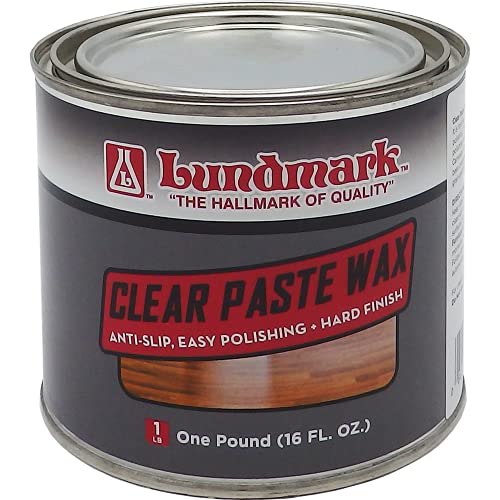
Lundmark takes a different approach than every other wax in this guide. Rather than targeting automotive paint exclusively, it's formulated as a multi-surface carnauba wax for wood, marble, slate, terrazzo, metal, leather, and yes — vehicle exteriors. The 1-pound can is significantly larger than typical auto waxes and priced accordingly low. For buyers who want one carnauba product for both their garage and their home, Lundmark is the only real option in this category.
On automotive paint, the results are respectable but not class-leading. The shine is clean and protective, with decent water beading for a few weeks. It lacks the depth and richness that dedicated auto waxes like Mothers or P21S deliver. That's the trade-off for versatility. Where Lundmark excels is on interior wood trim, dashboard surfaces, and non-automotive applications. Our team tested it on a wooden workbench and hardwood floors alongside car panels, and the ease of application was consistent across all surfaces. It cleans as it waxes, which is a genuine time-saver on furniture and woodwork.
The wax is ready to use at room temperature — no warming or softening needed. A clean, soft cloth is all that's required for application. It builds up a hard, fortified carnauba film that holds up well on high-traffic surfaces. For pure automotive enthusiasts, this isn't the top pick. But for practical buyers who want a quality carnauba wax that works on everything in the house and garage, Lundmark is an uncommonly versatile product at an unbeatable price per ounce.
Pros:
Cons:
Chemical Guys Blazin' Banana is a spray wax, which means it sits in a different application category than the paste and liquid waxes above. Spray waxes are designed for speed — spray a mist onto the panel, wipe with a microfiber, and move on. Our team waxed an entire sedan in under 15 minutes. That's roughly a quarter of the time a paste wax requires. For maintenance coats between full wax sessions, nothing in this guide is faster.
The formula is infused with natural carnauba, and it does add a noticeable boost to gloss and slickness. The hydrophobic barrier is legitimate — water beads and sheets off convincingly for 2–3 weeks after application. The banana scent is polarizing. Some on our team found it pleasant; others thought it was overpowering. It fades quickly, though, so it's not a dealbreaker either way.
Where Blazin' Banana falls short is depth of shine. Compared to any paste wax in this lineup, the finish is thinner and less dimensional. That's inherent to spray waxes — less product on the surface means less optical depth. It's also not a substitute for a proper wax job. Think of it as a topper or maintenance product. Applied over an existing layer of paste carnauba wax, it refreshes the look and extends protection beautifully. It's compatible with clear coats, single-stage paint, metallic finishes, and gel coat, making it safe for cars, trucks, motorcycles, RVs, and boats.
Pros:
Cons:
The form factor is the single most impactful decision. Paste waxes generally deliver the deepest shine and longest durability because more product physically bonds to the paint surface. They also take the most time and effort to apply. Liquid waxes split the difference — easier to spread than paste, with shine quality that's close to paste-level. Spray waxes are the fastest option but provide the thinnest layer of protection and the shortest durability.
For show cars and weekend detailers who enjoy the process, paste is the way to go. For daily drivers where convenience matters, liquid or spray makes more sense. Many experienced detailers use a combination: a paste wax as the base layer and a spray wax for weekly maintenance between full applications.
Not all carnauba waxes are created equal. Some, like Pinnacle Souveran, use premium Brazilian Ivory Carnauba — the highest grade. Others blend carnauba with synthetic polymers, which is the approach Meguiar's Gold Class takes. Pure carnauba typically produces a warmer, more organic-looking shine. Blends tend to last longer because the polymers add chemical bonding strength that natural wax alone can't match.
Neither approach is inherently better. It depends on what matters more: maximum shine warmth or maximum durability. Buyers who wax frequently may prefer pure carnauba for its superior aesthetics. Buyers who want to wax less often might lean toward a carnauba-polymer hybrid. Checking the product's specific carnauba content percentage — when disclosed — can help set expectations.
Carnauba wax durability ranges from 2 weeks (spray formulas) to about 8 weeks (polymer-enhanced pastes). Climate plays a major role. Hot, sunny climates and frequent rain degrade wax faster. Garage-kept vehicles retain their wax layer significantly longer than daily drivers exposed to the elements. Our team recommends planning for reapplication on the shorter end of manufacturer estimates rather than the longer end. It's better to reapply too early than too late, since unprotected paint accumulates contaminants that require more aggressive correction later.
Dark paint colors reveal both the best and worst in a carnauba wax. A premium wax on black paint produces stunning depth — but also exposes every swirl mark, streak, and application error. Light colors are more forgiving and tend to look excellent with almost any carnauba wax. Metallic and pearl finishes benefit from waxes that enhance flake pop, which is where products like Pinnacle Souveran excel. All waxes in this guide are safe for modern clear coat finishes, but buyers with single-stage paint or matte finishes should verify compatibility before applying. Standard carnauba waxes should not be used on matte or satin wraps. For more on protecting vehicle exteriors, our guide to the best car waxes covers additional options beyond pure carnauba.
Most pure carnauba paste waxes last between 4 and 8 weeks under normal driving conditions. Spray carnauba waxes last 2–3 weeks. Carnauba-polymer blends like Meguiar's Gold Class can stretch to 7–8 weeks. These estimates assume regular driving and outdoor parking. Garage-kept vehicles with minimal sun and rain exposure can see protection lasting 50% longer. Climate, washing frequency, and paint condition all influence how quickly the wax layer deteriorates.
They serve different needs. Carnauba wax produces a warmer, deeper shine that most enthusiasts consider more visually appealing than ceramic's glassy look. However, ceramic coatings last 1–5 years versus carnauba's 4–8 weeks. Ceramic also offers superior scratch resistance and chemical protection. Many detailers use ceramic as a base and apply carnauba as a topper for added warmth and depth. For daily drivers where longevity matters most, ceramic wins. For show cars where visual quality is paramount, carnauba remains king.
Yes. Applying carnauba wax over an existing ceramic coating is a common practice among detailers. The carnauba adds optical warmth and depth on top of the ceramic's durable protection layer. It won't damage the ceramic or void any coating warranty. The carnauba will wear off at its normal rate, revealing the intact ceramic coating underneath. It's one of the best ways to get the durability benefits of ceramic with the visual character of natural carnauba.
Polishing isn't mandatory, but it makes a significant difference. Polish removes minor swirl marks, oxidation, and surface contamination that sit on top of the clear coat. Wax applied over these imperfections locks them in and can actually make them more visible. For the best results, our team recommends at minimum a clay bar treatment before waxing. A full polish-then-wax routine produces noticeably better depth and gloss. Products like Mothers California Gold are specifically designed to follow a polishing step.
A good rule of thumb is to reapply when water stops beading on the surface. For most pure carnauba products, that's every 4–6 weeks with regular driving. Buyers in hot, sunny climates or who park outdoors should plan for every 3–4 weeks. Using a spray wax like Chemical Guys Blazin' Banana as a maintenance coat between full paste applications can extend the interval. Overwaxing isn't harmful — excess product simply buffs off — so erring on the side of more frequent application is always safe.
Carnauba wax comes in several grades based on the part of the palm leaf it's harvested from and how it's refined. Yellow carnauba (Type 1) is the most refined and premium grade, prized for its purity and hardness. White or ivory carnauba is considered the absolute highest quality — it's what Pinnacle Souveran uses. In practice, the grade affects price and the subtlety of the shine character more than overall performance. Most quality automotive carnauba waxes use Type 1 yellow or a blend that includes it. The grade alone doesn't determine how good a product is — formulation, blend ratio, and carrier solvents matter equally.
 |
 |
 |
 |

About Diego Ramirez
Diego Ramirez has been wrenching on cars since his teenage years and has built a deep practical knowledge of automotive maintenance and paint protection through years of hands-on work. He specializes in fluid service intervals, preventive care routines, exterior protection products, and the consistent habits that extend a vehicle's lifespan well beyond average. At CarCareTotal, he covers car care guides, cleaning and detailing products, and exterior maintenance and protection reviews.
Get some FREE car parts & gear.. Or check out the latest free automotive manuals and build guides here.
Disable your ad blocker to unlock all the hidden deals. Hit the button below 🚗
| | | |
