by Liam O'Brien
Which polishing pad actually delivers a flawless finish on your car's paint — and which ones just spin in circles wasting your compound? If you've spent any time chasing swirl marks and oxidation, you know the pad is just as critical as the machine or the product itself. Our top pick for 2026 is the Meguiar's DA 6" Microfiber Cutting Disc, a pad that punches well above its price class and handles moderate defects with zero additional marring.
Choosing the right polishing pad means understanding cut levels, foam densities, backing plate compatibility, and how each pad interacts with your specific polish or compound. Get it wrong and you end up burning clear coat or spinning a pad that barely touches the defects you're trying to remove. Get it right, and the transformation is dramatic — paint that looks like it just rolled off the showroom floor. Whether you're working on a daily driver or a weekend show car, the right pad makes the difference between a good detail and a great one.

In this guide, we've tested and evaluated seven of the best polishing pads available in 2026. From microfiber cutting discs to multi-grade bundle kits, every option on this list has been chosen for its real-world performance, durability, and value. We'll walk you through each one in detail, then give you a clear buying guide so you know exactly what to look for. And if you care about protecting your paint long-term, you'll also want to check out our guide to the best rust prevention sprays for cars — because a polished surface is only as good as what's protecting it underneath. Browse all our automotive detailing and maintenance tools at carcaretotal.com/tools/.
Contents
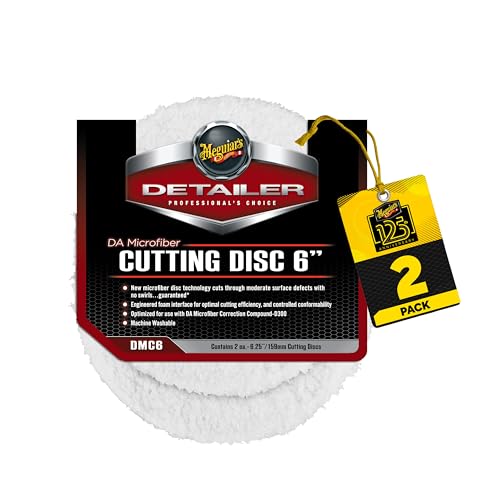






The Meguiar's DMC6 Microfiber Cutting Disc is a legitimate game-changer for anyone dealing with moderate swirls, scratches, and paint defects. What separates it from standard foam pads is the microfiber cutting surface bonded over a foam interface layer. That combination gives you the aggressive cutting action of a wool pad without the marring risk — you remove the defect and you don't create new ones in the process. Pair it with Meguiar's D300 DA Microfiber Correction Compound and the results are genuinely impressive. The no-sling formula means compound stays where it belongs, and cleanup between passes takes seconds rather than minutes.
The 2-pack value proposition is strong. These pads can be washed and reused multiple times before performance degrades, making them more economical than disposable alternatives. The foam interface behind the microfiber layer also provides excellent conformability on curved panels — fenders, hood edges, door curves — without losing consistent contact pressure. If you're new to machine polishing, the controlled cut level here is forgiving. If you're experienced, you'll appreciate that these deliver consistent results pass after pass without requiring constant compound priming.
One consideration: microfiber pads do load up faster than foam pads, so you need to keep a pad cleaning brush nearby during long correction sessions. That's a minor trade-off for the level of defect removal you get. For the price and the 2-pack quantity, this is the easiest recommendation on this entire list.
Pros:
Cons:
Chemical Guys built their reputation on pads, and the Hex-Logic Blue Light Polishing Pad is where that expertise really shows. The blue color coding signals a soft, finishing-grade pad designed for light polishing and final gloss enhancement. The Hex-Logic laser-cut surface pattern is the technical differentiator — hexagonal cuts across the pad face create flex zones that allow the pad to conform naturally to body lines and curves while maintaining even distribution of product across the entire working surface. You get faster, more consistent results compared to traditional circular foam pads with flat faces.
This is a 5.5-inch pad made for 5-inch backing plates, which is the standard DA polisher configuration. The fit is snug and secure. What this pad does exceptionally well is the final finishing stage — after you've done your heavy correction work, switch to this blue pad with a finishing polish and it brings out depth and gloss that makes paint look genuinely wet. It doesn't have the cut to tackle deep scratches, and it's not meant to. Its purpose is refining the surface after correction, and at that it's excellent.
The professional-grade foam holds up through repeated wash cycles without losing its structure or its surface pattern. For detailers who run multi-stage correction — heavy cut, medium polish, final finish — this pad earns its spot as the third step that makes everything else worthwhile. If you're also keeping your car's exterior protected between details, pair this process with one of the best car drying towels to avoid introducing new scratches during wash maintenance.
Pros:
Cons:
Griot's Garage makes tools for people who genuinely care about their cars, and these 6.5-inch orange foam correcting pads reflect that philosophy. The orange designation puts them in the light-to-moderate correction range — effective enough to remove the swirl marks and light scratches that accumulate from improper washing and everyday driving, gentle enough to not threaten your clear coat when used correctly. The beveled, flat face design is the engineering highlight here. That flat working face ensures uniform product application across the entire pad surface, so you're never concentrating compound in one spot or leaving sections of the panel under-corrected.
The foam construction uses thermoset bonding, which is a step above standard foam pads in terms of durability. The foam cells don't compress and deform after a few uses — they hold their shape, which means consistent performance from the first pass to the hundredth. These pads are also machine washable, and after washing they come back to full softness and performance. The 2-pack included in this listing means you have a spare ready when one pad gets loaded mid-job, which any experienced detailer knows is a real-world necessity.
Compatibility with Griot's own polish lines is excellent, but these pads perform well with other quality compounds and polishes too. They work on a standard 6-inch backing plate without overhang issues. For detailers who want reliable, repeatable correction on painted surfaces without the learning curve that comes with more aggressive pads, these Griot's pads deliver exactly what they promise.
Pros:
Cons:
Lake Country's CCS (Collapsed Cell System) technology solves a real problem that every detailer runs into: pad skipping and chatter on curved body panels. When you're running a DA polisher over a fender or a door edge, a flat foam pad doesn't always maintain consistent contact pressure — it bounces, chatters, and creates uneven correction. The CCS pattern of raised foam pockets around the pad face changes this. Those pockets collapse independently under pressure, allowing the pad to conform to contoured surfaces while maintaining even contact. The result is smoother machine operation and more uniform polishing results on panels that would challenge a conventional flat pad.
The patented pocket design also controls compound absorption. Instead of immediately soaking up your product, the CCS pockets release compound gradually and evenly as the pad works the surface. You use less product per panel, the compound stays active longer, and you're not constantly re-priming the pad between passes. This is a meaningful efficiency advantage for anyone working multiple panels in a single session.

The orange color places these in the light cutting category — they'll handle the swirls and light scratches that make up the majority of everyday paint correction work. The 2-pack at the 6.5-inch size fits a 6-inch backing plate precisely, minimizing overhang that can cause edge burning. Safe for all finishes and painted surfaces, including soft European clear coats that punish aggressive pads. These are a smart choice when your work involves a lot of curved body lines and complex panel shapes.
Pros:
Cons:
When light and medium pads aren't moving the needle on heavy swirl marks, deep oxidation, or water spots that have etched into the clear coat, you reach for the Chemical Guys Hex-Logic Quantum Orange. This is Chemical Guys' most aggressive foam cutting pad, and the Quantum foam formulation is where the performance lives. It's denser and firmer than their standard Hex-Logic pads, which means more cutting power per pass without the heat buildup that comes from wool or microfiber cut pads running at high speed. You're removing material efficiently while keeping temperatures managed.
The orange pad pairs specifically well with light swirl remover polishes like Chemical Guys V36 or their VSS Scratch and Swirl Remover. That might seem counterintuitive — pairing an aggressive pad with a lighter polish — but the combination is intentional. The pad provides the mechanical cut while the lighter polish refines the surface simultaneously, compressing two stages of correction into one. The Hex-Logic surface pattern remains on this Quantum version, so you still get the conformability and even product distribution that made the standard Hex-Logic line popular.
At 5.5 inches for a 5-inch backing plate, the fit is standard and secure. The foam construction on Quantum pads holds up to repeated washing and maintains its cutting performance well beyond what budget foam pads can manage. This is the pad you reach for when the paint in front of you has real problems that need real correction — not a quick polish before a car show, but genuine paint restoration work on a neglected vehicle. According to Wikipedia's overview of polishing techniques, mechanical abrasion through the right pad-compound combination remains the most effective method for removing surface defects from automotive finishes.
Pros:
Cons:
RUPES is a name that commands respect in professional detailing, and the D-A Series 6-inch Orbital Foam Polishing Pads Bundle is built to that standard. This bundle includes six pads: two Fine, two Ultra-Fine, and two Coarse — covering every stage of the correction and finishing process in a single purchase. That breadth of coverage is the primary reason to choose this kit over individual pads, especially if you're setting up a new polishing system or want a matched set of pads engineered to work together with your compound, polish, and sealant products.
Each grade has a distinct purpose. The Coarse pad features an open-cell foam material designed to tackle mild through severe defects on most paint systems, and it's compatible with both random orbital and gear-driven machines — a versatility advantage most foam pads don't offer. The Fine pad sits in the middle ground, effective for defect removal with the ability to finish to a high gloss on most paint systems. The Ultra-Fine pad is where the detail work happens: high gloss finishing on haze-prone or soft paint surfaces, and doubling as an application pad for sealants and waxes. You're getting a complete correction-through-protection workflow in one box.
The RUPES foam quality is immediately apparent. These pads have a firmness and consistency that communicates build quality the moment you hold them. They mount to standard 6-inch backing plates cleanly, with minimal overhang. For enthusiasts and professionals who want a complete pad solution without the guesswork of matching grades from different manufacturers, this bundle is the smartest investment on this list. If you're building out a complete car care kit, also check out our guide to the best car dusters for keeping your paint clean between polishing sessions.
Pros:
Cons:
The Meguiar's DFC6 Soft Buff DA Foam Cutting Disc is a proven performer at an accessible price point. The updated foam technology in these pads gives them a cut level that tackles moderate surface defects — the kind of scratches and swirls that develop from automatic car washes and improper drying technique — without generating additional marring in the clear coat. The low-profile design is intentional: keeping the pad thickness controlled improves tool efficiency on a DA polisher, giving you more consistent orbital movement and more predictable correction results.
Hook-and-loop backing makes pad changes fast and secure. These pads lock onto a 6-inch DA backing plate firmly and release cleanly without leaving adhesive residue. The foam formulation balances cutting power with a gentler touch — you can push for correction without being terrified of burning through a panel edge if your pressure or speed drifts slightly. That forgiveness makes the DFC6 a solid choice for newer machine polishers who are still developing their technique and feel. The advanced disc and tool efficiency that Meguiar's talks about in their marketing is real: these pads do work with the machine rather than fighting it, resulting in less operator fatigue during long correction sessions.
Where this pad lands on the spectrum: it's softer than the DMC6 microfiber pad at the top of this list, and it won't tackle the heavy stuff that the Chemical Guys Quantum handles. But for the middle ground of everyday correction on a car that's been reasonably maintained, the DFC6 delivers solid, consistent results at a price that makes stocking a few of them completely practical.
Pros:
Cons:
The single most important selection criterion is cut level, and it determines everything else. Polishing pads are graded from finishing (softest) through light, medium, heavy, and cutting (most aggressive). You always want to start with the least aggressive pad that will actually correct the defect — working up in aggression only when the gentler option isn't making progress. Using a heavy cutting pad on a car that only needs light swirl removal wastes product, generates unnecessary heat, and risks cutting through the clear coat on panel edges and high points.
When in doubt, test on a small inconspicuous section and evaluate before committing to the full panel. A test spot saves you from discovering an over-aggressive approach after you've run the pad across an entire hood.
Foam pads are the baseline — they're forgiving, easy to clean, widely compatible with polishes and compounds, and available in every cut level. Their consistency makes them the default choice for most correction work. Microfiber pads like the Meguiar's DMC6 sit in a different category: the microfiber cutting surface generates higher effective cut than foam of equivalent firmness, but without the heat and marring risk of wool. Microfiber pads are particularly effective when you need to remove moderate-to-heavy defects in fewer passes. The trade-off is that they load up faster and require more aggressive cleaning between uses.
For most detailers working with a random orbital DA polisher, foam pads cover 90% of correction scenarios. Microfiber pads become the right choice when you're chasing time efficiency on heavier defects, or when you want to consolidate a two-stage process into one pass.
Pad size must match your backing plate. The standard pairing is a pad that's 0.5 to 1 inch larger than the backing plate diameter — so a 6-inch backing plate typically runs a 6.5-inch pad, while a 5-inch backing plate runs a 5.5-inch pad. This slight overhang provides edge coverage without excessive pad extension that causes vibration or uneven pressure. Running a pad that's significantly too large for your backing plate creates overhang chatter and uneven product distribution. Running one that's too small leaves the backing plate edge directly contacting the paint — a clear coat disaster waiting to happen.
Check your machine's backing plate size before purchasing any pad. Most DA polishers come with either a 5-inch or 6-inch backing plate, though 3-inch and 4-inch setups exist for tight-quarters work on trim pieces and tight panel areas.
Quality polishing pads are washable and reusable — that's a core part of their value proposition. After each use, clean your pads with a dedicated pad cleaning brush during polishing sessions to keep the foam cells from loading up with dried compound. After the session, wash pads by hand or in a mesh laundry bag on a gentle cycle with water only, or a small amount of mild soap. Allow them to air dry completely before storage. Pads with thermoset bonding, like the Griot's Garage options, hold up to more wash cycles before degrading. Lower-quality pads start shedding foam cells and losing their structure after just a few washes. When a foam pad develops a permanent compression set, flat spots, or visible tearing, it's time to replace it regardless of wash count.
A cutting pad is made from firmer, denser foam (or microfiber) designed to remove surface defects like scratches, swirls, and oxidation through mechanical abrasion. A finishing pad is soft foam designed to refine the surface after correction, enhancing gloss and depth without removing additional paint material. Most multi-stage correction jobs use both — a cutting pad first, then a finishing pad to bring out maximum clarity and shine.
Most polishing pads are compatible with most polishes and compounds, but some pairings work better than others. Manufacturers like Meguiar's and Chemical Guys design their pads to work optimally with their own product lines. The DMC6 microfiber pad, for example, is specifically engineered for Meguiar's D300 compound. Following recommended pairings gives you the most predictable and efficient results, though you're not locked into brand-matched products for every application.
Replace your pad when you notice visible tearing, chunking, or foam cell breakdown. Pads that develop permanent flat spots or uneven compression across the face are no longer delivering consistent pressure distribution and should be retired. If a pad no longer responds to cleaning — product residue remains embedded after washing — that's another sign its working life is over. High-quality pads from brands like RUPES and Griot's typically last significantly longer than budget options before reaching this point.
Yes — always prime a new or freshly washed dry pad before use. Apply a small amount of your compound or polish directly to the pad face and work it into the foam by hand or by running the machine at low speed over a priming surface like cardboard. This saturates the foam cells and prevents the pad from absorbing your entire first application of product before it can do correction work. Skipping this step leads to inefficient first passes and inconsistent results.
Start between speed 4 and 5 on a standard variable-speed DA polisher for cutting and correction work. This range generates enough heat and mechanical action to activate the abrasives in your compound without overheating the paint or pad. Finishing pads can run at speed 5 to 6 for gloss enhancement. Always start at a lower speed when working on soft paint systems, thin clear coats, or high-point edges where heat accumulates fastest. Increase speed incrementally based on results rather than starting at maximum.
Typically three to five overlapping passes per section, working in a crosshatch pattern. Apply compound, work the pad at low speed for one pass to spread product, then increase speed for two to three correction passes, then finish with a slow-speed refining pass before wiping. The exact number depends on defect severity, pad cut level, compound aggressiveness, and machine speed. If you're not seeing improvement after five passes, you need a more aggressive pad or compound — not more passes with an undersized tool.
The right polishing pad doesn't just remove defects — it determines whether your paint looks better or worse when the machine stops spinning, so always match the cut level to the job before you touch the trigger.
 |
 |
 |
 |

About Liam O'Brien
Liam O'Brien has spent over a decade buying, field-testing, and evaluating automotive tools with a focus on what actually performs in a real DIY garage rather than what markets well on a spec sheet. His hands-on experience spans hand tools, diagnostic equipment, floor jacks, socket sets, and specialty automotive gear across a wide range of brands and price points. At CarCareTotal, he covers automotive tool and equipment reviews, garage setup guides, and buying advice for home mechanics.
Get some FREE car parts & gear.. Or check out the latest free automotive manuals and build guides here.
Disable your ad blocker to unlock all the hidden deals. Hit the button below 🚗
| | | |
