Car Care ›
by Diego Ramirez
According to a 2024 survey by the International Detailing Association, improper drying and polishing techniques — most often caused by low-quality or incorrect towels — are responsible for nearly 70 percent of preventable paint swirls on passenger vehicles. That single statistic explains why choosing the right car microfiber towel is one of the most consequential decisions you can make for your vehicle's finish. Whether you are applying a fresh coat of wax, buffing out a compound, or simply drying your car after a thorough wash, the towel in your hand determines whether you protect the paint or quietly destroy it.
Microfiber technology has advanced substantially since the material first entered automotive detailing in the 1990s. Today's professional-grade towels are engineered with specific GSM ratings, fiber blends, and weave patterns that directly affect performance on different surfaces and tasks. For 2026, the market offers a wide spectrum of products ranging from ultra-plush 1120 GSM drying giants to edgeless 365 GSM polishing workhorses, each designed with a specific job in mind. Understanding which towel fits which task — and which brands have earned their reputations — saves you money and, more importantly, saves your paint. For broader car care guidance, our full resource section covers everything from washing to protection.
This guide reviews the seven best car microfiber towels available in 2026, evaluating each on fiber quality, GSM weight, construction, durability, and real-world performance. We have also included a buying guide covering the key specifications you need to understand before purchasing, along with answers to the most frequently asked questions from detailing enthusiasts. If you are also considering what goes onto the paint before the towel comes out, our review of the best paint sealants for cars is a logical companion read alongside this guide.

Contents





Meguiar's has long been one of the most trusted names in automotive detailing, and the Supreme Shine Microfiber Towels represent the brand's commitment to delivering professional-grade results in an accessible, consumer-friendly package. These towels are specifically engineered for product removal — meaning compounds, polishes, waxes, and spray detailers — and their ultra-plush construction makes them one of the most capable options in this category for 2026. The fibers are exceptionally fine, designed to glide over paint, glass, plastic, and chrome without introducing the micro-scratches and swirls that lesser towels inevitably leave behind.
What distinguishes the Supreme Shine from generic microfiber towels is the advanced fiber technology Meguiar's employs in the weave. The pile is noticeably thick and dense, which gives each towel the ability to encapsulate and lift detailing product residue efficiently rather than simply spreading it across the surface. In practice, this translates to fewer passes required to achieve a clean, haze-free finish, and the results on dark paint — historically the most unforgiving surface for revealing swirl marks — are consistently impressive. The towel's performance on glass and chrome is equally strong, leaving those surfaces streak-free after a single buffing pass.
Durability is a key selling point for this set as well. The construction holds up well through repeated machine washing cycles, maintaining softness and absorbency without the fiber degradation that affects cheaper alternatives. For detailers who apply wax and sealant regularly — or anyone who wants a reliable, brand-name towel for finish work — the Meguiar's Supreme Shine is a definitive choice backed by decades of professional detailing expertise.
Pros:
Cons:
The Rag Company has built a formidable reputation among professional detailers over the past decade, and the Edgeless 365 is widely regarded as one of the brand's flagship products for good reason. These 16-inch by 16-inch towels feature a premium 70/30 polyester-polyamide blend woven at 365 GSM, with a fiber density that the company claims exceeds 380,000 fibers per square inch — a specification that places these towels firmly in the professional tier. The edgeless, tagless construction eliminates the primary source of paint marring associated with traditional hemmed towels, where stiff edges and sewn borders drag across the clear coat during buffing and wax removal.
The dual-pile construction is the standout engineering detail on the Edgeless 365. One face features slightly longer fibers optimized for lifting loose contaminants and initial buffing, while the reverse side employs a shorter, tighter terry weave designed to remove excess product with precision. This two-sided utility makes the towel genuinely versatile across tasks — wax removal, compound buffing, sealant application, glaze work, chrome polishing, and even waterless washing all fall within its effective range. For anyone who reaches for the best chrome polishes in their detailing kit, the Edgeless 365 is the ideal companion towel for buffing that product to a mirror finish without risking the surface.
The 10-pack format provides real value for detailers who work through multiple towels per session, and the towels maintain their performance characteristics through hundreds of wash cycles as claimed. The Royal Blue colorway also has a practical benefit — it shows contamination clearly, prompting you to flip or replace the towel before the soiled face makes contact with your paint again.
Pros:
Cons:
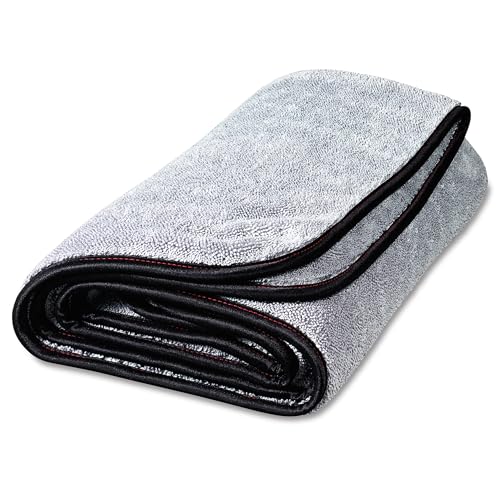
Griot's Garage designed the PFM Terry Weave Drying Towel around a single, uncompromising objective: removing the maximum amount of water from a vehicle's surface in the minimum number of passes while preserving the integrity of the paint beneath. The result is a 25-inch by 35-inch double-sided towel rated at a substantial 1120 GSM — one of the heaviest weights available in the consumer drying towel category — with a long-loop terry weave construction that the company says can hold up to five pounds of water before requiring a wring-out. In practice, that absorbency allows a single towel to dry a full-size sedan from roof to rocker panels without requiring a second towel or repeated wringing.
The oversized dimensions are a deliberate performance feature, not simply a marketing point. The extra surface area means fewer drag strokes across the paint per drying session, and the double-sided construction doubles the effective absorption capacity before you need to flip or replace the towel. Griot's Garage incorporated radiused corners with soft satin edging throughout the design — a detail specifically intended to prevent those corner-drag scratches that square-cut towels frequently introduce, particularly on wet paint that is more susceptible to marring. According to Wikipedia's entry on microfiber, the material's wedge-shaped fiber cross-sections are what enable this class of towel to lift and hold water so effectively compared to conventional cotton terry.
The PFM stands for Premium, Fast, Microfiber — and the naming is earned. This towel delivers drying speeds that are noticeably faster than standard 600–800 GSM alternatives, and the satin border construction eliminates the most common source of post-wash scratching. For anyone who takes paint protection seriously, this is the drying towel to own in 2026.
Pros:
Cons:
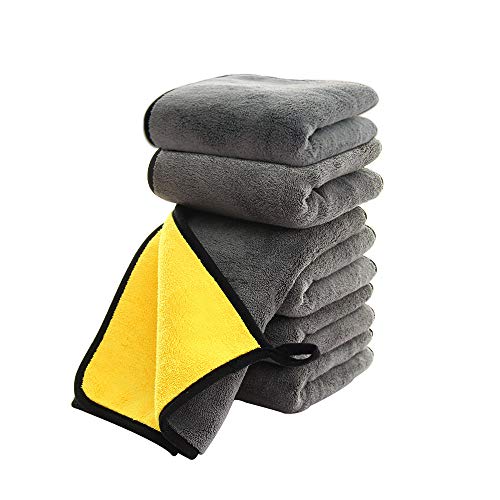
The SOFTBATFY 800 GSM Microfiber Towel occupies an important position in this roundup — it delivers a premium-feel fiber thickness at a price point that makes stocking a full set of dedicated towels accessible to everyday car owners rather than just professional detailers. Each towel in this six-pack measures 16 by 16 inches and carries an 800 GSM rating, placing it above the mid-range and firmly in the high-absorbency category. The brand claims that these towels can absorb up to ten times their weight in liquid, which positions them competitively against towels at twice the price for washing and drying applications.
The double-sided plush construction gives you two distinct working surfaces, and the ultra-soft fiber blend performs well across a wide range of surfaces including painted panels, glass, and trim. The scratch-free, lint-free, and swirl-free performance claims hold up in practice on standard passenger vehicles, motorcycles, and even boats and RVs — surfaces where both absorbency and gentleness matter in equal measure. The grey-and-yellow colorway also serves a functional purpose, helping you identify soiled towels quickly during a wash session so you never inadvertently drag a contaminated face across your clear coat.
For the budget-conscious detailer who needs a reliable everyday towel for routine washing and drying, the SOFTBATFY 800 GSM represents genuine value. It does not reach the professional-grade durability or fiber precision of The Rag Company or Griot's Garage options, but for the price point, it delivers performance that far exceeds what you would expect from the cost.
Pros:
Cons:
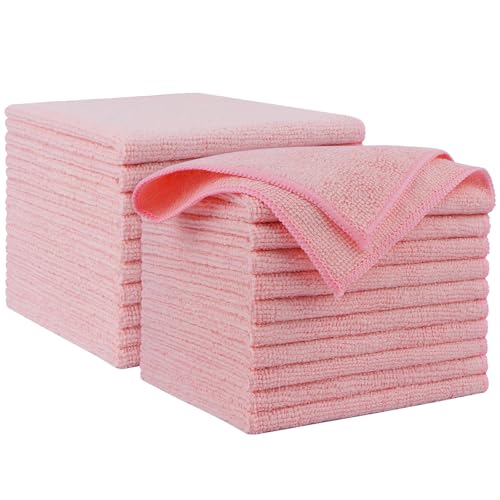
The AIDEA 20-Pack Microfiber Cleaning Cloths deliver a compelling value proposition for car owners who need a large stock of reliable, all-purpose cleaning towels without the premium pricing that accompanies professional detailing brands. Each cloth measures 12 by 12 inches and is constructed from premium microfiber materials that AIDEA describes as offering exceptional absorbency and rapid water-wicking performance. The pink colorway is well-suited for designating these as interior or glass-specific towels within a color-coded detailing system, keeping them separate from exterior paint towels to prevent cross-contamination.
Performance on glass, in particular, is a strong suit for the AIDEA cloths. The ultra-soft, non-abrasive construction leaves windows and windshields streak-free and lint-free, which is often the primary challenge with lower-quality microfiber products. On exterior painted surfaces, the cloths perform adequately for light dust removal and spray detailer application, though their lower GSM weight and smaller dimensions make them less suitable for heavy product removal or stand-alone drying compared to the higher-rated options in this guide. The durability claim of hundreds of wash cycles without loss of cleaning power is credible for this class of towel, making the 20-pack a cost-effective long-term purchase.
For car owners who want to cover every cleaning scenario without the cost of purchasing specialty towels for every individual task, the AIDEA 20-Pack provides depth of supply at a price point that makes routine replacement and disposal practical — a genuinely useful attribute when towels inevitably collect heavy contamination during engine bay cleaning or tar removal work.
Pros:
Cons:
Chemical Guys is one of the most recognizable brands in consumer automotive detailing, and the Happy Ending Ultra Plush Edgeless Microfiber Towel reflects the company's philosophy of delivering professional-grade tools to enthusiast-level users. The 16-inch by 16-inch towel is constructed from a premium 70/30 polyester-polyamide microfiber blend — the same fiber ratio used by The Rag Company's professional line — and the edgeless design eliminates the hemmed borders that represent the most common source of clear coat scratching during drying and buffing operations. The purple colorway is an instant visual identifier in a detailing kit, making it easy to designate these specifically for paint-contact work.
The all-purpose designation is earned through genuine versatility. The Happy Ending performs competently across drying, buffing, wax removal, and spray detailer application tasks, making it the type of towel you can reach for without overthinking which specific cloth matches the current step in your detailing sequence. The fiber pile is plush enough to cushion the contact between towel and clear coat effectively, and the 70/30 blend provides the balance between polyester's cleaning strength and polyamide's softness that defines high-quality microfiber construction. Water absorption is efficient and streak-free results are consistent, particularly on glass and dark paint where imperfections are most visible.
For detailers who also invest in quality polishing pads and compounds, the Happy Ending pairs naturally with that workflow. If you are building out a complete paint correction kit, our review of the best polishing pads of 2026 covers the mechanical side of the process while this towel handles the finishing cleanup. The Chemical Guys Happy Ending is not the deepest specialist in any single category, but its consistent cross-task reliability makes it one of the most practical all-purpose towels available in 2026.
Pros:
Cons:
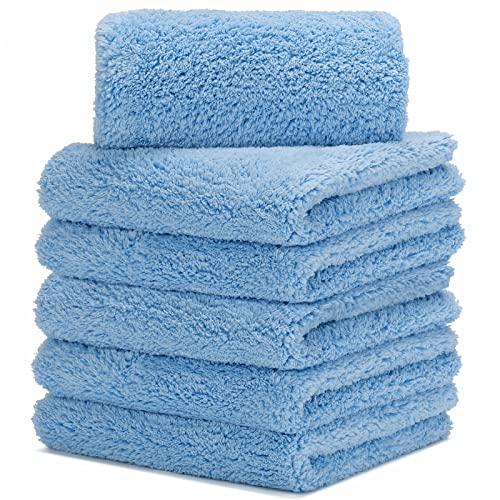
The CARCAREZ 450 GSM Microfiber Towels stand out in this roundup for one immediately practical design detail: the light blue colorway is specifically chosen because it highlights dirt and contamination clearly against the towel surface, giving you a reliable visual cue to flip the cloth before a soiled face contacts your paint. This seemingly minor feature addresses one of the most common causes of self-inflicted scratching during detailing sessions, where a contaminated towel continues to be used simply because the grime is not visible against a dark fabric. At 16 by 16 inches and 450 GSM, these towels occupy a productive middle ground between dedicated polishing cloths and heavy drying towels.
The professional-grade 450 GSM microfiber construction provides a fiber density and thickness that delivers measurably better performance than the 200–300 GSM cloths typically found in generic multipacks. The extra thickness translates to enhanced absorbency, better product encapsulation during wax and sealant removal, and a softer contact surface that protects the clear coat during buffing. CARCAREZ positions these as genuinely multipurpose towels capable of performing across car wash, window glass cleaning, drying, polishing, buffing, and finishing — and the 450 GSM specification is heavy enough to back that claim on all listed tasks. The six-pack format provides a practical working set that lets you cycle through fresh towels during a full vehicle detail without stopping to wash mid-session.
Compared to the 16 by 12-inch size standard of many competitors, the 16 by 16-inch dimensions represent the equivalent surface area of 1.78 smaller towels per unit, giving you more coverage per reach and reducing the total strokes required to complete each task. For a car owner who wants a single, reliable six-pack that handles every detailing task competently and is priced appropriately for routine replacement, the CARCAREZ 450 GSM is the most sensible daily-driver choice in this guide.
Pros:
Cons:
GSM — grams per square meter — is the single most important specification to understand when selecting a car microfiber towel for a specific task. Lower GSM towels in the 200–350 range are thinner, faster-drying, and well-suited for spray detailer application, glass cleaning, and interior wipe-downs where heavy absorbency is not required. Mid-range towels from 365 to 500 GSM represent the professional detailing sweet spot — thick enough to encapsulate product residue during polishing and wax removal while remaining nimble enough for controlled buffing work. High-GSM towels from 600 to 1200 GSM are purpose-built for drying, where raw water-holding capacity determines how many passes you need and how quickly the job is done. Matching the GSM to the task is not optional; using a thin polishing cloth for drying or a heavy drying towel for precision buffing compromises results on both ends.
Professional microfiber towels are constructed from a blend of polyester and polyamide fibers — typically in a 70/30 or 80/20 ratio — where each component serves a distinct function within the cloth. Polyester provides the structural cleaning strength and abrasion resistance that enables the towel to lift and remove detailing products, water, and contamination from surfaces efficiently. Polyamide, also known as nylon, contributes the softness, absorbency, and gentle surface contact that prevents the towel from marring paint or glass during use. A 70/30 polyester-polyamide ratio is widely considered the professional standard for polishing and wax removal towels, delivering the optimal balance of cleaning power and surface safety across automotive finishes.
The construction of a microfiber towel's edges is a detail that directly affects paint safety, particularly on clear-coated surfaces where micro-scratches accumulate over time and become visible as haze in direct light. Traditional hemmed towels use a sewn border that creates a stiff edge along the perimeter — and every time that border drags across wet or dry paint during buffing, drying, or detailing, it creates an opportunity for scratching that is absent from edgeless designs. Edgeless towels eliminate the border entirely, using a cut construction that keeps the soft fiber surface as the only contact point at every edge. For paint-contact applications — polishing, wax removal, drying, and spray detailer work — edgeless construction is the correct choice, and every professional detailer in 2026 stocks edgeless towels as a standard.
Establishing a color-coded towel system is a practical discipline that prevents the single most common source of self-inflicted paint damage in amateur detailing — using a towel that has touched rubber trim, engine components, exhaust tips, or floor mats on painted body panels. Designating specific colors for specific tasks means you never confuse a towel that last cleaned a wheel well with the cloth you use to buff a fresh coat of wax. Many professional detailers maintain at minimum three color categories: one for exterior painted surfaces and glass, one for interior surfaces including dash and upholstery, and one for wheels, tires, and lower body panels where contamination levels are highest. Light blue towels such as the CARCAREZ option are particularly well-suited for paint work because contamination shows clearly against the pale background, giving you an immediate visual warning before re-using a dirty cloth.
For dedicated vehicle drying tasks, you want a towel rated at a minimum of 600 GSM, with 800 to 1120 GSM representing the professional performance range where single-pass drying on full-size vehicles becomes achievable. Higher GSM means more fiber mass per square inch, which translates directly to increased water-holding capacity and fewer wringing cycles per drying session. The Griot's Garage PFM at 1120 GSM is the premium standard in this category, holding up to five pounds of water before requiring a wring-out and completing full-vehicle drying with minimal towel switching.
Yes, you can wash car microfiber towels in a standard household washing machine, but the process requires specific precautions to preserve the fiber structure and prevent contamination of other items. Always wash microfiber towels separately from regular laundry — cotton fabrics shed lint that embeds permanently in microfiber weaves and destroys their cleaning effectiveness. Use a microfiber-specific detergent or a small amount of regular liquid detergent without fabric softener or dryer sheets, which coat the fibers with residue that reduces absorbency. Wash on a gentle cycle with warm water, not hot, and air dry or tumble dry on low heat to prevent heat degradation of the polyamide fiber component.
A thorough single-vehicle detail session requires a minimum of 8 to 12 microfiber towels to complete properly without reusing contaminated cloths on sensitive surfaces. A practical allocation for a complete exterior detail includes two dedicated drying towels, two polishing and wax removal towels, two glass and trim towels, and two wheel and lower-body towels that you rotate as they become soiled. Professional detailers working on high-end vehicles often use 20 or more towels per session to ensure fresh contact surfaces at every stage, treating towel quantity as a direct investment in paint protection rather than an unnecessary expense.
Microfiber towels scratch paint when they carry abrasive contamination — embedded grit, metal particles, dirt, or dried product residue — that acts as sandpaper between the towel and the clear coat during use. This is why pre-washing new towels before first use is mandatory, as manufacturing residues and loose fibers can introduce contamination immediately. Beyond that, dropping a towel on the ground and continuing to use it is the most common mistake that introduces paint-scratching grit into an otherwise clean cloth. Hemmed borders, heavily used towels with degraded fibers, and towels contaminated by fabric softener residue are the other primary causes of microfiber-induced paint marring.
For any application where the towel makes direct contact with painted surfaces, glass, or polished metal, edgeless construction is worth the price premium without qualification. The hemmed edge on a traditional towel is stiff, abrasive, and designed for durability rather than surface safety — and every pass of that border across clear coat deposits micro-scratches that accumulate into visible haze over time. Edgeless towels cost marginally more per unit than hemmed alternatives in most cases, but the cost of a single professional paint correction to address swirl damage inflicted by stiff-bordered towels far exceeds the lifetime difference in towel pricing. The upgrade is a straightforward calculation in favor of edgeless construction for all paint-contact work.
Microfiber lint deposits on paint result from using towels that are new and unwashed, degraded from excessive heat exposure, or contaminated with fabric softener residue that causes fiber shedding. The most effective removal method is a thorough rinse with a quick detailer spray and a clean, high-quality microfiber cloth specifically designated for light wipe-downs — the same towel type that deposited the lint in the first place, except clean and properly conditioned. For stubborn lint embedded in a fresh wax or sealant layer, a clay bar treatment lifts the particles without disturbing the underlying protection. Preventing lint in the first place is more practical than removing it: always pre-wash new towels and never use fabric softener or dryer sheets in the washing cycle.
The right car microfiber towel is not a luxury — it is the last line of defense between your detailing work and a scratched, swirled finish that undermines every product you applied. Whether you choose the professional precision of The Rag Company Edgeless 365, the unmatched drying capacity of the Griot's Garage PFM, or the reliable everyday versatility of the CARCAREZ six-pack, each option in this guide gives you a clear performance advantage over generic cloths. Select the towel that matches your primary task, build a color-coded set, and treat every cloth as a direct investment in your vehicle's long-term finish quality.
 |
 |
 |
 |

About Diego Ramirez
Diego Ramirez has been wrenching on cars since his teenage years and has built a deep practical knowledge of automotive maintenance and paint protection through years of hands-on work. He specializes in fluid service intervals, preventive care routines, exterior protection products, and the consistent habits that extend a vehicle's lifespan well beyond average. At CarCareTotal, he covers car care guides, cleaning and detailing products, and exterior maintenance and protection reviews.
Get some FREE car parts & gear.. Or check out the latest free automotive manuals and build guides here.
Disable your ad blocker to unlock all the hidden deals. Hit the button below 🚗
| | | |
