by Joshua Thomas
Over 12 million air compressor hoses are sold each year in North America alone, yet nearly one in five buyers ends up replacing their purchase within the first twelve months due to kinking, cracking, or fitting failures. Choosing the right hose from the start can save hundreds of dollars in replacements and prevent dangerous blowouts on the job site. This guide examines the six best air compressor hoses of 2026, covering everything from heavy-duty rubber options to lightweight hybrid and recoil designs.
An air compressor is only as effective as the hose that delivers its output, and the wrong hose can bottleneck airflow, reduce tool performance, and create genuine safety hazards. Factors like hose material, inner diameter, working pressure rating, and cold-weather flexibility all play critical roles in determining real-world performance. Whether the application involves running a framing nailer on a construction site or inflating tires in a home garage, the hose must match the demands of the task at hand.
After evaluating dozens of options based on durability, flexibility, pressure ratings, and user feedback, the following six air compressor hoses stand out as the strongest performers in 2026. Each product has been assessed for both professional and DIY use cases, and the reviews below provide honest, detailed breakdowns of strengths and weaknesses. Those who also work in their garage may find our guide to the best garage lighting of 2026 a useful companion read for setting up a well-equipped workspace.
Contents






The Milton 1635 is a traditional rubber air hose built for demanding professional environments where reliability cannot be compromised. Constructed from EPDM (ethylene propylene diene monomer) rubber, this 50-foot hose features a generous 3/8-inch inner diameter that delivers excellent airflow for high-demand pneumatic tools such as impact wrenches, die grinders, and sandblasters. The larger bore size means less pressure drop across the length of the hose compared to 1/4-inch alternatives, which translates directly into better tool performance.
What sets the Milton 1635 apart from cheaper rubber hoses is its exceptional pressure rating. With a maximum working pressure of 250 PSI and a burst pressure of 1,000 PSI, this hose provides a 4:1 safety margin that exceeds industry safety standards for pneumatic hose assemblies. The rugged construction resists oil, grease, and UV degradation, making it equally suitable for indoor shop use and outdoor job sites. The brass fittings are crimped rather than clamped, which reduces the chance of blowoff under high pressure.
The primary trade-off with the Milton 1635 is weight; at roughly 50 feet of solid rubber construction with a 3/8-inch bore, this hose is noticeably heavier than hybrid or polyurethane alternatives. It also tends to retain coil memory in cold weather, though it loosens up reasonably well once pressurized. For buyers who prioritize maximum airflow and industrial-grade durability over portability, the Milton 1635 remains the gold standard in 2026.
Pros:
Cons:
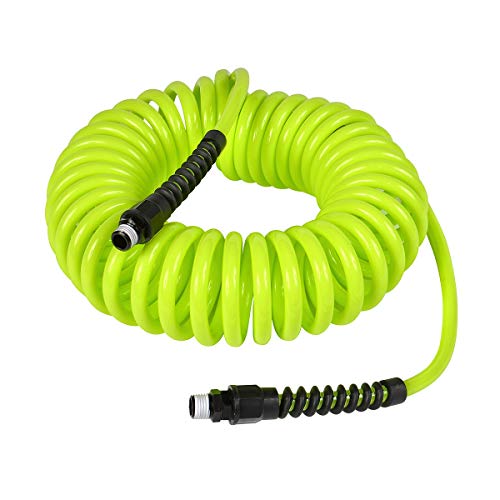
The Flexzilla Recoil Air Hose is a purpose-built solution for buyers who need a tidy, tangle-free setup in a compact workspace. Unlike traditional straight hoses that sprawl across the floor, this 25-foot recoil design automatically retracts after use, keeping the work area clean and reducing trip hazards. The polyurethane construction maintains its coil memory far better than nylon alternatives, which means the hose snaps back into shape consistently rather than developing kinks or permanent bends over time.
Flexibility is where this hose truly excels, operating effectively across an impressive temperature range of -40°F to 165°F. That kind of cold-weather performance is rare in recoil hoses, and it makes the Flexzilla Recoil a strong choice for unheated garages, outdoor workshops, and seasonal contractors who work through winter months. The polyurethane material also resists brittleness over time, a common failure point in cheaper coiled hoses that crack and split after a year or two of use.
The main limitation is the 1/4-inch inner diameter and 25-foot length, which restrict this hose to lighter pneumatic tasks such as brad nailers, blow guns, tire inflation, and airbrush work. High-demand tools like impact wrenches and die grinders will experience noticeable pressure drop through the narrower bore. Buyers who need a recoil hose for heavy-duty applications should consider stepping up to a 3/8-inch straight hose instead. For light-duty and moderate tasks, however, the Flexzilla Recoil is the cleanest and most convenient option available in 2026.
Pros:
Cons:
The Coilhose Pneumatics Flexeel occupies an interesting middle ground between lightweight polyurethane hoses and heavier rubber options, and it does so remarkably well. This 50-foot hose features a reinforced polyurethane construction with integrated braided nylon reinforcement, giving it the flexibility and light weight of a poly hose with significantly improved burst strength and kink resistance. The transparent blue color is not just cosmetic; it allows users to visually inspect the hose for moisture buildup, oil contamination, or internal damage without disconnecting anything.
Where the Flexeel truly differentiates itself is in its resistance to environmental abuse. The polyurethane tube and cover stand up to weathering, abrasion, oil exposure, and cold temperatures without cracking or becoming stiff. This makes it equally at home on an outdoor construction site as it is in a climate-controlled manufacturing facility. The reusable strain relief fittings on both ends are a thoughtful touch, reducing stress at the connection points where most hose failures originate. Those strain reliefs also make fitting replacement straightforward if a coupling does eventually wear out.
The 1/4-inch inner diameter does limit the Flexeel to moderate-demand tools, so buyers running large impact wrenches or sandblasters should look at 3/8-inch options like the Milton 1635 instead. For general shop work, finish nailers, staple guns, and tire inflation, however, the Coilhose Flexeel delivers a superb balance of durability, flexibility, and professional-grade build quality. It is particularly well suited to contractors who transition frequently between indoor and outdoor environments and need a hose that performs consistently regardless of conditions.
Pros:
Cons:

For buyers who need to cover serious distance from their compressor without daisy-chaining multiple shorter hoses, the Flexzilla Pro 100-foot model is the clear winner in the extra-long category. This hybrid polymer hose delivers 100 feet of reach in a package that remains remarkably flexible and manageable, even in subzero temperatures as low as -40°F. The all-weather flexibility is not a marketing exaggeration; this hose genuinely remains pliable in conditions that would turn most rubber hoses into rigid, uncooperative coils.
The Pro-series distinction matters here because of the reusable anodized aircraft aluminum fittings. Unlike standard crimped or barb fittings, these can be disassembled and reinstalled if a fitting gets damaged or the hose end needs to be trimmed. On a 100-foot hose, this field-repairability is a significant advantage; replacing the entire hose because of a single damaged fitting on a job site is expensive and wasteful. The bend reinforcement built into the fittings also reduces the wear and tear that commonly occurs at connection points, extending the usable life of the hose considerably. Similar attention to durability and long-term value can be found in other automotive tools and accessories worth investing in.
The trade-off for the extended 100-foot length is the 1/4-inch inner diameter, which will produce measurable pressure drop at that distance when running high-demand tools. For nailers, blow guns, tire inflation, and light-to-moderate pneumatic tasks, the pressure drop is negligible and performance remains excellent. Buyers who need 100 feet of reach for heavy-duty tools should consider running a larger-diameter lead hose for the first 50 feet and using this as an extension for the final stretch. Despite that caveat, the Flexzilla Pro 100-foot model earns its place as the best long-reach hose of 2026.
Pros:
Cons:
The Flexzilla Pro 3/8-inch by 50-foot model is, without qualification, the best all-around air compressor hose available in 2026. It combines the larger 3/8-inch bore needed for high-demand pneumatic tools with the lightweight hybrid construction and extreme flexibility that the Flexzilla line is known for. This is the hose that works equally well whether the task involves running a framing nailer on a roof deck or powering an impact wrench in a professional auto shop. The airflow is sufficient for virtually any common pneumatic tool, and the 50-foot length covers the vast majority of workshop and job site scenarios.
The build quality of the Pro series is evident in every detail. The abrasion-resistant outer cover shrugs off dragging across concrete, gravel, and rough surfaces that would chew through cheaper hoses within weeks. The crush-resistant aircraft aluminum fittings with integrated bend restrictors address the two most common points of hose failure: coupling damage from being stepped on or run over, and kinking at the connection point from sharp bends. Like its 100-foot sibling, the fittings are fully reusable and field-repairable, meaning a damaged end can be trimmed and refitted on site in minutes without any special tools.
The all-weather flexibility rating of -40°F to 140°F ensures this hose performs in extreme cold without becoming stiff or difficult to manage, and it tolerates high-heat environments near engines and exhaust systems without degrading. The distinctive ZillaGreen color is also practically useful, making the hose highly visible on busy job sites where trip hazards are a serious safety concern. For buyers who want one hose that handles everything from light finish work to heavy-duty professional tasks, the Flexzilla Pro 3/8-inch is the definitive choice. Pairing it with proper shop safety equipment like the best fire extinguishers makes for a well-prepared workspace.
Pros:
Cons:
The three main hose materials each serve different use cases, and understanding the trade-offs is essential for making the right purchase. Rubber hoses like the Milton 1635 offer the highest pressure ratings and best resistance to oils and chemicals, but they are the heaviest option and tend to retain coil memory in cold weather. Hybrid polymer hoses like the Flexzilla Pro line split the difference, offering near-rubber durability at roughly half the weight with superior cold-weather flexibility. Polyurethane hoses like the Coilhose Flexeel are the lightest and most flexible option, making them ideal for overhead work and confined spaces, though they generally have lower maximum pressure ratings than rubber.
Inner diameter (ID) is the single most important specification for matching a hose to specific tools. A 1/4-inch ID hose is perfectly adequate for nailers, staplers, blow guns, airbrushes, and tire inflation, where CFM (cubic feet per minute) demands are relatively low. A 3/8-inch ID hose is necessary for high-demand tools such as impact wrenches, die grinders, sandblasters, and paint sprayers that require sustained high-volume airflow. Running a high-CFM tool on an undersized hose causes pressure drop, reduced tool performance, and excessive compressor cycling.
Longer hoses provide more reach but introduce pressure drop, which is the loss of air pressure between the compressor and the tool end of the hose. As a general rule, every 50 feet of 1/4-inch hose produces approximately 3 to 5 PSI of pressure drop at moderate flow rates, while 3/8-inch hose produces roughly 1 to 2 PSI of drop over the same distance. For hoses under 50 feet, pressure drop is rarely a practical concern for most tools. For 100-foot runs, selecting the larger 3/8-inch bore becomes important to maintain adequate pressure at the tool.
Hose fittings deserve careful attention because they represent the most common point of failure in any air hose assembly. Crimped fittings offer a permanent, leak-free connection but require complete hose replacement if a fitting fails. Reusable fittings, like those on the Flexzilla Pro series, can be disassembled and reinstalled, allowing field repair without special tools. Barb fittings with hose clamps are the least expensive option but are also the most prone to leaks and blowoff under high pressure. For professional use, reusable fittings offer the best long-term value despite their higher upfront cost. Buyers who invest in quality tools across the board, from hoses to products like the best rust converters for maintaining equipment, tend to see the best return on their investment over time.
A 3/8-inch by 50-foot hybrid or rubber hose is the best all-around choice for a home garage. The 3/8-inch bore provides sufficient airflow for both light tasks like tire inflation and heavier tasks like running an impact wrench, while the 50-foot length covers most garage layouts comfortably. Buyers who only use nailers and blow guns can save weight by choosing a 1/4-inch hose, but the 3/8-inch option provides greater versatility as tool collections grow over time.
Most quality air compressor hoses last between five and ten years under normal use, though this depends heavily on material, storage conditions, and exposure to chemicals and UV light. Rubber hoses tend to develop cracks and dry rot after prolonged sun exposure, while polyurethane and hybrid hoses resist UV degradation more effectively. Any hose that shows visible cracking, bulging, persistent kinking, or fitting leaks should be replaced immediately regardless of age, as these are signs of impending failure that could cause injury.
Standard air hose fittings in the United States use NPT (National Pipe Thread) connections, so fittings from different manufacturers are generally interchangeable as long as the thread size matches. The most common sizes are 1/4-inch NPT for lighter hoses and 3/8-inch NPT for heavier-duty applications. Quick-connect couplers and plugs also follow industry-standard profiles (Industrial, Automotive, or ARO), but mixing different quick-connect styles will result in air leaks and poor connections. Buyers should verify that all quick-connect components share the same profile.
Hybrid polymer hoses outperform traditional rubber in cold weather by a significant margin. Most hybrid hoses, including the Flexzilla Pro line, remain fully flexible down to -40°F, while rubber hoses typically begin stiffening around 0°F to 10°F and become difficult to manage below that. For buyers who work in unheated garages or outdoor environments during winter months, a hybrid hose is the clearly superior choice for cold-weather flexibility and ease of handling.
Kinking occurs when a hose bends sharply enough to collapse the inner tube, blocking airflow. The most common causes are sharp bends at fittings, hose memory from tight coiling during storage, and insufficient flexibility in the hose material. Preventing kinks starts with choosing a hose with good flexibility ratings and integrated bend restrictors at the fittings. Proper storage on a hose reel or in loose coils rather than tight wraps also reduces kinking. Hybrid polymer hoses are generally the most kink-resistant material available in 2026.
An undersized hose forces the compressor to work harder and cycle more frequently because the restricted airflow creates back pressure and slower tank recovery. A 3/8-inch hose delivers roughly two to three times the volume of air per minute compared to a 1/4-inch hose at the same pressure, which means the compressor runs less often and the tank stays charged longer between cycles. Over time, this reduced cycling extends the compressor motor life and lowers electricity costs, making the larger-bore hose a worthwhile investment even for moderate-demand applications.
The right air compressor hose makes a measurable difference in tool performance, workplace safety, and long-term cost of ownership. For most buyers, the Flexzilla Pro 3/8-inch by 50-foot model offers the best combination of airflow, durability, and flexibility, earning its position as the top overall recommendation for 2026. Take stock of the tools in the current collection, consider the most demanding application the hose will need to support, and select the material and diameter that match those needs — a well-chosen hose will deliver years of reliable, frustration-free service.
 |
 |
 |
 |

About Joshua Thomas
Joshua Thomas holds a Bachelor of Science in Mechanical Engineering from San Diego State University and has spent years applying that technical foundation to hands-on automotive work — from routine maintenance to full mechanical repairs. He founded CarCareTotal in 2017 to give car owners the kind of clear, practical guidance that helps them understand what is happening under the hood and make smarter decisions about upkeep and repairs. At CarCareTotal, he oversees editorial direction and covers automotive fundamentals, maintenance guides, and troubleshooting resources for everyday drivers.
Get some FREE car parts & gear.. Or check out the latest free automotive manuals and build guides here.
Disable your ad blocker to unlock all the hidden deals. Hit the button below 🚗
| | | |
