Interior ›
by Rachel Park
Over 80 percent of drivers now use a smartphone for navigation, yet a 2026 NHTSA study found that an unsecured phone increases crash risk by 66 percent. A quality car phone holder eliminates that danger. It keeps the screen visible, the hands free, and the driver focused on the road ahead.
The car phone holder market has exploded in recent years. MagSafe mounts, vacuum-suction dashboards, air vent clips, and even CD slot designs all compete for attention. Each mounting style suits different vehicles and driving habits. Picking the wrong one means a phone sliding across the dashboard on the first sharp turn. Picking the right one means years of reliable, hands-free use. For drivers who also want to protect their vehicle's interior, a solid phone mount is one of the simplest upgrades available.
This guide breaks down the six best car phone holders of 2026. Every mount listed here was evaluated for grip strength, ease of installation, device compatibility, and overall build quality. Whether the priority is wireless charging, magnetic snap-on convenience, or universal clamp reliability, there is a clear winner in each category below.
Contents
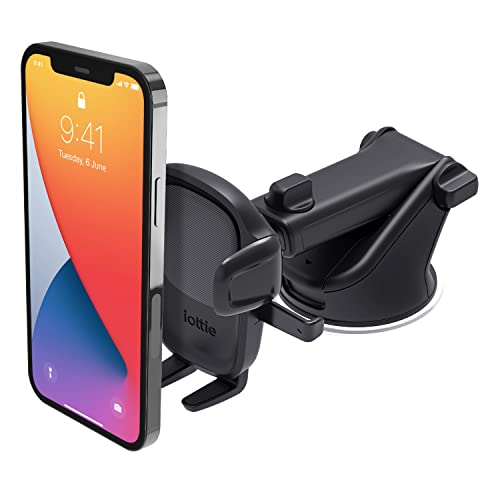





The iOttie Easy One Touch Signature has earned its reputation as the gold standard in car phone mounts. The patented one-touch mechanism is genuinely one-handed. Press the phone against the trigger button, and the locking arms snap shut instantly. Releasing takes one squeeze. No fumbling, no adjusting. It works exactly as advertised.
The suction cup base grips both dashboards and windshields with impressive tenacity. A telescopic arm extends reach without sacrificing stability. iOttie redesigned the trigger button in 2026 to be larger, accommodating phones in bulky cases without issue. The magnetic cord organizer near the bottom foot is a small but thoughtful touch that keeps charging cables from dangling everywhere.
Build quality is a step above most competitors. The materials feel solid, the joints are tight, and the suction cup holds through summer heat. For drivers who want a traditional clamp-style mount that simply works every single time, the iOttie remains the one to beat.
Pros:
Cons:
The Anker Prime is a game-changer for iPhone owners who are tired of slow wireless charging in the car. Qi2-certified at 25 watts, it charges an iPhone 17 Pro to 50 percent in just 22 minutes. That is six times faster than the standard 5W pads found in most competing mounts. The included 60W adapter means no need to hunt for a compatible charger separately.
What sets this mount apart is the TÜV-certified AirCool system. An aerospace-grade thermoelectric cooler (TEC) keeps the phone below 89°F during charging. Heat is the silent killer of smartphone batteries, and Anker addresses it head-on. The result is faster charging without the usual thermal throttling that plagues other wireless mounts on hot summer days.
The air vent mount offers ±32° tilt adjustment. Switching between portrait and landscape is seamless. Magnets are strong enough to hold an iPhone 17 Pro Max securely, though Android users without MagSafe cases will need an adapter ring. For anyone who values charging speed above all else, the Anker Prime is the clear pick in 2026.
Pros:
Cons:
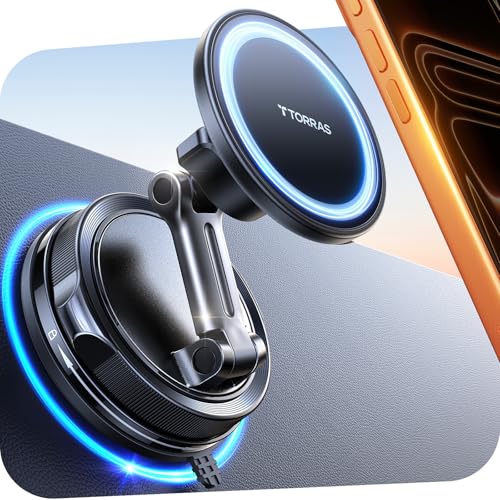
TORRAS built this mount for drivers who have watched their phone fly off a dashboard on a pothole. The headline spec: 98 pounds of suction force from a vacuum-lock system backed by four-layer nano gel. That is not marketing fluff. The suction cup holds through temperature extremes from -44°F to 203°F, and TORRAS claims 9,999+ adhesion tests back up the durability claim.
The magnetic side is equally impressive. Twenty-four N55 neodymium magnets arranged in a dual-ring matrix deliver 3,600 grams-force of magnetic hold. TORRAS tested this through 8,000 off-road vibration cycles. The enclosed magnetic field design prevents signal interference, so GPS navigation and phone calls stay uninterrupted. That detail alone puts it ahead of cheaper magnetic mounts that can cause compass drift.
Compatibility is broad. Any iPhone 12 through 17 snaps on directly. For non-MagSafe phones, two included metal rings add magnetic capability without blocking wireless charging. The 360° ball joint allows precise angle adjustments. For rough roads, gravel driveways, or off-road adventures, this is the mount that will not let go. Drivers who also invest in proper shock absorbers will appreciate a mount that can handle the same punishment.
Pros:
Cons:
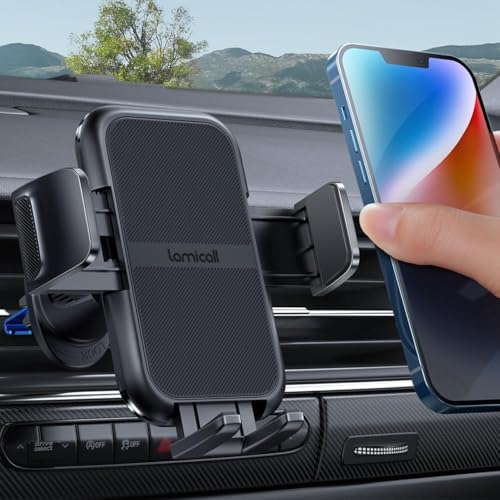
Lamicall delivers a no-nonsense vent mount that punches well above its price. The 2026 version introduces a wider clamp and metal hook system with 4-lock protection. It grips both vertical and horizontal air vents securely. Even aggressive driving through turns and speed bumps does not shake it loose. The hook extension fits vent blades between 10mm and 29mm thick, covering the vast majority of modern vehicles.
The standout feature is thick-case compatibility. The upgraded arms open wide enough for wallet cases, battery cases, and rugged protective cases that defeat most competing vent mounts. An adjustable foot accommodates different phone sizes without leaving gaps. The ultra-thick silicone backing prevents scratches — a real concern for drivers who dock and undock their phone multiple times daily.
Materials are solid for the price point. PC and ABS construction handles temperatures from -4°F to 194°F. The soft silicone contact surfaces feel premium. It will not win any design awards, but it holds phones firmly, installs in seconds, and costs a fraction of the magnetic or charging mounts on this list. For budget-conscious buyers who need reliable function, Lamicall is the smart pick.

Pros:
Cons:
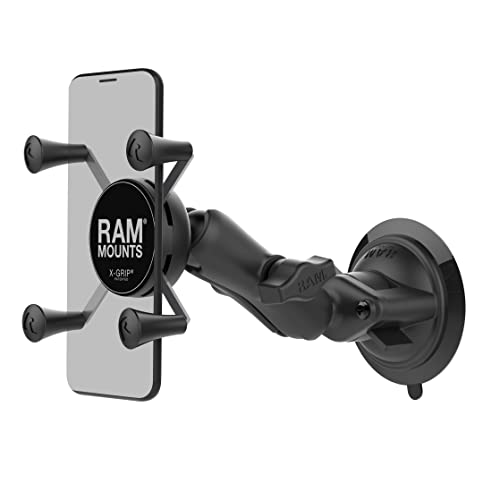
RAM MOUNTS is the brand that military, law enforcement, and commercial fleets trust. The X-Grip system brings that same industrial-grade reliability to everyday drivers. The spring-loaded X-design with rubber caps grips phones firmly without hiding the screen. An optional tether provides extra security for off-road or rugged driving where vibration testing matters in the real world, not just a spec sheet.
The Twist-Lock suction cup base is the strongest windshield attachment in this lineup. Once locked, it stays locked. The B-size medium double-socket arm uses RAM's signature ball-and-socket design for near-infinite adjustability. Point the phone at any angle. Tilt it any direction. It stays put. The stainless steel and high-strength composite construction means this mount will likely outlast the vehicle it is installed in.
The X-Grip is not the sleekest option. It looks utilitarian. There is no wireless charging, no magnetic snap-on convenience. But for truck drivers, construction workers, delivery drivers, and anyone who needs a mount that absolutely will not fail under harsh conditions, the RAM MOUNTS X-Grip is the industry benchmark. It pairs perfectly with other heavy-duty vehicle accessories like quality floor mats built to handle tough daily use.
Pros:
Cons:
Millions of cars still have CD players that nobody uses. This mount turns that dead slot into a surprisingly stable phone holder. The CD slot insertion mechanism locks in with a firm click. The position sits lower on the dash than windshield mounts, keeping the phone closer to eye level without blocking the road view. It is one of the most ergonomic mounting positions available.
A 360° rotatable ball head allows full angle adjustment. The one-button release mechanism makes removing the phone quick and painless. Heat-resistant PC and ABS construction is sturdier than cheaper all-plastic alternatives. Foldable holding feet keep the charging port accessible. The sponge-padded cradle surface prevents scratches and slipping.
Compatibility spans phones from 4.0 to 6.8 inches, covering virtually every smartphone on the market in 2026. The adjustable arms accommodate cases of varying thickness. The main limitation is obvious: no CD slot, no mount. But for the many drivers sitting on an unused CD player, this is a clever, affordable, and stable solution that avoids suction cups and vent clips entirely. According to the Consumer Reports auto division, CD-slot mounts often rank among the most stable mounting options due to the rigid insertion point.
Pros:
Cons:
VICSEED has built a following of over five million users worldwide, and the 2026 upgrade shows why. Aviation-grade materials make this one of the most durable vent mounts available. VICSEED claims it passed the most extreme durability tests on the market, and the upgraded clamping arm backs that up. It opens and closes smoothly without the hinge fatigue that plagues cheaper mounts after a few months.
The cradle uses a pinch-style design with thick silicone pads on every contact point. Phones stay locked in place on rough roads. The 360° rotation allows instant switching between portrait and landscape. The universal vent clip deserves special mention — a three-point support system grips both horizontal and vertical vent blades without slipping. It is genuinely one of the most universally compatible vent clips tested in 2026.
The charging port remains fully accessible regardless of phone size. Build quality matches mounts costing twice as much. The only real drawback is the same limitation every vent mount shares: it partially blocks airflow from the vent it occupies. For drivers who want a proven, durable vent mount from a brand with a massive track record, VICSEED delivers. It also makes a great companion to a clean car seat protector setup for those keeping their vehicle interior in top shape.
Pros:
Cons:
The mounting location determines everything else. Each type has clear trade-offs:
Test the mounting location before committing. Sit in the driver's seat. Hold the phone where the mount would place it. Check for windshield obstruction and ease of reach.
Not every mount fits every phone. Key dimensions to check:
A phone holder is useless if the phone shakes or falls. Stability depends on several factors:
Wireless charging in a car mount saves cable hassle. But not all wireless mounts charge equally:
For drivers who prioritize charging, the Anker Prime is the undisputed leader. For those who charge via cable and just need a mount, skip the premium and save with a clamp or magnetic option.
Laws vary by state. Most U.S. states allow phone holders as long as the phone is used hands-free and the mount does not obstruct the driver's view. Windshield-mounted holders face restrictions in some states that limit how much of the windshield can be covered. Check local regulations before installing a windshield mount. Dashboard and vent mounts generally face fewer legal issues.
No. Modern magnetic mounts use neodymium magnets with enclosed field designs that do not interfere with phone electronics, GPS signals, or wireless charging. Apple designed MagSafe specifically for magnetic accessories. The only component that can be affected is a physical compass, but smartphones use digital compasses that compensate for external magnetic fields automatically.
A mount that places the phone near the top of the dashboard or lower portion of the windshield is generally safest. This position keeps the phone in the driver's peripheral vision without requiring eyes to leave the road for long. Vent-mounted phones sit lower, which may require glancing further down. The ideal height lets the driver see both navigation and the road with minimal eye movement.
Clean the suction cup every two to three months with warm water and mild soap. Dust and oils from the dashboard reduce suction over time. Let it air dry completely before reattaching. Most quality suction cups last one to two years before the material degrades enough to require replacement. If the mount starts slipping after cleaning, it is time for a new one.
Quality vent mounts with silicone-padded clips cause no damage under normal use. Cheap plastic clips without padding can scratch or crack thin vent blades over time. The main risk is with thin, fragile vent fins found in some luxury vehicles. Always check the mount's maximum vent blade thickness specification before purchasing. Remove the mount periodically to ensure no stress marks are developing.
Standard wireless car mounts charge at 5-7.5W, which is significantly slower than a wired connection at 20-30W. However, Qi2 mounts like the Anker Prime at 25W approach wired speeds. For most daily commutes, even a 7.5W wireless mount provides enough charge to maintain or slowly increase battery level during a 30-minute drive. For road trips or heavy GPS use that drains the battery faster, a 25W mount or wired connection is recommended.
Every driver deserves a phone mount that stays put, fits their vehicle, and matches how they actually drive. The iOttie Easy One Touch Signature wins for overall reliability, the Anker Prime dominates wireless charging, and the TORRAS Vacuum Mount is unmatched for sheer hold strength. Pick the mounting style that suits the car, check compatibility with the phone and case, and stop risking a loose phone on the dashboard — a good car phone holder is one of the cheapest safety upgrades any driver can make in 2026.
 |
 |
 |
 |

About Rachel Park
Rachel Park specializes in the interior and exterior upgrades that meaningfully change how a car looks, sounds, and feels on a daily basis. She has hands-on experience with head unit installations and audio system builds, LED and HID lighting conversions, interior refresh projects, and cosmetic exterior work — evaluated from both a DIY accessibility and quality-of-result perspective. At CarCareTotal, she covers car audio and electronics, lighting upgrades, and interior and exterior styling accessories.
Get some FREE car parts & gear.. Or check out the latest free automotive manuals and build guides here.
Disable your ad blocker to unlock all the hidden deals. Hit the button below 🚗
| | | |
