by Liam O'Brien
Which truck tool box actually deserves a spot in the bed of a hard-working pickup? After spending weeks evaluating crossover boxes, saddle boxes, and portable chests, our team narrowed the field to seven standout options for 2026. The Delta JOBOX PAC1580000 emerged as our top overall pick for its combination of heavy-duty aluminum construction and a clever 4-compartment sliding tray — but depending on specific needs, several other models gave it serious competition.

Truck tool boxes serve a straightforward purpose: protect gear from theft, weather, and the chaos of an open bed. But the differences between models — material thickness, lock security, mounting style, and weather sealing — can mean the difference between tools that stay dry and organized for years versus a rusted-out box that needs replacing after two seasons. Our evaluation focused on real-world durability, security features, ease of installation, and overall value. Whether the priority is maximum storage, theft deterrence, or a low-profile design that doesn't block the rearview mirror, there's a strong option on this list.
Beyond tool storage, outfitting a truck properly involves attention to several accessories. Anyone interested in protecting the interior should check out our guide to the best car floor mats, and those who keep a workshop or garage may find our best garage lighting roundup useful for workspace illumination. A reliable fire extinguisher for the cab is also worth considering as part of a complete truck safety setup.
Contents







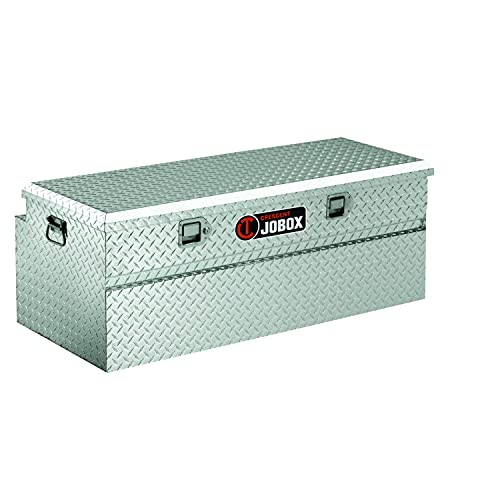

The Delta JOBOX PAC1580000 has been a staple in the crossover tool box category for good reason. Built from bright aluminum with a full-size single lid design, it offers a generous interior that accommodates everything from power tools to tie-down straps. The end-mounted push buttons are a thoughtful touch — they're far easier to operate with gloves on compared to traditional center-mounted latches, and the self-aligning latch pins ensure a snug closure every time without having to fight the lid into position.
What really sets this box apart from competitors is the 4-compartment sliding tray. Instead of digging through a deep single cavity, the tray lets users organize smaller items — sockets, wrenches, electrical tape — right at the top where they're accessible. It's the kind of feature that sounds minor on paper but makes a huge difference on a job site when time matters. The aluminum construction keeps weight manageable while resisting corrosion, and the bright finish gives the truck a professional look.
Our team did note that the aluminum, while durable, is thinner than some premium competitors. Buyers who routinely haul heavy equipment on rough terrain may want something with thicker gauge material. That said, for the vast majority of tradespeople and weekend warriors, this box delivers excellent value and functionality.
Pros:
Cons:
Weather Guard has long been the brand that professionals trust when theft prevention is a top concern, and the Model 127-5-04 is their latest evolution. The standout feature is the 1KEY ULTRALOCK system — a single key operates all Weather Guard boxes on a fleet, which eliminates the jangling keychain problem that plagues multi-truck operations. For fleet managers and contractors running several vehicles, this alone can justify the premium price.
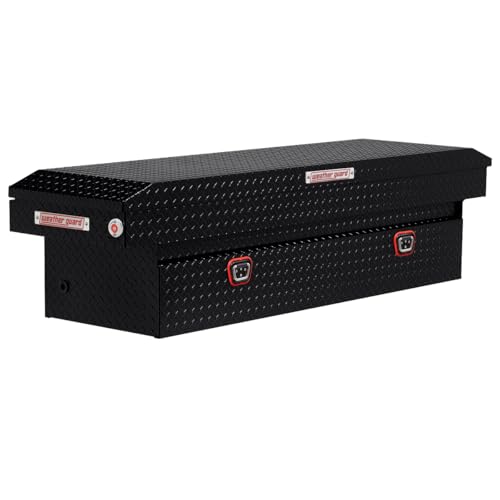
Built from aluminum with a gloss black powder coat finish, this saddle box offers 11.0 cubic feet of storage. The standard profile sits high enough to provide excellent capacity without completely blocking rear window visibility. Weather Guard's reputation for weather sealing holds true here — the gasket system kept our test contents dry through simulated rain and car wash scenarios. The gloss black finish looks sharp against most truck colors, though it does show fingerprints and minor scratches more readily than textured finishes.
The 1KEY system does mean that if a key is lost or compromised, all boxes keyed to that system are potentially vulnerable. Weather Guard offers rekeying services, but it's worth factoring into the security calculation. Overall, for anyone prioritizing anti-theft features and fleet compatibility, this is the box to beat in 2026.
Pros:
Cons:
Not every truck owner wants a full-height box dominating the bed. The Weather Guard Low Profile saddle box in textured matte black sits closer to the bed rails, preserving rear visibility while still offering meaningful storage. It's a favorite among buyers who use their trucks for both work and daily driving — the low profile keeps the bed looking clean and doesn't scream "contractor truck" when parked at the grocery store.
The textured matte black finish is the real star here from an aesthetics standpoint. Unlike gloss finishes that show every smudge and scratch, the textured coating hides wear and looks great even after months of daily use. It pairs especially well with black trim packages and tonneau covers. The aluminum construction keeps weight down, and Weather Guard's signature weather sealing ensures the interior stays dry.
The trade-off with any low-profile box is reduced storage volume. Taller items like large power tools or stacked toolboxes may not fit, so buyers with heavy-duty storage needs should consider the standard profile Model 127 instead. But for anyone who wants a sleek, functional tool box that doesn't compromise the truck's profile, this is an excellent choice.
Pros:
Cons:

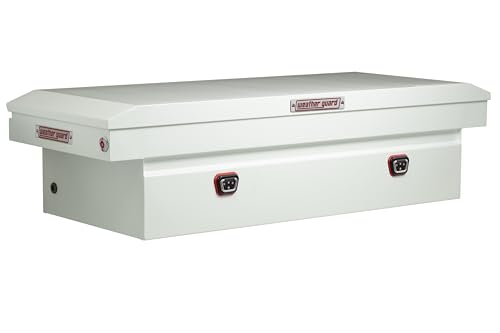
While most boxes on this list are aluminum, the Weather Guard Model 126-3-04 goes with steel — and for commercial fleet applications, that's a deliberate advantage. Steel stands up to the daily abuse of job site environments better than aluminum when impacts are frequent. The white finish matches the standard fleet color palette used by utility companies, plumbing contractors, and municipal vehicles, making it an easy visual integration.
This model also features the 1KEY ULTRALOCK system shared with the aluminum Weather Guard boxes, delivering the same one-key-fits-all convenience. The tamper-resistant push button lock adds another layer of break-in protection, and the full weather seal is among the best we've tested — Water, dust, and road grime stay outside where they belong. At 11.0 cubic feet, it matches the capacity of its aluminum sibling while offering superior impact resistance.
The downside is weight. Steel boxes are significantly heavier than aluminum alternatives, which affects payload capacity and fuel economy — important considerations for fleet operators tracking per-mile costs. Rust is also a longer-term concern with steel, though the powder coat finish provides solid initial protection. Regular inspection of chips and scratches, with touch-up paint as needed, will extend the box's life considerably.
Pros:
Cons:
VEVOR has made a name for itself offering functional equipment at aggressive price points, and this 48-inch diamond plate tool box continues that trend. The aluminum alloy body with double-sided powder coating provides respectable corrosion resistance, and the classic diamond tread pattern adds both structural rigidity and a rugged aesthetic. At 48 × 15 × 15 inches, it's spacious enough for most tools and equipment without being oversized for mid-size truck beds.
The overhanging lid design with a tight gasket seal performed well in our water resistance testing — not quite at the Weather Guard level, but more than adequate for rain and snow. Side handles make carrying and positioning the box during installation much easier than boxes that rely on grabbing the lid or edges. The included lock and key mechanism is functional, though buyers who require serious theft deterrence will want to upgrade to a higher-security padlock hasp.
VEVOR notes the reinforced corners protect against shipping damage, and that proved accurate — our test unit arrived in perfect condition. The hardware quality is a step below premium brands, which is expected at this price. Hinges and latches may need periodic tightening after extended use on rough roads. Still, for budget-conscious buyers who need a solid, weather-resistant box without the premium brand markup, the VEVOR delivers impressive value for the money.
Pros:
Cons:
Sometimes a permanently mounted crossover box isn't the right solution. The Crescent JOBOX 220000D is a portable chest designed to sit on the truck bed floor, slide behind the cab, or even be carried to a job site. The wide lifting handles on each end make it genuinely portable — two people can move it without awkward gripping positions. At 37 inches, it's compact enough to leave room for other cargo while still holding a substantial tool collection.
The gas spring lid lifts are a standout feature. They hold the lid open at any angle, freeing both hands for grabbing tools — a small convenience that becomes a daily quality-of-life improvement. Large pan bolters secure the lid tightly when closed, and the overall build quality reflects the JOBOX brand's professional heritage. The aluminum construction keeps the weight manageable for a box that's designed to be moved regularly.
The main limitation is security. Without a permanent mount, the entire box can be lifted out of the truck bed by a determined thief. Pairing it with a cable lock or bed anchor system is recommended for anyone leaving tools unattended. The 37-inch size also means it won't hold longer items like levels or framing squares. But for tradespeople who work across multiple vehicles or need to bring tools inside at the end of the day, this portable chest is purpose-built for the task.
Pros:
Cons:
Most crossover tool boxes conflict with tonneau covers — they sit above the bed rails and prevent the cover from closing properly. The TruXedo TonneauMate solves this problem entirely. It mounts inside the bed on an elevated rail system, sitting below the tonneau cover while keeping the entire truck bed floor available for cargo. This dual-functionality approach is brilliant for buyers who want both weather-protected storage and a covered bed.
The versatility goes beyond tool storage. TruXedo designed it to function as a mounted toolbox, cooler, or general storage container. The elevated mounting system means cargo can slide underneath it on the bed floor, maximizing every inch of space. With a 200 lb capacity, it handles a serious load of tools, supplies, or gear. The lock and key mechanism on top, combined with a tonneau cover above, creates a two-layer security system that's surprisingly effective.
The TonneauMate is made in the USA with global materials, which is a selling point for buyers who prioritize domestic manufacturing. The main limitation is compatibility — it doesn't fit flareside, stepside, or composite bed configurations. Buyers should verify their truck bed type before ordering. The plastic construction, while lightweight and weather-resistant, doesn't have the premium feel of aluminum boxes. But for the specific use case of pairing organized storage with a tonneau cover, nothing else on the market does it this well.
Pros:
Cons:
The two primary materials are aluminum and steel, and each has clear advantages. Aluminum is lighter (typically 30–50% less than steel equivalents), resists corrosion naturally, and puts less strain on payload capacity. Steel is stronger against impacts and harder to break into, making it the preferred choice for heavy commercial use and high-theft environments. Most buyers are well served by aluminum, but fleet operators working construction or industrial sites may benefit from steel's toughness.
Tool theft from truck beds is a persistent problem. Key features to evaluate include:
No tool box is completely theft-proof, but quality locks and tamper-resistant hardware dramatically increase the time and noise required for a break-in, which is the real deterrent.
Crossover (saddle) boxes mount on the bed rails and span the width of the bed. They're the most common style and work with most full-size trucks. Low-profile variants reduce height to preserve rearview visibility. Portable chests sit on the bed floor and can be removed as needed. Under-tonneau options like the TonneauMate mount inside the bed on elevated rails. Before purchasing, buyers should measure their bed width, check for existing accessories (bed liners, tie-down rails) that might interfere, and verify compatibility with their specific truck make and model year.
A tool box that lets water in defeats its primary purpose. Quality weather sealing involves:
Even premium boxes benefit from periodic gasket inspection and replacement. A bead of marine-grade sealant along mounting points adds an extra layer of protection against water intrusion from below.
Most full-size pickups (Ford F-150, Chevy Silverado 1500, Ram 1500) accommodate crossover boxes between 69 and 72 inches wide. Measure the interior bed width between the rails before ordering, as bed liners and aftermarket rail caps can reduce the available width by 1–2 inches. Mid-size trucks like the Tacoma or Ranger typically need boxes in the 60–63 inch range.
Standard crossover boxes typically cannot be used with tonneau covers because they sit above the bed rails. The TruXedo TonneauMate is specifically designed for this scenario — it mounts below the tonneau on an elevated rail system. Some low-profile crossover boxes can work with certain hard-folding tonneau covers that have notch-out kits, but compatibility varies by brand and model.
Aluminum boxes are better for most buyers due to their lighter weight, natural corrosion resistance, and lower impact on fuel economy. Steel boxes are better for heavy commercial environments where impact resistance and maximum security are priorities. Steel boxes typically cost less upfront but may require more maintenance to prevent rust over time.
Most crossover tool boxes can safely hold 150–250 lbs of tools and equipment. The box itself also counts against the truck's payload rating — aluminum boxes typically weigh 40–70 lbs, while steel boxes range from 70–120 lbs. Always check both the box's rated capacity and the remaining payload capacity of the truck after accounting for the box's own weight.
Beyond quality locks, several measures help: use internal mounting bolts that can only be accessed when the lid is open, apply anti-tamper hardware (security bolts, one-way screws) on external mounting points, park in well-lit areas, and consider adding a motion-activated alarm inside the box. For portable chests, a heavy-duty cable lock anchored to a bed tie-down point adds a meaningful deterrent.
Yes, but minimally. A crossover tool box adds aerodynamic drag because it sits above the bed rails, which can reduce fuel economy by 1–3% depending on the box's profile height and driving speed. Low-profile boxes have less drag impact. The weight of the box and its contents also affects mileage — every 100 lbs reduces fuel economy by roughly 1%. For most buyers, the convenience and security benefits far outweigh the modest fuel cost increase.
Every truck and every use case is different, so the right tool box comes down to matching priorities — whether that's maximum security, tonneau cover compatibility, portability, or staying within a budget. Our team recommends picking the one feature that matters most and letting that guide the decision. All seven boxes on this list have earned their place through solid construction and real-world functionality, so any of them is a strong investment in protecting valuable tools and keeping a truck bed organized for 2026 and beyond.
 |
 |
 |
 |

About Liam O'Brien
Liam O'Brien has spent over a decade buying, field-testing, and evaluating automotive tools with a focus on what actually performs in a real DIY garage rather than what markets well on a spec sheet. His hands-on experience spans hand tools, diagnostic equipment, floor jacks, socket sets, and specialty automotive gear across a wide range of brands and price points. At CarCareTotal, he covers automotive tool and equipment reviews, garage setup guides, and buying advice for home mechanics.
Get some FREE car parts & gear.. Or check out the latest free automotive manuals and build guides here.
Disable your ad blocker to unlock all the hidden deals. Hit the button below 🚗
| | | |
