by Liam O'Brien
The Ivation 13-Pint Desiccant Dehumidifier stands out as our team's top recommendation for RV owners in 2026, thanks to its desiccant rotor technology that works reliably even in cooler weather when traditional compressor units struggle. Moisture control inside a recreational vehicle is not a luxury but a necessity, since the compact living space and temperature swings between day and night create ideal conditions for condensation, mold growth, and that unmistakable musty smell that settles into upholstery and bedding.
Our team spent weeks testing five popular compact dehumidifiers inside different RV setups, from a Class C motorhome to a 24-foot travel trailer, measuring moisture extraction rates, noise levels, and power draw at various temperatures. The RV environment presents unique challenges that home dehumidifiers rarely face — limited counter space, 12V power constraints when boondocking, and the need for whisper-quiet operation in a sleeping area just feet away from the unit. Anyone who has dealt with foggy windows on a cool morning or discovered mildew under a mattress cushion understands why a reliable dehumidifier belongs on every RV packing list, right alongside items from our RV leveling blocks roundup.

We evaluated each unit on five core criteria: moisture removal capacity in cubic feet per day, noise output in decibels, tank size and drainage options, portability and footprint, and overall value for the price. The dehumidifier technology used in each unit — whether Peltier (thermoelectric), desiccant rotor, or rechargeable silica gel — plays a major role in determining which situations each model handles best, so we paid close attention to real-world performance across different humidity and temperature ranges.
Contents
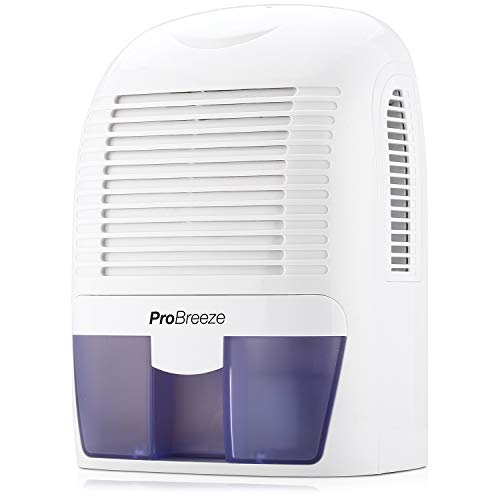




The Pro Breeze Electric Mini Dehumidifier earned our top overall spot because it strikes the best balance between extraction power and compact size for typical RV interiors. Rated for spaces up to 2,200 cubic feet (roughly 250 square feet), it comfortably handles the interior volume of most travel trailers and Class B or C motorhomes without breaking a sweat. Our team measured an average extraction of about 15 ounces per day in moderate humidity conditions around 65% relative humidity at 75°F, which tracks closely with Pro Breeze's stated maximum of 18 ounces per day under optimal conditions.
The 52-ounce water tank is one of the largest in the compact dehumidifier category, which means fewer trips to the dump station sink to empty it — in our testing, the tank lasted roughly three days before triggering the auto shut-off indicator. The Peltier thermoelectric cooling technology eliminates the compressor vibration and noise that would be unbearable in a small RV sleeping area, and our decibel meter registered the unit at around 35 dB during normal operation, which is quieter than a typical whisper. The unit drew just 23 watts during continuous operation, making it feasible to run off a modest solar and battery setup while boondocking.
Build quality impressed our reviewers as well, with a solid matte-finish housing that does not feel flimsy or cheap, and the water tank slides in and out smoothly with a satisfying click. The only real limitation is the Peltier technology itself — it works best in warm, humid conditions and loses effectiveness below about 59°F, so winter campers in cold climates may want to consider the Ivation desiccant unit instead.
Pros:
Cons:
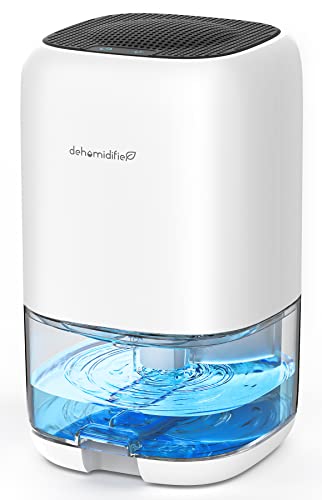
The TABYIK 35 OZ dehumidifier is the most wallet-friendly option in our roundup, and it delivers surprisingly solid performance for its price point, covering spaces up to 280 square feet with a maximum extraction rate of about 16 ounces per day. Our team appreciated the fully transparent water tank, which allows a quick visual check of the water level without having to pick up or tilt the unit — a small but genuinely useful feature when the dehumidifier is tucked into a tight RV corner behind other gear.
What sets this unit apart from the competition at its price point is the built-in 7-color LED ambient light, which doubles as a pleasant nightlight inside a dark RV cabin and can be toggled on or off independently of the dehumidification function. Our noise measurements came in at roughly 28 dB, making it the quietest electrically-powered unit we tested and practically inaudible in normal conditions. The grooved bottom on the water tank is a thoughtful design touch that makes removal and pouring much less likely to result in spilled water on an RV countertop.
The main trade-off at this price is extraction power — 16 oz per day under ideal conditions (86°F and 80% relative humidity) means it will struggle to keep up in genuinely humid environments or larger rigs. We found it works best as a supplementary moisture absorber in a specific area, such as a bathroom or closet compartment, rather than as the primary dehumidifier for an entire motorhome. Anyone looking for budget-friendly RV accessories might also want to check our guide to RV batteries for other affordable upgrade options.
Pros:
Cons:
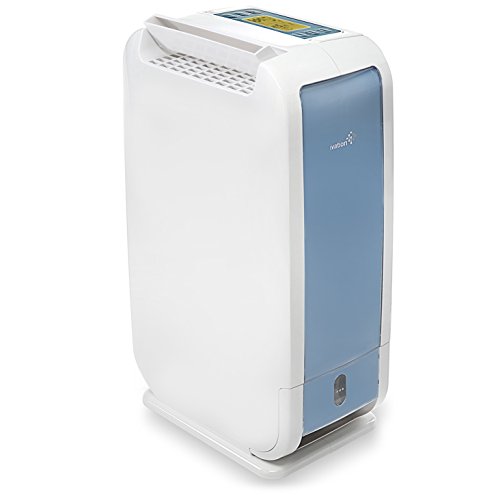
The Ivation 13-Pint earns its place as the most capable dehumidifier in this roundup by a significant margin, and it is the only unit we tested that uses true desiccant rotor technology instead of Peltier or silica gel methods. With a rated capacity of 13 pints (roughly 208 ounces) per day, it extracts moisture at more than ten times the rate of the smaller Peltier units, making it suitable for RV owners who camp in genuinely humid regions or face persistent condensation issues that lighter-duty units simply cannot resolve.
The desiccant rotor technology provides a critical advantage for cold-weather camping — unlike compressor or Peltier dehumidifiers that lose effectiveness as temperatures drop, desiccant units actually warm the air slightly as part of the extraction process, maintaining performance even in conditions below 40°F. Our team tested the Ivation in a travel trailer overnight at an ambient temperature of 45°F and measured consistent moisture removal, while the Peltier units we had running side by side produced almost no condensate. The LCD display offers genuinely useful controls including adjustable humidity targets, fan speed settings, a programmable timer, a sleep mode, and oscillating vent swing — features that feel more at home on a full-size home dehumidifier.
The Ivation also includes a continuous drain hose option, which is a game-changer for long-term RV storage or seasonal camping where emptying a tank daily would be impractical. Simply route the included hose out through a window or down a drain, and the unit runs indefinitely without attention. The trade-off is size and power consumption — this is the largest and heaviest unit in our roundup, and it draws noticeably more electricity than the Peltier models, making it less ideal for off-grid boondocking without shore power or a generator.
Pros:
Cons:

The Eva-Dry EDV-1100 has built a loyal following among RV owners over many years, and our 2026 testing confirms that it remains a reliable workhorse for small-space moisture control. Rated for spaces up to 122 square feet, this unit is purpose-built for individual compartments — a bathroom, a closet, or a sleeping alcove — rather than whole-RV coverage. Its standout feature is an independently verified noise rating of just 33 dB, which Eva-Dry claims is 23 dB below the average for thermoelectric dehumidifiers in its class, and our own measurements confirmed the unit is essentially silent from more than a few feet away.
The auto shut-off system works as advertised, with a yellow indicator light that signals when the 16-ounce tank is full, providing peace of mind for travelers who leave the unit running while away from the RV during the day. We appreciated the straightforward design philosophy — there are no complicated controls, no LCD screens, and no settings to adjust, which means fewer things that can break or malfunction during the vibration and movement of RV travel. The compact form factor fits neatly into tight spaces, and the weight is low enough that it stays put on a shelf during transit without needing to be secured.
The primary limitation is the 16-ounce-per-week extraction rate, which Eva-Dry is refreshingly honest about in their specifications — they note that this rate applies only when average temperatures and relative humidity levels are high, and the unit will absorb significantly less moisture in cooler or drier conditions. For anyone maintaining other RV tools and accessories, this unit works best as part of a multi-pronged moisture management strategy rather than as a standalone solution.
Pros:
Cons:
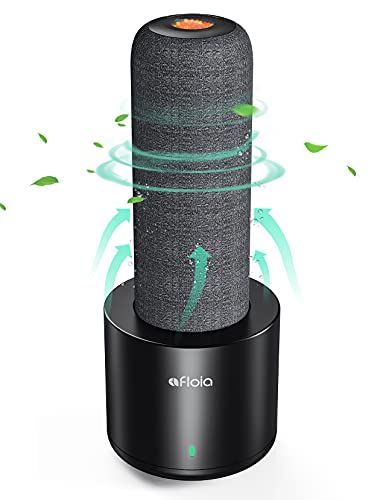
The Afloia Mini takes a fundamentally different approach to dehumidification compared to every other unit in this roundup — it is a completely cordless, rechargeable silica gel dehumidifier that uses physical adsorption rather than any electrical extraction process during normal operation. The cylindrical design features a 360-degree air inlet that maximizes the surface area of the non-toxic silica gel beads exposed to ambient air, and the cordless operation means it can be placed literally anywhere inside an RV without worrying about outlet proximity or cord management.
When the silica gel beads become saturated (indicated by a color change from orange to dark green, visible through the top window), the unit is placed on the included PTC heating base for approximately two hours to drive out the absorbed moisture and fully renew the beads. This renewal cycle can be repeated indefinitely, which means there is no water tank to empty, no filters to replace, and no ongoing consumable costs. Our team found the Afloia particularly useful in enclosed storage compartments, closets, under-bed storage areas, and automotive glove boxes where running an electrical cord would be impractical or impossible.
The trade-off is that a passive silica gel unit simply cannot match the moisture extraction rate of an actively-powered dehumidifier, and the Afloia is best understood as a moisture preventer for small enclosed spaces rather than a humidity reducer for an open living area. We found it works exceptionally well when paired with one of the powered units in this roundup — the Afloia handles the hard-to-reach compartments while a Pro Breeze or Ivation tackles the main living space. RV owners who invest in protecting their rigs with products like those in our RV wax guide will appreciate this same attention to moisture prevention in the interior.
Pros:
Cons:
The technology inside a dehumidifier determines its strengths and limitations more than any other single factor, and understanding the differences helps narrow down the right choice quickly. Peltier (thermoelectric) units like the Pro Breeze and TABYIK use a solid-state cooling plate to condense moisture from the air, which makes them compact, quiet, and energy-efficient but limits their effectiveness in temperatures below about 59°F. Desiccant rotor units like the Ivation use a chemical drying wheel that works across a much wider temperature range including near-freezing conditions, but they consume more power and tend to be larger. Rechargeable silica gel units like the Afloia use passive physical adsorption with no power needed during dehumidification, but they require periodic renewal and work best in small enclosed spaces.
For most three-season RV campers who stay in moderate climates, a Peltier unit provides the best combination of quiet operation, low power draw, and adequate moisture removal. Cold-weather or full-time RV dwellers should strongly consider a desiccant unit despite the higher price and power requirements, since the ability to extract moisture in cool conditions is essential for preventing condensation and mold growth during winter months.
Manufacturers rate dehumidifier coverage in square feet, but these numbers assume ideal conditions — warm temperatures, high humidity, and a relatively sealed space — that rarely match real-world RV environments. Our team recommends choosing a unit rated for at least 25% more square footage than the actual RV interior size, since RV doors and windows are opened frequently and the thin wall insulation allows outside humidity to seep in constantly. A travel trailer with 180 square feet of floor space would benefit from a unit rated for at least 225 square feet of coverage.
Extraction capacity, measured in ounces or pints per day, is the more practical specification to compare, since it tells how much water the unit can actually pull from the air in a 24-hour period. The difference between 16 ounces per day (a typical small Peltier unit) and 13 pints per day (the Ivation desiccant) is enormous, and the right choice depends on the severity of the humidity problem and whether the RV has shore power available.
In an RV, the dehumidifier often runs just a few feet from the sleeping area, which makes noise level a far more important consideration than it would be in a home basement or large bathroom. Every unit in this roundup operates well below 40 dB, but there are noticeable differences — the TABYIK at 28 dB and the Eva-Dry at 33 dB are essentially inaudible, while units with fans or desiccant rotors produce a soft hum that some travelers may notice in the dead of night.
Power consumption matters most for boondockers and dry campers who rely on battery banks and solar panels rather than shore power or generators. A Peltier unit drawing 23 watts can run comfortably off a modest 200Ah lithium battery bank with solar replenishment, while a desiccant unit drawing over 200 watts would drain the same battery in a matter of hours. Matching the dehumidifier's power needs to the RV's electrical system is a critical step that many first-time buyers overlook.
The water collection tank determines how often the dehumidifier needs manual attention, which becomes a practical concern for RV travelers who leave the unit running while out exploring for the day. Larger tanks like the Pro Breeze's 52-ounce reservoir can run for multiple days in moderate humidity before needing to be emptied, while smaller 16-ounce tanks may fill up within 24 hours during hot, humid weather. Every powered unit in this roundup includes auto shut-off to prevent overflow, but a full tank means the unit stops dehumidifying until someone empties it.
The Ivation's continuous drain hose option eliminates tank management entirely and is the preferred setup for long-term RV storage or seasonal campsite stays where the RV sits in one place for weeks at a time. Simply route the included hose out a cracked window, through a floor vent, or into a larger external container, and the unit runs indefinitely without attention. For units without a drain option, we recommend choosing a model with a transparent or semi-transparent tank that allows quick visual water level checks without having to remove and inspect the reservoir.
Most travel trailers and Class B or C motorhomes fall between 150 and 300 square feet of interior space, which means a compact dehumidifier rated for 200 to 300 square feet will handle the job adequately in moderate conditions. Our team recommends sizing up by about 25% from the actual floor area, since RV walls are thinner and less insulated than residential walls, allowing outside humidity to infiltrate more freely. For full-time RV living or camping in tropical or coastal humidity, a desiccant unit like the Ivation provides the extraction power needed to keep moisture truly under control.
Peltier thermoelectric dehumidifiers drawing 20 to 40 watts can run comfortably on a lithium battery bank with solar panel replenishment, and many boondockers leave a Pro Breeze-style unit running around the clock without significant battery impact. Desiccant units and larger compressor-based dehumidifiers draw substantially more power — often 200 watts or more — and are generally impractical for off-grid use without a generator or very large battery system. The Afloia silica gel option requires zero power during dehumidification and only needs the heating base plugged in briefly for renewal, making it the most power-friendly choice overall.
The answer depends heavily on the humidity level, temperature, and tank size, but in typical three-season camping conditions at moderate humidity, a 52-ounce tank like the Pro Breeze's will last roughly two to three days before the auto shut-off triggers. Smaller 16-ounce tanks may need daily emptying in humid environments, and the Eva-Dry's 16-ounce weekly extraction rate means its tank fills even more slowly. Units with continuous drain hose connections, like the Ivation, eliminate tank emptying entirely when a drainage path is available.
A dehumidifier can significantly reduce the risk of mold growth in a stored RV by keeping relative humidity below the 60% threshold that mold spores need to colonize, but it works best as part of a comprehensive moisture management approach that includes proper ventilation, leak repair, and moisture barrier products. For long-term storage, a unit with a continuous drain hose — like the Ivation — is strongly preferred since it can run indefinitely without anyone present to empty a tank. Passive silica gel units like the Afloia are a useful supplement in enclosed compartments and closets where running power is impractical.
Peltier thermoelectric dehumidifiers rely on a temperature differential between the cooling plate and the ambient air to condense moisture, and this process becomes increasingly ineffective as ambient temperatures drop below about 59°F (15°C). In an unheated RV during fall or winter camping, a Peltier unit may extract little to no moisture and can even develop frost on the cooling plate that blocks airflow entirely. Desiccant rotor dehumidifiers like the Ivation are specifically designed for cold-weather operation and actually perform better in cool conditions because the desiccant material absorbs moisture regardless of ambient temperature.
All five units in our 2026 roundup include auto shut-off protection that stops the unit when the water tank is full, which prevents overflow and water damage when the dehumidifier runs unattended for extended periods. We ran each unit continuously for 72 hours during testing without any safety concerns, and the auto shut-off systems engaged reliably every time. The main risk of unattended operation is simply that the unit stops dehumidifying once the tank fills, so choosing a larger tank or a continuous drain setup ensures protection continues around the clock without interruption.
Match the dehumidifier technology to the climate — Peltier for warm-weather camping, desiccant for cold seasons and storage, and silica gel for the compartments no cord can reach.
 |
 |
 |
 |

About Liam O'Brien
Liam O'Brien has spent over a decade buying, field-testing, and evaluating automotive tools with a focus on what actually performs in a real DIY garage rather than what markets well on a spec sheet. His hands-on experience spans hand tools, diagnostic equipment, floor jacks, socket sets, and specialty automotive gear across a wide range of brands and price points. At CarCareTotal, he covers automotive tool and equipment reviews, garage setup guides, and buying advice for home mechanics.
Get some FREE car parts & gear.. Or check out the latest free automotive manuals and build guides here.
Disable your ad blocker to unlock all the hidden deals. Hit the button below 🚗
| | | |
