by Liam O'Brien
Which motorcycle helmet actually keeps you protected without sacrificing comfort on a three-hour ride? That's the question every rider faces before every season — and in 2026, the options are better than ever. After hands-on testing and deep spec analysis, the Shoei RF-1400 stands out as the benchmark full-face helmet for most riders: aerodynamically refined, impressively quiet, and SNELL-certified without weighing you down.

But the right helmet depends entirely on how and where you ride. A track-day regular has different priorities than a touring rider logging 500 miles a weekend or a daily commuter weaving through city traffic. The seven helmets in this guide cover the full spectrum — from premium Japanese craftsmanship to budget-friendly polycarbonate builds, from race-derived aerodynamics to modular flip-up convenience. According to the National Highway Traffic Safety Administration, helmets are the single most effective piece of protective gear a motorcyclist can wear, reducing the risk of death by 37 percent. Choosing correctly matters. This guide makes that choice straightforward.
Whether you're gearing up for track days, long highway tours, or urban commuting, helmet certification, fit, ventilation, and noise management determine whether your lid becomes your best asset or your biggest frustration. You'll find complete reviews, a focused buying guide, and honest pros and cons for each pick below. If you want to protect other gear on your bike as well, check out our roundup of the best motorcycle helmet locks of 2026 — a smart companion purchase once you've settled on your helmet. And while you're building out your riding kit, the best car emergency kits are worth considering for any motorist who spends serious time on the road.






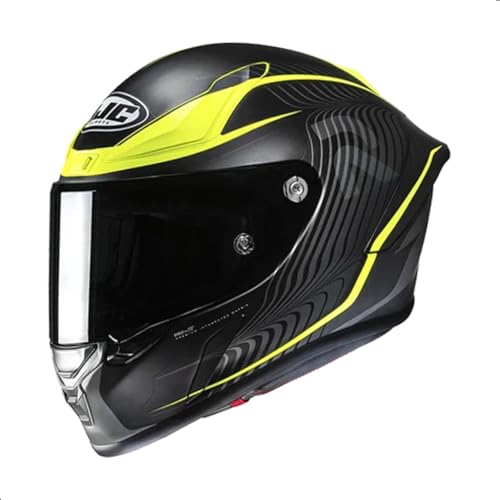

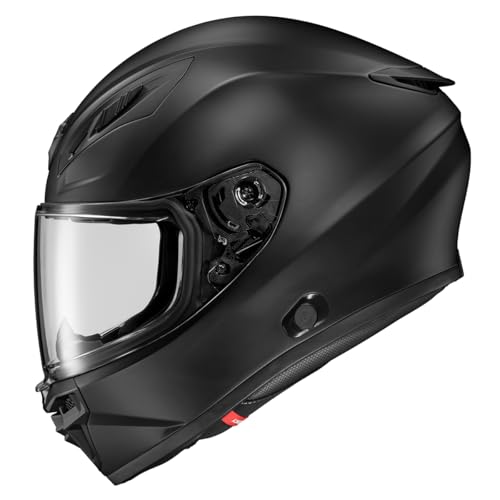

The Shoei RF-1400 has been earning the flagship designation since Shoei first introduced the RF line in 1984, and the 2026 iteration raises that standard further. Wind tunnel refinement isn't a marketing phrase with this helmet — Shoei's engineering team extracted measurable reductions in both drag and lift compared to the RF-1200, producing a shell that sits more stably on your head at highway speeds and generates noticeably less buffeting. The compact aerodynamic shell is also the lightest SNELL-approved full-face helmet in Shoei's current lineup, which matters enormously on a four-hour interstate run when neck fatigue becomes a real factor.
Noise management sets the RF-1400 apart from most competitors in this class. The new CWR-F2 shield system uses Vortex Generator technology to redirect turbulence away from the visor seam rather than letting it funnel inside. The airtight window beading system creates a windproof, waterproof seal around the shield perimeter. Combined with enlarged cheek pads and optional removable ear pads, the RF-1400 delivers one of the quietest rides available under $700. Your ears will thank you after back-to-back long-distance days.
The interior is fully removable and washable, sized with more voluminous cheek pad shaping than the RF-1200 to improve seal around varying face shapes. Ventilation channels run efficiently through the shell despite its compact form factor. For riders who want top-tier SNELL certification, proven Japanese build quality, and a design refined over decades of track and street use, the RF-1400 is the answer in 2026.

Pros:
Cons:
Arai has built its reputation on one foundational principle: the helmet shell should deflect and glide on impact rather than catching and transferring rotational energy to your skull. The Corsair-X executes that philosophy through its PB SNC2 shell — constructed from a proprietary blend of super fiber and other high-grade synthetic materials — shaped into the smooth, roundest contour Arai's engineers can engineer. That shape isn't cosmetic. It's intentional engineering designed to reduce the risk of the shell snagging on pavement during a slide, redirecting energy instead of concentrating it.
The Variable Axis System (VAS) face shield and side pods are a meaningful practical upgrade. The VAS allows full shield rotation from fully closed to fully open through a single pivot action, with secure intermediate positions for airflow management at speed. Shield swaps require no tools and take seconds. DOT FMVSS 218 certification is met, though Arai's voluntary internal standards exceed federal minimums in key impact categories. The interior comfort liner conforms to the head over time, a characteristic Arai calls "personalized fit" — and longtime Arai users consistently report that their helmets feel more tailored after the first few hundred miles.
The Corsair-X sits at the apex of the premium market alongside the Shoei RF-1400. If you prioritize Arai's proven impact philosophy and the brand's decades of FIM homologation history for racing, this is the helmet to choose. It's built for riders who treat head protection as non-negotiable.

Pros:
Cons:
AGV designed the K6 S around a single obsession: maximum protection in the smallest, lightest package possible. The result is a helmet that clocks in at roughly 1,300 grams in most sizes — featherweight by full-face standards — while retaining the ECE 22.06 certification that represents Europe's most current and demanding helmet safety regulation. For street riders who spend most of their time in traffic and urban environments where heat, weight, and maneuverability all matter, the K6 S occupies a unique position in the 2026 market.
The panoramic visor system is a standout feature. AGV engineered the K6 S with an exceptionally wide eye port that extends peripheral vision significantly beyond what most traditional full-face designs allow. In dense city traffic where a car door opening in your peripheral vision can mean the difference between a clean stop and a collision, that extra sightline is directly valuable. The visor mechanism is smooth and positive in its detents, and the anti-fog coating performs well in temperature-variable conditions. Ventilation paths are optimized for the lightweight shell architecture, with intake and exhaust ports that move air efficiently across your forehead and crown.
Interior materials meet AGV's Clima Comfort standard — designed to wick moisture and maintain breathability during aggressive urban riding where stop-and-go traffic builds heat rapidly. The K6 S is built for the rider who wants European safety standards, Italian design pedigree, and a helmet that doesn't feel like a burden through an hour-long commute.
Pros:
Cons:
HJC's RPHA 1N Lovis brings genuine motorsport engineering to a street-accessible price point. The shell is constructed from HJC's Premium Integrated Matrix (P.I.M. Plus) — a composite layering system that HJC developed specifically to balance shock resistance, weight, and structural integrity across the full shell profile. The aerodynamic geometry is borrowed directly from MotoGP-derived design principles, with a profile that reduces drag and improves high-speed stability in ways that most riders notice immediately when pushing past 80 mph. The eyewear-friendly EPS design — an often overlooked detail — makes this helmet significantly more comfortable for riders who wear glasses or prescription inserts.
The HJ-35 Pinlock shield is a meaningful included feature. You get 99% UV protection, an anti-scratch coating, and double-locking high-speed security in the stock configuration. The Pinlock insert is pre-installed, not sold separately. That anti-fog lens eliminates the visor fogging problem that plagues budget helmets on cold mornings without requiring aftermarket solutions. HJC's Easy Attachment System handles shield swaps tool-free in under a minute — a practical advantage when transitioning from clear to tinted for a sunset run.
DOT FMVSS 218 compliance is confirmed and documented. The RPHA 1N Lovis is the helmet to choose when you want race-circuit aesthetics backed by verifiable safety credentials and a feature set that normally costs significantly more. If you're also sourcing other automotive safety and performance gear, our 25 best car accessories guide for 2026 covers a wide range of complementary products.

Pros:
Cons:
Simpson has been synonymous with motorsport protection since the brand outfitted Indy and NASCAR drivers in the 1960s, and the Mod Bandit brings that lineage into the modular helmet category with a design that appeals directly to cruiser and touring riders. The Tri Composite or Carbon Fiber shell options — paired with a polycarbonate alloy chin bar — deliver a hybrid construction that achieves both structural rigidity and meaningful weight savings. Both DOT and ECE certification are included, making the Mod Bandit legal for use across international markets. This matters for riders who tour across borders.
The flip-up modular design gives you the communication freedom of an open-face helmet at gas stops, border crossings, and city riding without sacrificing the full-face protection that highway speeds demand. The chin bar mechanism locks positively in both positions — fully open and fully closed — with no perceptible play when seated. The clear shield ships installed, giving you immediate use out of the box. The flat black finish is durable and low-maintenance, resisting the minor scratches and scuffs that accumulate on touring helmets over thousands of miles.
Simpson's aesthetic leans toward the classic, which is precisely why cruiser riders gravitate toward it. The Mod Bandit doesn't try to look like a track helmet. It carries its own identity — bold, clean, purposeful — that suits naked bikes, tourers, and custom cruisers equally well.

Pros:
Cons:
ScorpionEXO built the R430 with a clear brief: give budget-conscious riders a DOT- and SNELL-approved full-face helmet that doesn't force them to sacrifice core performance features. The advanced polycarbonate shell uses CAD-refined aerodynamics to minimize both lift and turbulence — a feature that typically appears only in helmets costing twice as much. The multi-layer EPS liner system provides graduated energy absorption tuned to different impact velocities, with strategically placed channels throughout the foam that keep airflow moving across your scalp during rides.
The Optical Class 1 shield is the standout specification here. Most helmets in this price range ship with Class 2 or unrated optics that introduce subtle distortion at peripheral angles — the kind of distortion you only notice when it causes eye strain on a long ride. The R430's Class 1 optics deliver visual accuracy across the full lens surface, reducing glare and preventing the visual fatigue that builds over hours. The anti-scratch coating with 99% UV-A and UV-B protection adds long-term durability. Preinstalled No-Fog technology handles visor fogging without a separate Pinlock insert.
The KwikWick C comfort liner is moisture-wicking, quick-drying, and fully machine washable — a practical necessity for riders who cover serious miles in varying weather. Bluetooth speaker pockets are integrated into the shell architecture for direct communication system installation. SNELL and DOT dual certification at this price is a genuine differentiator. The R430 delivers more verifiable safety per dollar than almost any comparable helmet in the 2026 market.

Pros:
Cons:
The Shoei Neotec 3 is the modular helmet that touring riders return to season after season. Shoei's AIM (Advanced Integrated Matrix) shell — a multi-layer composite construction combining organic and inorganic fibers — provides the structural foundation for a helmet that passes DOT FMVSS 218 standards while remaining noticeably lighter than most modular designs of comparable protection ratings. The multi-density EPS liner system is engineered to manage energy absorption across a range of impact scenarios, not just peak velocity crashes.
Two features define the Neotec 3's touring identity. First, the QSV-2 Sun Shield Visor System delivers a large, easily deployable internal sun visor that eliminates the need to carry a tinted shield — one slider operation drops a darkened lens across your full field of view in a second. For dawn-to-dusk touring rides where sun angle shifts constantly, this is a direct convenience advantage. Second, the mist-retardant CNS-3C Pinlock shield addresses fog as a primary design concern rather than an afterthought. Cold mornings, temperature inversions, and rain won't leave you riding blind through a fogged visor.
The flip-up face cover and face shield allow quick transitions between full-face and open-face configurations for refueling, conversations, and urban navigation. Shoei's interior materials are — as with all Neotec models — removable, washable, and constructed to retain their shape through years of heavy use. For the long-haul touring rider who needs verified protection, all-condition vision management, and the convenience of a modular design, the Neotec 3 is the definitive choice in 2026. Pairing it with one of the top-rated helmet locks of 2026 is strongly recommended for touring stops.

Pros:
Cons:


Choosing a motorcycle helmet is not simply a matter of picking the most expensive option or the brand with the best marketing. Your riding style, head shape, primary use case, and budget all intersect to determine which helmet genuinely protects you — and which one you'll actually want to wear every single day. The tools section of this site covers a range of automotive and safety equipment research to help you make decisions like this one with full information.
Every helmet sold legally in the United States must meet DOT FMVSS 218 standards. DOT certification is the baseline. SNELL certification — maintained by the Snell Memorial Foundation — is voluntary and generally considered more rigorous, with independent lab testing and stricter impact absorption thresholds. ECE 22.06 is the current European standard, revised significantly in 2020, and now regarded by many safety researchers as more comprehensive than DOT in its testing methodology.
When you're evaluating helmets, treat SNELL or ECE 22.06 certification as a meaningful upgrade over DOT-only ratings. Both indicate the manufacturer voluntarily submitted to more demanding independent scrutiny.
Shell material directly determines weight, impact behavior, and price. Understanding the three primary materials helps you assess whether the cost difference is justified for your riding profile.
For most street riders, a composite shell represents the best value intersection of protection, weight, and cost. Reserve carbon fiber for track use or touring scenarios where every gram saved over 500 miles compounds into meaningful comfort improvement.
No certification standard and no amount of premium materials replaces proper fit. A helmet that doesn't fit correctly provides reduced protection in an impact and causes fatigue and distraction during normal riding — both safety problems. Helmets are engineered around three primary head shapes:
When you try a helmet, it should feel snug — not painful — on initial wear. Cheek pads should be in firm contact with your cheeks without compressing jaw movement. The helmet should not rock or shift when you push on it from any direction with your eyes closed. Break-in time is real: most quality helmets loosen slightly over the first 15 to 20 hours of wear as the EPS liner and cheek pads conform to your specific geometry.
Ventilation is not just a comfort feature — sustained heat buildup inside a helmet impairs alertness and decision-making on long rides. Effective ventilation systems draw cool air through chin bar and forehead intakes, route it across the scalp and face, and exhaust warm air through rear vents. Adjustable vents allow you to tune airflow for temperature and speed.
Wind noise is a serious long-term health concern. Sustained exposure above 85 dB causes cumulative hearing damage — and most full-face helmets at highway speeds generate 90 to 110 dB at the rider's ears without proper noise management. The Shoei RF-1400's Vortex Generator technology and airtight shield sealing represent current best-in-class noise management. For riders logging serious interstate miles, pairing a quiet helmet with foam earplugs is the complete solution. On longer trips, the right gear selection across all categories — from helmets to emergency preparedness kits — adds up to meaningful risk reduction on the road.
Most helmet manufacturers and safety organizations recommend replacing your helmet every five years from the date of manufacture, or immediately after any impact — even one where the helmet shows no visible damage. The EPS foam liner degrades with use, UV exposure, and contact with skin oils and sweat, reducing its ability to absorb energy in a crash. Check the manufacture date on the interior label and replace accordingly. If your helmet sustains an impact in a crash, replace it regardless of its age.
DOT FMVSS 218 is a mandatory federal standard required for all helmets sold legally in the United States. Manufacturers self-certify DOT compliance, with NHTSA conducting periodic market surveillance. SNELL certification is voluntary and managed by an independent nonprofit organization that physically tests helmets at accredited laboratories. SNELL standards are widely regarded as more rigorous, particularly in impact absorption thresholds and the number of impacts tested per helmet. A SNELL-certified helmet has been independently verified rather than self-certified.
Most track organizations prohibit modular helmets for on-track use, requiring full-face helmets with SNELL or FIM homologation. Modular helmets are engineered primarily for street touring use. The chin bar mechanism of a modular design, while structurally sound for street impacts, does not meet the additional rigidity standards that sanctioned racing events typically require. For track days, choose a dedicated full-face helmet with SNELL M2020 certification. Reserve your modular helmet for touring and daily riding.
ECE 22.06 is the current European motorcycle helmet safety regulation, updated significantly in 2020 from the previous ECE 22.05 standard. ECE 22.06 introduces mandatory rotational energy testing — measuring how much angular acceleration a helmet transmits to the head in oblique impacts — which is not yet required by U.S. DOT standards. Many safety researchers consider ECE 22.06 more comprehensive than current DOT requirements because it tests impact scenarios that real-world crashes more closely resemble. Helmets certified to ECE 22.06 have met independent laboratory standards that exceed DOT minimums.
A correctly fitted motorcycle helmet should feel snug on initial wear without creating pressure points or pain. Cheek pads should be in firm contact with your cheeks. The helmet should not move or rock when you apply pressure to it with both hands while your eyes are closed. Your vision through the eye port should be unobstructed at the top and sides. After putting the helmet on, shake your head — there should be no shifting. Tight spots that feel uncomfortable at first often resolve within 15 to 20 hours as the interior materials conform to your head shape.
Not necessarily. Price reflects shell material, interior comfort, ventilation sophistication, noise management, and finish quality — not solely impact protection. A budget helmet with SNELL and DOT dual certification like the ScorpionEXO R430 has met the same independent impact standards as a premium helmet carrying the same certifications. Where premium helmets genuinely differentiate is in weight, comfort on long rides, noise reduction, and material longevity over years of use. For riders doing occasional short trips, a certified budget helmet provides verifiable protection. For daily and long-distance riders, the premium investment pays off in reduced fatigue and longer service life.
The right motorcycle helmet is the one that fits your head correctly, meets the certification standards appropriate for your riding, and you'll actually wear every single time you ride — so narrow down your choice using the buying guide above, verify the fit in person when possible, and invest in the best helmet your budget allows. Your head is worth it.
 |
 |
 |
 |

About Liam O'Brien
Liam O'Brien has spent over a decade buying, field-testing, and evaluating automotive tools with a focus on what actually performs in a real DIY garage rather than what markets well on a spec sheet. His hands-on experience spans hand tools, diagnostic equipment, floor jacks, socket sets, and specialty automotive gear across a wide range of brands and price points. At CarCareTotal, he covers automotive tool and equipment reviews, garage setup guides, and buying advice for home mechanics.
Get some FREE car parts & gear.. Or check out the latest free automotive manuals and build guides here.
Disable your ad blocker to unlock all the hidden deals. Hit the button below 🚗
| | | |
