by Liam O'Brien
Which spark plugs actually make a difference in your engine's performance, and which ones are just marketing hype dressed up in a premium price tag? If you've been sifting through spec sheets and conflicting forum opinions, you already know how overwhelming this decision can get. The short answer: the NGK Iridium IX Spark Plugs for Chevy Silverado V8 lead our 2026 rankings for their combination of iridium durability, combustion efficiency, and verified fitment across the most popular truck platform in North America.
Spark plugs are among the most underrated maintenance items on any vehicle. Most drivers replace them only when a misfire code lights up the dashboard, but the reality is that worn plugs quietly drain your fuel economy, reduce throttle response, and stress your ignition coil long before any warning appears. According to Wikipedia's overview of spark plug technology, the electrode material determines both the plug's longevity and its ability to fire reliably under varying cylinder pressures — and that's where iridium and ruthenium alloys genuinely separate themselves from conventional copper plugs. When you're investing in engine maintenance for 2026, you owe it to yourself to understand exactly what you're putting in those cylinders.
We reviewed seven of the best spark plugs available right now, covering iridium, double-iridium, ruthenium, and platinum options from NGK, Bosch, ACDelco, Autolite, Denso, and Motorcraft. Whether you drive a GM truck, a Ford F-150, or you need a universal performance upgrade, this guide breaks down every contender with honest pros, cons, and clear buying advice. You'll also find a thorough buying guide below covering electrode materials, heat ranges, and gap specifications — everything you need to make an informed decision before you reach for that wrench. For other engine maintenance essentials, check out our roundup of the best 5W-30 synthetic oils of 2026 to pair with your fresh set of plugs.

Contents
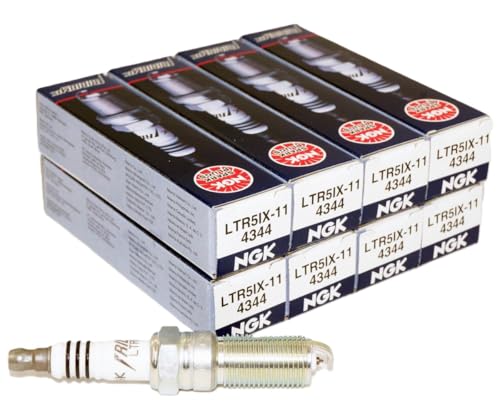






If you own a Chevrolet Silverado 1500 with the 5.3L or 6.2L V8 engine from the 2014–2024 model years, these NGK LTR5IX11 Iridium IX plugs are the single most straightforward upgrade you can make to restore — and often surpass — factory ignition performance. NGK engineered this eight-pack specifically for the LS-based and LT-based V8 architecture, which means fitment is guaranteed and you're not dealing with any adaptation concerns. The iridium center electrode and the corrosion-resistant ground electrode work together to produce a sharper, more focused spark arc that promotes complete combustion on every firing cycle, which translates into real-world gains in throttle response and overall engine efficiency that you notice within the first hundred miles.
The design philosophy behind the Iridium IX series centers on reducing spark gap growth over the plug's service life. Standard copper plugs erode rapidly under the heat and pressure of modern high-compression engines, causing the gap to widen and the spark to weaken — a process that happens slowly enough that most drivers don't notice until performance is already compromised. NGK's iridium alloy resists that erosion far more effectively, maintaining a consistent gap and spark energy for significantly longer intervals. The durable shell construction adds another layer of protection against the kind of corrosion that makes plug removal a nightmare on high-mileage engines, and the center electrode geometry promotes sharper spark focus that keeps misfire counts low even under load.
For Silverado owners, the practical benefit is equally compelling from a fuel economy perspective. Because combustion is more complete with each ignition event, your engine extracts more energy from the fuel charge rather than sending partially burned hydrocarbons out the exhaust, and that efficiency improvement shows up on longer highway runs where the engine is under sustained, consistent load. This eight-pack gives you everything you need to do the full V8 in one shot, and at competitive pricing through our tools and auto parts resources, the value-per-plug ratio is hard to argue with for GM truck owners.
Pros:
Cons:
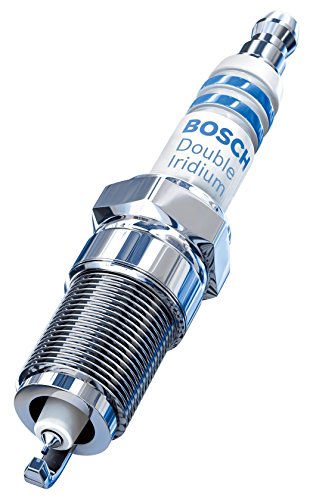
Bosch's double-iridium approach sets the 96337 apart from the majority of iridium plugs on the market, because rather than using iridium only on the center electrode, Bosch applies an iridium inlay to the ground electrode as well. That dual-material construction is what gives this plug its claimed four-times longer service life compared to standard copper plugs, and it's not marketing language — the reduced wear rate on both electrode surfaces is measurable and well-documented across Bosch's OE supply contracts with major European and Asian manufacturers. When you fit these to your vehicle, you're getting a plug that essentially mirrors what the factory installs on vehicles where Bosch is the original equipment supplier.
The 360-degree laser-welded ultra-fine wire iridium firing pin deserves specific attention because this manufacturing detail directly impacts ignition voltage requirements. By reducing the firing pin diameter to an extremely fine wire geometry and securing it with a precision laser weld rather than a mechanical crimp, Bosch achieves up to a 24% reduction in the voltage needed to jump the spark gap. That reduced voltage demand translates to less stress on your ignition coil and ignition module, which is a genuine long-term reliability benefit on high-mileage vehicles where the ignition system is already working harder to compensate for accumulated wear. The nickel-plated rolled threads eliminate the need for anti-seize compound during installation, which removes one step from the process and prevents the torque inconsistency that anti-seize can introduce.
From a performance standpoint, the Bosch 96337 delivers noticeably improved cold-start behavior and idle quality, which are the two areas where fine-wire electrode geometry makes the biggest practical difference in daily driving. The tighter, more energetic spark arc ignites the fuel-air mixture more reliably under cold, fuel-rich starting conditions, and the consistency carries through to idle quality that is measurably smoother than what worn OEM plugs produce. If you're also upgrading other ignition-adjacent maintenance items, pairing these with a fresh set of quality ignition coils or even a thorough look at your cordless impact wrench setup for removal torque control makes for a complete, professional-grade service.
Pros:
Cons:
When General Motors specifies a spark plug for their production vehicles, ACDelco is the name on the box, and the 41-114 (cross-referenced as GM part 12622441) is the direct OEM iridium replacement for a wide range of GM applications. Choosing an ACDelco OE plug over an aftermarket alternative eliminates the guesswork around heat range calibration, electrode geometry, and thread reach — all parameters that GM's engineers validated against the specific combustion chamber design and fuel management system of your particular engine. For drivers who want their vehicle to perform exactly as GM intended, without any deviation from factory calibration, this is the definitive answer.
The iridium fine-wire electrode on the ACDelco 41-114 delivers the two qualities that make iridium the material of choice for modern OEM applications: excellent idle stability and reliable cold-start performance. The fine-wire geometry concentrates the spark energy into a smaller, hotter arc that ignites the mixture more efficiently under the lean, precisely metered fuel conditions that modern direct-injection and port-injection systems operate in, and the iridium's thermal properties allow the electrode to remain clean by burning away carbon deposits as they form rather than accumulating buildup that eventually causes fouling. That self-cleaning behavior is particularly valuable on vehicles that see a lot of short-trip, low-temperature driving where incomplete combustion is most likely to deposit carbon on the plug tip.
The single-plug packaging reflects how most GM service centers stock and sell this part — ordered by the individual plug and installed to OEM specification during a full tune-up service. You'll need to purchase the correct quantity for your specific engine, but the tradeoff is that you're always installing a fresh, properly stored plug rather than one from a bulk pack that may have sat in warehouse inventory for an extended period. For GM owners who prioritize factory reliability above all else, the ACDelco 41-114 is the straightforward, no-compromise choice in 2026.
Pros:
Cons:

Autolite has built their reputation in the North American market on delivering genuine iridium performance at a price point that makes premium plug technology accessible without requiring a significant budget stretch, and the Iridium XP XP5683 continues that tradition with a legitimately impressive specification sheet. The 0.6mm fine-wire iridium center tip is laser-welded to the electrode for maximum bonding integrity, and at that diameter you're getting a firing pin geometry that matches or exceeds what you find on significantly more expensive plugs from European OEM suppliers. The focused ignition that results from that fine-wire design produces a more consistent flame kernel in the combustion chamber, which reduces the variability in combustion timing that causes subtle roughness and fuel economy degradation on worn plug sets.
The 100,000-mile service life claim is the headline specification here, and it's grounded in the same material science that makes iridium the premium electrode choice: the alloy's exceptional hardness and melting point mean electrode erosion happens at a fraction of the rate seen with copper or even standard platinum plugs. You should understand that the 100,000-mile figure represents the upper bound under ideal operating conditions — engines that run rich, experience significant oil consumption, or operate primarily on short trips will see shorter intervals — but under normal highway-oriented driving with a healthy engine, this specification is realistic and well-supported by Autolite's field data. The fuel efficiency benefit is a genuine outcome of the fine-wire electrode's more complete ignition performance, and drivers replacing plugs that are even modestly worn typically report a noticeable improvement in highway fuel economy within the first tank.
For budget-conscious buyers who understand spark plug metallurgy and don't want to pay an OEM premium for equivalent technology, the Autolite Iridium XP XP5683 represents the best price-to-performance ratio in this entire roundup. The four-pack pricing makes a four-cylinder service affordable, and the quality level is genuinely competitive with plugs that cost considerably more. If you're building out a comprehensive maintenance toolkit, pairing this purchase with our guide to the best digital tire pressure gauges of 2026 gives you two of the highest-value maintenance upgrades you can make in a single afternoon.
Pros:
Cons:
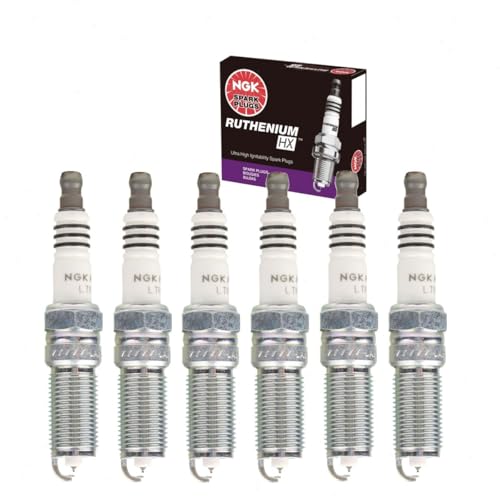
Ruthenium is the newest electrode material to enter the premium spark plug market, and NGK's HX series represents their flagship technology for applications where turbocharged engines demand the absolute best in ignition reliability and gap stability. The Ford F-150 with the 3.5L EcoBoost V6 is exactly the kind of application that benefits most from ruthenium's properties — a high-boost, direct-injected engine that generates elevated cylinder pressures on every combustion event and runs its plugs considerably harder than a naturally aspirated counterpart. NGK specifies this six-pack for F-150 model years 2011 through 2019, which covers the entire first and second generation of the EcoBoost 3.5L, one of the most popular and performance-oriented truck powertrains ever produced.
Ruthenium as an electrode material occupies a unique position between iridium and platinum in terms of electrical conductivity — it actually delivers better spark efficiency than iridium under certain high-pressure conditions because its conductivity profile aligns more favorably with the elevated cylinder pressures found in turbocharged engines. NGK's HX geometry pairs this material advantage with a precisely engineered ground electrode configuration that optimizes the spark path for the specific combustion chamber geometry of the EcoBoost engine. The result is ignition performance that remains consistent across the full RPM and load range, including the high-boost conditions that would cause lesser plugs to exhibit gap growth and misfires under hard acceleration.
The six-plug pack covers the V6 cylinder count exactly, so you're not paying for extras or short-changing the service by leaving one old plug in place. NGK genuine parts come in original packaging with all hardware included, which matters because aftermarket alternatives using NGK-style part numbers sometimes cut corners on the electrode alloy composition and gap specification. If you're maintaining your F-150 and want to match the plug quality with other performance maintenance, the factory fitment and precision engineering of these ruthenium plugs make them the definitive choice for the 3.5L EcoBoost platform in 2026.
Pros:
Cons:

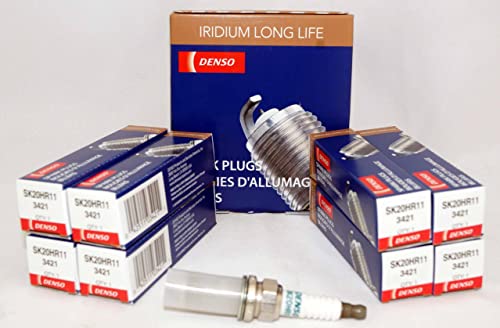
Denso holds a unique position in the spark plug market because the company is both one of the largest OEM suppliers to Japanese and domestic automakers and one of the most respected aftermarket brands among technicians who value manufacturing consistency over marketing language. The Denso 3421 Iridium Long Life plug, sold here in an eight-pack configuration, uses a 1.1mm (0.043") pre-set gap and an iridium core center electrode that Denso manufactures to the same tolerances as their OEM supply parts. That manufacturing pedigree means you're getting a plug where the gap, electrode geometry, and resistor value are held to tighter tolerances than most aftermarket alternatives, which translates to more predictable performance across the full set of eight plugs.
The "Long Life" designation in Denso's naming convention refers specifically to the iridium core's resistance to electrode erosion under the thermal and electrical stress of normal engine operation. Denso engineered the 3421 for applications where extended service intervals are a priority — think high-mileage daily drivers, fleet vehicles, or owners who prefer to do thorough maintenance events less frequently rather than partial tune-ups on a shorter schedule. The 0.043" gap specification is pre-set from the factory, and Denso's quality control ensures that gap consistency across all eight plugs in the pack is tight enough that you don't need to verify and adjust each one individually before installation.
The eight-pack format makes the Denso 3421 a natural fit for V8 engine applications where you need to replace all cylinders in a single service event, and the combination of iridium durability and Denso's OEM-grade manufacturing means the performance benefit per dollar spent is compelling. For owners building a comprehensive maintenance approach to their vehicle, the long-life characteristics of these plugs pair well with extended-drain synthetic oil strategies — much like the formulations covered in our guide to the best 5W-30 synthetic oils.
Pros:
Cons:

Motorcraft is Ford Motor Company's official parts brand, and the SP-493 AGSF32PM is a platinum spark plug designed and validated specifically for Ford and Mercury applications where the manufacturer's service specifications call for a platinum-tipped replacement. For Ford owners who want to maintain their vehicle strictly to factory specification — particularly relevant for vehicles still under extended warranty coverage or for owners who plan to resell and want a documented, factory-correct service history — the Motorcraft SP-493 is the unambiguous correct choice. Platinum technology sits below iridium and ruthenium in terms of electrode longevity and fine-wire geometry, but it delivers reliable, consistent ignition performance that fully meets Ford's design intent for the engines this plug was engineered to serve.
The eight-pack format recognizes that the V8 Ford applications this plug typically serves require a full cylinder set for a proper tune-up service, and purchasing all eight in one listing ensures you're working with plugs from the same production batch with consistent specifications. Motorcraft's quality control as a genuine OEM parts supplier means the platinum tip bonding, resistor value, and gap specification are all held to Ford's production tolerances rather than aftermarket approximations, which is especially important for vehicles with sophisticated engine management systems that are calibrated around specific plug electrical characteristics. New-in-box condition guarantees you're not dealing with corrosion or gap drift from improper storage.
For Ford owners who are less focused on maximum performance upgrade and more focused on reliable OEM-equivalent replacement, the Motorcraft SP-493 delivers exactly what the factory intended. The platinum specification is appropriate for the service intervals Ford specifies for these applications, and the genuine Motorcraft provenance eliminates any uncertainty about compatibility with Ford's PATS, PCM calibration, or emissions certification requirements. Pair this service with a thorough exterior maintenance pass using the best products from our guides on rust prevention sprays to keep your Ford in complete working order for 2026 and beyond.
Pros:
Cons:

The single most important variable in spark plug selection is electrode material, because it determines both the plug's service life and its ignition efficiency at a fundamental level. Copper plugs offer the best electrical conductivity of any electrode material, which is why they remain the top choice for modified high-performance engines where plugs are replaced frequently — but their softness means the electrode erodes quickly under normal operating conditions, making them impractical for modern service-interval-conscious ownership. Platinum plugs represent the step up from copper for OEM applications, offering a meaningful improvement in service life while maintaining reliable ignition for vehicles that operate within their factory power parameters.
Iridium is the current mainstream premium standard, combining exceptional hardness with an electrical conductivity profile that supports fine-wire electrode designs — and fine-wire geometry is the key to reduced firing voltage requirements and more focused spark energy. Double-iridium construction, as seen in the Bosch 96337, extends the benefits to the ground electrode as well, effectively doubling the wear-resistant surface area and further extending service life. Ruthenium, NGK's newest flagship material used in the HX series, delivers conductivity and pressure resistance advantages that specifically benefit turbocharged and supercharged applications where cylinder pressures exceed what iridium's conductivity profile handles optimally. For your daily driver in 2026, iridium is the right baseline choice — ruthenium becomes relevant if you're running forced induction.
Heat range describes a spark plug's ability to dissipate combustion heat from the electrode tip into the cylinder head, and selecting the wrong heat range is one of the most consequential specification errors you can make. A plug that runs too cold for your application will accumulate carbon deposits on the electrode tip from incomplete combustion — particularly on city-cycle driving with frequent cold starts — leading to fouling and eventual misfire. A plug that runs too hot will cause pre-ignition, which generates extreme cylinder pressure events that can crack piston crowns, damage rod bearings, and in severe cases destroy an engine within a relatively short period of sustained operation.
Your factory service manual specifies the correct heat range for your engine, and for street-driven vehicles you should follow that specification precisely. Performance-tuned engines with increased power output generate more heat per combustion cycle and typically require a colder-than-stock heat range to maintain safe electrode temperatures — this is a modification that should be guided by your tuner's recommendations rather than independent experimentation. The OEM and OEM-equivalent plugs reviewed here — ACDelco 41-114, Motorcraft SP-493, NGK vehicle-specific listings — are all pre-calibrated to the correct heat range for their target applications, which is one of the primary advantages of choosing a vehicle-matched plug over a universal alternative.
The spark gap is the distance the electrical discharge must jump between the center and ground electrodes, and it directly governs both the voltage required to fire the plug and the energy content of the resulting spark. Wider gaps generally produce a larger, more energetic spark that improves combustion efficiency — but wider gaps also demand higher firing voltages, which stress the ignition coil and can cause misfires if the ignition system's output capacity is marginal. Factory gap specifications balance these competing factors for the specific coil output and fuel system parameters of your engine, and you should always verify that any plug you install either comes pre-gapped from the factory or has been adjusted to your engine's specification before installation.
Most premium iridium and ruthenium plugs come with a pre-set gap and a strong recommendation against adjusting the fine-wire center electrode, because the thin iridium tip can fracture or delaminate if bent. For these plugs, your responsibility is to verify that the pre-set gap matches your specification — if it doesn't, the correct response is to return the plug and order the correct part number rather than attempting to adjust the electrode. Copper and standard platinum plugs use a more robust electrode construction that tolerates careful gap adjustment with a proper feeler gauge tool, but the general principle of verifying before installing applies to every plug regardless of material.
When you're buying spark plugs for a street vehicle in 2026, the decision between strict OEM replacement and a genuine performance upgrade is more nuanced than most buyers realize. For engines that are still within their design power parameters and running on stock tune, the OEM specification plug — whether it's an ACDelco for GM, Motorcraft for Ford, or NGK for a Japanese nameplate — is engineered to deliver exactly the performance the manufacturer intended, and the "upgrade" to a more expensive alternative may yield marginal real-world benefit that you cannot actually perceive during normal driving. The argument for upgrading to premium iridium or double-iridium in this scenario is primarily a service-interval one: if you can install higher-quality plugs that last twice as long at a modest price premium, the total cost of ownership over 150,000 miles favors the premium choice.
For modified engines — whether modified with a tune, forced induction, upgraded fuel injectors, or camshaft work — OEM plug specifications may no longer be appropriate, and selecting plugs with the correct heat range and electrode material for your power level and fuel type becomes a genuine performance and reliability decision. In this scenario, working with your tuner to select the correct plug specification is not optional. The ruthenium NGK HX plugs represent this philosophy applied to a factory turbocharged platform: the EcoBoost's cylinder pressures are high enough that ruthenium's specific advantages are relevant even in a stock configuration, which is why NGK designed this series for these applications specifically.
Service intervals depend entirely on electrode material. Copper plugs typically require replacement every 20,000 to 30,000 miles, standard platinum plugs extend that to 60,000 miles, and premium iridium plugs — like most of the options reviewed here — are rated for 60,000 to 100,000 miles under normal operating conditions. Always follow your manufacturer's service interval as the baseline, and inspect plugs visually at every other oil change on high-mileage engines that may consume oil, since oil contamination accelerates electrode fouling and shortens service life regardless of electrode material.
Yes, and the effect is more significant than most drivers expect. As electrodes erode and the spark gap widens beyond its design specification, the spark becomes weaker and less consistent, which means each combustion event extracts less energy from the fuel charge. Studies from major plug manufacturers show fuel economy reductions of 3–5% or more from plug sets that are operating at the outer limit of their service life, and that figure compounds over thousands of miles. A fresh set of quality iridium plugs is one of the highest-return maintenance investments available on any vehicle with neglected ignition service.
The answer depends on the specific plug and engine combination, and you should check your plug manufacturer's recommendation rather than applying a blanket rule. Many modern plugs — including the Bosch 96337 reviewed above — come with nickel-plated threads that are specifically designed to resist corrosion without anti-seize, and applying additional lubricant to these plugs actually alters the torque-to-clamp-force relationship, which can lead to over-torquing and thread damage. For aluminum cylinder heads without plated plug threads, a light application of copper-based anti-seize on the lower two or three threads helps prevent galling on removal — but always reduce your torque spec by approximately 10% when using anti-seize to compensate for the reduced friction.
The earliest and most common symptom is a slight roughness at idle that most drivers initially attribute to other causes — fuel quality, cold temperatures, or a perceived transmission issue. As plug condition worsens, you'll notice hesitation under acceleration as the engine struggles to fire cleanly under load, followed eventually by an illuminated check engine light with one or more cylinder misfire codes (P0300 through P0308 on OBD-II systems). Hard starting, particularly on cold mornings, is another reliable indicator that plug condition has declined to the point where the weakened spark cannot reliably ignite a cold, fuel-rich mixture. At this stage, replacement is overdue rather than upcoming.
Technically functional but not recommended for optimal performance. Different plug brands, and even different product lines within the same brand, can have slightly different thermal characteristics, resistor values, and electrode geometries that cause minor cylinder-to-cylinder combustion variations. Modern engine management systems compensate for these variations through individual cylinder trim adjustments, but you're asking the ECU to manage a more complex calibration challenge than necessary. The correct approach is always to replace all plugs as a full set with identical part numbers, both because it eliminates combustion variability and because installing a fresh set of matched plugs gives you a reliable performance baseline for the next service interval.
For the vast majority of iridium plugs, the answer is no — and attempting to adjust the gap on a fine-wire iridium electrode risks fracturing or delaminating the iridium tip, which would destroy the plug before it ever fires. Iridium and ruthenium plugs from reputable manufacturers like NGK, Bosch, Denso, and ACDelco are pre-set to the correct gap for their target application and verified during quality control inspection. Your job before installation is to verify the pre-set gap matches your engine's specification using a wire-type feeler gauge, and if there's a discrepancy, return the plug for the correct part number. The only exception is if you're using a universal iridium plug for a custom application — in that case, gap adjustment should be performed by bending the ground electrode only, never the center electrode.
 |
 |
 |
 |

About Liam O'Brien
Liam O'Brien has spent over a decade buying, field-testing, and evaluating automotive tools with a focus on what actually performs in a real DIY garage rather than what markets well on a spec sheet. His hands-on experience spans hand tools, diagnostic equipment, floor jacks, socket sets, and specialty automotive gear across a wide range of brands and price points. At CarCareTotal, he covers automotive tool and equipment reviews, garage setup guides, and buying advice for home mechanics.
Get some FREE car parts & gear.. Or check out the latest free automotive manuals and build guides here.
Disable your ad blocker to unlock all the hidden deals. Hit the button below 🚗
| | | |
