by Marcus Chen
The OPTIMA REDTOP 35 earns the top spot for 2026 thanks to its SpiralCell technology and rock-solid 720 CCA starting power. For drivers who need a battery that performs in extreme temperatures and outlasts conventional options, AGM (Absorbed Glass Mat) batteries remain the gold standard in automotive power.
AGM batteries differ from traditional flooded lead-acid batteries in one critical way: the electrolyte is absorbed into fiberglass mats between the plates rather than sloshing freely. This design makes them spill-proof, vibration-resistant, and capable of deeper discharge cycles without damage. Modern vehicles with start-stop systems, dashcams, heated seats, and multiple USB ports demand more from their batteries than ever — and AGM technology delivers. According to the U.S. Department of Energy, advanced battery technologies like AGM are becoming essential as vehicle electrical loads continue to increase.
After evaluating seven leading AGM batteries across cold cranking amps (CCA), reserve capacity, cycle life, and real-world fitment, this roundup covers the best options for every budget and vehicle type in 2026. Whether the priority is raw starting power, deep-cycle durability, or value per dollar, there is a strong pick on this list. For those unsure about their current battery's health, a reliable car battery tester can help diagnose whether it is time for a replacement.
Contents









The OPTIMA REDTOP 35 has been a benchmark in the AGM battery market for years, and the 2026 version continues that legacy. Its signature SpiralCell technology uses tightly wound 99.99% pure lead plates, which provide a larger surface area than flat-plate designs. The result is 720 CCA — more than enough to fire up most cars, trucks, and SUVs even in sub-zero conditions. The battery measures 9.38" x 6.75" x 7.69" and weighs 31.7 pounds, fitting Group 35 trays without modification.
What sets the REDTOP apart is its versatile mounting capability. Because the electrolyte is fully absorbed, the battery can be installed in virtually any position without leaking — a real advantage for off-road vehicles or custom builds where space is tight. The 90-minute reserve capacity keeps accessories running if the alternator fails, and faster recharge rates mean less downtime between deep discharges. For daily drivers and weekend warriors alike, this is the battery that consistently delivers.
The C20 capacity sits at 44 Ah, which is modest compared to some competitors. Buyers running heavy aftermarket electronics — think large amplifiers or winches — may want to look at higher-capacity options. But for pure starting power and long-term reliability, the REDTOP 35 is hard to beat.
Pros:
Cons:
ACDelco has been supplying OEM batteries to General Motors for decades, and the Gold 94RAGM brings that factory-grade engineering to the aftermarket. This Group 94R battery fits a wide range of European sedans (BMW, Mercedes, Audi) and many American vehicles. The high-density negative paste formula improves charge acceptance and extends overall service life compared to standard AGM designs.
The Silver Calcium stamped alloy in the positive grid is a standout feature. This enhanced alloy increases cycle life — the number of times a battery can be discharged and recharged before capacity drops — and reduces internal resistance. Lower resistance means more of the battery's stored energy reaches the starter motor and accessories. The calcium-lead positive grid further maximizes conductivity, making this battery particularly efficient at converting chemical energy into usable power.
ACDelco backs this battery with a 36-month free replacement warranty, which is standard for this price tier. The high-density plate oxide design delivers maximum power-per-pound, an important consideration for buyers who want strong performance without excessive weight. This is a workhorse battery that fits the "install and forget" approach most drivers prefer.
Pros:
Cons:
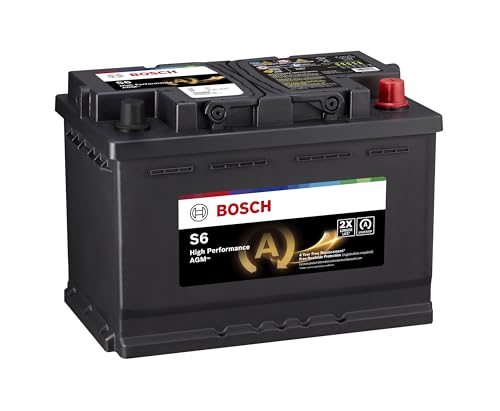
Modern vehicles with start-stop technology (the engine shuts off at red lights to save fuel) demand a battery that can handle hundreds of restarts per day without breaking a sweat. The Bosch S6585B was engineered specifically for this use case. Its Group 48 (H6/L3) size fits a broad range of European and domestic vehicles equipped with start-stop and regenerative braking systems.
The numbers tell the story. Bosch claims up to 2x longer service life and 4x higher deep-cycle resistance compared to conventional batteries. In practical terms, that means this battery handles the constant charge-discharge cycles of start-stop driving far better than a standard flooded battery — or even many basic AGM options. The excellent charge acceptance rate is critical here: during regenerative braking, the alternator pushes energy back into the battery rapidly, and this Bosch soaks it up efficiently.
Vibration resistance is another area where the S6585B excels. Robust internal connections prevent plate damage from road impacts, which is a common failure point for cheaper batteries. Bosch's OEM-approved status means this battery meets the same specifications that automakers require for factory installations. For drivers in urban areas with heavy stop-and-go traffic, this is the ideal choice.
Pros:
Cons:
NorthStar batteries are built in the same factory that produces batteries for military and emergency vehicle applications, and that pedigree shows in the NSB-AGM-34/78. This dual-terminal battery (Group 34/78) uses pure lead AGM technology — not recycled lead alloys — which translates to exceptional CCA ratings and cycling ability that puts most competitors to shame.
The headline spec is the cycle life: over 400 cycles to 80% depth of discharge (DOD). To put that in perspective, most AGM batteries start degrading significantly after 200-300 cycles at that depth. This makes the NorthStar ideal for vehicles loaded with aftermarket accessories — light bars, winches, audio systems, and auxiliary power setups. Buyers running off-road lights or other high-draw accessories will appreciate the deep reserve this battery provides.
The dual-terminal design (both SAE post and side terminal) offers broad vehicle compatibility across GM, Ford, and Chrysler platforms. Reliable starting power comes standard, even in extreme cold. The NorthStar carries a premium price tag, but for users who push their batteries hard and need absolute dependability, it is money well spent.
Pros:
Cons:
The Weize Platinum delivers legitimate AGM performance at a price point that undercuts the big-name brands significantly. With 70 Ah capacity, 760 CCA, and 120 minutes of reserve capacity, this Group 48 battery checks all the boxes for most daily drivers. The dimensions (10.94" x 6.89" x 7.48") match the H6 standard, fitting vehicles from Chevrolet, Volkswagen, BMW, and more.
Weize rates this battery for up to 2x the cycle life of conventional batteries, and the self-discharge rate of less than 8% after 90 days of storage is competitive with premium brands. The operating temperature range spans -22°F to 158°F, covering everything from Minnesota winters to Arizona summers. Charging specs (14.4-15.0V, up to 18A) are standard AGM parameters, compatible with any quality automotive charger.
One important note: buyers must verify terminal orientation before purchasing. The Weize uses a tapered terminal layout with negative on the left and positive on the right. Ordering the wrong polarity is a common mistake with budget batteries, and returns eat into any savings. The 36-month warranty provides reasonable protection, though it does not match the longer warranties offered by premium brands. For budget-conscious buyers who still want true AGM benefits, the Weize Platinum is the clear pick.
Pros:
Cons:
Interstate Batteries brands its MTZ line as "Outrageously Dependable," and the specs back up the marketing. This Group 34 pure lead AGM battery delivers 800 CCA — the highest in this roundup — along with 63 Ah capacity. The 99.99% pure non-alloy lead and ultra-thin plate design enable both cranking power and true deep cycling, which most batteries struggle to do simultaneously.
The dual-purpose capability is the MTZ-34's defining feature. Interstate claims over 10,000 starts at 5% DOD and 400 cycles at 80% DOD. That means it handles daily starting duties while also powering accessories through deep discharge cycles without premature degradation. The expected service life is 2x that of conventional AGM batteries and 3x longer than standard flooded batteries — a meaningful advantage for buyers who keep vehicles for the long haul.
With 40% more cranking power than conventional batteries during 5-second engine starts, cold morning reliability is not a concern. The rapid recharge capability pairs well with vehicles that make short trips, where the alternator has limited time to replenish the battery. This is an excellent choice for trucks and SUVs with performance accessories that draw significant power.
Pros:
Cons:
The Mighty Max MM-H8 is the biggest battery in this roundup, and that is exactly the point. At 95 Ah, 900 CCA, and 160 minutes of reserve capacity, this Group 49 (H8) battery is built for full-size trucks, SUVs, and luxury sedans that need every amp they can get. Vehicles with heated and cooled seats, large infotainment systems, and multiple 12V outlets will benefit from the extra capacity.
The sealed, spill-proof AGM design offers high discharge output and strong deep discharge recovery. That recovery characteristic matters: after a deep drain — say, leaving the lights on overnight — the MM-H8 bounces back more effectively than many competitors. The 900 CCA rating ensures reliable starting even in the coldest conditions, making it a strong choice for northern climates where large diesel trucks need serious cranking power.
Mighty Max positions this as a start-stop compatible battery, and the high capacity supports the frequent restart demands of modern start-stop systems. The 160-minute reserve capacity is the highest in this group, providing a substantial safety margin if the charging system fails. For buyers driving large vehicles with heavy electrical demands, the MM-H8 delivers the raw capacity that smaller batteries simply cannot match. Keeping battery terminals clean is essential for any AGM battery — a guide on cleaning car battery terminals with vinegar covers the basics.
Pros:
Cons:
Battery group size (BCI group number) determines the physical dimensions and terminal layout. Installing the wrong group size can result in a battery that does not fit the tray, cables that do not reach the terminals, or a battery that shifts during driving. Always check the vehicle owner's manual or the existing battery's label for the correct group number before ordering. Common group sizes in this roundup include Group 34, 35, 48, 49, and 94R — each designed for specific vehicle platforms.
CCA measures how much current a battery can deliver at 0°F (-18°C) for 30 seconds while maintaining at least 7.2 volts. Higher CCA means more reliable starting in cold weather. For mild climates, matching the OEM-spec CCA is sufficient. For cold regions, adding 10-20% above the minimum spec provides a safety margin. Reserve capacity (measured in minutes) indicates how long a battery can run essential accessories if the alternator fails. Batteries in this roundup range from 90 to 160 minutes of reserve capacity — a significant spread.
Cycle life measures how many charge-discharge cycles a battery can complete before capacity drops below a usable threshold. Depth of discharge (DOD) indicates how much of the battery's total capacity is used per cycle. A battery rated for 400 cycles at 80% DOD will last far longer than one rated for 200 cycles at the same depth. Buyers with heavy accessory loads — winches, audio systems, camping setups — should prioritize cycle life. Pure lead AGM batteries generally offer the best cycle life numbers in the consumer market.
Most AGM batteries in the mid-to-premium range come with 36-month free replacement warranties. Some manufacturers offer prorated coverage beyond the free replacement period. Brand reputation matters in the battery world because manufacturing consistency directly affects longevity. Established brands like OPTIMA, Bosch, Interstate, and ACDelco have decades of quality data behind them. Newer brands like Weize offer competitive specs at lower prices but lack the same depth of long-term reliability data. When possible, purchasing from retailers with hassle-free warranty processes simplifies any future claims.
Most quality AGM car batteries last between 4 and 7 years under normal driving conditions. Factors that affect lifespan include climate (extreme heat accelerates degradation), driving habits (frequent short trips prevent full recharging), and electrical load (heavy accessory use increases discharge depth). Pure lead AGM batteries from brands like NorthStar and Interstate tend to land on the longer end of that range, while budget options may reach 3-4 years in demanding conditions.
Yes, an AGM battery can replace a flooded battery in virtually any vehicle as long as the group size, terminal type, and CCA rating match or exceed the original specifications. AGM is a direct upgrade — it offers better vibration resistance, deeper cycling, and spill-proof operation. However, some older vehicles with external voltage regulators may need adjustment, as AGM batteries have slightly different charging profiles. Modern vehicles with built-in charging management handle the swap without any changes.
AGM batteries charge best with a charger that has an AGM-specific mode. Standard chargers can overcharge AGM batteries because they deliver higher voltages than AGM cells prefer (14.4-15.0V is the typical AGM range). Overcharging generates excessive heat and can permanently damage the sealed cells. Most modern smart chargers include an AGM setting. Using one extends battery life significantly compared to unregulated charging.
Both AGM and gel batteries are sealed lead-acid (SLA) designs, but they use different methods to immobilize the electrolyte. AGM uses fiberglass mats to absorb the acid, while gel batteries mix silica with the acid to create a thick paste. AGM batteries handle high-current demands (like engine starting) better and charge faster. Gel batteries excel in slow, steady discharge applications like solar storage. For automotive use, AGM is the superior choice in almost every scenario.
Common signs include slow engine cranking, dimming headlights at idle, dashboard warning lights, and needing frequent jump starts. A car battery tester provides precise measurements of voltage, CCA, and internal resistance. A healthy 12V AGM battery should read 12.6-12.8V at rest. Readings below 12.4V indicate partial discharge, and consistent readings below 12.0V suggest the battery is nearing end of life and should be replaced before it fails completely.
For most daily drivers in mild climates, a standard AGM battery provides excellent performance and value. Pure lead AGM batteries justify their higher cost for buyers who need extended cycle life (off-road vehicles, heavy accessory loads), extreme cold-weather reliability, or the longest possible service life. The Interstate MTZ-34 and NorthStar NSB-AGM-34/78 in this roundup are pure lead designs that deliver measurably longer lifespans — typically 2-3x that of conventional AGM batteries. Buyers who keep vehicles for 5+ years often recoup the premium through avoided replacements.
 |
 |
 |
 |

About Marcus Chen
Marcus Chen has over twelve years of hands-on experience modifying cars across a range of platforms — from commuter builds to track-focused setups — with deep expertise in suspension tuning, wheel and tire fitment, and performance upgrades that improve driving dynamics without sacrificing day-to-day reliability. He has worked with both bolt-on and engineered modifications and brings a methodical, results-focused approach to evaluating performance parts. At CarCareTotal, he covers performance upgrades, suspension and handling, and wheel, tire, and drivetrain modifications.
Get some FREE car parts & gear.. Or check out the latest free automotive manuals and build guides here.
Disable your ad blocker to unlock all the hidden deals. Hit the button below 🚗
| | | |
