by Liam O'Brien
Hailstorms cause more than $1 billion in vehicle damage every single year in the United States — and that's before you factor in UV fading, bird damage, tree sap, and the slow, relentless toll of leaving your car exposed to the elements 365 days a year. A quality carport is one of the smartest investments you can make for your vehicle, and in 2026 the options are better than ever. Whether you're protecting a daily driver, a boat, an RV, or a work truck, there's a structure built for exactly your situation.
But the carport market is flooded with options ranging from flimsy pop-up canopies to near-permanent aluminum structures, and picking the wrong one is an expensive mistake. We've done the hard work of sorting through dimensions, frame materials, cover fabrics, and real-world durability data so you don't have to. This guide covers five of the best carports available right now, along with a practical buying guide and answers to the questions buyers ask most. If you're also thinking about what goes inside your covered space, check out our roundup of the best garage floor mats of 2026 — a smart pairing for any carport setup.
From ShelterLogic's workhorse steel frames to Palram's architectural polycarbonate structures, every pick on this list earns its spot with verified specs and real-world performance. Let's get into it.
Contents







If you need one carport that handles everything from daily commuters to weekend project trucks, the ShelterLogic 73432 is the one to beat. The 12-foot width and 20-foot depth give you room for a full-size pickup with space to walk around it, while the 10-foot peak height clears most truck bed racks and roof boxes with ease. The all-steel frame uses ShelterLogic's DuPont thermoset baked-on powder coat finish — this isn't spray paint over raw steel, it's a factory-baked coating that resists rust and corrosion far longer than cheaper competitors. You'll notice the difference after the first hard rain season.
What really sets this frame apart is the patent-pending ShelterLock stabilizer block at every single rib connection. On most budget carports, the weak point is where the ribs meet the uprights — over time, those joints loosen and the whole structure starts to rack and wobble. ShelterLogic solved this with a block system that locks each connection rigid. Paired with bolt-together hardware at every joint (no snap-fit plastic clips here), this frame stays square and solid season after season. The ratchet-Tite tension system keeps the grey polyethylene cover drum-tight so you don't get that annoying flapping and pooling that accelerates fabric wear. Installation takes a couple of hours with two people and basic tools — nothing exotic required.
The cover is UV-treated and water-resistant, though it's worth noting this is a fabric-covered structure rather than a hard roof. In heavy snow regions, you'll want to knock accumulation off the cover rather than let it pile up. That said, for the majority of climates and use cases, the ShelterLogic 73432 delivers professional-grade protection at a price that's hard to argue with. It earns its "Best Overall" title by hitting the right balance of size, durability, and practical value in 2026.
Pros:
Cons:
The Acepic 13x20 takes a different approach than the open-sided shelters on this list — it's a fully enclosed portable garage, and that distinction matters more than you might think. Four roll-up ventilation windows and zippered doors on both ends mean you get full weather sealing when you need it and proper airflow when you don't. That's a genuinely useful feature if you're using the space as a workshop, storing a motorcycle over winter, or keeping a boat covered during off-season. The 13-foot width is slightly wider than the ShelterLogic 12-footer, which matters when you're maneuvering something like a boat trailer through the doors.
The frame is built from 38mm steel tubing — that's roughly 1.5 inches in diameter, which is on the heavier end for portable carports in this price range. Eight support posts provide stability that you typically don't get from cheaper 6-post designs, and you'll feel that difference during a wind event. The cover fabric is 180g PE with UV-resistant and waterproof treatment baked in. For a portable structure, that weight spec is solid. Acepic also includes a QR code in the box that links directly to an installation video, which sounds like a small thing but genuinely speeds up assembly — following the video rather than paper diagrams alone cuts the error rate significantly.
The enclosed design does mean slightly more assembly complexity compared to open-sided carports, and if you live somewhere with serious snow loads, you'll need to clear the roof periodically. But for year-round covered storage with actual ventilation control, the Acepic 13x20 is the standout portable option in 2026. It's the pick for anyone who values flexibility — set it up in one location, break it down, move it if your situation changes.
Pros:
Cons:
When you're protecting something large — a 40-foot RV, a dual-axle boat trailer, a lifted 4x4 with a rooftop tent — the standard 12-foot-wide carport just doesn't cut it. The ShelterLogic 15'x20'x12' Round Standard is built for exactly that scenario. The 15-foot width gives you real lateral clearance for wide vehicles, extended mirrors, and side-mounted accessories. The 12-foot peak height is generous even by RV standards — most Class A motorhomes run between 11 and 13 feet, so this structure accommodates the majority of recreational vehicles without ducking.
The round-style roof profile isn't just an aesthetic choice. A rounded peak sheds rain and light snow more efficiently than a flat or low-pitch design, which reduces the chance of pooling and the structural stress that comes with it. ShelterLogic carries over the same core engineering from the 73432: the DuPont thermoset powder coat finish on all steel components, the patent-pending ShelterLock stabilizer blocks at every rib connection, and bolt-together hardware throughout. The ratchet-Tite tension system and easy-glide sliding cross rails keep the grey cover tight and positioned correctly even as temperatures cycle through the seasons and the fabric naturally expands and contracts.
If your daily driver is a standard sedan, this is overkill — but for truck owners who are also managing a truck tool box setup or hauling large equipment, the extra width and height pay for themselves immediately. Assembly follows the same pattern as other ShelterLogic products: two people, basic tools, a couple of hours. The 20-foot depth is the only potential limitation — if you need to cover a truly long trailer, you'll want to look at dedicated RV covers instead. But for the vast majority of large-vehicle carport buyers in 2026, the 15'x20'x12' hits the sweet spot.
Pros:
Cons:
If you're done with fabric covers and temporary structures, the Palram Canopia Arcadia is where you step up to a near-permanent solution. This is a real aluminum-frame carport with polycarbonate roof panels — not a tent with a metal skeleton, but an actual rigid structure that looks like it belongs next to your house. The aluminum frame is powder-coated gray and resists corrosion without any ongoing maintenance. The polycarbonate roof panels block harmful UV rays while still allowing natural light to filter through, which means the space under the Arcadia stays bright and functional rather than dark and cave-like.
The specs here are serious. You get a 7.6-foot clearance height — that's headroom for standard passenger vehicles and crossovers with roof racks — and a snow load rating of 30.7 lbs per square foot. That snow load rating is critical if you're in the Northeast, Midwest, or any mountain region. A rated permanent structure handles the kind of winter weather that destroys fabric shelters in their first season. The 10-year warranty from Palram backs that claim with real coverage, not fine-print exclusions. According to Wikipedia's overview of carport construction, permanent aluminum-frame structures with polycarbonate roofing represent the highest tier of residential carport durability — and the Arcadia fits that profile precisely.
The 12'x16' footprint is the one trade-off. It's ideal for a single midsize or compact vehicle, but if you drive a full-size pickup with an extended cab, measure your truck before you buy — you'll be close to the 16-foot depth with the tailgate down. For the right vehicle, though, this structure is essentially a permanent addition to your property and genuinely adds curb appeal rather than detracting from it. If you've been debating a carport versus a true garage addition, this is a useful middle ground: permanent aesthetics, DIY installation, no permit drama in most municipalities.
Pros:
Cons:
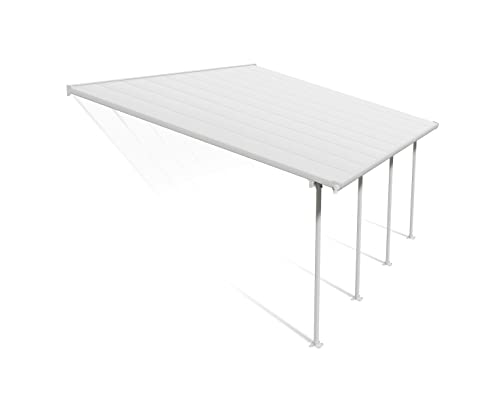
The Palram Canopia Feria is the carport you buy when you want protection that genuinely enhances your property. The 13'x20' footprint handles a full-size vehicle with room to open doors wide, and the all-white aluminum frame with polycarbonate roof panels creates a clean, architectural look that photographs well and adds measurable value at the property line. This is the pick for homeowners who've looked at fabric shelters and found them aesthetically unacceptable for their neighborhood — the Feria looks like it was designed by an architect, not assembled from a parts kit.
The technical specs justify the premium. The 8mm multi-wall polycarbonate roof panels are the thickest on this list — that thickness translates to superior insulating properties, better impact resistance, and a 100% UV block that protects everything underneath without blocking 65% of visible light transmission. That light transmission number is meaningful: the space under the Feria is genuinely bright and pleasant, useful as a covered workspace, outdoor entertaining area, or equipment storage. The frame combines powder-coated galvanized steel structural elements with aluminum trim and connectors, giving you corrosion resistance across every exposed surface. The Click N' Lock roof connector system and pre-drilled, pre-cut panels make assembly manageable as a DIY project — you won't need a contractor if you follow the step-by-step instructions carefully.
The white finish is the only potential limitation — in certain climates or near trees, white structures show dirt and algae growth more visibly than gray alternatives. That's a minor maintenance consideration, not a structural one. For the buyer who wants the best-looking carport on the block with specs that back up the appearance, the Feria 13'x20' is the clear answer in 2026. It pairs well with a thoughtfully equipped garage space — and if you're refining your entire setup, our guide to the best garage floor mats and our comparison of garage floor paint vs. epoxy are worth reading before you finalize your space.
Pros:
Cons:

The frame is the foundation of everything — get this wrong and no other feature saves you. Steel frames dominate the portable carport market, but not all steel is equal. Look for frames with a powder-coated or thermally-applied finish rather than bare or spray-painted steel. DuPont thermoset baked-on coatings, like those used by ShelterLogic, provide significantly better rust resistance than field-applied paints. Tube diameter matters too: 38mm (roughly 1.5 inches) is a solid benchmark for portable heavy-duty carports. Anything under 32mm is likely to flex and ultimately fail in high-wind conditions.
For permanent structures, aluminum frames are the superior choice. Aluminum doesn't rust, requires no ongoing maintenance, and when properly anodized or powder-coated, holds up for decades without structural degradation. The trade-off is cost — aluminum-frame carports like the Palram Arcadia and Feria carry a higher price tag than steel-frame fabric shelters, but they also carry warranty periods measured in years rather than seasons.
Fabric covers (PE — polyethylene) are the standard on portable and semi-permanent carports. The key specs to evaluate are fabric weight and UV treatment. A 180g PE cover is on the heavier, more durable end of the fabric spectrum. UV-resistant treatment extends the life of the cover significantly — untreated PE becomes brittle and tears within a couple of seasons in direct sunlight. Most quality covers are also waterproof (not just water-resistant), meaning seams and fabric are both sealed against moisture penetration.
Polycarbonate panels, used on the Palram Arcadia and Feria, are a different category entirely. Multi-wall polycarbonate (6mm or 8mm thickness) is virtually unbreakable under normal conditions, blocks 100% of UV radiation, and transmits natural light. It's heavier, more expensive, and requires a rigid aluminum or steel frame to support it — but it performs like a permanent roof, not a cover. For year-round protection in climates with serious precipitation or snow load requirements, polycarbonate is worth the investment.
Don't just measure your vehicle — measure your vehicle with everything on it. Roof rack, bike carrier, antenna, roof-mounted AC (for RVs). Then add at least 18 inches on each side for door clearance and comfortable movement around the vehicle. A carport that perfectly fits your truck with an inch to spare is frustrating to use every single day.
Also factor in your site. If you're positioning the carport on a slope, you may need anchor extensions or leveling adjustments. Most manufacturers supply anchor kits for concrete, asphalt, and ground surfaces — verify what's included before you buy, because anchor kits sold separately add to the total cost.
Portable carports generally aren't rated for extreme snow loads or sustained high winds — that's the trade-off for their lower cost and mobility. If you're in a region with regular heavy snowfall, the rating you care about is lbs per square foot of snow load. The Palram Arcadia's 30.7 lbs/sq ft rating is meaningful and verifiable. For fabric-covered structures, the practical rule is simple: clear snow after every significant storm. Don't let accumulation build up on a fabric roof regardless of what the marketing says.
Permanent carports may require building permits in your municipality, especially if they're attached to your home or exceed a certain square footage. Check with your local building department before purchasing a permanent structure — requirements vary widely. The tools and resources section of this site has additional guides covering property preparation and outdoor structure planning. Many homeowners are surprised to find that a 12'x20' detached carport triggers permit requirements just like a deck or addition would.
A fabric carport provides meaningful protection from small to moderate hail — the fabric absorbs and disperses impact that would otherwise dent sheet metal and crack glass. Polycarbonate carports rated for impact (like the Palram Arcadia and Feria) provide even stronger protection. Neither is a guarantee against catastrophic hailstorms with golf-ball-sized stones, but both dramatically reduce damage compared to leaving your vehicle fully exposed. Any covered structure is significantly better than none.
A quality UV-treated PE cover on a well-maintained frame lasts 3–7 years depending on your climate. Direct sun exposure, extreme UV, and freeze-thaw cycles accelerate degradation. High-quality covers in the 180g range and above, kept under tension and cleared of snow and debris, routinely hit the upper end of that range. Most manufacturers sell replacement covers separately, so you don't need to replace the entire structure when the cover wears out — just swap the cover and your frame keeps going.
All five picks on this list are designed for DIY installation. Fabric-covered ShelterLogic-style shelters need two people and 2–4 hours with basic hand tools. Polycarbonate structures like the Palram Arcadia and Feria are more involved but still manageable with two people over a full day. The key is following the manufacturer's instructions precisely — especially watching installation videos when provided. Errors that require disassembly and reassembly are the main cause of installation frustration.
It depends entirely on your municipality and the structure type. Freestanding portable carports under a certain square footage are often permit-exempt, but permanent structures (especially those attached to your home) typically require permits and may need to meet local wind and snow load codes. Check with your local building department before purchasing. Many HOA communities also have rules governing carport appearance and materials — aluminum-frame structures with polycarbonate roofs tend to be HOA-friendly; fabric shelters often are not.
A traditional carport is open on the sides — it shields your vehicle from sun, rain, and overhead precipitation without enclosing the space. A portable garage (like the Acepic 13x20 on this list) adds walls and doors, fully enclosing the space like a fabric garage. Portable garages provide better wind protection, security, and keep dust and debris out — but they cost more, take longer to assemble, and require more ventilation management. Which one you need depends on whether you value open accessibility or full enclosure more.
Proper anchoring is non-negotiable — an unanchored carport in a windstorm becomes a projectile. Most carports ship with anchor kits designed for their specific frame. For concrete surfaces, use expansion bolt anchors drilled into the slab. For asphalt, use auger-style ground anchors. For dirt or grass, use heavy-gauge spiral ground anchors and supplement with weight bags or sandbags at the base of each upright. In high-wind regions (coastal areas, open plains), consider adding additional guy wire anchoring points beyond the standard kit — it's cheap insurance against a very expensive failure.
Your vehicle is one of the largest investments you own — protecting it with a quality carport is straightforward math. Whether you go with the ShelterLogic 73432 for solid everyday coverage, the Acepic 13x20 for fully enclosed portable protection, the 15'x20' ShelterLogic for a large vehicle, or step up to a Palram Arcadia or Feria for a permanent aluminum-and-polycarbonate structure, every option on this list beats leaving your car, truck, or boat exposed to the elements. Check current prices on Amazon, match the dimensions to your vehicle and site, and get your vehicle covered before the next storm rolls through.
 |
 |
 |
 |

About Liam O'Brien
Liam O'Brien has spent over a decade buying, field-testing, and evaluating automotive tools with a focus on what actually performs in a real DIY garage rather than what markets well on a spec sheet. His hands-on experience spans hand tools, diagnostic equipment, floor jacks, socket sets, and specialty automotive gear across a wide range of brands and price points. At CarCareTotal, he covers automotive tool and equipment reviews, garage setup guides, and buying advice for home mechanics.
Get some FREE car parts & gear.. Or check out the latest free automotive manuals and build guides here.
Disable your ad blocker to unlock all the hidden deals. Hit the button below 🚗
| | | |
