by Marcus Chen
Which diesel motor oil actually protects your engine when it matters most — under heavy load, during cold starts, or through extended drain intervals? If that question has sent buyers down a rabbit hole of viscosity grades and API certification charts, the answer is simpler than it looks. The clear top pick for 2026 is the Shell Rotella T6 Full Synthetic 5W-40, but the right choice depends heavily on the application, engine generation, and operating conditions. This guide breaks down the six best diesel motor oils available right now, with no fluff and no fence-sitting.
Diesel engines run hotter, generate more soot, and operate under higher cylinder pressures than their gasoline counterparts. That's not a knock — it's just physics. The combustion process that gives a diesel its torque and fuel efficiency also demands a motor oil with superior oxidation resistance, robust soot-handling chemistry, and a film strength that holds up under sustained load. Skimping on oil quality in a diesel is the fastest way to accelerate wear on injectors, turbocharger bearings, and valve train components. Whether it's a pickup truck doing daily towing, a fleet vehicle racking up highway miles, or a passenger car fitted with a particulate filter, the oil choice is mission-critical.

The oils reviewed here span the full spectrum — from budget-friendly conventional formulas to fully synthetic premium blends — covering 5W-40 and 15W-40 viscosity grades, CK-4 and CJ-4 certifications, and everything from passenger diesels with DPF systems to heavy-duty commercial applications. For buyers who want peak engine performance alongside strong maintenance habits, pairing a quality diesel oil with a full set of engine degreasers helps keep the whole drivetrain in top shape between services. Now, let's get into the picks.







Mobil 1's Turbo Diesel Truck formula is purpose-built for the kind of punishment modern diesel truck engines deliver on a daily basis — sustained towing loads, high EGT cycles, and the thermal stress that comes with turbocharger use. The 5W-40 viscosity grade gives it excellent cold-flow properties for clean starts in sub-freezing temperatures while maintaining a robust high-temperature film at full operating temp. It's not just marketed for trucks; it legitimately meets or exceeds the specifications demanded by the major OEMs including Cummins, Detroit Diesel, and Mercedes-Benz, making it a genuine single-drum solution for mixed fleet operations.
The long-drain capability is one of the strongest selling points here. In fleet contexts or for trucks that accumulate miles quickly, extended OCI intervals reduce downtime and per-mile oil costs significantly. The formula's oxidation resistance means it resists viscosity breakdown even under the punishing heat cycles of turbocharged applications. Low-emission engine compatibility — including those with EGR and DPF systems — rounds out a spec sheet that's hard to argue with for full-size diesel truck owners in 2026.
Pros:
Cons:
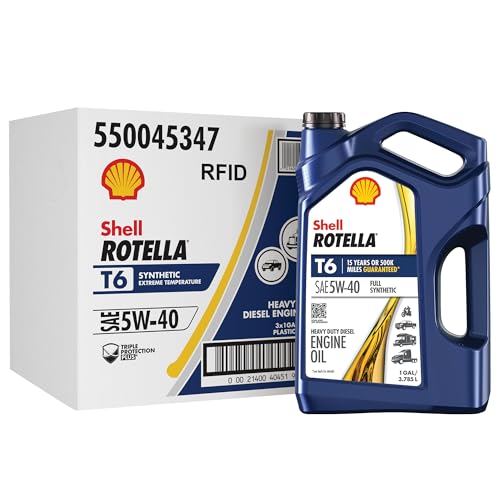
Shell Rotella T6 is the gold standard of diesel motor oils, and the 2026 formulation continues to justify that reputation. The Triple Protection Plus technology addresses the three primary failure modes in diesel engines — wear, deposits, and oil breakdown — through a fully synthetic base stock and a tightly tuned additive package that outperforms the previous CJ-4 generation by a measurable margin. Shell's own comparative testing shows significantly improved antiwear performance, and the 1.5% fuel economy improvement over equivalent 15W-40 oils is a real number that adds up over the life of a vehicle or fleet.
The 3-pack format (3 gallons total) makes it economical for regular oil changes, and the 5W-40 grade covers virtually every modern diesel application from light-duty pickups to medium commercial trucks. Soot dispersancy and oxidation resistance are exceptional — two critical metrics for any engine running long drain intervals or operating in dusty environments. The T6 is the default recommendation here, and it's the benchmark every other oil on this list gets measured against. Buyers looking to keep their entire drivetrain in peak condition will find the T6 pairs well with a rigorous maintenance schedule that also includes attention to brake system wear items.
Pros:
Cons:
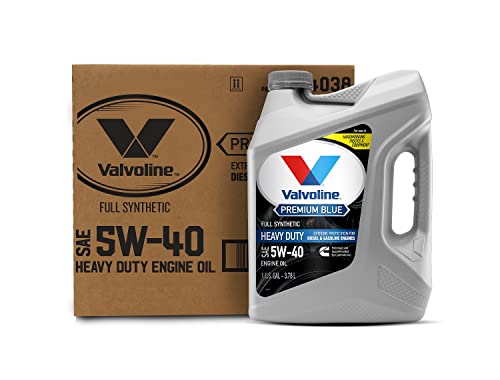
Valvoline's Premium Blue Extreme is the OEM choice for Cummins-powered equipment, and that endorsement carries serious weight. This isn't a marketing claim — Valvoline Premium Blue is the factory-fill and dealer-recommended oil for Cummins engines, which means the chemistry has been validated against real-world heavy-duty workloads that most consumer oils never face. The 5W-40 full synthetic formulation covers cold-start performance, sustained high-load operation, and the long idle periods common in construction and agricultural equipment.
Oxidation resistance is a standout spec. The higher-quality synthetic base oils resist the formation of deposits and sludge under the severe thermal cycling that heavy machinery goes through, and the cold-start protection keeps soot and contaminant buildup in check during the critical warm-up phase. The 3-case format (3 gallons total) makes it practical for fleet buyers running Cummins ISX, ISB, or ISL engines. It's the top choice for operators who can't afford unplanned downtime and whose Cummins warranty documentation requires Premium Blue-compliant oil.
Pros:
Cons:
LIQUI MOLY is the German benchmark for passenger car diesel lubricants, and the Diesel High Tech 5W-40 is the formula that built that reputation. This is a Low SAPS (Sulfated Ash, Phosphorus, Sulfur) fully synthetic oil — a critical distinction for anyone running a diesel with an active diesel particulate filter. High-SAPS oils contaminate and prematurely clog DPF systems, leading to expensive regeneration failures and shortened filter life. The LIQUI MOLY formula avoids that entirely, making it compatible with modern Euro-spec and US-market passenger diesels where DPF health is a primary concern.
The 5-liter container format aligns perfectly with European passenger car oil capacity requirements (typically 5–6 liters), and the ACEA C3 / API SN compliance covers the full range of VW TDI, BMW diesel, and Mercedes CDI applications. Build quality and additive sophistication are typical of German engineering — methodical, well-proven, and over-specified for the use case. It's not the cheapest option per liter, but for DPF-equipped passenger diesels, it's the technically correct choice. Performance-focused diesel drivers will appreciate how this oil complements other performance upgrades that keep fuel efficiency and engine health dialed in.
Pros:
Cons:
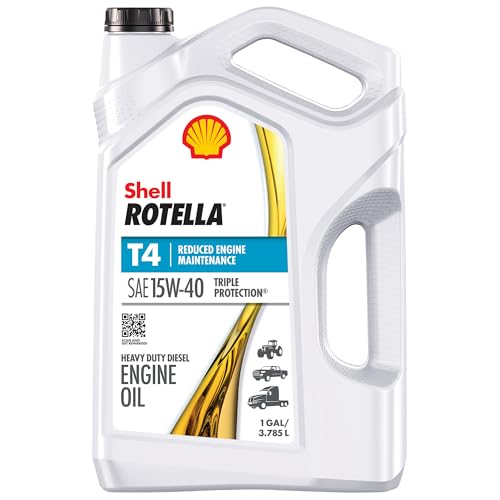
The Rotella T4 is the workhorse of the diesel oil market — not glamorous, but relentlessly effective. The 15W-40 grade is the tried-and-true viscosity specification for diesel engines operating in moderate to warm climates, and Rotella T4's advanced additive technology — supplemented with a synthetic base component — delivers meaningfully better protection than the conventional mineral oils it competes against at a similar price. Triple Protection technology covers the same wear, deposit, and breakdown triad as the T6, but tuned for conventional-oil drain intervals rather than extended OCI.
Engine cleanliness throughout the drain interval is a genuine strength. The deposit control additive package keeps piston crowns, ring grooves, and valve train components clean across normal service intervals. For older diesel trucks, agricultural equipment, or any application where synthetic-level cost isn't justified but the owner still wants real protection, the T4 is the default recommendation. It's the right tool for the job: affordable, widely available, and consistently effective. Owners managing a full vehicle maintenance regimen will find the T4's reliability pairs well with similarly dependable mechanical components like quality shock absorbers for heavy-duty truck setups.
Pros:
Cons:
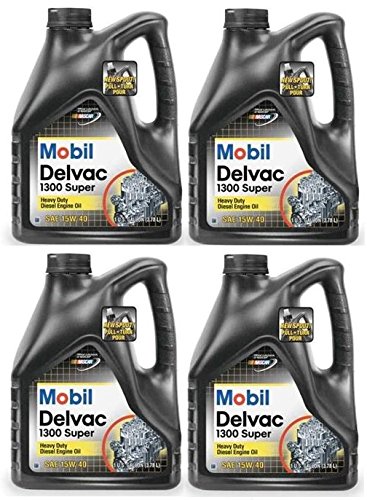
Delvac 1300 Super is Mobil's heavy-duty fleet formula, and the 4-gallon pack format makes its intentions clear. This oil is designed for commercial operations — trucking fleets, construction equipment, buses — where reliability across high mileage and varied operating conditions is non-negotiable. The 15W-40 specification covers the standard viscosity requirement for heavy-duty commercial diesel applications, and Mobil's additive engineering ensures consistent performance from first startup to the end of the drain interval.
The Delvac 1300 Super carries API CK-4 certification, which means it's cleared for use in the current generation of low-emission commercial diesels with SCR and EGR systems. Mobil's wear protection technology holds up under the sustained high-load conditions that fleet trucks see daily — long highway runs, loaded urban delivery cycles, and the cold starts that come with overnight parking in variable climates. The 4-gallon pack is cost-effective for fleet maintenance managers who are doing multiple vehicle services in a single session, reducing per-quart cost considerably over single-gallon purchases.
Pros:
Cons:
Castrol GTX Diesel rounds out the list as the budget-friendly entry point that still delivers real, measurable protection. The 15W-40 formulation is designed to handle severe service conditions — towing, hauling at high ambient temperatures, stop-and-go fleet routes — while maintaining engine cleanliness through a full drain interval. Castrol's piston deposit protection is particularly well-developed here: the additive chemistry actively combats the carbonaceous deposits that build up on piston crowns and ring lands in diesel engines running under sustained load.
It's compatible with both diesel and gasoline engines, which is useful for mixed fleets or owners with multi-vehicle garages. Sludge minimization and valve train wear protection are solid for the price tier. The GTX Diesel doesn't compete with the T6 or Mobil 1 on extended drain capability or advanced soot-handling chemistry, but for buyers who change their oil on a standard interval and want reliable baseline protection without paying a premium, it's a legitimate option. At this price point, there are few better choices for diesel-gasoline mixed applications or older pre-EGR diesel engines.
Pros:
Cons:

Viscosity grade is the first filter for any diesel oil decision. The two most common grades in 2026 are 5W-40 and 15W-40, and the difference matters.
The API (American Petroleum Institute) and ACEA (European Automobile Manufacturers' Association) certification marks on an oil bottle are performance certifications — not marketing badges. Understanding them prevents compatibility mistakes, especially with modern emission-controlled engines.
For a deeper technical background on diesel engine lubrication standards, the Wikipedia article on motor oil covers the API service category system in useful detail.
Full synthetic diesel oil outperforms conventional on nearly every measurable axis — oxidation resistance, cold-start performance, soot dispersancy, and film strength under load. But the premium is real, and conventional oil is not a failure mode in all applications.
Using an oil that doesn't meet the engine manufacturer's published specification can void warranty coverage and cause real mechanical harm. Always cross-reference the owner's manual specification — not just the API starburst on the bottle — with the oil's listed approvals before purchase.
The first number in the viscosity grade (5W or 15W) represents cold-weather flow performance — specifically, how the oil behaves at low temperatures. 5W-40 oil flows at temperatures as low as -40°F/-40°C, protecting turbocharger bearings and critical engine surfaces during cold starts. 15W-40 has a higher cold-pour-point and is best suited for moderate to warm climates. Both grades offer equivalent film thickness at full operating temperature (the "40" rating), so high-temperature protection is comparable. Cold-climate operations and modern turbocharged engines almost always benefit from a 5W-40 formulation.
Yes, in almost all cases. Modern full synthetic diesel oils are fully backward-compatible with older conventional-oil-specification engines. The main exception to verify is whether the older engine has worn seals that may have been swelled or conditioned by conventional oil mineral content — in rare cases, switching to synthetic can cause temporary minor seepage until seals readjust. That said, the benefits of synthetic (better oxidation resistance, cleaner deposits, improved cold-start protection) apply equally to older engines, and the switch is generally recommended unless the owner's manual or a qualified mechanic advises otherwise.
Oil change intervals depend on the oil type, engine design, and operating conditions. Full synthetic diesel oils formulated for extended drain service (like Mobil 1 Turbo Diesel or Shell Rotella T6) can support intervals of 10,000–15,000 miles in normal highway operation. Engines running under severe service conditions — heavy towing, stop-and-go commercial routes, dusty environments — should follow shorter intervals regardless of oil quality. Conventional oils like Rotella T4 are typically rated for 5,000–7,500 mile intervals. Always defer to the OEM's published interval recommendation for the specific application.
Yes, viscosity grade has a measurable impact on fuel economy. Lower-viscosity oils reduce internal friction, which translates directly to lower fuel consumption. Shell Rotella T6 5W-40, for example, demonstrates a documented 1.5% fuel economy improvement over equivalent 15W-40 oils in controlled testing. While 1.5% sounds modest, it accumulates meaningfully over a high-mileage vehicle's lifetime. Ultra-low-viscosity grades (0W-20, 5W-30) offer even greater fuel economy benefits but are typically reserved for passenger car diesels — most heavy-duty applications still require 5W-40 or 15W-40 minimum film thickness.
SAPS stands for Sulfated Ash, Phosphorus, and Sulfur — three additive components present in conventional and High SAPS engine oils. In diesel engines equipped with diesel particulate filters (DPF), these compounds accumulate in the filter substrate, accelerating plugging and requiring more frequent regeneration cycles. Over time, high SAPS contamination shortens DPF service life and can trigger costly regeneration failures. Low SAPS oils (designated ACEA C3 or C4) are specifically formulated to minimize these compounds while maintaining full wear protection. Any diesel with an active DPF system must use a Low SAPS certified oil.
Mixing oil brands in an emergency top-up is generally acceptable — modern diesel oils from reputable manufacturers are formulated to be compatible. However, regularly mixing different viscosity grades (e.g., topping a 5W-40 fill with 15W-40) will alter the effective viscosity of the blend and dilute the additive package of whichever oil was dominant. For optimal performance and consistent protection, sticking with a single product and grade throughout the drain interval is best practice. If an oil change is due soon, top up with the correct grade to avoid running low, then do a proper full drain and refill at the scheduled interval.
Choosing the right diesel motor oil in 2026 comes down to matching the product's specification to the engine's actual requirements — viscosity grade, SAPS level, OEM approval, and operating conditions all matter. For most buyers, the Shell Rotella T6 Full Synthetic 5W-40 is the clear answer, but the Valvoline Premium Blue Extreme is the non-negotiable pick for Cummins applications, and the LIQUI MOLY Diesel High Tech is the technically correct choice for DPF-equipped passenger diesels. Pick the oil that fits the engine, commit to the service interval, and the investment in quality lubrication will pay back in extended engine life and fewer unplanned repair bills.
 |
 |
 |
 |

About Marcus Chen
Marcus Chen has over twelve years of hands-on experience modifying cars across a range of platforms — from commuter builds to track-focused setups — with deep expertise in suspension tuning, wheel and tire fitment, and performance upgrades that improve driving dynamics without sacrificing day-to-day reliability. He has worked with both bolt-on and engineered modifications and brings a methodical, results-focused approach to evaluating performance parts. At CarCareTotal, he covers performance upgrades, suspension and handling, and wheel, tire, and drivetrain modifications.
Get some FREE car parts & gear.. Or check out the latest free automotive manuals and build guides here.
Disable your ad blocker to unlock all the hidden deals. Hit the button below 🚗
| | | |
