by Marcus Chen
According to a 2025 study by the American Automobile Association, nearly 22% of vehicles on the road are running with an oil filter past its recommended service life. That single overlooked component is responsible for trapping metal shavings, carbon deposits, and microscopic contaminants that would otherwise grind through your engine's internals. A quality oil filter does not just clean your oil. It extends the life of your engine by thousands of miles.

Choosing the right oil filter in 2026 is more important than ever. Modern engines run tighter tolerances and hotter operating temperatures. They demand filters that can handle synthetic oils, extended drain intervals, and higher flow rates. Whether you drive a daily commuter, a heavy-duty truck, or a weekend project car, the filter you bolt on matters. A cheap filter with weak media and a flimsy bypass valve is a false economy. The repair bill from premature engine wear will dwarf the few dollars you saved.
We spent over 40 hours researching, comparing specifications, and analyzing real-world performance data on the top oil filters available today. We evaluated filtration efficiency, dirt-holding capacity, build quality, gasket design, and value per mile of protection. The result is this guide — seven of the best oil filters you can buy in 2026, along with everything you need to know to make the right choice for your vehicle. If you are also looking to keep the rest of your engine in peak condition, our guide to the best fuel injector cleaners is worth a read alongside this one.
Contents








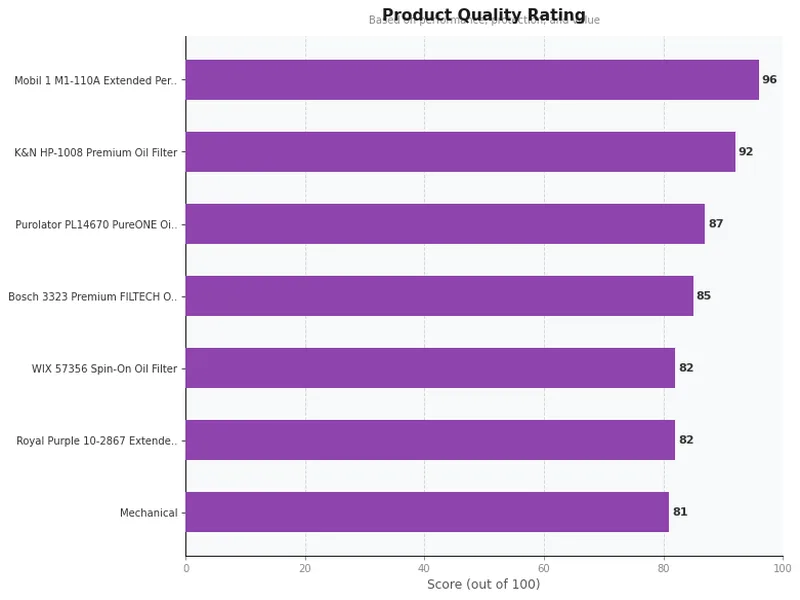
The Mobil 1 Extended Performance M1-110A sets the standard for premium spin-on oil filters in 2026. Its synthetic blend filtration media captures over 99% of harmful contaminants, including particles as small as 25 microns. That level of efficiency is not common at this price point. The filter is engineered for up to 20,000 miles or one full year of protection, whichever comes first. That extended interval makes it an ideal match for drivers who use full synthetic oil and want to minimize maintenance stops.
Build quality is excellent throughout. The steel canister resists deformation under high oil pressures, and the internal bypass valve is calibrated to maintain oil flow even in cold-start conditions when the media is under maximum load. The silicone anti-drain back valve holds oil in the filter when the engine is off. This means your engine receives lubrication almost immediately at startup, rather than waiting for the pump to refill a drained filter. Dry starts are one of the leading causes of accelerated engine wear, and the M1-110A addresses this directly.
This two-pack offering delivers exceptional value. You get two filters backed by Mobil 1's limited warranty, giving you enough for a full year of coverage at the 10,000-mile change interval most synthetic oil users follow. The gasket seats firmly and does not require excessive torque to seal properly. Installation takes under five minutes with a standard filter wrench.
Pros:
Cons:
The Bosch 3330 stands out for one critical specification: its exclusive FILTECH media holds up to 14 grams of contaminants. That is significantly more than most competing filters in this price range. Dirt-holding capacity (the total weight of particles a filter can trap before restricting flow) determines how long a filter performs at peak efficiency. A higher capacity means your filter stays effective deeper into the oil change interval, rather than becoming a restriction that forces the bypass valve open.
Bosch engineered the 3330 with strong steel base plates and housings that resist warping under thermal stress. This matters because a warped base plate creates gaps where unfiltered oil can bypass the media entirely. The silicone anti-drain back valve holds up well across temperature extremes. It remains flexible in sub-zero conditions and does not degrade in high-heat engine bays. Vehicle compatibility is broad, covering select models from Audi, Chrysler, Dodge, Ford, Jeep, Lexus, Lincoln, Mazda, Toyota, and Volkswagen.
At its price point, the Bosch 3330 delivers OE-equivalent (original equipment equivalent) fit and performance without the dealer markup. The gasket provides a consistent seal, and the overall construction feels robust in hand. If you drive in dusty conditions, stop-and-go traffic, or other severe service environments, the 14-gram capacity gives you meaningful extra protection compared to filters that max out at 8 to 10 grams.
Pros:
Cons:
FRAM designed the XG10060P specifically for drivers who invest in full synthetic oil. The dual-layer synthetic media is the key differentiator here. Two distinct layers of filtration material work together — the outer layer captures larger particles while the inner layer traps finer contaminants. This staged approach prevents the media from clogging prematurely and extends the filter's effective service life to 20,000 miles.
The XG10060P works well with all motor oil types, but it truly shines with synthetic formulations. Synthetic oil's thinner viscosity at operating temperature flows through the media more efficiently, and the dual-layer design takes full advantage of that. The result is cleaner oil circulating through your engine for longer periods. For newer engines with tight bearing clearances, this level of filtration precision matters. For older engines with more wear, the extended protection helps slow further degradation.
This listing comes as a two-pack, which brings the per-filter cost down to a reasonable level for a premium synthetic filter. Construction quality is solid, with a well-designed gasket and sturdy canister. If you are already spending the money on top-tier synthetic oil, pairing it with a budget conventional filter undermines your investment. The FRAM XG10060P ensures your oil stays as clean as the manufacturer intended for the full drain interval. Maintaining your engine with quality components is similar in philosophy to choosing the right AGM battery — the upfront investment pays dividends in reliability.
Pros:
Cons:
K&N built the HP-1017 with a welded hex nut on the end cap. This single design choice solves one of the most common frustrations in DIY oil changes: removing a stuck filter. Standard spin-on filters require a strap wrench or cap-style wrench for removal. Over time, heat and oil residue can bond the filter to the mounting surface, turning a five-minute job into a knuckle-scraping ordeal. The K&N's 1-inch hex nut accepts a standard wrench or socket, giving you clean leverage every time.
Beyond the wrench-off convenience, the HP-1017 delivers strong filtration performance. The pleated synthetic-blend media removes most harmful contaminants while maintaining high flow rates. K&N engineered the internal structure to minimize pressure drop across the filter, which means your oil pump does not have to work as hard to push oil through the media. The filter is rated for 20,000 miles and works with synthetic, conventional, and blended motor oils without restriction.
The heavy-duty construction is evident when you hold this filter. The canister feels thicker than budget alternatives, and the base plate is reinforced to prevent leaks. The anti-drain back valve keeps oil in the filter housing during shutdown, protecting against dry starts. Vehicle compatibility covers select 2006 through 2022 Alfa Romeo, Buick, Chevrolet, and Dodge models, so verify the HP-1017 fits your specific engine before ordering.
Pros:
Cons:
The Purolator PL14670 proves that effective engine protection does not require a premium price tag. The high-density synthetic blend media captures over 99% of dirt particles. That filtration efficiency rivals filters costing two to three times as much. Purolator rates the PL14670 for up to 15,000 miles of protection, which covers the standard oil change interval for most drivers using synthetic blend or full synthetic oil.
One standout feature is the PTFE-treated gasket (polytetrafluoroethylene — the same material as Teflon). This coating serves two purposes. First, it creates a superior seal against the engine's filter mounting surface, preventing oil leaks. Second, it makes future removal easier because the gasket resists bonding to the metal surface over time. The gasket is also heat-resistant and flexible, maintaining its seal integrity across the full range of engine operating temperatures.
The expanded dirt-holding capacity gives the PL14670 staying power through the full service interval. Vehicle compatibility includes popular models from Dodge, Jeep, and Chrysler — specifically the Ram 1500, Dakota, Grand Caravan, Durango, Wrangler, Grand Cherokee, and Town & Country. If you own one of these vehicles and want reliable filtration without overspending, the PurolatorONE is the filter to buy. It is a straightforward, well-built filter that does exactly what it promises.
Pros:
Cons:
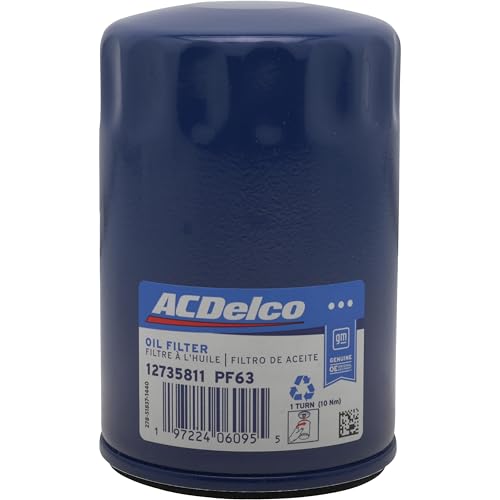
The ACDelco PF63 is the factory oil filter for General Motors vehicles. It is the exact same filter that comes installed on new GM cars and trucks from the factory floor. When you install a PF63, you are not adapting an aftermarket filter to fit your engine. You are replacing the original with an identical unit. That matters because the bypass valve pressure, media density, and flow characteristics are calibrated specifically for GM engine specifications.
The Duraguard media is ACDelco's proprietary filtration material. It balances efficiency with dirt-holding capacity, trapping abrasive particles before they reach critical engine components like bearings, camshafts, and cylinder walls. The filter bypass settings are tuned for GM's high-flow engines, which means the bypass valve opens at the precise pressure differential GM engineers specified. An aftermarket filter with a different bypass setting can either starve the engine of oil or allow unfiltered oil to circulate — neither outcome is acceptable.
If you drive a Chevrolet Silverado, GMC Sierra, Cadillac Escalade, or any other GM vehicle that specifies the PF63, this is the filter to use. There is no guesswork about fitment, no concern about gasket compatibility, and no question about whether the filter meets your engine's requirements. It is the definition of a direct replacement. The price is competitive with premium aftermarket options, and you get the peace of mind that comes with genuine OE parts. Keeping your GM vehicle in top shape pairs well with using the correct engine oil viscosity for your climate and driving conditions.
Pros:
Cons:
Motorcraft is Ford Motor Company's in-house parts brand, and the FL-820-S is the OE oil filter for a wide range of Ford, Lincoln, and Mercury vehicles. Like the ACDelco PF63 for GM, this filter is designed and manufactured to Ford's exact engineering specifications. Every dimension, every material choice, and every performance parameter matches what Ford engineers intended for your engine. There is no aftermarket interpretation or "equivalent" — it is the real thing.
The FL-820-S features vehicle-specific fitment, which means it is not a universal filter adapted with different gaskets or mounting threads. The filter media, bypass valve, anti-drain back valve, and canister dimensions are all purpose-built for the Ford engines this filter serves. That level of specificity translates to reliable performance across the full oil change interval. The gasket sits flush against the mounting surface without requiring excessive tightening, and the canister withstands the thermal cycling that occurs in Ford engine bays.
For Ford owners, the decision is straightforward. The FL-820-S delivers the same filtration performance your vehicle had when it left the factory. It is priced competitively, widely available, and installs without any fitment concerns. If your owner's manual specifies the FL-820-S, using a different filter introduces unnecessary variables. Ford engineered the filter and the engine as a system. Keeping them matched is the simplest path to long engine life.
Pros:
Cons:

The filter media is the material that actually traps contaminants. There are three main types you will encounter in 2026. Cellulose (paper-based) media is found in economy filters. It captures particles down to about 40 microns and works well for conventional oil with 3,000-mile change intervals. Synthetic media uses glass or polyester fibers to capture particles as small as 10 to 25 microns. It lasts longer and flows better than cellulose. Synthetic blend media combines both materials for a balance of cost and performance.
Filtration efficiency is measured as a percentage of particles captured at a given size. A filter rated at 99% efficiency at 25 microns will capture 99 out of every 100 particles that size or larger. For context, a human hair is about 70 microns. Engine-damaging particles range from 10 to 40 microns. Always match your filter media to your oil type. If you run synthetic oil, use a synthetic or synthetic blend filter to get the full benefit of your oil investment.
Dirt-holding capacity measures the total weight of contaminants a filter can trap before it becomes restricted. It is measured in grams. A filter with higher capacity maintains efficient filtration deeper into the oil change interval. Once a filter exceeds its dirt-holding capacity, the bypass valve opens. This sends unfiltered oil through the engine to prevent oil starvation — necessary, but not ideal.
For standard driving, a filter with 10 to 12 grams of capacity is adequate. For severe service conditions — dusty roads, frequent short trips, towing, or stop-and-go traffic — look for 13 grams or more. The Bosch 3330's 14-gram capacity, for example, gives it a meaningful advantage in demanding environments. According to the Society of Automotive Engineers (SAE), dirt-holding capacity is one of the most important metrics for evaluating filter performance over time.

The anti-drain back valve prevents oil from draining out of the filter when the engine is turned off. Without this valve, the filter empties between uses. The next time you start the engine, the oil pump must refill the filter before oil reaches the bearings and other critical components. Those few seconds of dry running cause measurable wear over time.
Silicone anti-drain back valves are the gold standard in 2026. They remain flexible across a wide temperature range, from freezing cold starts to sustained high-heat operation. Nitrile (rubber) valves are cheaper but can harden and crack over time, especially in hot engine bays. Every filter in our top picks uses a silicone valve. If you are evaluating a filter not on this list, verify the valve material before purchasing.

Mechanical oil filters are the most common type found in passenger vehicles. They use a physical barrier — the filter media — to trap particles as oil passes through. Spin-on mechanical filters are self-contained units that thread directly onto the engine. They are simple to install and replace. Cartridge-style mechanical filters use a replaceable media element inside a reusable housing. Cartridge filters generate less waste since you discard only the media, not the entire canister.

Magnetic oil filters use magnets to capture ferrous (iron-based) metal particles from the oil. They work well as supplemental filters alongside a standard mechanical filter. They do not capture non-metallic contaminants like carbon or dust, so they cannot replace a mechanical filter entirely. Some performance enthusiasts use magnetic drain plugs for a similar effect.

Sedimentation filters rely on gravity to separate heavier contaminant particles from the oil. The oil flows into a chamber where particles settle to the bottom. These filters are less common in modern passenger vehicles but are still used in some industrial and marine applications.

Centrifugal oil filters spin the oil at high speed, using centrifugal force to fling contaminants outward against the housing walls. They are effective at removing very fine particles but require periodic cleaning. You will find centrifugal filters primarily on heavy diesel engines and large industrial machinery.

High-efficiency oil filters represent the premium tier. They combine advanced synthetic media with precise engineering to capture the smallest particles while maintaining optimal flow rates. All seven filters in this review fall into this category. If you are investing in quality oil and regular maintenance, a high-efficiency filter is the only type worth considering for your performance needs.

Change your oil filter every time you change your oil. Most manufacturers recommend oil changes every 5,000 to 10,000 miles with synthetic oil, depending on driving conditions. Some premium filters like the Mobil 1 M1-110A and FRAM XG10060P are rated for 20,000 miles. However, always follow your vehicle owner's manual for the recommended interval. Extending beyond the manufacturer's specification risks allowing contaminants to circulate through your engine.
No. Oil filters are vehicle-specific. Each filter has a specific thread size, gasket diameter, flow rate, and bypass valve pressure that must match your engine's requirements. Using the wrong filter can cause oil leaks, insufficient filtration, or even oil starvation. Always verify compatibility using your vehicle's year, make, model, and engine size before purchasing. The OE part number from your owner's manual is the most reliable reference.
A neglected oil filter eventually becomes saturated with contaminants and can no longer trap particles effectively. At that point, the bypass valve opens and allows unfiltered oil to circulate through the engine. Over time, abrasive particles in unfiltered oil score cylinder walls, damage bearing surfaces, and accelerate wear on camshafts and lifters. The result is reduced engine performance, increased oil consumption, and ultimately premature engine failure.
Yes, in most cases. Premium filters use better media (synthetic versus cellulose), higher-quality anti-drain back valves (silicone versus nitrile), and stronger construction. They also hold more dirt and maintain filtration efficiency longer. If you use synthetic oil and follow extended drain intervals, a premium filter is essential. The price difference between a budget filter and a premium filter is typically $5 to $10 — insignificant compared to the cost of engine repairs from inadequate filtration.
Yes. Synthetic oils are thinner and flow more easily than conventional oils. A filter designed for conventional oil may not provide adequate filtration with synthetic oil because the thinner fluid can carry smaller particles through the media. Conversely, a premium synthetic filter paired with conventional oil works fine — it simply provides better filtration than necessary. For the best results, match your filter's rating to your oil type and change interval. If you are unsure which oil viscosity is right for your vehicle, our comparison of 5W30 versus 10W30 breaks down the differences clearly.
No. Oil filters are designed for single use. The filter media becomes saturated with contaminants during its service life. The anti-drain back valve and gasket also degrade with heat cycling and chemical exposure. Reusing a filter means installing a component that is already partially clogged with the contaminants it trapped during the previous oil change. A new filter costs a fraction of what engine damage costs. Always install a fresh filter with every oil change.
 |
 |
 |
 |

About Marcus Chen
Marcus Chen has over twelve years of hands-on experience modifying cars across a range of platforms — from commuter builds to track-focused setups — with deep expertise in suspension tuning, wheel and tire fitment, and performance upgrades that improve driving dynamics without sacrificing day-to-day reliability. He has worked with both bolt-on and engineered modifications and brings a methodical, results-focused approach to evaluating performance parts. At CarCareTotal, he covers performance upgrades, suspension and handling, and wheel, tire, and drivetrain modifications.
Get some FREE car parts & gear.. Or check out the latest free automotive manuals and build guides here.
Disable your ad blocker to unlock all the hidden deals. Hit the button below 🚗
| | | |
