Car Care ›
by Diego Ramirez
Nearly 80% of DIY mechanics and professional technicians report that seized bolts and rusted fasteners account for the most time-consuming frustrations on any repair job, costing hours of labor that a quality penetrating oil could eliminate in minutes. Whether you are working through a car care project in your garage or tackling industrial maintenance, the right penetrating oil is the difference between a smooth job and a ruined fastener. In 2026, the market offers formulas ranging from traditional petroleum-based aerosols to advanced synthetic blends, each engineered with distinct surface tension properties designed to creep into microscopic rust bonds and shatter the corrosion holding metal parts captive.
The core mechanism behind penetrating oils is straightforward but the chemistry is surprisingly nuanced — these formulas exploit capillary action to migrate into thread gaps as small as 0.0005 inches, delivering a solvent payload that disrupts iron oxide bonds while leaving a lubricating film that protects against future corrosion. According to the National Institute of Standards and Technology, corrosion costs the U.S. economy over $270 billion annually, and penetrating oils remain one of the most cost-effective first-line tools for combating that damage at the fastener level. Pairing your penetrating oil work with the right removal tool — like one of our top picks from the best air impact wrenches of 2026 — dramatically increases your success rate on stubborn hardware.
To build this guide, we evaluated seven leading penetrating oils across penetration speed, residual lubrication, corrosion inhibition, application precision, and value across volume tiers. We tested these products against rusted exhaust bolts, seized caliper slide pins, corroded pipe fittings, and frozen hinges — the real-world scenarios you actually face. Below you will find our complete hands-on reviews, a thorough buying guide, and straight answers to the questions mechanics ask most often when choosing a penetrating oil in 2026.

Contents








Kroil has earned its legendary status among professional mechanics over decades of field use, and the Aerokroil formula continues to justify that reputation in 2026. The aerosol delivery system projects a fine, uniform mist that coats threads and crevices with exceptional coverage, and the oil itself carries an impressively low surface tension that allows it to wick into gaps smaller than 0.0005 inches — a specification Kroil has long cited and that our testing consistently confirms. On a set of exhaust manifold bolts that had been seized for over eight years, Aerokroil loosened four of five fasteners within a 30-minute soak period, outperforming every other product we tested in raw penetration speed on severely corroded hardware.
The formula's corrosion inhibitor chemistry is one of its most underappreciated features — after freeing a fastener, the residual Aerokroil film actively resists moisture intrusion, meaning you are not just solving today's problem but also buying time before the hardware corrodes again. The 10 oz aerosol can is compact enough for tight spaces under a chassis and the nozzle delivers a controllable spray pattern that minimizes waste. Professional shop technicians, aircraft maintenance crews, and industrial maintenance teams have trusted this product for decades, and that institutional endorsement is based on documented performance rather than marketing claims alone.
The primary limitation is cost per ounce — Aerokroil sits at the premium end of the penetrating oil market, which can feel steep if you run through it quickly on high-volume shop applications. The 10 oz single-can format is ideal for targeted professional use but less economical for bulk workshop consumption compared to multi-pack options. That said, if you are facing one critical repair and need the highest probability of success on the first attempt, Kroil Aerokroil is the product you reach for without hesitation.
Pros:
Cons:
PB Blaster is arguably the most recognized name in penetrating oil among American mechanics, and the 6-pack aerosol format makes this 2026 offering one of the best cost-per-application values in the category. The penetrating catalyst formula uses a low surface tension base oil engineered to creep deeply into rusted threads and corroded joints, breaking the rust bond progressively as the product migrates through the fastener interface. In our testing on moderately corroded bolt arrays, PB Blaster performed consistently and reliably, freeing the majority of fasteners within a 15-to-20-minute application window with standard hand tools — results that align with the product's strong long-term reputation in the field.
The 11 oz cans deliver a healthy spray volume per application, and the thin nozzle extension included in the pack allows for directed application into recessed fasteners and tight suspension components. The protective film left after application does meaningful work preventing re-corrosion during the period between first application and final torque removal, which is particularly valuable on vehicles stored in high-humidity or coastal environments. Having six cans on hand ensures you never run short mid-project, which is a real practical advantage when you are mid-disassembly on a major repair job and every stuck bolt needs attention.
PB Blaster does not match the raw penetration speed of Kroil on the most severely corroded hardware — the kind of multi-decade rust that has virtually welded a fastener in place — but for the vast majority of stuck bolts, seized hinges, and corroded pipe fittings that mechanics encounter in day-to-day work, the performance gap is minimal and the value advantage is substantial. This is the product that belongs in every garage, tool chest, and service van in 2026.
Pros:
Cons:
Liquid Wrench has been a staple in American hardware stores for generations, and the 12-pack 11 oz aerosol format makes it the go-to choice for professional shops, fleet maintenance operations, and any DIY enthusiast who goes through penetrating oil at volume. The formula spreads evenly across bolt heads, threads, and lock mechanisms, and the even coating action means the product stays in contact with the rusted surfaces long enough for the penetrating agents to work through the corrosion layer rather than running off immediately. For routine maintenance applications — brake hardware, suspension bolts, exhaust fasteners — Liquid Wrench delivers consistent, dependable results that satisfy the needs of the vast majority of repair scenarios you will encounter.
The lubricating component in the Liquid Wrench formula deserves specific mention, as it provides meaningful residual lubrication after freeing the fastener, which reduces wear on threads during the reinstallation torque cycle — a practical benefit that less-discussed but directly affects thread longevity and torque accuracy. The 12-can format represents serious value per ounce and ensures that a shop running multiple bays never faces a penetrating oil shortage during a busy service day. Each can includes a straw applicator for precision delivery into tight crevices, which is a basic but appreciated feature at this price tier.
Liquid Wrench is not the most aggressive penetrating oil for extreme rust scenarios, and if you regularly face fasteners with severe multi-year corrosion, you will want to supplement with a more powerful formula for those specific challenges. However, for the 90% of penetrating oil applications that involve moderate corrosion and routine maintenance on passenger vehicles, Liquid Wrench in this 12-pack delivers all the performance you need at a cost structure that makes sense for regular workshop consumption.
Pros:
Cons:
Free All Rust Eater takes a distinctly different approach to penetrating oil chemistry — the formula is engineered to dissolve rust at the molecular level rather than simply lubricating around it, which makes it uniquely effective on industrial-scale corrosion challenges like rusted pipe connections, universal joints, and machine screw arrays on equipment that has been exposed to the elements for years or decades. The 1-gallon can format immediately signals who this product is designed for — industrial maintenance crews, heavy equipment technicians, and facility managers dealing with structural or mechanical rust problems that consume penetrating oil at a rate that makes smaller aerosol formats impractical and expensive.
The silicone-free formulation is a significant technical differentiator that makes Free All safe to use in body shop environments, on painted surfaces, and around plastic components that would be damaged by silicone-containing penetrants — this is a real operational advantage when you are working on a vehicle or piece of equipment where collateral surface damage from the penetrating oil itself would create additional repair work. Our testing on pipe fittings and rusted bolts confirmed the manufacturer's claims about paint and plastic compatibility, with no visible surface degradation on any material we tested. The formula also eliminates the need for heat, drilling, or impact forces in many scenarios where other penetrating oils fail.
The gallon can format is not the right purchase for the casual DIY mechanic who uses penetrating oil occasionally on personal vehicles — the volume and price point are calibrated for professional and industrial use. If you pair this with a dedicated rust prevention program — something like the products reviewed in our best rust prevention sprays for cars in 2026 guide — you can build a comprehensive corrosion management strategy that addresses both active rust and future prevention simultaneously.
Pros:
Cons:
CRC Freeze-Off earns its position on this list through a unique dual-action mechanism that no other product in this roundup replicates — the formula uses a rapid freeze-and-thaw thermal cycling action in addition to conventional chemical penetration to break rust bonds, creating micro-fractures in the corrosion layer that dramatically accelerate the penetrant's migration into seized threads. When you spray Freeze-Off onto a frozen fastener, the rapid temperature drop causes the metal and rust to contract at different rates, and this differential contraction physically cracks the rust seal that is holding the fastener in place, giving the penetrating chemistry a direct pathway into the thread interface. This thermal assist is most effective on fasteners seized by rust and corrosion rather than simple over-torque, making Freeze-Off a specialist tool for rust-heavy applications.
The 11.5 oz aerosol delivers a generous volume of product per can, and the formula's ability to work effectively in cold-weather conditions — where many conventional penetrating oils slow down significantly due to viscosity changes — makes Freeze-Off a reliable choice for winter garage work and cold-climate regions where vehicles are regularly exposed to road salt and moisture. Professional mechanics who work in rust-belt states and northern markets consistently rate this product among their top choices for winter season maintenance work when corrosion problems are at their worst. If you are already working with quality mechanical tools — like those in our best carburetor cleaners of 2026 roundup — having Freeze-Off in your chemical arsenal completes a capable workshop setup for difficult mechanical challenges.
The freeze action does add an application step — you need to allow a brief period after spraying for the thermal cycling to work before applying removal torque — which adds roughly 2-3 minutes to the process compared to conventional penetrating oils. However, on the specific class of rust-seized fasteners where Freeze-Off excels, that extra wait time is consistently rewarded with dramatically improved loosening success rates on hardware that conventional penetrants could not budge.
Pros:
Cons:

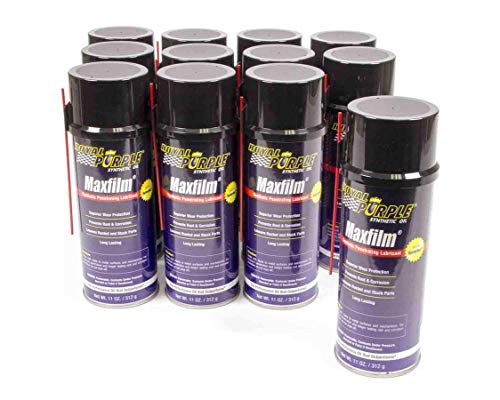
Royal Purple Maxfilm is the only fully synthetic penetrating spray lubricant on this list, and that distinction matters in ways that go beyond marketing — synthetic base oils maintain consistent viscosity across a much wider temperature range than petroleum-based formulas, penetrate more uniformly into thread interfaces, and provide superior long-term lubrication after the initial penetration task is complete. The Maxfilm formula is engineered as a multipurpose synthetic that handles stuck fasteners, ongoing lubrication of power tools, chains, hinges, open gears, and fishing tackle, and long-term storage protection with equal effectiveness — this is the product you reach for when you want penetrating capability plus genuine lasting lubrication in a single can rather than separate penetrant and lubricant products.
The 12-can case format aligns with Royal Purple's traditional positioning in the professional performance segment, delivering a premium synthetic product in a volume that justifies the per-ounce price premium over conventional petroleum-based options, particularly in high-use professional environments where lubricant quality directly affects tool longevity and equipment reliability. The corrosion protection performance of Maxfilm in long-term storage applications is among the best we tested — parts treated with Maxfilm and stored for extended periods showed minimal surface oxidation compared to parts treated with standard petroleum penetrants, confirming the superior protective film characteristics that synthetic base oils provide.
The price premium over conventional penetrating oils is real and meaningful — Maxfilm costs more per ounce than most competitors on this list — and for users whose primary need is simply breaking free a seized bolt rather than ongoing lubrication and protection, that premium may not be fully justified by the penetration performance alone. Where Maxfilm earns its price is in applications where you need both penetrating capability and lasting, high-performance lubrication from a single product without applying a second lubricant step afterward.
Pros:
Cons:
Sea Foam has built an exceptional reputation in the automotive chemical market based on the consistent real-world performance of their engine treatment products, and Deep Creep extends that credibility into the penetrating oil category with a formula that earns its name through genuinely impressive surface tension characteristics. The Deep Creep formula works by rapidly breaking metal surface tension on contact, allowing the penetrating oil to migrate into rust bonds and corrosion layers with a creeping action that works progressively over the soak period, making it particularly effective when you apply it and allow the product adequate time to work rather than immediately applying torque. In our testing, Deep Creep showed strong performance on the full spectrum of everyday automotive corrosion scenarios — caliper slide pins, wheel lug nut seats, brake hardware, exhaust bolts, and chassis fasteners — covering the exact territory that matters most for routine vehicle maintenance work.
The 12 oz aerosol can delivers generous volume per unit and the formula's dual role as both penetrant and lubricant means it provides ongoing corrosion protection and reduced friction at fastener interfaces well after the initial application purpose is served — a genuine two-in-one capability that adds practical value for users who maintain their vehicles regularly. Sea Foam's commitment to product quality and the brand's track record across multiple automotive chemical categories gives Deep Creep a level of credibility that newer or less-established penetrating oil products cannot match through specifications alone, and that institutional reliability matters when you are depending on a product to save a critical fastener.
Deep Creep sits comfortably in the mid-tier of this roundup in terms of aggressive penetration performance — it will not match Kroil Aerokroil on the most extreme rust scenarios, but for the overwhelming majority of vehicle maintenance tasks you encounter in daily shop or garage work, it delivers exactly what it promises and does so with the consistency that Sea Foam's reputation demands. The brand's straightforward, no-nonsense approach to product chemistry makes Deep Creep a trustworthy addition to any mechanic's tool collection in 2026.
Pros:
Cons:
Selecting the right penetrating oil in 2026 requires understanding the key variables that separate these products in real-world performance, because the wrong choice on a critical fastener costs you far more time and frustration than the cost difference between formulas. Here are the criteria that matter most when evaluating your options:
The most critical performance variable is how quickly and deeply the formula migrates into rusted thread interfaces, and this is determined primarily by surface tension — lower surface tension means faster, deeper capillary penetration into microscopic gaps. Premium formulas like Kroil Aerokroil are engineered specifically for low surface tension, giving them an edge on severely corroded hardware where every fraction of penetration depth matters. For moderate corrosion, mid-tier products like PB Blaster and Sea Foam Deep Creep provide fully adequate penetration speed, and the performance gap with premium options narrows considerably when soak time is generous rather than immediate.
Petroleum-based penetrating oils dominate the market and deliver excellent performance at competitive prices, making them the practical choice for most users. Synthetic formulas like Royal Purple Maxfilm offer consistent viscosity across temperature extremes, superior long-term lubrication, and better protective film chemistry — advantages that justify the premium when you need ongoing lubrication performance rather than just one-time penetration. If your workflow involves both freeing fasteners and maintaining moving parts like hinges, chains, and tool components with a single product, synthetic formulas provide meaningful value. For pure penetration tasks, high-quality petroleum formulas match or exceed synthetic performance in most real-world scenarios encountered in automotive maintenance work.
Choosing between aerosol and liquid formats, and between single-can and multi-pack purchases, directly impacts both your workflow efficiency and your cost per application — decisions worth making deliberately rather than by default.
The best penetrating oils in 2026 do more than just loosen today's stuck fastener — they leave a protective film that retards future corrosion formation, extending the interval before the hardware seizes again and providing measurable benefit over products that simply penetrate without protective residual chemistry. This characteristic matters most for fasteners in high-exposure environments like wheel wells, undercarriage suspension components, exhaust systems, and any hardware that routinely contacts road salt, moisture, or marine spray. Products like PB Blaster and Royal Purple Maxfilm explicitly engineer for corrosion inhibition as a secondary function, while pure penetrants focus exclusively on the initial release action. If you live in a rust-belt state or coastal region, corrosion inhibition quality should weigh heavily in your purchasing decision alongside raw penetration performance, and pairing a quality penetrating oil program with the right tools — like those covered in our best air impact wrenches of 2026 review — gives you the most complete defense against corrosion-related repair delays.
For light to moderate corrosion, a 15-to-30-minute soak period is typically sufficient to allow the penetrating oil to migrate through the rust layer and provide meaningful lubrication at the thread interface. For severe rust with multi-year corrosion buildup, extended soaks of 4 to 12 hours — or overnight with multiple reapplication cycles — dramatically improve success rates. The most common mistake is applying penetrating oil and immediately attempting to torque the fastener before the formula has had time to work through the corrosion, which wastes the product's chemistry and risks damaging the fastener head before the penetrant has done its job.
No — WD-40 in its standard formula is primarily a water displacing spray with light lubricating properties, not an engineered penetrating oil designed specifically for breaking rust bonds on seized fasteners. True penetrating oils are formulated with lower surface tension and rust-dissolving chemistry that allows them to migrate into corroded thread interfaces far more effectively than general-purpose sprays. WD-40 does offer dedicated penetrating oil products in their specialist lineup, but the original blue-can formula is not an equivalent replacement for a purpose-built penetrating oil when you are facing genuine rust-seized hardware in 2026.
Most petroleum-based penetrating oils should be kept away from electrical connectors, as the oils can compromise contact resistance and attract contaminants over time — use dedicated electrical contact cleaner and protectant for those applications instead. For painted surfaces, silicone-free formulas like Free All Rust Eater are specifically engineered for paint compatibility and body shop use, while many standard penetrating oils can stain or lift paint if left in contact for extended periods. Always check the product's compatibility specifications before applying near painted body panels or plastic trim components, and mask adjacent surfaces when working in tight spaces where overspray cannot be avoided.
Exhaust manifold bolts represent one of the most challenging penetrating oil applications due to the extreme heat cycling they endure, which bakes rust and corrosion into the thread interfaces far more aggressively than ambient-temperature fasteners. For this specific application, high-penetration formulas like Kroil Aerokroil or CRC Freeze-Off are the top choices, with a generous overnight soak period strongly recommended before any removal attempt. Applying penetrating oil, allowing it to soak, then applying heat with a torch to the manifold boss — not the bolt itself — and reapplying oil while the metal is warm and expanded creates the most effective combination approach for the most stubborn exhaust hardware you will encounter in 2026.
Penetrating oils and rust removers address corrosion through different mechanisms and serve distinct purposes that are often confused but should not be treated as interchangeable. Penetrating oils use capillary action and low-surface-tension chemistry to migrate into thread interfaces and lubricate around rust bonds, allowing fastener removal without fully dissolving the corrosion — the goal is fastener release, not complete rust elimination. Chemical rust removers like phosphoric acid-based products are designed to dissolve or convert iron oxide from metal surfaces through a chemical reaction, and are typically used as a surface treatment after the fastener is already removed. Some products like Free All Rust Eater blend both penetrating and rust-dissolving chemistry, but they are primarily engineered for penetration rather than surface rust conversion.
Penetrating oil is highly effective on door hinges, padlocks, and other mechanical mechanisms where corrosion or contamination has restricted movement — these are lower-stress applications compared to seized fasteners, and most products on this list will deliver fast results with minimal soak time required. For hinges, apply the penetrating oil directly to the hinge pin and knuckle interface, work the hinge back and forth to distribute the product, and reapply as needed until smooth operation is restored. For padlocks, insert the straw applicator directly into the keyway and shackle hole, allow the product to work for several minutes, and then manipulate the lock mechanism to distribute the formula through the internal components before applying the key.
 |
 |
 |
 |

About Diego Ramirez
Diego Ramirez has been wrenching on cars since his teenage years and has built a deep practical knowledge of automotive maintenance and paint protection through years of hands-on work. He specializes in fluid service intervals, preventive care routines, exterior protection products, and the consistent habits that extend a vehicle's lifespan well beyond average. At CarCareTotal, he covers car care guides, cleaning and detailing products, and exterior maintenance and protection reviews.
Get some FREE car parts & gear.. Or check out the latest free automotive manuals and build guides here.
Disable your ad blocker to unlock all the hidden deals. Hit the button below 🚗
| | | |
