by Joshua Thomas
Over 500,000 trailer-related accidents occur on U.S. highways each year, and the National Highway Traffic Safety Administration links a significant portion of them to inadequate braking systems. A quality trailer brake controller isn't just a convenience — it's a critical safety device that synchronizes trailer brakes with the tow vehicle, preventing jackknifing, swaying, and dangerous stopping distances. Whether hauling a boat to the lake or towing a fifth-wheel across state lines, the right controller makes the difference between a white-knuckle stop and a smooth, controlled deceleration.

The trailer brake controller market in 2026 has evolved dramatically. Gone are the days when a simple time-delayed unit was the only option. Today's controllers offer Bluetooth connectivity, smartphone apps, proportional braking with triple-axis accelerometers, and trailer-mounted wireless modules. Proportional controllers dominate the market for good reason — they apply trailer braking force in direct proportion to the tow vehicle's deceleration, delivering smoother stops and less brake wear. Time-delayed controllers still exist for budget-conscious buyers, but proportional units have become the standard for anyone serious about towing safety and accessories.
After evaluating the top-selling brake controllers of 2026 based on braking response, ease of installation, build quality, and smart features, this guide covers seven standout models. From the tech-forward CURT Echo with its smartphone app to the rugged simplicity of the Reese Towpower Pod, there's a controller here for every towing setup and budget. Those who've already sorted their towing rig with a solid truck bed cover know that protecting the payload is only half the equation — controlling what's behind the hitch matters just as much.
Contents
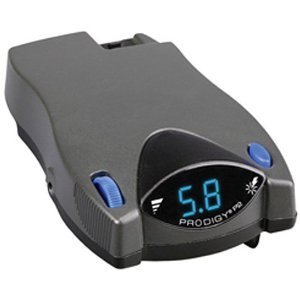











The Tekonsha Prodigy P2 has been a staple in the brake controller world for years, and the 2026 version continues that legacy with rock-solid reliability. Designed specifically for GM vehicles from 2003 onward, it offers a plug-and-play installation that eliminates the guesswork. The proportional braking system uses an internal accelerometer to match trailer brake force with the tow vehicle's deceleration. This means hard stops get aggressive trailer braking, while gentle slowdowns get a lighter touch. The result is a natural braking feel that most drivers notice immediately.
What sets the Prodigy P2 apart is its 360-degree vertical rotation mounting bracket. Buyers can position the controller at virtually any angle on the dash, which solves the common complaint of controllers not fitting cleanly in certain cab layouts. The unit also supports electric-over-hydraulic brake systems, making it one of the more versatile options for those running disc brakes on their trailers. Build quality is excellent — the housing feels durable and the digital display remains readable in direct sunlight.
The P2 stores settings between uses, so there's no need to recalibrate every time the trailer hooks up. Gain adjustment is straightforward with a simple boost feature for heavy loads. Tekonsha backs it with a lifetime warranty, which speaks volumes about their confidence in the hardware. For GM truck and SUV owners, this remains the gold standard.
Pros:
Cons:
The CURT Echo Mobile completely rethinks what a trailer brake controller can be. Instead of a permanently mounted dash unit, the Echo is a compact, portable module that connects to the trailer's brake wiring and communicates via Bluetooth to a smartphone app. This wireless approach is a game-changer for buyers who tow with multiple vehicles. Just move the Echo from one truck to another — no rewiring, no extra dash-mounted hardware. The custom CURT app handles all brake settings, displays real-time braking data, and sends status updates during towing.
Proportional braking performance is solid. The Echo's internal sensor detects deceleration and applies trailer brakes accordingly. The app allows fine-tuning of gain settings and provides a manual override slider for situations requiring extra trailer braking force. Setup takes roughly 15 minutes for most users — connect the module to the trailer's 7-way plug, pair the phone via Bluetooth, and start towing. The app also logs braking events, which is useful for diagnosing any trailer brake issues down the line.
Battery life is the one area to watch. The Echo runs on an internal rechargeable battery that lasts several hours of active towing. Long road trips may require a charging break. That said, for weekend warriors and multi-vehicle households, the portability factor alone makes this controller worth serious consideration.
Pros:
Cons:
The Tekonsha Prodigy RF takes a fundamentally different approach to brake control. The power module mounts directly on the trailer, while a compact handheld remote stays in the cab. Communication between the two happens over Bluetooth wireless technology. This trailer-mounted design means the controller's inertia sensor lives where it matters most — on the trailer itself. The sensor reads the trailer's actual deceleration rather than the tow vehicle's, which can produce more accurate and responsive braking proportionality.
Compatibility is a major strength. The Prodigy RF works with Ford, GM, Chevy, Dodge, RAM, Toyota, Jeep, and most other popular tow vehicles. It supports trailers with one to three axles (2, 4, or 6 brakes). Vehicle-specific plug-and-play wiring harnesses are available separately, making installation clean and reversible. The handheld remote provides manual override, gain adjustment, and status feedback — all from the driver's seat. No smartphone app needed, though that also means no data logging or remote diagnostics.
The trailer-mounted design does add complexity. Initial setup requires mounting the module in a weatherproof location on the trailer frame and running wiring to the brake magnets. Once installed, however, the system performs flawlessly. For buyers who tow the same trailer with different vehicles, the Prodigy RF eliminates the need for a controller in each truck. The trailer carries its own brain.
Pros:
Cons:
Not every towing situation demands a high-tech proportional controller. The Reese Towpower Pod fills the budget-friendly niche with straightforward, time-delayed braking that gets the job done reliably. The unit uses solid-state electronics — no moving parts to wear out or recalibrate. A power-on LED confirms the tow vehicle-to-trailer connection is live, which is a simple but reassuring feature before hitting the highway. The up-front manual override controls put immediate braking authority at the driver's fingertips.
Installation is about as easy as it gets. The rugged chassis mounts quickly under the dash, and wiring is minimal. The Pod doesn't need to be level or oriented in any specific direction since it uses time-delayed braking rather than an inertia sensor. This makes it forgiving for DIY installers working in tight cab spaces. The gain dial adjusts braking intensity, and the manual slide activates trailer brakes independently — useful for controlling trailer sway on downhill grades.
The trade-off is braking finesse. Time-delayed controllers apply a preset amount of braking force after a configurable delay, regardless of how hard the driver hits the brake pedal. This works fine for light-duty towing — utility trailers, small boats, and single-axle loads. But for heavy trailers or frequent stop-and-go driving, the lack of proportional response becomes noticeable. Buyers towing more than 5,000 pounds regularly should consider stepping up to a proportional unit. For occasional light towing, the Pod delivers solid value.
Pros:
Cons:
The CURT TriFlex Next is engineered for drivers who want top-tier proportional braking without a bulky controller cluttering the dash. Its slim, low-profile housing fits neatly under the dashboard with a unique bracket system that maximizes clearance. The modern aesthetic actually looks intentional rather than aftermarket — a rarity in the brake controller world. This matters for buyers driving newer trucks where interior design is a priority.
Under the hood, the TriFlex Next packs a triple-axis, motion-sensing accelerometer. Most proportional controllers use a single-axis sensor, which works fine on flat roads but can misread braking force on grades or during turns. The triple-axis setup accounts for pitch, roll, and yaw, delivering highly responsive and accurate braking in virtually any terrain or driving condition. The difference is noticeable on mountain passes and winding roads where single-axis units sometimes apply too much or too little brake force. Towing enthusiasts who also outfit their rigs with quality RV heaters for cold-weather camping will appreciate this level of engineering refinement.
The TriFlex Next supports two to four axles, covering everything from small utility trailers to heavy gooseneck setups. Plug-and-play adapters are available for most popular trucks. The gain control is intuitive, and a manual override lever provides instant independent trailer braking. Build quality matches the premium positioning — the housing is solid, the connections are secure, and the display is crisp.
Pros:
Cons:
The REDARC Tow-Pro Liberty takes a completely different approach to controller design. Instead of a box mounted under the dash, the Liberty uses a compact remote head that installs into a blank switch panel in the vehicle's dashboard. The result looks factory-installed. No dangling wires, no aftermarket appearance — just a clean knob that blends with the existing switches. Australian-made REDARC has built a strong reputation in the overlanding community, and the Tow-Pro Liberty shows why.
Braking performance is proportional mode, delivering smooth on-road control that reduces the push-and-pull sensation common with lesser controllers. The system pairs with REDARC's universal pigtail wiring harness or vehicle-specific harnesses and switch inserts for true factory-style integration. The remote head assembly includes the controller knob, bezel, nut, and a 3-foot cable — everything needed for a clean install. The main module tucks away behind the dash, completely out of sight.
The Liberty supports one to two axles, which covers most common towing applications — boats, campers, utility trailers, and car haulers. It won't handle triple-axle gooseneck trailers, so heavy haulers should look elsewhere. But for the vast majority of recreational and light commercial towing, the Tow-Pro Liberty delivers excellent braking control with the cleanest installation on this list. According to Wikipedia's overview of trailer brake controllers, proportional systems like this one represent the current gold standard for braking responsiveness and safety.
Pros:
Cons:
The Tekonsha Voyager iD brings proportional braking to a sleek, OEM-style package that seamlessly integrates into the vehicle's dashboard. Where many aftermarket controllers look bolted on, the Voyager iD appears intentional. Its slim profile and clean lines match modern truck interiors, making it a strong choice for buyers who care about cabin aesthetics as much as towing performance. The fingertip controls allow quick, intuitive adjustment of brake settings without taking eyes off the road.
Proportional braking performance is reliable and consistent. The Voyager iD detects the tow vehicle's deceleration and applies matching force to the trailer brakes. Gentle stops stay gentle. Emergency stops get full trailer braking power. The controller handles one to three axles, covering a wide range of trailer sizes from small utility haulers to larger RV setups. Settings are saved between sessions, so reconnecting the trailer is a plug-and-go affair.
The Voyager iD sits in a sweet spot between the budget Pod controllers and the premium wireless units. It offers genuine proportional braking — a significant safety upgrade over time-delayed systems — at a mid-range price. The OEM appearance is the defining feature. Buyers upgrading from a basic controller or installing one for the first time will appreciate how little the Voyager iD disrupts their truck's interior. It does one thing well: proportional braking with a factory look.
Pros:
Cons:
This is the single most important decision. Proportional controllers use accelerometers to detect how hard the tow vehicle is braking and apply matching force to the trailer. The result is smooth, natural-feeling stops at any speed. Time-delayed controllers apply a preset amount of braking force after a fixed delay, regardless of the braking intensity. Proportional units cost more but deliver dramatically better performance, less brake wear, and shorter stopping distances. For trailers over 3,500 pounds or frequent highway towing, proportional is the clear choice. Time-delayed controllers work fine for occasional light-duty hauling — small utility trailers, lawn equipment, and single-axle loads.
Controllers are rated by the number of axles (and brakes) they support. A single-axle trailer has two brakes. A tandem-axle has four. Triple-axle gooseneck rigs have six. Most controllers on this list handle two to three axles, but the CURT TriFlex Next extends to four axles, and the REDARC Tow-Pro Liberty caps at two. Match the controller to the heaviest trailer in the fleet — buying a controller that supports more axles than currently needed provides room to upgrade trailers later without replacing the controller. Also confirm whether the trailer uses electric or electric-over-hydraulic brakes. Most controllers support standard electric brakes, but only some (like the Tekonsha Prodigy P2) handle electric-over-hydraulic systems.
Traditional cab-mounted controllers bolt under the dashboard and wire directly into the tow vehicle's brake circuit. They're reliable and always ready but tied to one vehicle. Portable units like the CURT Echo Mobile move between vehicles easily — ideal for households with multiple tow rigs. Trailer-mounted systems like the Tekonsha Prodigy RF put the controller on the trailer itself, meaning any vehicle can tow that trailer without needing its own controller. Consider the towing routine: one truck and one trailer favors a fixed cab-mounted unit. Multiple trucks or a shared trailer points toward portable or trailer-mounted solutions.
Bluetooth connectivity and smartphone apps have entered the brake controller market in force. The CURT Echo and Tekonsha Prodigy RF both use wireless technology for setup, monitoring, and adjustment. App-based controllers offer data logging, real-time brake status, and the convenience of adjusting gain from a phone screen. However, smart features add complexity and potential failure points. A dead phone battery or Bluetooth dropout at the wrong moment is a legitimate concern. Traditional wired controllers with physical knobs and levers never lose connection. For tech-savvy buyers who tow regularly, smart features add genuine value. For occasional towers who prioritize simplicity, a quality wired proportional controller is the more dependable choice.
Requirements vary by state and trailer weight. Most states mandate trailer brakes on trailers exceeding 3,000 pounds gross vehicle weight, and many require a controller that allows the driver to activate trailer brakes independently. Some states set the threshold as low as 1,500 pounds. Check state-specific regulations before towing across state lines, as penalties for non-compliance can include fines and liability issues in the event of an accident.
Proportional controllers use an internal accelerometer to sense how aggressively the tow vehicle is decelerating and apply matching brake force to the trailer in real time. This produces smooth, synchronized stops. Time-delayed controllers apply a preset amount of braking force after a configurable delay period, regardless of braking intensity. Proportional units deliver shorter stopping distances, less trailer brake wear, and a more natural driving feel. Time-delayed units are cheaper and simpler but less refined.
Traditional hardwired controllers require reinstallation in each vehicle, which involves mounting and wiring. Portable controllers like the CURT Echo Mobile are designed to transfer between vehicles in minutes. Trailer-mounted controllers like the Tekonsha Prodigy RF stay on the trailer, so any vehicle with a 7-way connector can tow without needing its own controller. Plug-and-play wiring harnesses also make swapping cab-mounted controllers easier than custom wiring.
Most controllers support two to six trailer brakes (one to three axles). The CURT TriFlex Next extends to eight brakes (four axles) for heavy gooseneck and commercial trailers. The REDARC Tow-Pro Liberty caps at four brakes (two axles). Always check the controller's maximum axle rating against the trailer's brake configuration. Running a controller beyond its rated capacity can result in insufficient braking force and dangerous stopping distances.
Proportional controllers with inertia sensors need to be mounted within a few degrees of level for accurate readings. Most units have a built-in calibration feature that compensates for slight mounting angles. Time-delayed controllers like the Reese Towpower Pod have no orientation requirement since they don't use inertia sensing. Trailer-mounted proportional units sense the trailer's deceleration directly, so the tow vehicle's mounting angle is irrelevant. Always follow the manufacturer's mounting guidelines for optimal performance.
Most modern brake controllers offer plug-and-play installation using vehicle-specific wiring harnesses. These harnesses connect to the factory tow package connector under the dash, making installation a 15–30 minute DIY project. Vehicles without a factory tow package may require custom wiring — splicing into the brake light circuit, running a power wire, and connecting to the trailer plug. In those cases, professional installation ensures proper connections and avoids electrical issues. Trailer-mounted units like the Prodigy RF involve more complex installation and may benefit from professional help.
A proportional brake controller matched to the trailer's axle count is the single best safety upgrade any tow rig can get — spend the extra dollars over a time-delayed unit and never second-guess a stop again.
 |
 |
 |
 |

About Joshua Thomas
Joshua Thomas holds a Bachelor of Science in Mechanical Engineering from San Diego State University and has spent years applying that technical foundation to hands-on automotive work — from routine maintenance to full mechanical repairs. He founded CarCareTotal in 2017 to give car owners the kind of clear, practical guidance that helps them understand what is happening under the hood and make smarter decisions about upkeep and repairs. At CarCareTotal, he oversees editorial direction and covers automotive fundamentals, maintenance guides, and troubleshooting resources for everyday drivers.
Get some FREE car parts & gear.. Or check out the latest free automotive manuals and build guides here.
Disable your ad blocker to unlock all the hidden deals. Hit the button below 🚗
| | | |
