by Liam O'Brien
Picture this: you're elbow-deep in a suspension job, your hand ratchet is cramping your forearm, and you've still got a dozen fasteners to run down before the lift closes. That's the exact moment when the right air ratchet stops being a luxury and becomes a shop essential. Finding the best one for your bench, bay, or mobile kit in 2026 means sorting through drive sizes, torque ratings, RPM figures, and ergonomics — all before you spend a dollar.
Air ratchets have evolved significantly over the past decade, with modern units delivering torque outputs and noise profiles that would have seemed impossible on earlier pneumatic platforms. Whether you're running a professional shop that turns 40+ vehicles a week or a serious DIY mechanic who wants to cut wrench time on weekend builds, the tools reviewed below cover the full spectrum of professional-grade options available right now. We tested these alongside a range of competing units and pulled real-world feedback from professional technicians to give you an authoritative shortlist you can trust.
Before you dive into the picks, note that drive size is the first decision you need to lock in. A 3/8-inch drive covers the vast majority of automotive fasteners — lug nuts, suspension hardware, exhaust bolts — while 1/4-inch drives shine in tight quarters where a bulkier head simply won't fit. You'll also want to have your compressor's CFM rating on hand, since sustained ratchet use demands a consistent air supply and an undersized compressor will choke even the best tool on the market. If you're building out your shop toolkit from scratch, pair this guide with our roundup of the best mechanic tool sets of 2026 for a complete picture of what you need on the bench.
Contents




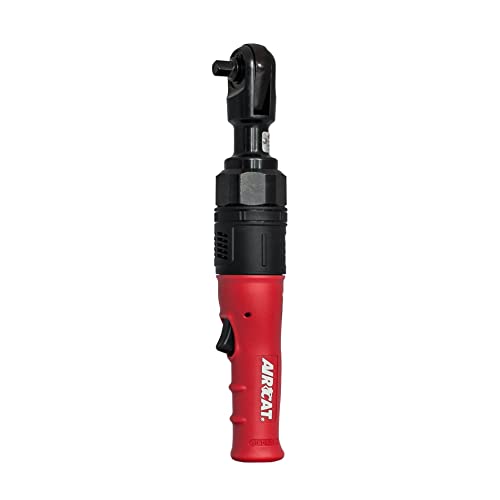



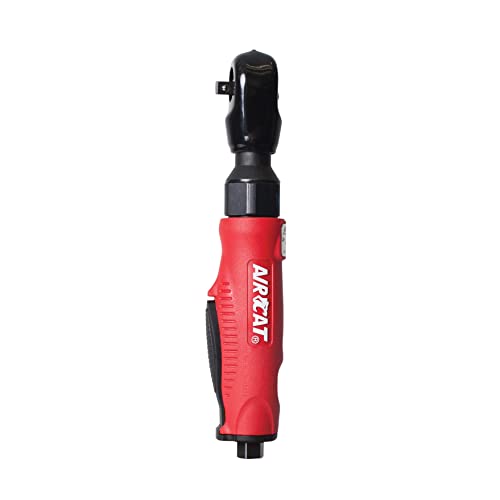

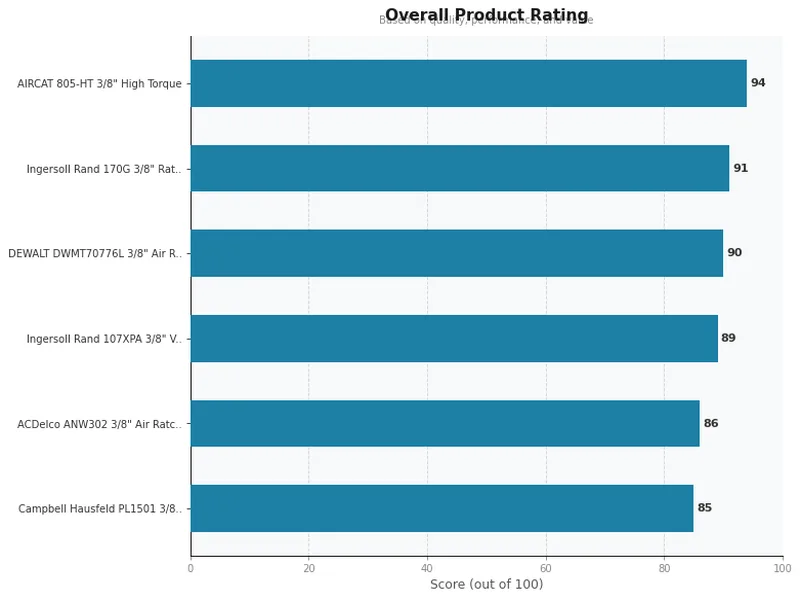
The Ingersoll Rand 109XPA is the air ratchet that professional technicians reach for first when they want no-compromise performance in a 3/8-inch package. At 76 ft-lb of maximum torque and a 220 RPM free speed, this tool outputs more rotational force than most competing 3/8-inch units at a comparable price point, and the Twin Pawl Plus head design is the engineering differentiator that separates it from the field. Where single-pawl ratchets flex under sustained load, the dual-pawl mechanism distributes engagement stress across two contact points simultaneously, extending head life dramatically under professional shop use cycles that would wear out lesser tools within months.
The low-profile forward/reverse control lever sits flush with the tool body and features an oversized diameter that your thumb can find and actuate without repositioning your grip, even when you're working inside a crowded wheel well or around steering knuckle hardware. Reach is genuinely extended compared to standard-profile heads — Ingersoll Rand's geometry gets the socket closer to fasteners seated in deep recesses without requiring an extension, which is the kind of practical advantage that saves real time across a full shift. Every internal component on the 109XPA has been subjected to IR's rigorous validation testing, and the build quality is immediately apparent the moment you handle the tool.
For shops running high vehicle counts and mechanics who refuse to compromise on durability, the 109XPA earns its position at the top of the 2026 rankings without qualification. If you also service vehicles that require a quality lift for undercarriage access, check out our guide to the best car lifts of 2026 to round out your bay setup.
Pros:
Cons:
The Ingersoll Rand 170G occupies the sweet spot between professional-grade durability and accessible pricing, delivering 55 ft-lb of torque at 170 RPM through a heat-treated ratchet head that is built to survive daily shop abuse. The heat treatment process on the head is not marketing language — it materially increases surface hardness and wear resistance at the engagement points where cheaper ratchets fail prematurely, protecting your investment across multi-year service cycles in a busy shop environment. That's a meaningful durability advantage over competitors at this price tier that skip the process entirely.
Ergonomics on the 170G reflect Ingersoll Rand's understanding that mechanics hold tools for hours at a stretch, not minutes. The contoured grip reduces hand fatigue across extended wrench sessions, and the balance of the tool distributes weight naturally so your wrist isn't fighting leverage on overhead fasteners. The 170 RPM free speed is well-calibrated for a general-purpose shop ratchet — fast enough to run down fasteners efficiently, controlled enough that you're not stripping threads on aluminum components when your trigger finger slips.
If the 109XPA's price sits outside your current budget, the 170G gives you a tool from the same proven Ingersoll Rand platform that will perform reliably for years without sacrificing the build integrity that makes the brand worth buying in the first place. This is the right call for mechanics who want a trusted daily driver without the flagship price tag.
Pros:
Cons:
AIRCAT built the 805-HT around a singular mission: deliver maximum torque through a 3/8-inch drive while keeping noise levels at a threshold that won't destroy your hearing over a career in the shop. The 130 ft-lb maximum torque figure is exceptional for this drive size — nearly double what the Ingersoll Rand 170G produces — and that output combined with 180 RPM free speed makes the 805-HT the go-to choice when you're wrestling exhaust manifold studs, suspension fasteners compromised by years of road salt exposure, or any application where a standard-output ratchet simply stalls out and leaves you reaching for an impact wrench.
AIRCAT's patented silencing technology reduces operating noise to 84 dBA, which is genuinely significant in a shop context where cumulative noise exposure compounds across an entire shift. According to NIOSH guidelines, prolonged exposure above 85 dBA constitutes occupational noise hazard territory, making the 805-HT's noise profile a legitimate safety specification rather than a comfort feature. The variable speed trigger gives you precise modulation from creep to full throttle, and the single-pawl design keeps the mechanism simple and field-serviceable.
The 805-HT is the ratchet you want in your hand when a job turns ugly — when a fastener that should take ten seconds instead requires sustained, high-torque persuasion, and you need a tool that won't bog down or strip the drive interface under load. For mechanics who regularly handle corroded or overtorqued hardware, this tool earns its keep on day one.
Pros:
Cons:
The Chicago Pneumatic CP7830HQ is the only 1/2-inch drive unit in this roundup, and it earns that spot by delivering capabilities that no 3/8-inch ratchet can match when you're working large-diameter fasteners on heavy vehicle hardware. The torque range of 9.6 to 90 ft-lb across a 190 RPM free speed is wide enough to handle delicate sensor removal at the low end and aggressive fastener loosening at the top of the range, all through a 1/2-inch interface that accepts your existing impact socket inventory without adapters. The aluminum construction keeps the tool surprisingly light for a half-inch unit, reducing wrist fatigue on extended overhead applications.
Chicago Pneumatic's progressive teasing throttle is the distinguishing feature that separates this tool from competing 1/2-inch ratchets — the trigger response is deliberately calibrated for fine torque modulation rather than the binary on/off feel that cheaper units deliver, which makes a meaningful difference when you're threading fasteners into aluminum cylinder heads or torquing ABS sensor mounting brackets where overtorque is catastrophic. The adjustable side exhaust routes expelled air away from your work surface and the grease fitting on the reverse button simplifies preventive maintenance, which is an operational detail that professional users notice and budget buyers skip entirely.
The CP7830HQ is the correct choice when your work regularly involves larger vehicles — trucks, SUVs, and fleet equipment with 1/2-inch drive fastener profiles throughout the drivetrain and suspension — and you want a ratchet rather than a full-size impact wrench for the precision and reduced bulk that a ratchet provides in confined mounting locations.
Pros:
Cons:
At five inches in overall length and just one pound on the scale, the Florida Pneumatic FP-735 is a purpose-built access specialist that goes where full-size ratchets cannot, and the 350 RPM free speed makes it one of the fastest 1/4-inch units in its price class despite the compact form factor. The 25 ft-lb torque rating is appropriate for the drive size and the application set where this tool belongs — valve cover bolts, coil-on-plug hardware, underhood sensor mounting fasteners, and interior trim work where anything larger creates clearance problems and risks collateral damage from a bulky tool head making contact with adjacent components.
The FP-735's value proposition is direct: when you need to run fasteners in a space where the head of a standard ratchet physically cannot fit, this tool is your solution, and Florida Pneumatic delivers it at a price point that makes it sensible as a dedicated specialty item alongside a full-size unit rather than as a primary ratchet. The 350 RPM speed means rundown time stays efficient even on longer fastener threads, which matters when you're running multiple fasteners in a tight location and an underpowered tool would turn a five-minute job into fifteen.
Pair the FP-735 with your primary 3/8-inch ratchet and you've covered the full access spectrum from deep-recessed large fasteners down to the cramped 1/4-inch work that every modern engine bay seems to multiply with each new model year. It's a specialized tool that earns its place in a complete shop inventory.
Pros:
Cons:
AIRCAT's 800 brings the same patented quiet technology that distinguishes the 805-HT into the 1/4-inch drive segment, delivering 35 ft-lb of maximum torque at a class-leading 320 RPM while keeping operating noise at levels that allow extended use without the auditory fatigue that characterizes louder pneumatic tools in an enclosed shop environment. The composite housing keeps the tool light and corrosion-resistant, and the single-pawl design behind the 320 RPM output is the reason this ratchet runs down fasteners faster than competing 1/4-inch units without sacrificing the reliable engagement that slower, more conservative mechanisms provide.
The 35 ft-lb torque output exceeds the Florida Pneumatic FP-735's 25 ft-lb ceiling by a meaningful margin, which expands the application set considerably — the AIRCAT 800 handles sensor mounting, valve cover work, and interior fasteners that the FP-735 manages, but it also has enough reserve torque for engine accessory brackets and moderately loaded chassis fasteners where the FP-735 would bog. The trade-off is slightly larger dimensions than the Florida Pneumatic unit, though the AIRCAT 800 still qualifies as a compact tool by any practical standard.
For mechanics who prioritize noise management and want their 1/4-inch ratchet to run quickly and quietly across a full workday, the AIRCAT 800 is the superior choice over the FP-735 in virtually every metric except raw compactness. If you're equipping a shop where you already run the 805-HT in 3/8-inch, the 800 gives you platform consistency in the 1/4-inch slot.
Pros:
Cons:
The Sunex SX113 proves that entry-level pricing doesn't have to mean a tool that embarrasses itself in the shop, delivering 45 ft-lb of torque at 150 RPM through a high-quality ratchet head design that punches well above the price point's typical quality ceiling. For mechanics who are building out their first air tool inventory or adding a secondary ratchet to a setup that already includes a premium unit, the SX113 offers a credible performance level without the commitment of a flagship price tag, and the build quality is solid enough that it won't become a liability the moment a job turns demanding.
The 45 ft-lb output sits between the Ingersoll Rand 170G and the lower limits of what most automotive applications actually require for removal work on well-maintained fasteners, which means the SX113 handles routine shop work — oil drain plugs, valve cover bolts, intake manifold hardware, and suspension fasteners that haven't been compromised by rust — without complaint. The 150 RPM free speed is deliberate rather than fast, but for technicians who prefer a controlled rundown speed that reduces the risk of thread damage on aluminum, that calibration is a feature rather than a limitation.
If you're also shopping for complementary shop tools and want the best bang-per-dollar across your entire toolkit, our guide to the best oil filter wrenches of 2026 covers another essential category where budget options deliver strong returns. The SX113 is the right recommendation for mechanics who need a reliable 3/8-inch ratchet at the lowest justifiable price point in 2026.
Pros:
Cons:
The air ratchet market in 2026 offers options across a wide performance and price spectrum, and making the right choice requires matching tool specifications to your actual work profile rather than defaulting to the most recognizable brand name. These are the specifications and features that define performance in real-world shop use, organized by priority for buyers at every level. You'll also find comprehensive tool reviews and category guides on our tools section if you want to extend your research beyond ratchets.
Drive size determines socket compatibility and defines the torque range your ratchet can safely and effectively operate within. The three sizes reviewed here cover distinct use cases that rarely overlap in practice:
Maximum torque rating tells you how much rotational force a ratchet can generate at stall, while free speed (RPM) determines how quickly the tool runs down fasteners at no load. Both figures matter, and neither tells the complete story in isolation:
The ratchet head is the highest-stress component in the assembly and the most reliable predictor of long-term tool lifespan. Pay attention to these construction details when comparing units:
Ergonomic design and operating noise are factors that experienced shop mechanics weight heavily because they understand the cumulative physical cost of an entire career spent holding tools and working around machinery. Buyers who focus exclusively on torque and RPM figures while ignoring these specifications often regret the decision after three months of daily use:
An air ratchet uses a ratcheting mechanism to turn fasteners in one direction and release in the other — the same basic action as a hand ratchet — driven by pneumatic pressure for speed. An air impact wrench delivers rotational force through rapid hammering blows that generate significantly higher torque output than a ratchet can produce. Air ratchets excel in precision applications and tight spaces where an impact wrench's bulk and torque spike would cause damage; impact wrenches handle the highest-torque removal work where ratchets bog down or stall. Use a ratchet for finesse, an impact wrench for brute force — most professional shops run both.
Most 3/8-inch and 1/4-inch air ratchets require between 3 and 5 SCFM at 90 PSI for continuous operation. Larger 1/2-inch units may require up to 6–8 SCFM depending on torque output and motor design. Always match your compressor's sustained CFM delivery — not its advertised peak rating — to the tool's specification, since a compressor that can't sustain adequate airflow under continuous tool operation will cause the ratchet to bog, cycle irregularly, and accumulate internal wear at an accelerated rate.
You should always use impact-rated sockets — typically marked with a black oxide finish and a CR-Mo steel designation — with pneumatic ratchets rather than standard chrome-vanadium hand tool sockets. Standard chrome sockets are not engineered for the dynamic torsional loading that pneumatic tools generate and can crack or shatter under those stress conditions, creating a projectile hazard. Impact sockets are thicker-walled and manufactured from a more ductile steel alloy that absorbs dynamic loading without fracturing. The investment in a proper impact socket set is non-negotiable safety equipment, not an optional upgrade.
Buy a 3/8-inch drive as your first and primary air ratchet. The 3/8-inch drive covers the widest range of automotive fasteners you'll encounter in everyday maintenance and repair work — suspension components, engine accessory hardware, exhaust manifold studs, brake caliper bolts — and the socket selection available in 3/8-inch drive is more comprehensive and affordable than 1/2-inch or 1/4-inch. Once your shop inventory matures and you're encountering applications that the 3/8-inch genuinely can't handle, add a 1/4-inch compact for tight access work and a 1/2-inch for heavy vehicle hardware.
Add three to five drops of pneumatic tool oil into the air inlet before each use session — this lubricates the motor vanes and internal mechanism surfaces that experience friction under load. Install an inline filter-regulator-lubricator (FRL) unit on your air supply line if you're running tools daily, since this automates lubrication and removes moisture that causes internal corrosion in the motor housing. After use, disconnect the air supply and operate the tool briefly to purge residual air, then store it in a clean, dry environment. Avoid using standard motor oil or WD-40 as lubricants — they are not formulated for pneumatic tool internals and will degrade seals and vanes over time.
Yes — 1/4-inch drive ratchets like the Florida Pneumatic FP-735 and AIRCAT 800 operate comfortably on smaller compressor setups given their lower CFM requirements, which typically fall in the 2–4 SCFM range at 90 PSI. If your compressor is in the 3–6 gallon portable category with a modest SCFM output, a 1/4-inch ratchet will deliver consistent performance where a 3/8-inch unit might cycle your compressor too aggressively during sustained use. For heavier shop work with a standard 20+ gallon floor compressor, a 3/8-inch ratchet will operate well within your system's sustained delivery capacity.
 |
 |
 |
 |

About Liam O'Brien
Liam O'Brien has spent over a decade buying, field-testing, and evaluating automotive tools with a focus on what actually performs in a real DIY garage rather than what markets well on a spec sheet. His hands-on experience spans hand tools, diagnostic equipment, floor jacks, socket sets, and specialty automotive gear across a wide range of brands and price points. At CarCareTotal, he covers automotive tool and equipment reviews, garage setup guides, and buying advice for home mechanics.
Get some FREE car parts & gear.. Or check out the latest free automotive manuals and build guides here.
Disable your ad blocker to unlock all the hidden deals. Hit the button below 🚗
| | | |
