Exterior ›
by Rachel Park
You've already mapped out the road trip, packed the cooler, and loaded the kids into the car — then reality hits: the trunk is completely full and there's still a mountain of gear sitting in the driveway. That's the moment when a quality cargo box or rooftop carrier stops being an optional accessory and becomes an absolute necessity. Whether you're heading into the backcountry for a weekend ski trip or driving cross-country with your family, the right rooftop carrier transforms your vehicle's wasted space into a dependable hauling platform that keeps everything dry, secure, and aerodynamically sound at highway speeds.
The market in 2026 spans everything from compact, aerodynamic hard-shell boxes designed for daily commuters to heavy-duty open steel baskets built for overland adventures. Hard-shell boxes offer weather protection and cleaner aerodynamics, while soft-sided bags give you flexibility and easier storage when the trip is done. Open baskets let you strap down irregularly shaped gear, and cargo nets make them even more versatile. Understanding which category fits your lifestyle is the first real decision you'll make, and we've done the legwork to make sure you walk away with the right answer. For a broader look at exterior vehicle accessories, our site covers everything from protective films to lighting upgrades that complement your travel setup.
For this guide, we tested and evaluated seven leading cargo boxes and car top carriers across key categories: capacity, weather resistance, installation ease, noise performance at speed, and overall value. We pulled data from verified buyer feedback, manufacturer specifications, and hands-on analysis to build a ranking that reflects real-world performance rather than spec-sheet promises. Whether you drive a compact sedan or a full-size SUV, there's a solution on this list that fits your roof, your budget, and your hauling demands.
Contents







The Thule Force 3 XL US is the benchmark that every other hard-shell cargo box in 2026 gets measured against, and for good reason — it combines premium construction with a mounting system so intuitive that a first-timer can have it locked onto factory crossbars in under fifteen minutes. The PowerClick quick-mount system gives you an audible and tactile confirmation click when the box is securely anchored, which removes the anxiety of wondering whether your gear is actually safe at 70 mph on the interstate. Thule built this box with an aerodynamic profile that keeps wind noise to a minimum, and the dual-side opening means you're not walking around the car to load skis, hockey bags, or camping gear from the wrong side.
The exterior finish resists UV degradation and road grime exceptionally well, maintaining its appearance through seasons of heavy use without fading or cracking the way budget boxes often do. Inside, the cavity is spacious enough to absorb a full family's ski equipment or a week's worth of luggage for two adults, and the interior walls are smooth enough to protect soft cases and packed clothing bags. If you're serious about year-round use and want a box that holds its resale value, this is the one investment worth making — it's built to outlast several vehicles.
The only real trade-off is the premium price point, which puts it out of reach for occasional users who only need a carrier a few times a year. But if you're loading a roof box more than six or eight times a season, the Thule Force 3 XL pays for itself in reliability, reduced frustration, and the fact that you won't be replacing it anytime soon. Pair it with a dedicated roof rack for the cleanest, most secure installation possible.
Pros:
Cons:
The Yakima SkyBox NX 18 delivers 18 cubic feet of weather-protected hauling capacity in a sleek matte black shell, and it does it with the kind of thoughtful engineering you expect from a brand that's been designing rooftop solutions for decades. The dual-sided opening is the standout feature — you can load from either side of your vehicle, which is a genuine convenience upgrade when you're parked curbside in a crowded ski resort lot or a narrow campsite driveway. The box fits snowboards and skis up to 195cm without the awkward diagonal positioning that plagues smaller options, making it a natural fit for winter sports families who need reliable, high-capacity storage every weekend from November through March.
The full-metal opening handle is engineered to serve two security functions simultaneously: it locks your cargo inside the box and locks the box itself to the vehicle's crossbars, so you're dealing with one integrated system rather than two separate padlock points. SKS locking technology, Yakima's proprietary same-key system, means you can use a single key across multiple Yakima products — a small quality-of-life detail that road-trippers genuinely appreciate. The SkyBox NX 18 is wide enough to swallow four campers' worth of sleeping bags, packed clothing, and camp kitchen supplies, and it closes with a firm, positive latch that doesn't rattle at highway speed.
At this capacity level, the box does add noticeable weight to the roof load, so check your vehicle's dynamic roof load rating before filling it completely with dense gear. It mounts to round, square, and factory crossbars via the included SuperLatch mounting hardware, and the installation process is methodical but straightforward — allow 30 to 40 minutes for your first install. If you frequently travel with families on camping and outdoor adventures that require substantial gear storage, this is the box that consistently delivers.
Pros:
Cons:
The SportRack Vista XL makes a compelling case that you don't have to spend premium money to get a fully functional, durable hard-shell cargo box for your vehicle's roof. Offering 18 cubic feet — or 510 liters — of interior capacity, it handles everything from camping gear to hockey bags to a season's worth of ski equipment, and it does so at a price point that leaves money in your pocket for fuel and lift tickets. The ABS construction is UV-resistant, meaning the shell won't bleach out, warp, or crack after a couple of seasons parked in the sun, which is a common failure mode for budget-tier boxes built from inferior plastics.
The rear-opening design is the key differentiator here, and it's a genuinely practical feature rather than a marketing gimmick — you load and unload from the back of the vehicle, away from traffic, which improves safety when you're parked on a roadside or in a busy parking lot. The trade-off is that you lose the dual-side convenience of premium models, so in tight parallel parking situations you'll need to plan your access accordingly. The Vista XL mounts via a universal mounting system compatible with most factory and aftermarket crossbars, and the installation process is clean and tool-friendly, even for someone doing it for the first time.
This box sits squarely in the value-for-money category — if you're buying your first cargo box, pulling it out a handful of times per year, or simply don't want to invest four hundred dollars or more in a premium option, the SportRack Vista XL delivers the core functionality you need without unnecessary features driving up the cost. It pairs well with a standard crossbar setup and works reliably across a wide range of vehicle types from compact crossovers to full-size SUVs.
Pros:
Cons:
The Rightline Gear Sport 3 solves a problem that hard-shell boxes simply cannot: it attaches directly to vehicles that don't have a roof rack, using car clips that hook to the door frame weather molding, making it the most accessible rooftop carrier option for drivers of rack-free sedans, hatchbacks, and compact crossovers. At 18 cubic feet of carrying capacity, it competes head-to-head with full-size hard-shell boxes on volume, and its 100% waterproof construction — built with welded seams and a waterproof SZip zipper system — eliminates the need for an external rain flap that many competing bags require. Everything you need for a complete installation comes in the box: the carrier itself, four attachment straps, four car clips, and a stuff sack with a sewn-in setup guide that you can reference while your hands are full.
The no-rack mounting system is genuinely versatile — the straps route through the door openings and secure inside the vehicle's door frame, which creates a stable hold even at sustained highway speeds. You can also mount this carrier to a standard roof rack using the included straps, so it works across both configurations without any additional hardware purchase. At 18 cubic feet, you have room for two to three large duffel bags of clothing, a tent, sleeping pads, and camp kitchen essentials, making it a legitimate solution for weekend camping trips where a hard box's price tag doesn't make financial sense.
The soft-sided design means compression is a real consideration — avoid packing anything structurally delicate at the bottom of the bag, since the carrier conforms to its contents under load rather than providing rigid protection. Storage is also far simpler than a hard-shell box when the trip is over: the carrier folds flat and slides into a closet without the garage ceiling clearance battle that plagues bulky hard-shell boxes. If you don't currently have roof rails and need a solid, waterproof solution this season, the Rightline Gear Sport 3 gives you full functionality without the rack investment.
Pros:
Cons:
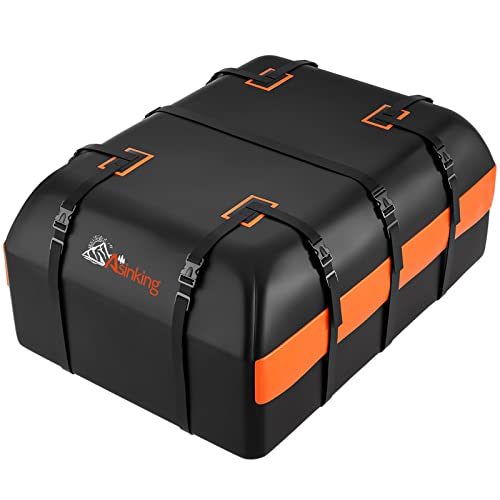
The 21 cubic foot rooftop cargo carrier bag hits a specification ceiling that hard-shell boxes rarely achieve at anywhere near this price — and it does it with a material specification that puts genuine confidence behind the waterproofing claims. Built from heavy-duty 840D abrasion-resistant PVC fabric with triple-reinforced welded seams, this bag is engineered to resist tearing, puncturing, and sustained weather exposure across multiple seasons of continuous use. The waterproof zipper is wrapped with a six-inch-wide velcro zipper flap that creates double-layer moisture protection, so even in a sustained downpour you're looking at zero water infiltration — not the "mostly dry" performance you get from bags that rely on a zipper flap alone without the underlying zipper waterproofing.
Installation uses eight thickened adjustable straps combined with an anti-slip mat that sits between the bag and your roof surface, preventing the carrier from shifting during acceleration, cornering, and braking. Six door hooks provide additional anchor points by routing straps through the door openings and securing inside the car, which means you can use this carrier on a rack-free vehicle just as confidently as you'd use it on a vehicle with crossbars. The complete kit also includes two extra straps, storage bags for organizing the hardware, and a luggage lock for basic theft deterrence when you leave the vehicle unattended at rest stops or campgrounds.
At 21 cubic feet, this is the largest-capacity soft bag on our list, which makes it the right choice for large family road trips where you're fighting for every cubic inch of storage space inside the vehicle. The 840D PVC construction is noticeably stiffer than standard 600D nylon bags, which helps the carrier maintain its shape under a heavy load rather than sagging into an unstable pancake that shifts at highway speed. For value-focused buyers who need maximum capacity, reliable waterproofing, and a full installation kit without paying for premium branding, this bag is the clear winner in the soft-carrier category.
Pros:
Cons:
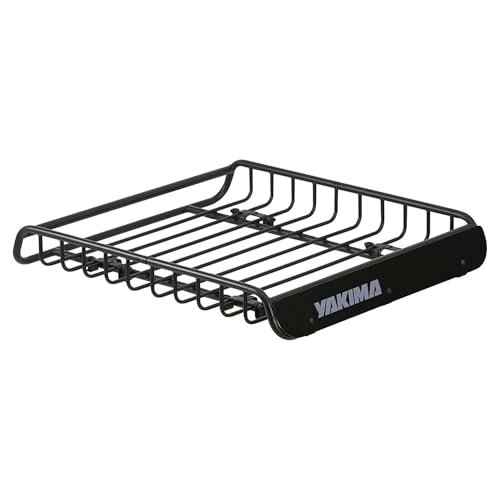
The Yakima LoadWarrior operates in a fundamentally different category from every other product on this list — it's an open steel basket rather than an enclosed box or bag, which means the rules around what you can carry and how you carry it change completely. If you've been hauling kayaks, lumber, bikes, coolers, or bulky camping gear that simply doesn't fit inside a box, the LoadWarrior opens up a class of cargo that enclosed options can't accommodate. The medium-sized steel basket is weather-proof by construction — there's nothing to degrade, seal, or waterproof on a steel basket — and the powder-coat finish resists rust through years of exposure to rain, road salt, and UV radiation. According to the roof rack Wikipedia article, open cargo baskets have been a standard solution for utility hauling since the early automotive era, and the fundamental design logic hasn't changed because it doesn't need to.
The universal mounting hardware fits Yakima StreamLine crossbars as well as most factory and aerodynamic aftermarket crossbars, which covers the vast majority of vehicle types you're likely working with in 2026. A custom wind fairing ships with the basket, which reduces aerodynamic drag across the leading edge and meaningfully cuts highway wind noise compared to a bare open basket without one. Yakima sells compatible gear mounts separately — including kayak cradles, bike mounts, and ski carriers — so the LoadWarrior becomes a modular platform that evolves with your hauling needs rather than locking you into one use case for the life of the product. The SKS locking bracket is sold separately, which is the one notable gap in the base kit.
If you're regularly transporting oversized items that don't fit in enclosed boxes, or if you're building out a serious overlanding rig where gear organization across multiple carriers is the goal, the LoadWarrior gives you the most flexible mounting platform in this review. Pair it with cargo nets and tie-down straps — check our guide to the best recovery straps for quality strap options that work for rooftop cargo securing as well as vehicle recovery — and you have a system that handles virtually any load you throw at it.
Pros:
Cons:
The INNO Ridge Cargo Box is designed and manufactured in Japan, and that heritage shows in the precision of the fit-and-finish, the quality of the latch mechanisms, and the aerodynamic optimization that makes this an 8-cubic-foot box with an outsized performance advantage when it comes to noise and fuel economy impact. At 8 cubic feet, this is the compact specialist on the list — it's not trying to carry a family's week of luggage, but rather to provide a secure, low-profile solution for commuters, cyclists, and weekend day-trippers who need to haul a structured payload of helmets, camera gear, tools, or clothing without the bulk of a large box sitting on the roof permanently. The aerodynamic design is genuinely class-leading at this size, and the lightweight construction makes installation and removal a one-person job in under ten minutes.
The universal fit system accommodates aero crossbars, square crossbars, round crossbars, and most factory rack systems, so compatibility across vehicle platforms is rarely an issue. The quick on/off installation design means you can remove the INNO Ridge after every trip without spending half an hour on hardware — which matters enormously if you're concerned about fuel economy during the commuting days between weekend adventures, since a permanently mounted box adds a constant aerodynamic penalty even when empty. The gloss black finish is sharp and holds up well against road debris and automatic car washes, though like all gloss surfaces it shows water spots more readily than matte finishes.
For drivers who want a hard-shell solution without the size and weight penalty of a full-scale box, the INNO Ridge is the answer that the rest of the market often overlooks. It's also a natural fit for motorcycle hitch carrier users who already have a rear carrier for their primary cargo and want a compact, aerodynamic front complement for helmets and riding gear — if you're building out that kind of multi-carrier system, our review of the best motorcycle hitch carriers covers the rear-carry side of that equation in detail.
Pros:
Cons:

The most common purchasing mistake in this category is buying based on interior cargo volume without accounting for what you actually need to carry on a typical trip. Hard-shell boxes in the 16-to-18 cubic foot range are genuinely large — large enough to carry a full family's ski equipment or three to four fully packed duffel bags — but that capacity only delivers value if your vehicle's roof load rating can support the combined weight of the box itself and a full payload. Most passenger vehicles have a dynamic roof load rating between 150 and 220 pounds, and a fully loaded 18-cubic-foot hard box can easily approach that ceiling. Check your owner's manual before purchasing, and remember that the weight rating includes the carrier, not just the gear inside it.
Hard-shell cargo boxes provide rigid structural protection for your gear, a weatherproof seal that performs better in sustained rain, and a cleaner aerodynamic profile that reduces wind noise at highway speeds. They require a roof rack for mounting and occupy significant storage space when not in use. Soft-sided carriers and bags give you flexibility for irregularly shaped loads, fold flat for off-season storage, and — critically — can attach to rack-free vehicles using strap and door-clip mounting systems, which opens the category up to millions of drivers who would otherwise be locked out entirely. The decision comes down to whether you need rigid protection, permanent mounting convenience, and maximum weather resistance (hard shell), or whether you need flexibility, easy storage, and rack-free compatibility (soft bag).
Before you commit to any cargo box, confirm that your vehicle's crossbar type — round, square, aero, or factory T-slot — is listed as compatible with the carrier's mounting hardware. Most premium boxes from Thule and Yakima support universal crossbar compatibility, but budget boxes sometimes specify narrower compatibility ranges that create fitment problems after purchase. Installation time varies significantly across product tiers: premium quick-mount systems like Thule's PowerClick confirm secure attachment with an audible click and take under fifteen minutes, while basic bolt-on mounting systems require careful torque checking and can take thirty to forty minutes for first-time installation. If you plan to remove and reinstall your carrier frequently between trips, a quick-release system pays for itself in time savings alone across a full season of use.
The security and weather resistance of a cargo carrier directly determine whether your gear arrives at the destination the same way it left the garage. For hard-shell boxes, look for integrated locking handles that secure both the lid and the mounting hardware simultaneously — the Yakima SkyBox NX 18's full-metal handle that locks gear inside and locks the box to the vehicle is the benchmark implementation of this approach. For soft bags, welded seams and waterproof zippers are non-negotiable features; seam-taped construction and basic zipper flaps are adequate for light rain but fail in sustained downpours. UV resistance matters more than many buyers anticipate — ABS and quality polypropylene shells that lack UV stabilizers will chalk, crack, and lose structural integrity within two to three seasons of sun exposure, especially in high-altitude or Southern climates where UV radiation is intense.
Most rooftop cargo carriers have a weight capacity of 100 to 165 pounds, but your vehicle's dynamic roof load rating is the number that actually governs how much you can safely carry. The dynamic roof load rating — listed in your owner's manual — accounts for the forces generated at highway speed, which are significantly higher than static loads. Always subtract the weight of the carrier itself from your vehicle's dynamic roof load rating to determine your actual usable payload capacity.
Yes, several soft-sided carriers are specifically designed for rack-free installation, including the Rightline Gear Sport 3 and the 21 CF rooftop cargo bag reviewed above. These carriers use a combination of adjustable straps and car clips that attach to the vehicle's door frame weather molding, routing through the door openings and securing inside the car. This system creates a secure hold at highway speeds without requiring any permanent roof hardware.
A rooftop cargo box increases aerodynamic drag and can reduce fuel economy by 5% to 25%, depending on the box's aerodynamic profile, your vehicle's shape, and your typical driving speed. At highway speeds, the impact is at the higher end of that range because aerodynamic drag increases exponentially with speed. Compact, aerodynamic boxes like the INNO Ridge minimize this penalty, while large rectangular boxes create the most drag. Removing the box when it's not in use eliminates the fuel economy impact entirely.
Rooftop cargo boxes require a crossbar roof rack system for mounting — vehicles without factory crossbars need an aftermarket rack before installing a hard-shell box. Most modern crossover SUVs, wagons, and hatchbacks come with factory roof rails that accept crossbars, but traditional sedans and coupes typically do not. Soft-sided carriers that use strap-and-clip mounting are the practical solution for rack-free vehicles. Always verify specific crossbar compatibility with the manufacturer before purchasing a hard-shell box.
Wind noise from a rooftop cargo box comes primarily from the leading edge meeting oncoming air at speed. Choose a box with a tapered aerodynamic front profile rather than a blunt rectangular leading edge, ensure the box is mounted as far forward on the crossbars as the manufacturer allows (forward-biased positioning reduces wake turbulence), and confirm that all lid seals are fully seated before driving. Open cargo baskets generate more wind noise than enclosed boxes — a wind fairing like the one included with the Yakima LoadWarrior significantly reduces this.
Hard-shell cargo boxes require horizontal storage on a garage floor, shelf, or wall-mounted bracket — they're too large and structurally rigid to fold or compress, and they need support along their full length to prevent warping the mounting points. Many owners build simple wall hooks or purchase dedicated cargo box wall mounts. Soft-sided carriers and bags fold flat and store easily in a closet, under a bed, or in a storage bin, which is one of their most practical advantages over hard-shell alternatives for seasonal users.
The right rooftop cargo solution is out there for your specific vehicle, your gear list, and your budget — whether that's the Thule Force 3 XL for all-season premium performance, the Yakima SkyBox NX 18 for family-scale capacity, the Rightline Gear Sport 3 for rack-free versatility, or the INNO Ridge for sleek compact hauling. Pick the carrier that matches how you actually travel in 2026, click through to Amazon to check current pricing and availability, and get your gear locked down before your next trip hits the calendar.
 |
 |
 |
 |

About Rachel Park
Rachel Park specializes in the interior and exterior upgrades that meaningfully change how a car looks, sounds, and feels on a daily basis. She has hands-on experience with head unit installations and audio system builds, LED and HID lighting conversions, interior refresh projects, and cosmetic exterior work — evaluated from both a DIY accessibility and quality-of-result perspective. At CarCareTotal, she covers car audio and electronics, lighting upgrades, and interior and exterior styling accessories.
Get some FREE car parts & gear.. Or check out the latest free automotive manuals and build guides here.
Disable your ad blocker to unlock all the hidden deals. Hit the button below 🚗
| | | |
