by Liam O'Brien
Picture this: you park your motorcycle outside a restaurant, enjoy a two-hour dinner, and walk back out to find your bike gone. It happens more often than most riders want to admit. Motorcycle theft is a real and constant threat, and the difference between keeping your bike and filing a police report often comes down to the security gear you chose before leaving home. In 2026, the market offers everything from simple vibration-triggered disc locks to full wiring-harness alarm systems with two-way remotes — and knowing which one actually fits your situation matters.
We've put together this guide specifically for riders who are done guessing. Whether you commute daily on a scooter, store a cruiser in a shared garage, or take a sportbike out on weekends, there's an alarm on this list that fits your threat level and budget. You'll find compact disc locks that slip into a jacket pocket, wireless systems you can arm from across a parking lot, and hardwired setups that physically cut the engine if someone tries to ride away. Our picks cover all of it. If you're also looking at physical restraints beyond alarms, our roundup of the 7 Best Steering Wheel Locks of 2026 covers complementary anti-theft tools worth pairing with any alarm.
Before diving into the reviews, here's the short version: for disc lock simplicity and proven build quality, the ABUS Granit Detecto X-Plus 8077 2.0 and the Xena XX6-Y lead the pack. For a full electronic security system with engine kill, the LNKERCO with 2-Way LCD Remote is the strongest option in 2026. Read on for the full breakdown.
Contents






The Xena XX6-Y has been a benchmark disc lock in the motorcycle security space for years, and in 2026 it still earns its spot at the top of this category. The mono-block, high-grade stainless steel construction is the first thing you notice — there are no seams, no joints, and no weak points for a bolt cutter to exploit. The 6mm hardened-steel push-down locking pin gives it one of the broadest rotor compatibility profiles of any disc lock available. You push it down, it clicks, and it's locked. No fumbling with keys on the first engagement.
The built-in alarm is piezoelectric — it doesn't rely on a battery to generate the shriek, which means it performs consistently in cold weather when lithium cells lose output. The alarm triggers on vibration, so anyone touching the bike while the lock is engaged will set it off. The sensitivity is factory-set at a reasonable threshold, meaning parked bikes on a busy street won't be going off every time a truck rolls by. Installation is exactly as simple as a disc lock should be: fit it over your brake rotor vent hole, push the pin, walk away.
The one honest trade-off here is size. The XX6-Y is not the most compact disc lock on this list. It's dense and solid, which is the point, but it does add a bit of pocket weight compared to lighter alternatives. If you're looking for something that slips into a jacket pocket unnoticed, the Kryptonite Keeper further down this list might suit you better. But if your priority is a proven build with genuine deterrence at the physical layer, the Xena XX6-Y delivers exactly that without compromise.
Pros:
Cons:
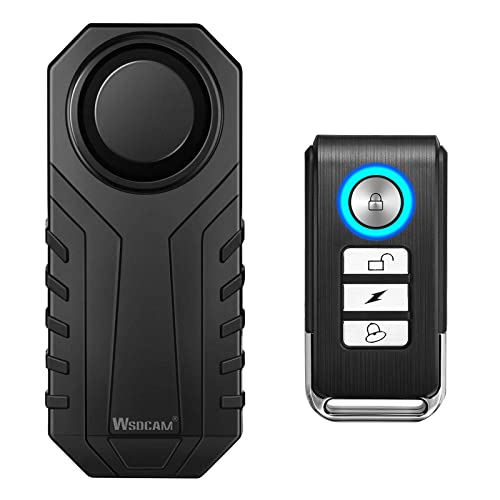
The Wsdcam alarm takes a different approach from disc locks — it's a standalone vibration sensor unit that you attach anywhere on the bike frame, then arm and disarm with a wireless remote from up to 66 feet away. That remote range is genuinely useful in real-world parking situations. You can arm it while walking away from the bike instead of crouching down to toggle a switch on the lock itself. The 113dB siren output is loud enough to be disruptive in any environment, and the IP55 waterproofing rating means rain isn't going to silence it.
What makes this alarm stand out for riders who use multiple types of bikes is its compatibility range. It works on bicycles, electric bikes, scooters, and full motorcycles. If you split time between a commuter bicycle and a weekend motorcycle, one unit covers both. The vibration sensitivity is adjustable across seven levels, and the volume runs three levels. That combination lets you dial in the sensitivity precisely for your environment — lower sensitivity for a busy urban rack where foot traffic constantly passes, higher for a quiet residential garage where any movement is suspicious. Most competing units give you one fixed threshold and call it a day.
The installation is straightforward but does require some thought about placement. You want the unit mounted firmly to the frame — not dangling or cable-tied loosely — or the sensitivity tuning becomes unreliable. The wireless remote is compact and fits on a keychain without trouble. One thing to keep in mind: because this is a vibration sensor and not a disc lock, it doesn't physically prevent the wheel from moving. It's a deterrent and alert system. For the strongest setup, combine it with a physical lock like the Xena or Kryptonite entries on this list.
Pros:
Cons:
ABUS builds some of the most respected security hardware in the world, and the Granit Detecto X-Plus 8077 2.0 is the company's premium statement in motorcycle disc lock alarms. The headline feature is the intelligent two-stage alarm system. When the bike first moves, it triggers a pre-warning tone — a shorter, less aggressive sound that gives legitimate passers-by or a clumsy parking attendant a moment to back off. Only if the movement continues does it escalate to the full 100dB alarm, which runs for 15 seconds. This approach dramatically reduces false alarm fatigue without compromising actual security response.
The LED status indicators are a thoughtful addition that you won't find on most disc locks at this level. Different colored LEDs tell you whether the alarm is active, whether the battery is running low, and the current state of the lock at a glance. This eliminates the guessing game of "did I actually arm it?" that disc lock users regularly experience. The transport mode with brake disc detection is equally well-executed — the lock can be transported closed without the alarm triggering, which matters when you're carrying it in luggage or shipping a bike.
Build quality is exactly what you expect from ABUS. The Granit range is specifically engineered for high-resistance applications, and the locking cylinder and body have the weight and solidity to match. This is not a light option, and it carries a premium price tag. But if you're serious about protecting a high-value motorcycle and want a disc lock that doesn't require compromise on features, the 8077 2.0 is the clear choice in 2026. If you're evaluating brake disc compatibility, our guide to the 6 Best Brake Rotors of 2026 covers rotor specs that affect disc lock fitment across different bike models.
Pros:
Cons:
Kryptonite has a long history in the bike lock space, and the Keeper Alarm Disc Lock brings that credibility directly into the motorcycle market. The stapler-style design is one of the most distinctive things about this unit — it's genuinely compact, easy to grip, and fits into a jacket pocket or small bag without the bulk you get from thicker disc locks. The 5.5mm locking pin is sized for smaller rotor vent holes, which makes it particularly well-suited to scooters, e-bikes, and lighter motorcycles where bigger pins simply don't fit through the rotor ventilation slots.
The IPX7 waterproofing rating is a real differentiator here. IPX7 means submersion up to one meter for 30 minutes — this isn't just splash resistance, it's genuine weather protection at a level most disc locks don't reach. If you ride year-round in wet climates or store your bike outdoors, IPX7 is the rating you want on your alarm hardware. The integrated 100dB alarm triggers on tampering, and the dual-reinforced disc-style cylinder gives you physical resistance to match the electronic deterrence.
The one trade-off is the 5.5mm pin diameter. It fits smaller rotor vent holes exceptionally well, but if you ride a larger sportbike or cruiser with wider rotor ventilation slots, verify the pin clearance before purchasing. For most modern scooters and mid-size motorcycles, fitment is not an issue. Kryptonite's reputation for quality control means the alarm circuitry and locking mechanism are built to consistent standards, and the compact form factor makes it the easiest disc lock on this list to actually carry every day without leaving it at home.
Pros:
Cons:
If you want the most comprehensive electronic security on this list, the LNKERCO is it. This is a hardwired 12V DC system that integrates directly with your motorcycle's ignition — when the alarm triggers, it doesn't just make noise, it physically cuts the engine. A thief who gets past the siren still can't ride your bike away. The dual-layer detection combines a shock sensor with a microwave motion detector, covering both physical contact with the bike and nearby motion. That combination catches a wider range of intrusion attempts than a single-sensor system.
The 2-way LCD remote is what elevates this beyond a standard alarm. You get real-time status feedback on the remote display — whether the alarm is armed, whether it's been triggered, and the current battery voltage. The operating range of up to 1,000 meters means you can monitor the bike from inside a building or across a large parking area. When the bike is disturbed, the remote alerts you directly. You're not relying on hoping someone near the bike notices the siren. The 115dB siren output is the loudest on this list, and combined with the engine kill, it presents a genuinely multi-layered barrier to theft.
Installation is the honest caveat here. You're wiring this into your motorcycle's electrical system, and while the included harness and diagram are clearly designed for the task, it requires comfort with basic motorcycle wiring. If you're not confident with electrical work, a shop installation adds to the cost. The system is rated for 12V DC motorcycles only — it won't work on AC-system scooters or older bikes with incompatible electrical setups. But for riders who want the strongest electronic deterrence available without paying for a dealership-installed system, the LNKERCO delivers it. You can find additional anti-theft coverage context in our 7 Best Trailer Locks of 2026 guide, which covers security for vehicles in transport and storage scenarios.
Pros:
Cons:
The DC12V alarm system fills an important slot in this lineup: it's a hardwired engine-kill alarm at an accessible price point. The core functionality matches what you'd expect from a professional alarm install — remote arm/disarm, anti-hijacking engine cutoff, and an adjustable horn alarm with three sensitivity levels. The turn signal synchronization (flashing hazards when the alarm triggers) adds a visual component to the alert that catches attention even in noisy environments where a siren might be ignored.
The anti-hijacking feature is worth understanding specifically. This isn't just a stationary alarm — if someone rides the bike under duress and triggers the anti-hijacking protocol, the system can cut power to the ignition. That's a feature most disc locks and basic sensor units simply cannot replicate, because it requires wired integration with the motorcycle's electrical system. For riders who park in urban environments or areas with elevated theft risk, that capability matters. The three-level sensitivity adjustment for the horn trigger lets you tune out minor vibration from passing vehicles while remaining responsive to actual tampering.
The trade-off compared to the LNKERCO is feature depth. The DC12V system doesn't include a 2-way remote with LCD status feedback, so you're working with a standard one-way remote that controls the system but doesn't report back to you. The remote range is also shorter. For riders who want hardwired engine-kill protection without the premium price tag of the LNKERCO and are comfortable with a one-way remote setup, the DC12V system is the practical choice. If you're exploring tools and security accessories broadly, our tools category covers additional gear for riders and drivers.
Pros:
Cons:
The YOHOOLYO disc lock earns its place on this list through a combination of solid construction, strong alarm output, and a feature that the more expensive options don't include by default: a 5-foot reminder cable. That cable attaches between the disc lock and the handlebar or frame, so if you ride off with the lock still engaged, the cable catches your attention before the wheel does. It's a simple addition, but disc locks are notorious for being forgotten on the rotor. The YOHOOLYO addresses that directly and ships the cable in the box alongside a carry pouch.
The forged stainless steel construction handles impacts well, and the one-press locking operation — push the button, hear the beep, it's armed — is as fast as any disc lock on this list. The 110dB alarm activates automatically on vibration detection without requiring a separate arming step beyond engaging the lock. That's a meaningful convenience for quick stops. The waterproofing holds up in rain, and the anti-corrosion properties of stainless steel mean it won't deteriorate after seasons of outdoor exposure the way cheaper zinc-alloy locks do.
The 7mm locking pin diameter is worth noting. It fits standard motorcycle brake rotor vent holes well but may not fit smaller, tighter vent configurations on certain scooters or lightweight bikes — check your rotor vent hole diameter before ordering if you're riding anything in the 125cc and under range. For the majority of motorcycles and mid-size scooters, the 7mm pin fits without issue. At its price point, the YOHOOLYO delivers a complete package: stainless body, loud alarm, waterproofing, reminder cable, and carry pouch. It's the right choice when budget is a real constraint and you don't want to sacrifice on core function.
Pros:
Cons:
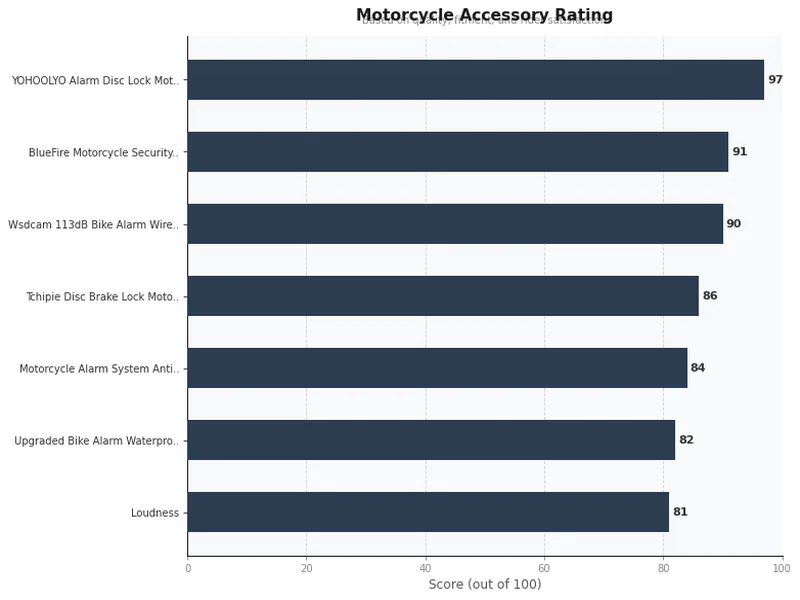
The first decision is which category of alarm matches your needs. Disc locks combine a physical locking mechanism with a vibration alarm in one unit — they attach directly to the brake rotor and prevent the wheel from rotating. They're the simplest option, require no installation, and work on any bike with a disc brake. Standalone sensor alarms like the Wsdcam mount to the frame and arm wirelessly, but they don't physically restrain the bike. Hardwired systems like the LNKERCO or DC12V integrate into the motorcycle's electrical system and add an engine kill capability that disc locks and sensor units can't match. Each category has a clear use case. Disc locks for everyday portability, sensors for versatility across multiple bikes, hardwired systems for maximum deterrence on a primary bike.
Alarm output is measured in decibels, and the range on this list runs from 100dB to 115dB. That 15dB difference is significant — decibels are logarithmic, not linear, so 115dB is substantially louder than 100dB in practice. For urban environments with high ambient noise, higher dB output means the alarm is more likely to be noticed. Sensitivity is equally important. A well-calibrated vibration sensor triggers on genuine tampering but not from a passing bus or a dog brushing against the bike. The best systems on this list offer adjustable sensitivity; fixed-threshold units require you to accept the factory calibration. Motorcycle theft methods range from lifting to rolling to break-starting, so sensitivity tuning should account for the full range of movement, not just direct impact.
A motorcycle alarm lives outside year-round in most real-world use cases. IP ratings tell you exactly what protection you're getting. IP55 (Wsdcam) covers dust and directional water jets — adequate for rain. IPX7 (Kryptonite) covers submersion up to one meter. For disc locks specifically, material matters as much as the IP rating. Forged stainless steel resists corrosion, impact, and attack better than cast zinc alloy or hardened plastic. Look for terms like "mono-block" or "forged" when comparing disc lock bodies. On hardwired systems, the waterproofing applies to the sensor and control unit electronics rather than a locking body — verify the sensor enclosure rating if you're installing on a bike stored outdoors.
Disc lock pin diameter directly determines whether the lock fits your specific brake rotor. The vent holes in motorcycle brake rotors vary by manufacturer and model. Smaller rotors on scooters and lightweight bikes often have tighter vent configurations that require a narrower pin — the Kryptonite's 5.5mm pin is ideal for these. Larger sportbikes and cruisers with wide rotor ventilation accommodate 7mm and even larger pins without issue. Before purchasing any disc lock, measure the diameter of your rotor vent holes or check your bike's spec sheet. A disc lock that doesn't fit your rotor is completely useless regardless of its other qualities.
Yes — opportunistic thieves, which account for the majority of motorcycle theft incidents, consistently avoid alarmed bikes in favor of easier targets. A 100dB+ alarm draws immediate attention and creates risk of identification. Combined with a physical disc lock that prevents the wheel from turning, the time and effort required to steal your bike increases dramatically. Determined, organized theft rings are a different category, but for everyday parking situations, a quality alarm significantly reduces your risk.
A disc lock alarm is a self-contained unit that physically locks onto the brake rotor while also triggering an alarm on vibration. It requires no installation and works without connecting to the bike's electrical system. A hardwired alarm system wires into the motorcycle's 12V DC circuit, enabling features like engine kill, remote start, and two-way communication with the controller. Disc locks are portable and versatile; hardwired systems are more capable but require installation and are specific to the bike they're wired into.
In 2026, anything below 100dB is insufficient for most real-world environments. Urban settings with traffic noise, music, and crowds require at least 100dB to reliably attract attention. The best alarms on this list output between 100dB and 115dB. Higher output is better, but the siren placement matters too — an alarm mounted low on the frame with surrounding bodywork absorbing sound will be less effective than the same unit mounted on an exposed surface. Check where the siren projects sound before finalizing your installation position.
Disc locks work on any motorcycle with disc brakes — which covers the vast majority of modern bikes. The key variable is the locking pin diameter versus your specific rotor vent hole size. Pins range from 5.5mm (Kryptonite) to 7mm (YOHOOLYO) to 6mm (Xena). Measure your rotor vent holes before buying. Drum brake bikes, which appear mainly on older models and certain budget scooters, are not compatible with disc locks at all and require a different security approach.
With properly calibrated sensitivity, no. The alarms on this list with adjustable sensitivity — particularly the Wsdcam's seven-level adjustment — let you tune the threshold specifically for your parking environment. Even fixed-sensitivity units like the Xena XX6-Y are factory calibrated to avoid nuisance triggers from road traffic. The key is mounting location: a unit mounted on flexible rubber or loose straps will amplify ambient vibration. Mount your alarm sensor firmly to the frame on a rigid contact point for the most stable and accurate sensitivity response.
Absolutely. Security professionals consistently recommend layered protection — no single device is a complete solution. The most effective combination pairs a disc lock alarm (physical wheel restraint plus audible deterrent) with a hardwired alarm system (engine kill plus loud siren) and a chain or ground anchor for stationary storage. If that's more investment than your situation warrants, a quality disc lock alarm alone is a substantial improvement over no security. Start with what fits your budget and parking situation, then build from there.
Choosing the right motorcycle alarm in 2026 comes down to your specific situation — how you park, what you ride, and how much risk you're managing daily. Pick the ABUS Granit Detecto X-Plus 8077 2.0 if you want the most refined disc lock on the market, go with the LNKERCO hardwired system if engine kill and two-way remote feedback are your priorities, and start with the YOHOOLYO if you need proven protection at a no-compromise price. Whatever you choose, put it on your bike today — the only alarm that doesn't work is the one sitting in a drawer.
 |
 |
 |
 |

About Liam O'Brien
Liam O'Brien has spent over a decade buying, field-testing, and evaluating automotive tools with a focus on what actually performs in a real DIY garage rather than what markets well on a spec sheet. His hands-on experience spans hand tools, diagnostic equipment, floor jacks, socket sets, and specialty automotive gear across a wide range of brands and price points. At CarCareTotal, he covers automotive tool and equipment reviews, garage setup guides, and buying advice for home mechanics.
Get some FREE car parts & gear.. Or check out the latest free automotive manuals and build guides here.
Disable your ad blocker to unlock all the hidden deals. Hit the button below 🚗
| | | |
