by Liam O'Brien
Which garage parking aid actually delivers consistent, damage-free stops every single time you pull in — and which ones are overpriced gimmicks that collect dust on a shelf? After testing dozens of options across laser guides, ultrasonic sensors, LED indicators, and low-tech physical stops, one product stood out as the clear leader for most homeowners in 2026: the Maxsa 37312 Park Right Dual Laser Parking Guide, a motion-activated, dual-laser system that handles everything from compact sedans to full-size SUVs with precision most competitors simply cannot match. Whether your garage is a single-car setup or a sprawling two-bay space, the right parking aid saves your bumpers, your walls, and your frustration — and this guide covers every top-rated option available right now.

Garage parking aids have evolved considerably beyond the dangling tennis ball that your grandfather swore by. Today's market offers laser-based wall-mount systems, ultrasonic proximity detectors, illuminated LED proximity bars, and pressure-activated parking mats — each solving the same core problem in a fundamentally different way. According to data compiled by the National Highway Traffic Safety Administration, a significant portion of driveway and garage-related vehicle damage occurs during low-speed maneuvers in confined spaces, making a reliable parking guide one of the most practical investments you can make for your vehicle and your property. If you're also dealing with car scratch removers after a close call, a proper parking aid prevents the problem before it starts.
In 2026, the best garage parking aids combine motion detection, adjustability, and reliable power options into packages that install in under an hour without special tools. This comprehensive review covers six top-rated products across multiple categories — from premium dual-laser systems to simple but effective parking mats — so you can make an informed purchase that fits your garage layout, your vehicle size, and your budget. You'll find detailed specs, honest assessments of strengths and weaknesses, and a buying guide that answers every key question before you commit.
Contents



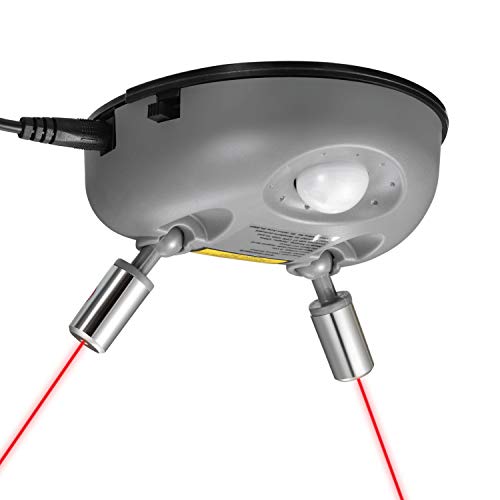




The Maxsa 37312 earns its status as the top-rated garage parking aid in 2026 by combining two independently adjustable lasers with a robust motion-activation system that handles real-world garage conditions without constant fiddling. Each laser rotates a full 360 degrees, which means you can target the precise spot on your dashboard — or your windshield — that signals a perfect stop, accommodating vehicles as different as a compact hatchback and a full-size pickup truck parked side by side. The motion sensor covers a 130-degree arc at distances up to 15 feet, activating the lasers the moment your vehicle enters the detection zone and shutting them down automatically roughly 15 seconds after you've stopped, which conserves power and eliminates any bright red distractions if you're using the garage as a workspace later.
Power reliability is one of the most underappreciated specs in this category, and the Maxsa 37312 addresses it definitively with a dual-power design: an AC adapter handles everyday operation, while a built-in battery backup ensures you're never fumbling in a dark garage after a power outage. Installation involves a single wall-mount bracket and a short run of the included AC adapter cable, placing setup time well under 30 minutes for most homeowners. Maxsa's reputation as the market's bestselling laser parking guide is backed by years of consistent reviews, and the 37312's silver housing is compact enough to stay out of the way while still being visible enough to locate quickly when you need to adjust settings.
For households with two vehicles of significantly different lengths — a common scenario in American garages — the independent adjustment of each laser is genuinely transformative, eliminating the compromise position that single-laser units force on you. The 37312 is, without question, the product we recommend first to anyone navigating the garage tools and accessories market for a parking solution that will remain accurate and useful for years.
Pros:
Cons:
Fosmon's updated wide-angle dual laser parking assistant takes direct aim at one of the most common complaints about earlier laser parking guides: insufficient lateral spread to accommodate two vehicles parked side by side. The upgraded unit widens the angle between the two lasers to 75 degrees, which Fosmon's engineering team specifically calibrated for standard two-car garage configurations where the vehicles are parked in parallel bays rather than tandem. With a motion detection range of 33 feet — more than double the distance covered by some competing units — the Fosmon system activates well before your front bumper crosses the threshold, giving you a visible laser target as soon as you begin the approach rather than scrambling to spot it mid-maneuver.
The practical benefit of that extended detection range is most apparent in garages attached to homes with long interior approaches, where the car-to-wall distance at activation can easily exceed 20 feet. Fosmon's unit handles those approaches cleanly, holding the laser active throughout the entire pull-in sequence and shutting off after 30 seconds without detected motion — a slightly longer window than the Maxsa 37312's 15-second shutoff, which some users prefer for post-parking tasks like gathering groceries. Installation follows the same wall-mount approach as the Maxsa units, with AC adapter power and battery backup providing the same dual-power reliability you'd expect at this price level.
Where Fosmon distinguishes itself most clearly is in two-car households where both vehicles arrive at different times, since each laser independently covers its assigned bay and neither is disrupted when only one vehicle is present. For garages where tight lateral clearance is the primary concern, the Fosmon wide-angle upgrade delivers a measurably wider safety margin than the competition.
Pros:
Cons:
The VKQTS LED Garage Parking Aid approaches the parking problem from a completely different angle than laser-based systems, placing a proximity sensor at the front of the parking zone rather than projecting a reference point onto the vehicle from behind. As your car approaches, the unit cycles through a green-yellow-red LED sequence — green for safe distance, yellow for close, red for stop — providing a traffic-light-style visual cue that is intuitive to read instantly without requiring any calibration of a laser dot position. The adjustable warning distance, settable anywhere from 6 inches to 6.5 feet by pressing the middle button until the LED confirms the new threshold, makes this unit adaptable to garages of radically different depths and vehicles of different front-end lengths.
The dual-power design supports both AAA battery operation and USB-cable connection to wall power, giving you genuine flexibility for garages without conveniently located outlets near the front wall — a surprisingly common limitation in older attached garages and most detached structures. The portable form factor also means you can reposition the unit easily when you're rotating different vehicles into the space, something wall-mounted laser units cannot accommodate without full reinstallation. VKQTS positions this product explicitly as a car accessory with a broad compatibility range, and the sensor's response curve covers vehicles of varying heights reliably, from low-profile sedans to taller crossovers and SUVs.
The primary limitation of proximity-sensor LED systems compared to laser guides is that they only address forward stop position — they don't help with lateral alignment or tell you how far forward your rear bumper is from a back wall. For garages where forward stop distance is the primary concern and lateral clearance is generous, however, the VKQTS delivers a clean, color-coded solution that requires no interpretation and no line-of-sight to a laser dot.
Pros:
Cons:
STKR's garage parking sensor uses ultrasonic detection technology rather than optical or laser-based sensing, which provides one distinct advantage over camera or laser competitors: ultrasonic sensors are entirely indifferent to lighting conditions, working equally well in a pitch-black garage at 2 a.m. as in a fully illuminated space at noon. The wall-mount unit projects an ultrasonic beam toward the approaching vehicle, calculating distance continuously and updating the three-color LED display — green for safe, yellow for caution, red for stop — in real time as you pull forward. The adjustable stop zone, settable in increments from 6 inches to 6 feet via the dedicated "Set Distance" button, accommodates the full range of vehicle front-end lengths from subcompact cars to extended-cab pickup trucks.
Power options include four AA batteries or an optional USB power port, though STKR's product listing notes that the USB cable and charger are not included for the USB option — a minor but notable omission at this price point that you'll want to account for when purchasing. The wall-mount installation is straightforward, with the unit's footprint small enough to place on virtually any forward wall surface, and the dark grey housing blends naturally into most garage interiors without looking out of place. STKR has built its reputation on rugged, reliable sensor products, and this unit's ultrasonic core is the same technology used in automotive parking assist systems built into modern vehicles.
For drivers who find laser dots difficult to spot on their windshields — particularly those with tinted glass or patterned dashboards — the STKR's wall-mounted LED display is a compelling alternative that requires only a glance forward rather than any searching for a projected spot. Just as you might invest in wheel chocks for additional stability when parking on inclines, pairing the STKR with a physical floor stop covers both the forward approach and the static hold simultaneously.
Pros:
Cons:
The Black Parking Mat strips garage parking guidance down to its most fundamental mechanism — a physical bump that your front tire meets when you've reached the correct stopping point — and executes that concept with a level of build quality that justifies its place on this list among substantially more expensive electronic alternatives. At 21 inches wide and 2 inches tall, the mat's dual guide bumps provide enough lateral span to center vehicles ranging from compact cars with narrow track widths to full-size pickup trucks, and the anti-skid base uses a peel-and-press adhesive design that secures the mat to concrete, epoxy-coated, or painted garage floors without tools, brackets, or hardware installation.
The mechanics here are entirely passive and entirely reliable: there are no batteries to replace, no sensors to calibrate, no laser angles to readjust after bumping the mount, and no power interruptions that leave you guessing your position during a storm. You feel the bump, you stop. Every single time, with zero exceptions, as long as the mat remains in position — which the anti-skid base maintains reliably across normal temperature variations and daily use. The universal sizing accommodates the vast majority of passenger vehicles sold in North America, with the 10-inch length providing sufficient depth for both front tire positions to register the guide bumps sequentially.
The honest limitation is that the mat addresses only forward stop position, not lateral alignment or rear clearance, making it a complement to rather than a replacement for a full laser or sensor system in garages where side clearance is tight. For single-car garages with ample lateral space and a reliable concrete floor, however, this mat eliminates the most common parking problem — stopping too far forward — with zero ongoing maintenance and a purchase price that undercuts every electronic option on this list. If a close call has already resulted in paint damage, pairing this mat with a review of the best car body fillers and scratch removers will restore your finish while the mat prevents future incidents.
Pros:
Cons:
The Maxsa 37310 is the single-laser sibling of the top-rated 37312, offering the same core technology — a 360-degree adjustable laser, a 130-degree motion sensor with 15-foot detection range, AC adapter power with battery backup, and the signature Maxsa silver housing — at a lower price point calibrated for single-vehicle garages where a second laser provides no practical benefit. The single adjustable laser projects a precise targeting dot onto your windshield or dashboard, and the full-rotation adjustability means you can position that dot on any surface visible through your windshield from the driver's seat, accommodating both left-hand-drive and right-hand-drive configurations and virtually any seating height from a low sports car to a lifted truck.
The motion-activated behavior follows the same logic as the 37312: the laser activates when the sensor detects a vehicle entering the detection zone, remains on throughout the approach, and shuts off approximately 15 seconds after motion is no longer detected — a clean, low-maintenance operation cycle that requires no manual switching and no ongoing user interaction once the initial calibration is complete. Battery backup ensures that a power outage won't strand you in a dark garage with no reference point, and Maxsa's build quality track record extends to this unit, which carries the same structural reliability as its dual-laser counterpart.
For single-car homeowners who don't need dual-bay coverage and want the most proven laser parking technology available without paying for features they'll never use, the 37310 represents the straightforward, right-sized choice. The 37312 is the upgrade if you add a second vehicle; the 37310 is the perfect fit if your garage is a dedicated single-car space.
Pros:
Cons:
The Genie GPS-R takes a fundamentally different approach to installation by mounting from the ceiling rather than the wall, a configuration that offers a distinct practical advantage in garages where the forward wall is entirely covered by shelving, cabinets, or workbenches with no clear mounting surface. Genie positions this product specifically for judging stopping distance to allow clearance for the garage door behind your car — an often-overlooked concern in garages with rear-mounted door openers, where stopping too far back can place your trunk or tailgate directly in the door's travel path. The yellow housing is intentionally visible, and the ceiling-mounted position ensures you're referencing the guide from above rather than scanning a forward wall during the approach.
The Genie GPS-R is compatible with all garage door opener systems, which Genie highlights as a specific design consideration given the variety of overhead hardware configurations in American homes, and installation uses all included hardware for a straightforward ceiling-mount procedure that most homeowners complete in under 20 minutes. The hanging pendulum guide drops to a calibrated stopping height and makes physical contact with your vehicle's roof or windshield when you've reached the correct position — a tactile feedback mechanism that is unambiguous regardless of lighting conditions, laser visibility, or sensor calibration drift.
The tactile-contact mechanism is the GPS-R's greatest strength and its most notable limitation simultaneously: it provides unmistakable feedback on forward position but requires that the hanging contact point be set precisely for your specific vehicle's roof height, meaning a second vehicle of substantially different height will need a separate guide or a readjustment of the existing one. For single-vehicle garages where wall space is at a premium and ceiling mounting is the most practical option, the Genie GPS-R delivers reliable, technology-free parking guidance that never needs a battery change or a software reset.
Pros:
Cons:

Choosing the right garage parking aid in 2026 requires matching the technology type to your specific garage layout, your vehicles, and your tolerance for installation complexity. Each of the four major technology categories — laser guides, proximity sensors, LED proximity indicators, and physical stops — solves the parking problem in a distinct way, with trade-offs in feedback type, vehicle compatibility, installation requirements, and ongoing maintenance. Here are the four criteria that matter most when evaluating your options.
Laser guides project a reference dot onto your windshield or dashboard that you align to a target position before stopping, offering high precision and flexible calibration across vehicle types but requiring clear line-of-sight from the wall to your front glass. Proximity sensors — both ultrasonic and capacitive — measure the distance from the unit to your front bumper continuously and display color-coded feedback on a wall-mounted LED display, which is easier to read peripherally but less precise at indicating lateral position. Physical stops like parking mats require no visual feedback at all, relying on tactile resistance when your tire contacts the bump, which is perfectly reliable for forward stop position but provides no guidance on side clearance. Consider which type of feedback you'll actually respond to reliably during a routine parking sequence before choosing a technology category.
Single-car garages need one reference point calibrated to one vehicle, making single-laser units like the Maxsa 37310, proximity sensors like the STKR, and physical mats all viable choices. Two-car garages introduce significantly more complexity: both bays need coverage, vehicles may arrive independently, and lateral clearance between the two parked cars is often tighter than clearance from either car to the side wall. For two-car setups, the Maxsa 37312 with independently adjustable dual lasers or the Fosmon wide-angle system with its 75-degree spread are the appropriate solutions — single-laser units and physical mats simply cannot address both bays simultaneously without doubling the hardware.
All laser-based and sensor-based systems require some power source, and the most important practical question is whether a standard outlet is accessible within the cable run distance from your intended mounting location. Most wall-mount systems include an AC adapter with a fixed cable length, and battery backup adds operational insurance but not primary power independence — batteries in most units deplete within days if used as the sole power source for a daily-use system. The physical parking mat requires no power at all and installs in under five minutes, making it the clear winner on installation simplicity. For any electronic system, survey your garage outlet locations before purchasing and measure the distance from your ideal mount position to the nearest outlet to confirm the included cable reaches without an extension cord.
Laser parking guides that project onto the windshield are sensitive to vehicle height, since a laser calibrated for a sedan's windshield position will strike a point far above or below the target on an SUV or lifted truck. The best units — notably the Maxsa 37312 and 37310 — address this with full 360-degree laser rotation, allowing you to redirect the beam upward or downward to match any vehicle's glass position. Proximity sensors and LED indicators measure distance from bumper to sensor regardless of vehicle height, making them inherently more universally compatible. Physical mats work with any vehicle that has a front tire, with no adjustment needed regardless of vehicle size — making them the most universally compatible option in the category, though also the most limited in what they can guide.
Laser parking guides with 360-degree adjustable beams, such as the Maxsa 37312 and 37310, provide the most precise stopping-position feedback of any type available in 2026. By projecting a visible dot directly onto your windshield or dashboard, they give you a fixed visual reference that you can reproduce identically every time you park. Ultrasonic sensors like the STKR are close behind in forward-position accuracy, while physical mats provide reliable but coarser feedback limited to the tire-contact moment.
Yes, the top-rated options on this list are explicitly designed for compatibility across compact cars, full-size SUVs, and pickup trucks. Laser guides with full 360-degree rotation handle height differences by redirecting the beam to the correct window position. Proximity sensors and LED indicators measure bumper distance regardless of vehicle height. The Black Parking Mat's 21-inch width accommodates virtually all passenger vehicle track widths sold in North America, from subcompacts to extended-cab trucks.
Most wall-mount laser parking guides, including the Maxsa 37312 and Fosmon dual-laser unit, install in 20 to 30 minutes using basic tools — typically just a drill and the included mounting hardware. The process involves choosing a wall location at the appropriate height, securing the bracket, running the AC adapter cable to a nearby outlet, and then calibrating the laser angle while seated in your parked vehicle. The most time-consuming step is finding the precise angle adjustment that places the dot in a consistently visible and memorable position on your windshield.
Yes, with some planning. All laser and sensor-based systems reviewed here include battery backup that can serve as temporary power, though daily battery-dependent operation will deplete even quality batteries within days. For garages without conveniently located outlets, you have three practical options: run a properly rated extension cord from the nearest outlet, have an electrician add an outlet in the appropriate location, or choose a power-free solution like the Black Parking Mat or Genie GPS-R ceiling mount. The VKQTS LED unit's USB power option adds flexibility for garages with USB-equipped outlets or power strips.
A laser guide projects a visible beam onto your vehicle, requiring you to read a dot position on your windshield or dashboard as a stopping reference — it is a visual tool that tells you where you are in space. An ultrasonic sensor measures the distance from the unit to your front bumper using sound-wave reflection, similar to the parking sensors built into modern vehicles, and displays the result as a color-coded LED readout on the wall unit. Laser guides are more precise and more adjustable for lateral position, while ultrasonic sensors work in complete darkness and don't require any reading of a projected image.
Laser garage parking guides emit low-power Class IIIa or equivalent laser beams that are safe under normal use conditions, provided you avoid directing them toward eye level. Proximity sensors and LED indicators emit no visible light and pose no risk to stored items or people in the garage. Physical parking mats present no electrical or optical hazard whatsoever. The primary safety consideration for any parking aid is calibration accuracy — a correctly calibrated unit stops you at the right position every time, which is precisely what protects stored items, bicycles, and garage walls from contact with your vehicle.
 |
 |
 |
 |

About Liam O'Brien
Liam O'Brien has spent over a decade buying, field-testing, and evaluating automotive tools with a focus on what actually performs in a real DIY garage rather than what markets well on a spec sheet. His hands-on experience spans hand tools, diagnostic equipment, floor jacks, socket sets, and specialty automotive gear across a wide range of brands and price points. At CarCareTotal, he covers automotive tool and equipment reviews, garage setup guides, and buying advice for home mechanics.
Get some FREE car parts & gear.. Or check out the latest free automotive manuals and build guides here.
Disable your ad blocker to unlock all the hidden deals. Hit the button below 🚗
| | | |
