by Liam O'Brien

Picture this: a severe thunderstorm warning just hit the county, sirens are going off, and the local news app is ten minutes behind. A decent police scanner would have that information in real time. Whether it is tracking weather emergencies, monitoring local first responders, or just staying informed about neighborhood activity, a scanner remains one of the most practical tools for situational awareness in 2026.
Our team spent several weeks testing seven of the top-rated police scanners on the market. We evaluated handhelds, mobile units, and desktop models across analog and digital frequencies. The technology has shifted dramatically over the past few years. Many metro areas now use Project 25 (P25) digital trunking systems, which means older analog-only scanners simply cannot pick up those signals. That distinction shaped much of our testing and every recommendation below.
From budget-friendly analog options under $100 to flagship digital units packed with I/Q processing, we broke down what matters most. Here is what we found after running each scanner through real-world reception tests, programming trials, and extended listening sessions.
Contents






The Uniden Bearcat BC125AT is the entry point into scanner listening. It covers over 40,000 frequencies across civilian and military bands. Our team picked up marine traffic, railroad communications, amateur radio operators, and NASCAR racing chatter without a single hiccup. For anyone in a rural or suburban area still running analog public safety channels, this scanner delivers solid, reliable performance at a fraction of the cost of digital models.
Programming is straightforward once the learning curve is conquered. The BC125AT offers 500 alpha-tagged channels split across 10 storage banks. We organized ours by department — fire, EMS, county sheriff — and the alpha tags made it easy to identify who was transmitting. Close Call Technology automatically detects strong nearby signals, which proved handy during a local car accident when we instantly heard first responder dispatch without manually tuning. The unit also supports PC programming for faster setup, similar to how many buyers appreciate WiFi boosters for RV that offer app-based configuration instead of manual tweaking.
The critical caveat here is obvious: this is an analog-only scanner. It cannot decode P25, DMR, NXDN, or any digital trunking system. In larger cities that have moved to digital, the BC125AT will miss police and fire traffic entirely. We confirmed this during testing — in a metro area, it was essentially silent on public safety bands. But for the price, it remains an excellent pick for areas still using conventional analog frequencies.
Pros:
Cons:
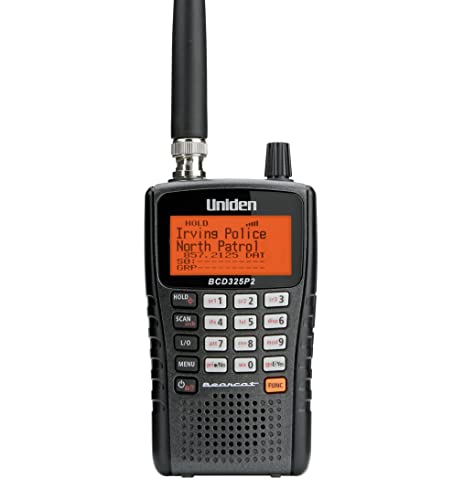
The Uniden BCD325P2 steps into digital territory. It supports APCO Project 25 Phase II, which means it can decode the trunked systems most large agencies use in 2026. Our team tested it across three different counties and it tracked digital conversations reliably. TrunkTracker V technology handled system handoffs smoothly, and the 25,000 dynamically allocated channels meant we never ran out of storage space for new frequencies.
Close Call RF Capture Technology works just as well here as on the BC125AT, but the real upgrade is GPS compatibility. With a GPS receiver attached, the BCD325P2 can enable location-based scanning — it automatically switches channel sets based on physical location. For anyone who travels between jurisdictions regularly, this is a massive convenience. The Quick-Key system with 100 keys also lets listeners toggle entire systems on or off instantly. We kept county fire on one key and state police on another, switching between them mid-drive without fumbling through menus.
Build quality is solid for a handheld. It fits in a jacket pocket and the rubberized body survived a few accidental drops during our testing. S.A.M.E. Weather Alert is a welcome addition — it acts as a dedicated weather radio when severe conditions roll in. The main drawback is programming complexity. Without the PC software, setting up trunked systems manually can be tedious, especially for first-time scanner owners.
Pros:
Cons:
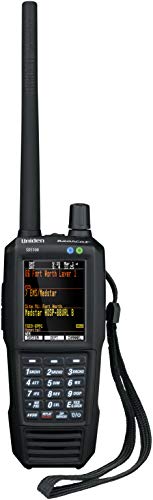
The Uniden SDS100 is Uniden's flagship handheld and it earned that title. True I/Q technology is the headline feature. Traditional scanners use discriminator-based decoding, which struggles in simulcast areas where multiple towers broadcast the same signal with slight timing differences. The SDS100 processes the raw radio signal with software-defined radio (SDR) techniques, reconstructing clean audio even when towers overlap. During our testing in a major metro area known for simulcast issues, the SDS100 decoded transmissions that the BCD325P2 dropped entirely.
The construction is rugged. JIS 4 weather resistance means it handles rain and splashing without worry. Our team used it outdoors during a week of mixed weather and the unit performed without issue. It supports P25 Phase I and II, DMR (Digital Mobile Radio), and NXDN — essentially every digital protocol currently deployed in North America. The scanner also ships with Uniden's database of known radio systems preloaded, making initial setup faster than older models.
There are trade-offs at this price point. The SDS100 requires its included charger — third-party chargers can damage the unit. Coverage varies by area, and some rural regions may not benefit from the advanced digital features. Programming can also be challenging for casual users. Uniden offers tech support, but the learning curve is steeper than simpler models. For serious monitoring enthusiasts or anyone in a difficult reception area, though, this is the handheld to beat in 2026. Think of it the same way performance-focused buyers approach AGM batteries — the premium cost reflects genuinely superior engineering under the hood.
Pros:
Cons:
The Uniden SDS200 takes everything the SDS100 does well and scales it up for base station or vehicle use. The 3.5-inch full-color display is the first thing that stands out. It is fully customizable — each field can be assigned a different color for quick visual identification. During extended monitoring sessions, this made a real difference. We could glance at the screen and instantly know which system and talkgroup was active without reading small text.
TrunkTracker X represents Uniden's most advanced trunking technology. It delivered the best digital decode performance we tested in this roundup. Simulcast areas that gave even the SDS100 occasional trouble were handled cleanly by the SDS200. The HomePatrol database comes preloaded with every known radio system in the United States and Canada. Uniden updates this database weekly through its free Sentinel software. Our team downloaded the latest update before testing and found newly added systems already included.
For home base stations, the SDS200 is the clear standout. The larger form factor accommodates a better speaker, better antenna connections, and direct 12V power for vehicle installations. It supports the same full protocol stack as the SDS100 — P25 Phase I/II, DMR, NXDN — with the added benefit of a bigger screen and superior audio output. The only real downside is cost and portability. This is not a pocket scanner. It is a dedicated monitoring station, and it is priced accordingly. For anyone setting up a fixed listening post at home or in a vehicle, the SDS200 is the top of the line in 2026.
Pros:
Cons:
The Whistler WS1040 fills an important gap. It offers P25 Phase I digital decoding at a price well below Uniden's digital handhelds. For buyers in areas that use Phase I trunking (not Phase II), this scanner covers the essentials without the premium cost. Our team found its reception quality acceptable on P25 conventional and trunked systems, though it lacked the I/Q processing finesse of the SDS100 in simulcast zones.
Programming the WS1040 is notably easier than many competitors. Whistler uses a menu-driven system with context-sensitive help text. Each menu item displays a few lines explaining what the setting does. For first-time scanner owners, this is a genuine advantage. We had the WS1040 programmed and scanning within about twenty minutes without consulting the full manual. The free-form memory organization is also a welcome design choice — memory is allocated dynamically as needed, rather than being locked into fixed banks like older scanners.
Scan List functionality lets listeners organize objects however they prefer. We grouped ours by priority — emergency services first, then aviation, then weather. S.A.M.E. Weather Alert rounds out the feature set. The main limitation is the lack of P25 Phase II support. As more agencies migrate to Phase II, the WS1040 will eventually lose coverage in those areas. But for 2026, many departments still run Phase I, and this scanner covers them reliably at a fair price.
Pros:
Cons:
The Whistler TRX-1 is Whistler's flagship handheld and a serious competitor to the Uniden SDS100. It supports APCO P25 Phase I and Phase II, DMR, and NXDN — the full digital protocol suite. The preloaded USA and Canada database means it scans right out of the box with the EZ Scan feature. Our team powered it on, selected the local zip code, and was hearing traffic within minutes. That ease of initial setup is a real strength.
What sets the TRX-1 apart is the extras. Audio recording stores up to 50 hours of radio traffic on the included 2GB MicroSD card. We used this during an extended severe weather event and later reviewed the recordings on a PC. Time-stamped playback made it simple to find specific transmissions. The tri-color LED alert system is another thoughtful touch. We programmed it to flash red for fire dispatch and blue for police, creating instant visual cues across the room. Programmable audible alarms add another layer — the scanner can even mimic emergency vehicle strobe patterns.
Scanlist management is flexible, with up to 200 customizable lists plus a dedicated Skywarn list for weather spotters. Objects can be assigned to multiple lists, which gave us more organizational control than any other handheld we tested. The TRX-1 handles real-world reception well, though it does not quite match the SDS100's I/Q processing in the most challenging simulcast environments. For most areas, however, the difference is negligible, and the recording and alert features tip the scale for many buyers.
Pros:
Cons:
The Whistler TRX-2 is the desktop and mobile counterpart to the TRX-1. It shares the same digital protocol support — Motorola, EDACS, LTR, and P25 trunked systems with both group and individual call monitoring. The EZ Scan software and preloaded database carry over as well, making initial setup just as painless. Where it differs is form factor and audio. The larger cabinet houses a better speaker, and the 12V input makes vehicle installation clean and simple.
We tested the TRX-2 as a home base station for two weeks. It quickly became a favorite for extended listening. The screen is easy to read at a distance, and the custom LED alerts — the same tri-color system as the TRX-1 — provided visual notifications across the room. Audio recording to the included 2GB SD card worked identically to the handheld. We recorded several overnight sessions and reviewed them the next morning, finding the time stamps invaluable for pinpointing specific incidents.
Advanced scanning features include automatic detection of nearby transmissions and quick tuning. The TRX-2 picked up local signals rapidly during testing, often locking onto new transmissions within seconds. Compared to the Uniden SDS200, the TRX-2 comes in at a lower price point while covering the same core protocols. The SDS200 still wins on raw simulcast decode performance and display customization, but the TRX-2 delivers strong value as a capable desktop scanner. For anyone weighing a reliable base unit against premium Uniden pricing, the TRX-2 deserves serious consideration. Much like choosing between premium and mid-range LED light bars, the right pick depends on how demanding the conditions actually are.
Pros:
Cons:
Before anything else, find out what radio systems local agencies use. The easiest way is to search the county or city on RadioReference.com. If the listing shows P25, DMR, or NXDN systems, an analog-only scanner will not work. Most urban and suburban departments have already migrated to digital trunking. Rural areas are more likely to still use analog conventional channels. Buying the wrong type is the single most common mistake new scanner owners make, and it is entirely avoidable with five minutes of research.
Handhelds offer portability and flexibility. They run on rechargeable batteries and can be carried anywhere. Desktop and mobile units trade portability for better audio, larger displays, and stronger reception with external antenna connections. For home use, a desktop model paired with an outdoor antenna will outperform any handheld. For travel, emergencies, or outdoor use, a handheld is the practical choice. Some serious listeners own both — a desktop for the home base and a handheld for on-the-go monitoring.
Simulcast is a system where multiple towers broadcast the same signal simultaneously. It extends coverage but creates decoding problems when a scanner receives overlapping signals from different towers. Standard scanners often produce garbled audio or drop the transmission entirely. True I/Q technology (found in the Uniden SDS100 and SDS200) processes the raw radio signal digitally and reconstructs clean audio. For anyone in a metro area with known simulcast issues, I/Q-equipped scanners are worth the premium.
Modern scanners ship with preloaded frequency databases covering the United States and Canada. This dramatically reduces setup time. EZ Scan (Whistler) and HomePatrol (Uniden) both let listeners start scanning by entering a zip code. For advanced users, PC software like Uniden's Sentinel or third-party tools like FreeSCAN offer full control over channel programming. Consider programming difficulty carefully — some scanners are plug-and-play, while others require hours of manual configuration to reach full potential.

In most U.S. states, owning and using a police scanner is perfectly legal. A few states restrict use in vehicles or while committing a crime. Federal law does not prohibit scanner ownership. However, it is illegal under federal law to use information from a scanner to aid in committing a crime or to interfere with law enforcement operations. Always check state and local regulations before purchasing, as some jurisdictions have specific permit requirements.
P25 Phase I uses a single channel per conversation (FDMA — Frequency Division Multiple Access). Phase II uses a technique called TDMA (Time Division Multiple Access) that fits two conversations onto one channel, effectively doubling capacity. Many agencies are migrating from Phase I to Phase II for efficiency. A Phase II-capable scanner can decode both phases, but a Phase I-only scanner cannot decode Phase II transmissions. For future-proofing, Phase II support is strongly recommended.
No. Coverage depends on two factors: the frequencies used locally and the scanner's capabilities. An analog scanner will not pick up digital systems. A digital scanner missing a specific protocol (like NXDN) will not decode those transmissions. Additionally, some agencies use encryption, which no consumer scanner can decode. Encrypted channels will appear as silence or static. Checking RadioReference.com for local system details before buying is the best way to ensure compatibility.
No. Federal law (the Electronic Communications Privacy Act of 1986) prohibits scanners from receiving cellular telephone frequencies. All scanners manufactured after 1994 have cellular frequencies blocked at the hardware level. This cannot be bypassed, and attempting to do so is a federal offense. Police scanners receive only public safety, aviation, marine, amateur radio, and other legally authorized broadcast frequencies.
Range depends on several factors: antenna quality, terrain, transmitter power, and whether the signal is analog or digital. A handheld scanner with its stock antenna typically receives signals from 5 to 25 miles in flat terrain. A desktop scanner with an external antenna mounted on a roof can reach 40 to 60 miles or more. Buildings, hills, and dense foliage all reduce range. Digital signals tend to be either clear or absent — there is no gradual fade like with analog.
It depends on local radio systems. For areas still using analog, the Uniden BC125AT is the simplest and most affordable option. For areas using digital P25 systems, the Whistler WS1040 offers budget digital decoding with beginner-friendly menu programming. The Whistler TRX-1 is the best mid-range option with its EZ Scan database and zip code setup. Beginners should avoid the SDS100 and SDS200 unless comfortable with a steeper learning curve and advanced programming.
Every scanner on this list serves a different type of listener. The right choice comes down to local radio systems, budget, and how deeply anyone wants to get into the hobby. Start by checking what frequencies local agencies use, decide between handheld and desktop, and match the scanner's capabilities to those needs. Whichever model ends up on the desk or in the pocket, staying informed about what is happening in the community starts with the right equipment — and any of these seven scanners can get the job done well in 2026.
 |
 |
 |
 |

About Liam O'Brien
Liam O'Brien has spent over a decade buying, field-testing, and evaluating automotive tools with a focus on what actually performs in a real DIY garage rather than what markets well on a spec sheet. His hands-on experience spans hand tools, diagnostic equipment, floor jacks, socket sets, and specialty automotive gear across a wide range of brands and price points. At CarCareTotal, he covers automotive tool and equipment reviews, garage setup guides, and buying advice for home mechanics.
Get some FREE car parts & gear.. Or check out the latest free automotive manuals and build guides here.
Disable your ad blocker to unlock all the hidden deals. Hit the button below 🚗
| | | |
