Car Care ›
by Diego Ramirez
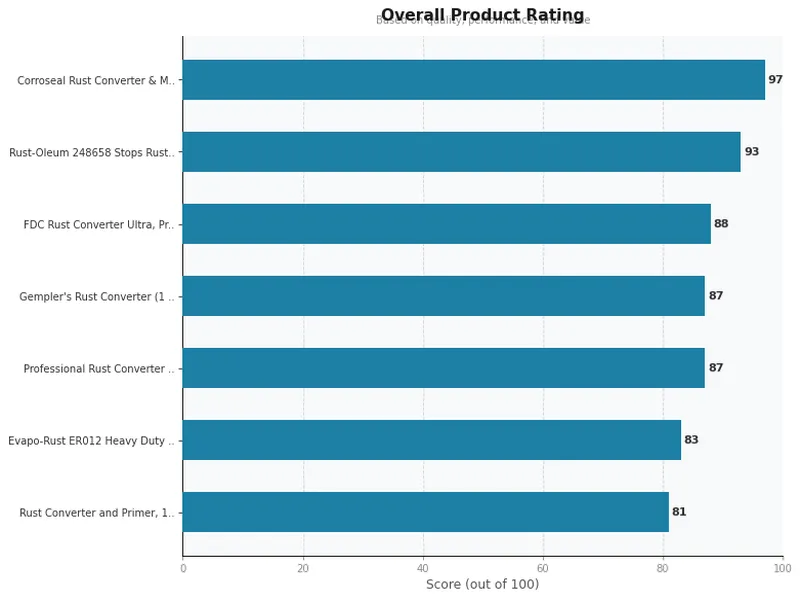
Which rust converter actually stops corrosion dead in its tracks — and which ones just paint over the problem? After testing and researching the top formulas on the market in 2026, our pick is the Corroseal 82320 Water-Based Rust Converter for its dual-action primer and converter formula that outperforms the competition on bare metal surfaces.
Rust converters work by chemically transforming iron oxide (rust) into a stable compound, typically iron tannate, that seals the surface and prevents further oxidation. They save you hours of grinding, sandblasting, and wire-brushing. For anyone doing car care and maintenance on vehicles, trailers, or outdoor equipment, a quality rust converter is one of the most cost-effective investments you can make. The key is choosing the right formula for your specific application — spray vs. brush-on, water-based vs. oil-based, and coverage per gallon all matter.
We evaluated seven of the best-selling rust converters of 2026 based on conversion speed, surface adhesion, coverage area, ease of application, and long-term corrosion protection. Whether you need to treat a small patch on your car frame or an entire piece of industrial equipment, this guide breaks down exactly which product fits your needs.
Contents






Corroseal 82320 is the gold standard in water-based rust converters. It handles three jobs in one step: converting rust, priming the surface, and laying down a protective latex barrier. You brush or roll it on, and the tannic acid formula reacts with iron oxide to form a stable black coating. The result is a surface ready for topcoat paint within 24 hours.
Performance on heavily rusted surfaces is where Corroseal separates itself. The formula penetrates deep into pitted metal, reaching rust that wire brushing would miss. Coverage is solid at roughly 200 square feet per quart on smooth surfaces, though heavily textured or deeply corroded metal will use more product. The water-based formula means cleanup is soap and water — no harsh solvents needed.
One thing to note: Corroseal works best on actual rust. On clean or lightly oxidized metal, it can leave a tacky residue. Apply it to surfaces with moderate to heavy rust for the best chemical reaction and the hardest final finish. If you're restoring a vehicle frame, trailer, or any steel structure exposed to the elements, this is the product to start with.
Pros:
Cons:
Rust-Oleum's Stops Rust Reformer is the go-to aerosol option. Point, spray, and the oil-based formula bonds directly with rusted metal. It converts rust into a flat black, paintable surface in minutes. Tack-free time is 20 to 40 minutes. You can apply a topcoat after 24 hours.
The spray format is this product's biggest advantage. It reaches tight corners, undercarriage crevices, and hard-to-brush areas that liquid converters struggle with. The 10.25 oz can covers roughly 12 to 15 square feet depending on rust severity. For spot treatments on vehicle panels, wheel wells, and exhaust components, the precision of a spray nozzle beats a brush every time.
The oil-based formula creates a stronger initial bond with rusted surfaces compared to many water-based alternatives. However, cleanup requires mineral spirits or paint thinner. The matte black finish is functional, not decorative — plan on a topcoat if appearance matters. This is a problem-solver for targeted rust areas, not a whole-structure solution. If you're also working on protecting your truck bed from corrosion, pair this with a quality bedliner for full coverage.
Pros:
Cons:
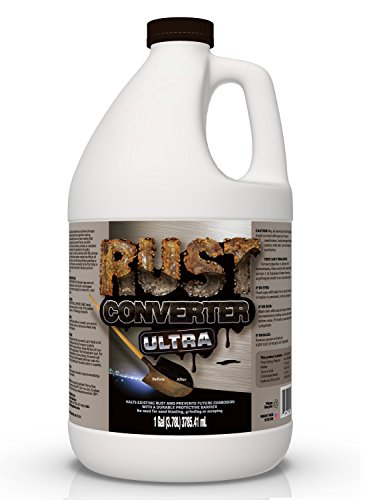
FDC Rust Converter Ultra is built for big jobs. The one-gallon size covers up to 500 square feet on smooth, non-porous surfaces. That's enough for a full dumpster, a large trailer, or an entire vehicle undercarriage with product to spare. For professional shops and serious DIYers tackling fleet maintenance, the cost-per-square-foot is hard to beat.
The formula converts rust into an inert black coating that seals out moisture. According to research on rust converter chemistry, tannic acid-based formulas like this one create iron tannate — a stable compound that stops the oxidation cycle. FDC's version is marketed as professional grade, and the coverage numbers support that claim. It eliminates the need for sandblasting, grinding, or scraping on moderately rusted surfaces.
Application is straightforward. Brush, roll, or spray it on. Two coats are recommended for maximum protection. The water-based formula is low-odor and cleans up easily. The gallon format does mean you need your own applicator — no brush or sprayer is included. For small patch jobs, this is overkill. But for large-scale rust remediation, FDC Ultra delivers the best value per square foot of any product on this list.
Pros:
Cons:
Gempler's stands out for one specific reason: you don't always have to paint over it. The converted surface can be left unpainted if it's not exposed to direct weather. That makes it ideal for indoor equipment, sheltered steel structures, tool storage, and machinery housed in garages or shops. Most competitors require a topcoat for lasting protection — Gempler's gives you the option to skip it.
The water-based formula is environmentally safe and non-flammable. Cleanup is simple with water. Two coats are recommended for optimum coverage, which is standard for this product category. The gallon size provides enough product for mid-to-large projects. Coverage depends heavily on surface porosity and rust severity, but expect similar rates to other gallon-size converters.
For outdoor applications exposed to rain, snow, or high humidity, you should still apply a topcoat. The "leave unpainted" advantage only applies to sheltered environments. If you're treating rust on a garage workbench or indoor racking system, Gempler's saves you a step that other products can't. For vehicle exteriors or exposed trailers, stick with a full paint system.
Pros:
Cons:
Loctite Extend delivers solid rust conversion at a price point that undercuts most competitors. The 8 oz bottle is small, but it's perfect for targeted repairs — spot-treating rust patches on body panels, tools, hinges, and hardware. The formula chemically converts rusted metal into a neutral black polymer surface that accepts oil or lacquer-based topcoats.
Application is dead simple. Brush it on, let it dry, then paint. The converted surface forms a tough polymer barrier that bonds well with most paints. Loctite's brand reputation carries weight here — this is a proven formula from one of the most recognized names in adhesives and surface treatments. The 8 oz size means you're not paying for a gallon you'll never use on small repairs.
The trade-off is coverage. At 8 oz, you're limited to small-to-medium repair areas. If you need to treat an entire vehicle frame or large piece of equipment, the per-ounce cost adds up fast compared to gallon options like FDC or Gempler's. But for the home mechanic keeping rust in check on tools, small auto parts, and workshop equipment, Loctite Extend hits the sweet spot between performance and price.
Pros:
Cons:
T9TDCS markets itself as a zero-prep rust solution, and it mostly delivers. No sanding. No separate primer. Apply it directly to rusty metal, and the formula converts rust into a stable black protective coating that doubles as a primer for topcoat paint. For car frames, chassis, tools, fences, railings, and marine equipment, this two-in-one approach cuts your labor time roughly in half.
The formula acts as a rust reformer, neutralizer, and primer simultaneously. It chemically converts rust while forming a durable anti-rust barrier that stops corrosion from spreading. The 5.29 oz size is compact — suited for spot treatments and small repairs rather than full-scale projects. Think of it as a toolbox-ready solution for catching rust early before it becomes a structural problem.
The "no sanding needed" claim holds up on light to moderate rust. On heavy, flaking scale, you'll still want to knock off the loose material with a wire brush before applying. No chemical converter can bond to rust that's already detaching from the base metal. But for the typical surface rust you find on daily-driven vehicles and outdoor metal fixtures, T9TDCS eliminates the worst part of rust repair: the prep work.
Pros:
Cons:
Permatex 81849 is purpose-built for automotive rust treatment. The 10.25 oz aerosol can is designed for cars, trucks, and any vehicle where rust threatens structural integrity or appearance. Spray it on, and within minutes, visible rust transforms into a durable black polymer coating. The speed of this reaction is one of the fastest in this category.
Permatex is a brand that professional mechanics know well. Their rust treatment formula is formulated specifically for automotive applications — it handles the vibration, heat cycling, and moisture exposure that vehicle components face daily. The aerosol delivery works well on undercarriage components, suspension parts, and body seams where brush application is impractical. If you're also maintaining your vehicle's appearance, you might want to check out our guide on headlight restoration kits while you're at it.
Like the Rust-Oleum spray, coverage per can is limited. You're paying a premium for the aerosol convenience. For spot treatments and targeted auto repairs, the price is reasonable. For treating an entire truck frame, you'd burn through multiple cans — at which point a gallon of brush-on converter makes more financial sense. Use Permatex for precision automotive work where the spray format justifies the cost.
Pros:
Cons:
Your application method depends on the job. Aerosol sprays (Rust-Oleum, Permatex) are best for tight spaces, undercarriage work, and spot treatments where precision matters. Brush-on liquids (Corroseal, FDC, Gempler's) cover large flat surfaces more efficiently and cost less per square foot. If you're treating a fence, trailer, or equipment frame, a brush or roller saves time and money. For wheel wells and suspension components, a spray gets into crevices a brush can't reach.
Match the product size to your project scope:
Buying a gallon for a small patch wastes product and money. Buying 8 oz cans for a trailer-sized job wastes time and costs three times as much per ounce. Size the product to the task.
Water-based formulas (Corroseal, FDC, Gempler's, Loctite) clean up with soap and water. They're non-flammable, low-odor, and safer in enclosed spaces. Oil-based formulas (Rust-Oleum) create a stronger initial bond with rusted surfaces but require solvent cleanup and produce stronger fumes. For garage and indoor work, water-based is the clear choice. For outdoor automotive work where ventilation isn't an issue, oil-based formulas offer a marginal edge in adhesion.
Not all rust converters play well with all paints. Loctite Extend works only with oil or lacquer-based topcoats. Corroseal accepts most latex and oil-based paints. Gempler's can be left unpainted indoors. Before buying, confirm the converter is compatible with your planned topcoat system. Applying a latex paint over an oil-based converter — or vice versa — can cause peeling, bubbling, and adhesion failure that defeats the entire purpose of the treatment.
Rust converters stop active rust by chemically converting iron oxide into iron tannate or a similar stable compound. This halts the oxidation process on treated surfaces. However, no converter provides permanent protection on its own. Exposed metal can develop new rust adjacent to treated areas. For lasting results, apply a topcoat paint or sealant over the converted surface to block moisture and oxygen from reaching bare metal.
Rust converters need direct contact with iron oxide to work. They will not convert rust beneath intact paint. You must remove loose, flaking, or bubbling paint to expose the rusted metal before applying the converter. Intact paint adjacent to the treatment area is fine — the converter will only react with exposed rust. For best results, use a wire brush or scraper to remove loose material, then apply the converter to the bare rusted surface.
Drying times vary by formula. Aerosol products like Rust-Oleum and Permatex are tack-free in 20 to 40 minutes. Brush-on liquid converters like Corroseal and FDC typically need 24 hours to fully cure before topcoating. Temperature and humidity affect dry time significantly. Cold or humid conditions can double cure times. Always follow the manufacturer's recommended drying schedule before applying paint or sealant over the treated surface.
Yes. Rust converters work on surface rust that is still bonded to the base metal. Heavy, flaking scale that is actively detaching must be removed first. A wire brush, scraper, or grinder handles this quickly. You do not need to remove all rust down to bare metal — that defeats the purpose of using a converter. Remove the loose material and let the converter handle the remaining bonded rust layer.
Rust removers dissolve and strip rust completely, leaving bare metal that must be immediately primed and painted to prevent new oxidation. Rust converters chemically transform rust into a protective coating, sealing the surface. Converters are faster and require less mechanical prep. Removers give you a cleaner starting surface for high-end finishing work. For most maintenance and repair applications, converters are the more practical choice because they save labor and provide built-in corrosion protection.
No. Rust converters are formulated to react with iron oxide, which only forms on iron and carbon steel surfaces. Aluminum oxidizes differently (forming aluminum oxide), and stainless steel resists oxidation due to its chromium content. Applying a rust converter to aluminum or stainless steel will not produce the intended chemical reaction and may leave an unwanted residue. Use products specifically designed for aluminum corrosion if you're treating non-ferrous metals.
 |
 |
 |
 |

About Diego Ramirez
Diego Ramirez has been wrenching on cars since his teenage years and has built a deep practical knowledge of automotive maintenance and paint protection through years of hands-on work. He specializes in fluid service intervals, preventive care routines, exterior protection products, and the consistent habits that extend a vehicle's lifespan well beyond average. At CarCareTotal, he covers car care guides, cleaning and detailing products, and exterior maintenance and protection reviews.
Get some FREE car parts & gear.. Or check out the latest free automotive manuals and build guides here.
Disable your ad blocker to unlock all the hidden deals. Hit the button below 🚗
| | | |
