by Marcus Chen
You're standing in the auto parts aisle, staring at a wall of serpentine belts, and they all look identical. Your old belt is squealing at cold starts, maybe cracking along the ribs, and you just need one that fits your application and lasts. The wrong pick means premature wear, annoying noise, or worse — a roadside breakdown when the belt snaps and takes your power steering, A/C, and alternator with it.
We've tested and researched the top serpentine belts on the market in 2026 to help you cut through the clutter. Whether you drive a daily commuter, a heavy-duty truck, or a weekend project car, this guide covers the seven best options across every budget and use case. From Gates and Dayco to Goodyear and Continental, we'll break down exactly what makes each belt worth your money — and which ones to skip for your specific setup.

A serpentine belt is one of those parts you forget about until it fails. It drives your alternator, power steering pump, A/C compressor, and sometimes the water pump — all from a single ribbed belt routed through multiple pulleys. Modern EPDM belts don't crack like older neoprene versions. They wear gradually, losing rib material until they slip. That makes visual inspection unreliable. You need to either measure rib depth with a gauge or replace on schedule. Most manufacturers recommend 60,000–100,000 miles, but conditions vary. Let's get into the picks.
Contents
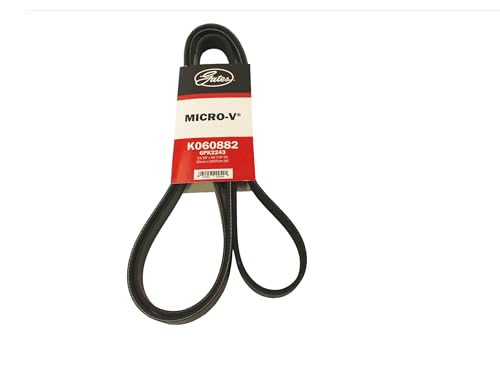







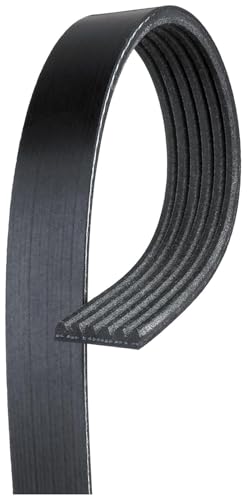


Gates is the OE supplier for a massive chunk of the automotive market, and the K060882 shows why. This Micro-V belt uses Gates' proprietary EPDM compound that resists heat degradation, ozone cracking, and the gradual rib wear that plagues lesser belts. The construction is tight — consistent rib geometry across the full length, clean edges, and a flex profile that seats into pulleys without any break-in noise. If you want a drop-in replacement that matches or exceeds what came on your car from the factory, this is it.
Where the Gates really separates itself is longevity under thermal cycling. Repeated hot-cold cycles are what kill serpentine belts over time, and Gates' rubber compound handles that stress better than most competitors in the same price bracket. The belt tracks true even on systems with slight pulley misalignment — something that causes cheaper belts to chirp or squeal within weeks. For most drivers, this belt will go the full 90,000+ miles without drama.
The only real knock is that Gates belts tend to run slightly stiffer out of the box compared to Dayco or Bando. That means your automatic tensioner works a bit harder during the first few hundred miles. It's not a problem on a healthy tensioner, but if yours is already weak, you might notice. Overall, the K060882 is the belt we'd put on our own cars without hesitation.
Pros:
Cons:
Dayco has been making belts since 1905, and the 5060908 Poly Rib is a no-nonsense workhorse for drivers who want reliability without paying premium prices. This belt uses Dayco's Poly-Rib construction with an EPDM rubber compound that handles the thermal demands of modern engine bays. The ribs are well-formed and the belt flexes smoothly around pulleys — no stiffness complaints out of the box like you sometimes get with stiffer competitors.
Installation is straightforward. The belt seats into the pulley grooves cleanly and the tensioner takes up slack without any issues. Noise performance is solid for the price point — you won't hear chirping during cold starts unless you have an underlying tensioner or alignment problem. Dayco rates this belt for standard duty cycles, and it delivers exactly that. It's not going to outperform a Gates in extreme heat conditions, but for the vast majority of daily drivers in moderate climates, it's more than adequate.
Where the Dayco falls short is in the premium-feel department. The packaging is basic, fitment data is sparse, and the rubber compound doesn't have the same high-temp resilience as Gates or Continental's top-tier options. If you're running a turbocharged engine with tight belt routing and high underhood temps, spend up. But for a naturally aspirated commuter car? The Dayco 5060908 is the smart money pick. Similar to how you'd pick a solid ball joint based on your actual driving demands rather than overkill specs, match your belt to your real-world conditions.
Pros:
Cons:
Bando is a Japanese manufacturer that supplies OE belts to Honda, Toyota, Subaru, and Nissan — so when they say "OEM Quality," they're not exaggerating. The 6PK2135 features their proprietary "Run Quiet" technology, which uses ground rubber ribs (not molded) for a more precise profile that grips pulleys with less vibration. The result is genuinely noticeable: this is one of the quietest serpentine belts you can buy in 2026.
The high-strength tensile cords are a standout feature. They carry heavy accessory loads without stretching over time, which means your tensioner stays in its optimal operating range longer. The synthetic rubber compound is formulated for wear resistance, and Bando's ground-rib process creates a surface finish that bites into pulley grooves more uniformly than molded alternatives. If you've ever had a belt that squealed intermittently despite proper tension, the Bando is your fix.
The trade-off is availability. Bando doesn't have the retail distribution footprint of Gates or Dayco, so finding the exact part number for your application can take more effort. Their online fitment tools aren't as polished either. But if you can confirm the 6PK2135 fits your vehicle, it's a premium belt that delivers OE-level quiet performance at an aftermarket price. Particularly worth considering if you drive a Japanese vehicle that came with a Bando belt from the factory.
Pros:
Cons:

Continental is another major OE supplier, and the 4060885 is built to that standard. This 6-rib, 88.5-inch belt uses straight-ribbed construction that professional technicians trust for consistent performance across a wide range of applications. The "OE Technology" branding isn't just marketing — Continental's construction and compounding upgrades in recent years have genuinely improved durability and noise characteristics over their older designs.
What sets this belt apart is its balance of flexibility and strength. The rib compound is engineered to resist cracking at high temperatures while maintaining enough pliability to wrap around tight pulley configurations without excess stress. For vehicles with complex accessory drive layouts — think full-size trucks and SUVs with A/C, power steering, and dual alternators — that flexibility matters. The belt runs quieter than you'd expect from a straight-rib design, and Continental's improved compounding reduces the harmonic vibrations that can develop at highway RPMs.
Professional shops stock Continental belts for a reason: consistent dimensions, reliable fitment, and minimal comebacks. The 4060885 is a "fit it and forget it" belt. The only downside is that Continental's part numbering system can be confusing if you're cross-referencing from another brand. Double-check your application with their online tool or a parts counter lookup before ordering. If you're doing your own performance maintenance, this belt won't let you down.
Pros:
Cons:
If you drive a GM vehicle, ACDelco should be your first stop. The Gold 6K882 is a premium aftermarket replacement that meets GM's original specifications. Previously sold under the ACDelco Professional line (same belt, rebranded), the Gold series drives your alternator, power steering, A/C compressor, and water pump with the same reliability as the factory belt. For Chevy, GMC, Buick, and Cadillac owners, this is the closest thing to an OE replacement without buying from the dealer.
The belt construction is straightforward and effective. Clean rib profiles, consistent thickness, and a rubber compound that holds up well to the thermal cycling common in GM's engine bay layouts. ACDelco doesn't publicize proprietary noise-reduction technology like Bando or Continental, but in practice, the 6K882 runs quietly on properly maintained tensioner systems. It's a belt that does its job without any drama — exactly what you want from a wear item.
The limitation is that ACDelco belts are engineered primarily for GM applications. While the part number might cross-reference to other makes, you're better served by Gates or Bando for Japanese vehicles, or Continental for European applications. Stick with ACDelco for what it does best: GM powertrain accessories. At its price point, it's a solid value that gives you peace of mind on your next long road trip — just make sure your brake pads are in similar shape before you hit the highway.
Pros:
Cons:
The Gatorback line is Continental's premium offering, and the 4081190 brings their Quiet Channel technology to the table. This isn't a marketing gimmick — the staggered-cog profile on the back of the belt combined with advanced rubber compounds virtually eliminates the noise associated with pulley misalignment. If you've been chasing a belt squeal that won't go away regardless of tension adjustment, the Gatorback is built to solve exactly that problem.
High-strength tension members give the Gatorback superior wear resistance compared to standard Continental belts. The belt maintains its dimensional stability over tens of thousands of miles, which means consistent tension and consistent accessory drive performance throughout its service life. The Quiet Channel design works by breaking up the harmonic frequencies that cause belt noise, rather than just relying on a tighter grip. It's an engineering approach rather than a brute-force one, and it works.
This is Continental's top-shelf belt, and the price reflects that. You'll pay more than a standard Poly-V or an equivalent Gates Micro-V. But if belt noise is your primary complaint — especially on vehicles with long serpentine routes and multiple idler pulleys where misalignment accumulates — the Gatorback pays for itself in frustration saved. It's also a strong choice for vehicles with known tensioner issues where you're trying to extend the time between full tensioner replacements. You get quiet, reliable operation even when the system isn't perfectly dialed in.
Pros:
Cons:
Goodyear brings their tire-industry rubber expertise to the serpentine belt market, and the 1060842 is a focused product for specific Acura and Ford applications. This 6-rib, 84.2-inch belt uses EPDM rubber with balanced twist polyester cord — a construction that delivers strong power transmission with reduced noise and vibration. The fitment list is precise: 2003–2013 Acura MDX, RL, TL, and ZDX models, plus 2020–2022 Ford F-53 and F-59 chassis. If your vehicle is on that list, this belt was engineered with your exact pulley layout in mind.
The balanced twist polyester cord is worth highlighting. Unlike standard cord constructions that can create uneven tension across the belt width, Goodyear's twisted cord distributes load more evenly. This translates to smoother operation and less vibration transmitted through the accessory drive system. For the Acura V6 engines this belt fits, which are known for smooth operation, maintaining that refinement through the accessory drive matters. The EPDM compound handles heat well and resists the gradual wear that causes belt slip over time.
The narrow fitment range is both a strength and a limitation. Goodyear engineered this belt for specific applications, which means the dimensions and flex characteristics are optimized. But if your vehicle isn't on the list, don't try to make it work. Cross-referencing Goodyear belt part numbers to other applications is less straightforward than with Gates or Dayco. For Acura owners who also maintain other components with quality parts — like choosing the right ignition coils — the Goodyear 1060842 fits right into a thoughtful maintenance strategy.
Pros:
Cons:

Choosing a serpentine belt isn't complicated, but getting the wrong one means noise, premature failure, or accessory damage. Here's what actually matters when you're shopping in 2026.
Every belt on this list uses EPDM (ethylene propylene diene monomer) rubber, and yours should too. Neoprene belts are obsolete technology. They crack visibly when they wear out, which made them easy to inspect but gave them shorter service lives — typically 40,000–60,000 miles. EPDM belts last 90,000–100,000 miles but wear differently. They lose rib material gradually, reducing grip without visible cracking. You need a belt wear gauge to check them properly.
If your parts store tries to sell you a neoprene belt in 2026, walk out. Every modern vehicle is designed for EPDM. The rubber compound within the EPDM category varies by manufacturer — Gates, Continental, and Bando each have proprietary formulations that affect heat resistance, noise, and longevity. But the baseline is EPDM. Period.
Serpentine belts are application-specific. Length, rib count, and width must match your vehicle's pulley system exactly. A belt that's half an inch too long won't tension properly. One rib too few and it won't seat in the pulleys. Always verify fitment by VIN or year/make/model/engine before ordering.
Cross-referencing between brands is common and generally reliable. A Gates K060882 and an ACDelco 6K882 serve similar applications with the same rib count and approximate length. But "approximate" can bite you. Use the manufacturer's online fitment tool or a trusted parts database. Don't guess based on part number similarity alone.
Belt squeal is the number one complaint that drives replacement. Most squealing comes from slip — either the belt is worn, the tensioner is weak, or there's pulley misalignment somewhere in the system. A new belt fixes the first cause but not the other two. However, some belts handle imperfect conditions better than others.
Bando's "Run Quiet" ground-rib technology and Continental's Gatorback "Quiet Channel" design are specifically engineered to minimize noise even when alignment isn't perfect. If you're replacing a belt on a high-mileage vehicle where the tensioner is still within spec but not fresh, these noise-reduction features are worth the premium. If your tensioner and pulleys are new, any quality EPDM belt will run quiet.
For serpentine belts, the OE vs. aftermarket distinction is less meaningful than with many other parts. Gates, Continental, Bando, and Dayco all supply OE belts to major automakers. When you buy their aftermarket versions, you're often getting the same belt — same factory, same compound, same construction — in different packaging. ACDelco Gold belts are the GM OE specification in an aftermarket box.
Where OE matters is matching the belt to the vehicle's design assumptions. A Toyota designed with Bando belts will perform optimally with a Bando replacement. A GM vehicle designed around ACDelco specs will run best with ACDelco. This isn't a hard rule — a Gates belt works perfectly well on a Toyota — but if all else is equal, matching the OE supplier removes one variable from the equation.
Most manufacturers recommend replacement between 60,000 and 100,000 miles, depending on the vehicle and driving conditions. Modern EPDM belts don't crack like older neoprene versions, so visual inspection alone isn't reliable. Use a belt wear gauge to measure rib depth — if the gauge sits flush in the grooves, the belt is worn and needs replacement regardless of mileage.
You lose power steering, the alternator stops charging, and the A/C compressor shuts off immediately. On vehicles where the serpentine belt drives the water pump, you'll also lose engine cooling and need to pull over within minutes to avoid overheating. The engine itself keeps running, but you'll have heavy steering, a dead battery within minutes, and potentially a dangerous loss of power braking assist if the vacuum pump is belt-driven.
Temporarily, yes. Belt squeal is usually caused by slip from wear, a weak tensioner, or pulley misalignment — not imminent failure. But a slipping belt means your accessories aren't running at full capacity. Your alternator won't charge properly, your A/C will be weak, and the belt is wearing faster. Fix the squeal promptly. If the belt is glazed or has visible rib loss, replace it before it fails completely.
No. While all modern belts use EPDM rubber, the specific compound formulations, cord materials, and manufacturing processes vary significantly. OE suppliers like Gates, Continental, and Bando invest heavily in noise reduction, heat resistance, and wear characteristics. Budget-brand belts may use lower-grade EPDM that wears faster under thermal cycling. Stick with established manufacturers for reliability.
If the tensioner has more than 100,000 miles on it, yes. A weak tensioner won't maintain proper belt tension, causing slip, noise, and premature belt wear — even with a brand new belt. Test the tensioner by checking for smooth arm movement and proper spring tension. If it bounces at idle or doesn't hold steady tension, replace it with the belt. Doing both at once saves labor.
For longevity and noise, yes. A Gates or Continental belt will consistently outlast generic alternatives and run quieter on systems with minor alignment issues. For basic functionality on a well-maintained system, the differences between major brands are smaller. The biggest mistake is buying the wrong size, not the wrong brand. Get the fitment right first, then choose a reputable brand within your budget.
Your serpentine belt is a single point of failure for every engine accessory you rely on daily. Don't gamble on it. If you want the safest all-around pick, go with the Gates K060882 — it's OE-grade quality that fits most applications and lasts. For noise-sensitive setups, the Bando 6PK2135 or Continental Gatorback will keep things silent even on imperfect systems. Match the belt to your vehicle, replace the tensioner if it's tired, and you'll get 90,000 worry-free miles out of whichever belt you choose. Check the prices above and get it done this weekend.
 |
 |
 |
 |

About Marcus Chen
Marcus Chen has over twelve years of hands-on experience modifying cars across a range of platforms — from commuter builds to track-focused setups — with deep expertise in suspension tuning, wheel and tire fitment, and performance upgrades that improve driving dynamics without sacrificing day-to-day reliability. He has worked with both bolt-on and engineered modifications and brings a methodical, results-focused approach to evaluating performance parts. At CarCareTotal, he covers performance upgrades, suspension and handling, and wheel, tire, and drivetrain modifications.
Get some FREE car parts & gear.. Or check out the latest free automotive manuals and build guides here.
Disable your ad blocker to unlock all the hidden deals. Hit the button below 🚗
| | | |
