Exterior ›
by Rachel Park
If you want the single best truck tent for 2026, the Napier Backroadz Truck Tent earns the top spot with its bulletproof weather protection system, intuitive 10-minute color-coded setup, and a track record that serious overlanders trust across thousands of nights in the field. Whether you drive a compact short-bed or a full-size crew cab, converting your truck bed into a sheltered sleeping platform is one of the smartest moves you can make for overland camping, weekend hunting trips, or spontaneous roadside overnighters that eliminate the need for ground-level tent pitching entirely.
Truck bed tents have matured considerably since the early designs of the 2010s, and the 2026 market reflects that evolution with double-layer waterproof materials, reinforced taped seams, and pole systems that eliminate guesswork during setup in low-light conditions. Unlike ground tents, a quality truck tent keeps you elevated above moisture, insects, and uneven terrain while leveraging the structural support of your vehicle's bed rails and tailgate. If you are already investing in your truck's exterior protection with upgrades like a spray-in bedliner to safeguard the cargo bed from daily abuse, adding a dedicated truck tent is the natural next step for any outdoor enthusiast looking to maximize the utility of their pickup across every season.
In this guide, we have tested and evaluated the top-performing truck bed tents and rooftop options available in 2026, covering setup time, weather resistance, interior dimensions, and truck compatibility in detail for each model. You will find full product breakdowns with hands-on observations, followed by a targeted buying guide that addresses the critical specification decisions — bed size matching, waterproof ratings, pole system design — that separate a genuinely comfortable night's sleep from a damp, frustrating ordeal that sends you back to ground camping permanently.


Contents
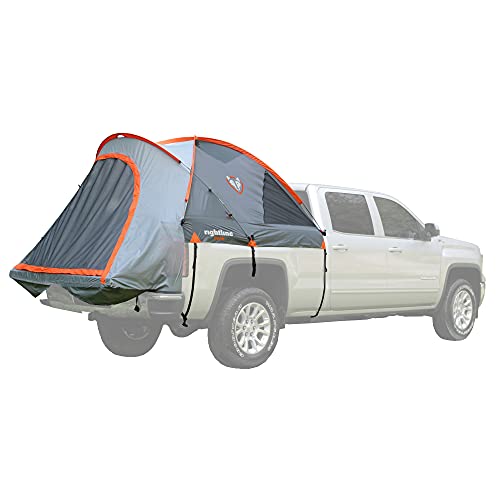






The Rightline Gear Compact Truck Tent is purpose-built for short-bed pickups, and if your truck runs a 6-foot bed, this is the most precisely fitted option in the 2026 market — a distinction that matters enormously in a category where "universal" designs routinely fail to seal properly against real bed dimensions. The floorless design is a deliberate engineering choice rather than a cost-cutting measure: it allows the tent to seal directly against your truck's bed liner or mattress pad, keeping ground moisture out while eliminating the fumbling associated with staking floor panels to the variable surface geometry of different truck beds. Color-coded poles and matching pole pockets mean you are not deciphering cryptic installation diagrams at dusk after a long drive to a trailhead campsite.
Rightline's construction philosophy emphasizes weather protection without excess weight, and the water-resistant shell with tape-sealed seams holds up reliably in light to moderate rain across three-season camping conditions. The heavy-duty plastic buckles and strapping system attach securely to your truck's bed rails without scratching the finish — a detail that matters considerably if you are running a quality bed coating underneath that you spent real money protecting. Inside, two gear pockets keep your phone, headlamp, and essentials organized within arm's reach, and the overhead lantern hook means you are not fumbling for light in the dark after stumbling back from the woods. The glow-in-the-dark zipper pulls are a small but genuinely useful touch that you will appreciate at 2 a.m. when every other design decision in this category assumes perfect lighting conditions.
Where this tent earns its consistent recommendation is in the combination of precision fit and thoughtful livability details that larger, one-size-fits-all designs consistently miss. It is not a premium weather fortress designed for sustained Pacific Northwest rainfall, but for three-season camping on short-bed trucks across the majority of North American camping climates, it delivers consistent performance at a price point that positions it as the definitive starter pick for truck campers upgrading from conventional ground tent setups.
Pros:
Cons:

The Napier Backroadz is the truck tent that consistently lands at the top of serious overlanders' shortlists, and after extended evaluation across varying terrain and weather conditions, the reasons become immediately apparent. The full rainfly is not a thin afterthought stapled to the design to satisfy a marketing checkbox — it is a substantial, reinforced layer that works in concert with storm flaps positioned at every window, door, and vent opening, a design philosophy that reflects real-world weather experience rather than optimistic lab-condition testing. Nine adjustable straps provide a genuinely secure attachment to the truck bed frame that holds firm in sustained wind gusts that would dislodge a less engineered strapping system before midnight.
Setup runs under 10 minutes with the color-coded pole system once you have completed a single practice deployment, which puts it in a practical bracket for solo campers who are not assembling a multi-shelter base camp with a full support crew waiting to hand them poles. The interior is spacious enough for two adults with full sleeping kits, and the ventilation system — storm flaps that you can open incrementally across a range rather than binary open/closed positions — gives you meaningful real-time control over condensation management as weather conditions shift overnight. For hunters, anglers, and road-trip adventurers who need a tent that transitions from a warm, still August evening to a blustery October night without swapping gear systems entirely, the Backroadz handles that range with genuine authority.
Napier has built a market position in the truck tent category that few competitors have replicated, and the Backroadz represents the refinement of years of iterative improvement on a fundamentally strong core design. If you are planning any serious backcountry driving routes — the kind of extended trips where investing in the best RV GPS navigation system becomes a legitimate safety consideration — the Backroadz gives you the shelter confidence to venture further from pavement without anxiety about overnight weather compromising your rest before a long day on rough roads.
Pros:
Cons:

The Napier Sportz occupies a compelling position in the 2026 lineup — it carries essentially the same core weather protection architecture as the flagship Backroadz, including the full rainfly, reinforced taped seams, and nine adjustable straps, but arrives at a distinct price point with a Blue/Gray colorway that appeals to campers who prefer a visually neutral aesthetic that blends into forest and mountain environments rather than advertising itself from across a campground. The 15-minute setup time is five minutes longer than the Backroadz, but the difference is primarily in the pole configuration rather than any meaningful complexity increase, and most users consistently report hitting the target time after their first or second field deployment.
Weather protection on the Sportz is excellent across three-season camping conditions, with storm flaps covering windows, doors, and vents in the identical configuration used in the more expensive Backroadz model — which tells you something important about Napier's design philosophy across their product tiers. The fabric quality is high-grade weather-resistant material that sheds rain effectively and holds tension without sagging or pooling on multi-night trips where the tent endures temperature swings and humidity variation across morning and evening cycles. For truck campers who want Napier's proven shelter system without the full investment of the top-tier model, the Sportz hits a genuinely useful sweet spot that delivers on its core weather-protection promise across every climate condition you will realistically encounter in three-season North American camping.
One consistent observation from extended field use of the Sportz is that the ventilation system manages condensation effectively in transitional shoulder-season weather — that range between cold nights and warm mornings where moisture accumulation can make a tent feel noticeably damp by the time the sun comes up. The vent positioning and storm flap design reflect real engineering intent rather than checkbox compliance, which is the detail that separates Napier's products from private-label alternatives that claim comparable weather protection at similar price points without the structural evidence to back it up.
Pros:
Cons:

The Napier Backroadz Camo is the standard Backroadz in every meaningful technical specification — full rainfly, reinforced taped seams, nine adjustable straps, and the same sub-10-minute color-coded setup — with one critical differentiator that makes it the definitive choice for hunters across every North American game season: the camouflage pattern. If you are spending pre-dawn hours parked along a tree line or field edge waiting for shooting light, blending your camp into the surrounding environment is a legitimate performance consideration, not an aesthetic preference, and this tent takes that seriously with a properly executed camo print that functions rather than just gestures toward concealment.
The technical specifications mirror the standard Backroadz precisely: storm flaps on windows, doors, and vents, high-quality weather-resistant fabrics rated for sustained precipitation, and a comfortable 2-person interior that fits two adults with full hunting kit and still allows you to organize gear without stacking everything on top of sleeping bags. For deer hunters, waterfowlers, and elk camp participants who drive their truck to the blind edge or meadow border and need shelter that pulls double duty as practical field concealment, this model delivers without requiring you to drape an aftermarket tarp over a tent that was never designed with concealment in mind as a primary function.
Setup and breakdown in hunting-context conditions — typically low-light, cold temperatures, and the operational need for minimal noise and movement — proceeds with the same color-coded efficiency as the standard Backroadz. The 10-minute deployment time is genuinely achievable even wearing insulated gloves in cold-weather pre-dawn conditions, which is a practical field detail that matters considerably more to the hunting audience than most product reviews acknowledge when they evaluate truck tents exclusively through the recreational camping lens.
Pros:
Cons:

The JOYTUTUS 5ft 2.0 makes a compelling case for budget-conscious truck campers who refuse to sacrifice waterproofing performance to stay within a reasonable spending threshold. The 210D polyester oxford shell with PU2000mm waterproof coating is a legitimate engineering specification that delivers real-world performance — PU2000mm means this tent fabric can withstand substantial hydrostatic pressure before moisture begins migrating through the material, which is a meaningful benchmark for anyone who has woken up damp inside a cheaper single-layer tent that claimed waterproof status on the packaging but performed like water-resistant at best in actual rainfall. The double-layer construction also creates a thermal buffer that reduces condensation accumulation on interior surfaces, which is a genuine quality-of-life improvement over single-skin designs that collect moisture between the outer fabric and your sleeping bag by morning.
At 85.4 x 62.9 x 66.9 inches of interior space, the JOYTUTUS provides a genuinely comfortable 2-person sleeping area with meaningful headroom that allows adults to sit upright without craning their necks into the canopy — a detail that matters at 6 a.m. when you are trying to change clothes before a hike. Three windows — two panoramic sightseeing panels and one forward-facing observation port that doubles as a hunting or wildlife-watching aperture — give you flexibility in how you configure ventilation and visibility, and the mesh layers with pull-down shading panels allow you to keep insects out while maintaining airflow on warm nights when full closure would make the interior feel stifling. The color-matching pole ends simplify assembly to the point where the included instruction sheet becomes supplementary reference material rather than essential reading.
The aluminum pole construction provides a durability advantage over fiberglass alternatives in cold-weather conditions, where fiberglass has a well-documented tendency to become brittle and snap under assembly tension — a failure mode that is genuinely common in temperatures below 40°F and that manufacturers of fiberglass-pole tents rarely acknowledge honestly. JOYTUTUS backs the poles with a one-time free replacement guarantee for breakage resulting from installation errors, which reflects genuine confidence in the design and provides practical peace of mind for first-time truck tent users still developing their setup technique.
Pros:
Cons:
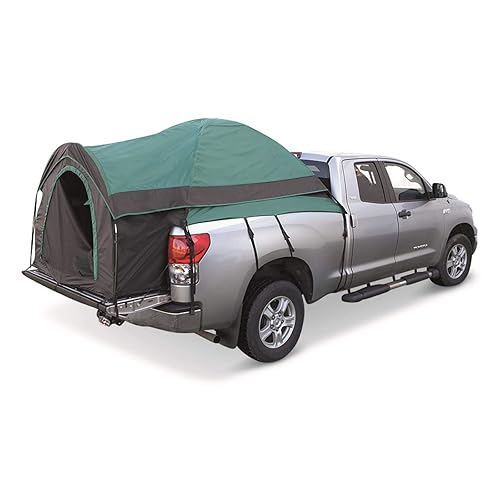
Full-size crew cab trucks present a specific engineering challenge for tent manufacturers because the shorter bed length that comes with the extended cab configuration creates a geometry that standard truck tent designs — sized for longer standard beds — do not accommodate cleanly. The Napier Sportz Full Size Crew Cab version addresses this directly with a design calibrated for the rear cab wall's proximity to the tailgate, delivering a large interior with a sewn-in floor that eliminates the gap management and moisture infiltration issues that plague standard bed tent designs when deployed on crew cab configurations where the geometry simply does not align as the manufacturer intended.
The sewn-in floor is the most significant feature distinction from the floorless designs like the Rightline Gear option — it provides a complete sealed sleeping environment that keeps ground-level moisture, loose bed debris, and insects entirely separated from the interior space without requiring you to supply a separate floor liner or mattress pad as the primary moisture barrier. Combined with the full rainfly, this creates a shelter system that delivers genuine all-weather performance for crew cab truck owners who want a complete solution rather than an assembly of supplementary components. The large interior dimensions accommodate two adults with full camping gear and maintain Napier's consistent quality standards for fabric construction and hardware reliability.
For crew cab truck owners specifically, this model removes the compatibility guesswork that makes buying a truck tent a frustrating research exercise, and delivers it with the brand confidence that comes from Napier's established multi-decade position in the truck camping category. If you drive an F-150, Silverado, Ram 1500, or Tundra in crew cab configuration, this is the tent engineered for your specific truck geometry — not a compromised adaptation of a standard-bed design.
Pros:
Cons:
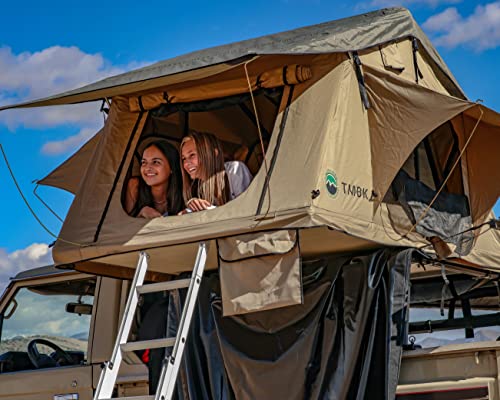
The Overland Vehicle Systems TMBK Soft Shell Rooftop Tent represents a fundamentally different approach to truck camping that elevates your sleeping position above the bed entirely, mounting directly to your truck's roof rack system with universal fitment covering Jeeps, SUVs, trucks, trailers, and any vehicle running a compatible rack infrastructure. For serious overlanders who prioritize terrain flexibility, 360-degree elevated views, and the ability to establish camp on ground where a level truck bed surface is simply not achievable, the rooftop position changes the entire camping calculus in ways that no bed tent can replicate regardless of construction quality. The integrated skylight is a functional feature rather than a decorative one — it allows genuine stargazing from a horizontal sleeping position and delivers natural morning light diffusion into the tent without the harsh yellow cast of a synthetic canopy at full opacity.
The high-density foam mattress with a cotton cover is a meaningful sleeping comfort upgrade over the self-inflating pads and aftermarket air mattresses that truck bed tent users typically supply at additional expense, providing density that holds its shape over hundreds of nights rather than developing the compression patterns that foam pads accumulate with consistent heavy use. The included aluminum ladder provides stable, safe access to the elevated sleeping platform with a comfortable load rating for two adults, and the three-person capacity gives you flexibility to accommodate a child or third adult on occasional group trips without purchasing a second shelter system. If you are building out a serious overland rig and want to complement the TMBK with the best truck exterior accessories for backcountry expeditions, the elevated sleeping platform pairs well with a comprehensive overlanding equipment strategy.
The practical trade-offs with any rooftop tent are significant and worth evaluating honestly: aerodynamic drag affects fuel economy in a measurable way, the mounted height creates clearance issues for parking structures and low-clearance roads, and the full setup/breakdown cycle is substantially longer than deploying a bed tent when you factor in the mechanical process of opening and securing the rooftop platform. For dedicated overlanding enthusiasts who already run a full exterior buildout and value the elevated platform advantages across all terrain types year-round, the TMBK delivers premium performance that justifies the investment — but it is a purpose-specific tool, not a general recommendation for casual weekend truck campers.
Pros:
Cons:


Selecting the right truck tent in 2026 requires matching three primary variables — your truck's bed configuration, your realistic weather exposure expectations, and your tolerance for setup complexity — against the tent's stated specifications and intended design parameters. The market offers excellent options across every budget tier, but purchasing without verifying compatibility first is the most common and most avoidable mistake in this category. According to the National Park Service, choosing appropriate shelter for your specific camping environment is one of the most critical decisions for both safety and comfort in the outdoors — and truck camping is no exception to that principle.
This is the non-negotiable first filter before any other consideration, and it is the step that most buyers skip to their significant regret when the tent arrives and the geometry does not align with their actual truck bed dimensions. Truck bed sizes fall into four practical categories that determine which tent designs are viable:
Measure your bed from the inside of the tailgate to the inside rear cab wall before selecting any tent, then match that exact measurement against the manufacturer's stated compatibility range — not just the headline bed size claim in the listing title, which is frequently imprecise about the critical internal dimensions that determine actual fit.
Waterproofing in truck tents is delivered through two primary systems that you need to evaluate together rather than independently, because either one alone is insufficient for sustained precipitation. The shell fabric's water resistance — expressed as a PU coating rating in millimeters of hydrostatic head — determines how much sustained water pressure the material can withstand before moisture begins migrating through, while tape-sealed seams prevent water infiltration at the needle holes created during manufacturing, a vulnerability that unsealed seams exploit aggressively in steady rainfall. A full rainfly adds a critical third layer by creating an air gap between the outer weather surface and the tent body, dramatically improving performance in sustained precipitation compared to single-layer flyless designs that rely entirely on fabric coating to manage rain.
Setup complexity matters considerably more for truck tents than for ground tents because you are deploying in a campsite or trailhead under time pressure, often alone, and frequently in low-light conditions after a full day of driving or hiking. Color-coded pole systems — used consistently by both Napier and Rightline Gear across their product lines — reduce cognitive load during assembly by eliminating the need to consult instruction diagrams for each pole-to-pocket assignment in sequencing order. A tent that claims 10–15 minutes on its listing should be evaluated against solo deployment at dusk, not the optimistic two-person scenario in full daylight that manufacturer setup time claims tend to reflect. If you are already managing a comprehensive truck buildout with accessories like the protective covers and utility equipment serious overlanders rely on, choosing a truck tent with an intuitive, color-coded setup system keeps your deployment workflow efficient rather than adding a fumbling variable to the process.
Interior dimensions in truck tents are constrained by the bed footprint, but meaningful variation exists in how manufacturers use vertical space through pole geometry and how effectively they manage airflow through window placement, vent design, and storm flap architecture. The difference between a tent that feels like a sleeping tube and one that functions as a genuine mobile shelter comes down to a handful of specific design decisions:
Truck tents deliver specific advantages that make them worth the investment for truck owners who camp with any regularity: you sleep elevated above ground moisture, insects, and uneven terrain while leveraging your truck's structural bed as a ready-made sleeping platform. You carry significantly less supplementary gear than a ground tent setup requires, setup typically runs faster once you have the system dialed, and you eliminate the need to find and clear a flat, debris-free ground surface at every campsite. The trade-off is that your truck's position determines your sleeping position for the night — on steeply graded campsites where your truck cannot park level, a ground tent gives you flexibility that a bed tent cannot match.
Measure your truck bed from the inside of the tailgate to the inside rear cab wall in inches, then match that measurement against the manufacturer's compatibility chart — not just the headline bed size claim in the listing title. Most established brands like Napier and Rightline Gear publish specific compatibility databases organized by make, model, year, and cab configuration on their websites. Crew cab configurations in 2026 typically have shorter effective usable bed lengths than the listed nominal bed size due to the rear cab overhang geometry, which is precisely why crew-cab-specific tent versions exist as a distinct product category rather than a marketing distinction.
Yes, but only if the tent's waterproofing specifications are adequate for the precipitation intensity you expect to encounter. Tents with full rainflies, manufacturer-confirmed tape-sealed seams, and PU-coated fabric rated at PU2000mm or higher — specifically the Napier Backroadz and the JOYTUTUS 5ft 2.0 — provide reliable protection in sustained overnight rain across three-season camping conditions. Entry-level tents with water-resistant coatings and no rainfly hold up in light drizzle and morning dew but allow meaningful moisture infiltration during extended precipitation events. Always evaluate the specific waterproof rating against your realistic camping weather exposure rather than relying on the generic "waterproof" label that appears on every listing regardless of actual protection level.
High-quality truck tents are designed with finish-safe attachment systems that use padded nylon straps and heavy-duty plastic buckles rather than metal hooks, clamps, or bare-wire tensioning hardware that would directly contact and abrade your bed rails or cab paint. Rightline Gear specifically highlights their finish-safe strap and buckle system as a core design priority rather than an afterthought. If you are running a spray-in bedliner, the tent floor contacts the liner surface rather than bare truck bed steel, which eliminates virtually all direct metal-on-surface contact damage concerns during normal deployment and breakdown cycles. Avoid improvised attachment solutions using metal hardware against any painted or coated surface.
A truck bed tent mounts within the cargo bed using the bed rails for structural attachment — it requires no additional roof rack infrastructure, deploys in 10–15 minutes, and positions the sleeping surface at bed height. A rooftop tent mounts on a roof rack system above the cab, elevating sleepers 5–6 feet above the vehicle and well above uneven terrain. Rooftop tents like the Overland Vehicle Systems TMBK provide superior terrain flexibility for sleep on angled or rough ground, 360-degree elevated views, and complete separation from ground-level moisture and wildlife — but at substantially higher price points, with vehicle-height and fuel-economy implications for daily driving, and with a longer, more involved setup and breakdown cycle that bed tents do not require.
Most truck bed tents are accurately rated for 2 persons, which reflects the realistic sleeping capacity of a standard or short truck bed footprint — approximately 5 to 6.5 feet in length and 4 to 5 feet in effective width once the wheel well intrusions are accounted for. The Overland Vehicle Systems TMBK Rooftop Tent is rated for 3 persons due to its larger elevated platform geometry above the roofline. Solo truck campers will find most 2-person truck bed tent interiors genuinely spacious with meaningful room for gear organization along the perimeter; couples fit comfortably in the larger Napier models when both occupants are in appropriately sized sleeping bags positioned with their feet toward the tailgate.
 |
 |
 |
 |

About Rachel Park
Rachel Park specializes in the interior and exterior upgrades that meaningfully change how a car looks, sounds, and feels on a daily basis. She has hands-on experience with head unit installations and audio system builds, LED and HID lighting conversions, interior refresh projects, and cosmetic exterior work — evaluated from both a DIY accessibility and quality-of-result perspective. At CarCareTotal, she covers car audio and electronics, lighting upgrades, and interior and exterior styling accessories.
Get some FREE car parts & gear.. Or check out the latest free automotive manuals and build guides here.
Disable your ad blocker to unlock all the hidden deals. Hit the button below 🚗
| | | |
