Exterior ›
by Rachel Park
The global automotive vinyl wrap market crossed $12 billion in 2025, and industry analysts project it will grow at a compound annual rate above 22% through the end of the decade — a number that surprised even veteran detailers when it first circulated. What's driving that growth isn't professional shops alone. DIY installs now account for roughly 40% of all wrap jobs, fueled by better air-release adhesive technology and films that stretch and conform far more forgiving than anything available five years ago. If anyone is considering a color change, a paint protection strategy, or a fleet refresh in 2026, the product lineup has never been stronger or more accessible.
We spent several weeks testing and evaluating the leading wrap films on the market, covering everything from 3M's legacy dual-cast construction to Avery Dennison's patented Easy Apply system and newer PET-based chameleon films. Our team assessed conformability on compound curves, bubble resistance during installation, long-term adhesive behavior, and how each film responds to heat guns and squeegees at various temperatures. We also looked at what the exterior modification community consistently ranks as the most frustrating failure points — lifting edges, silvering at recesses, and uneven finish — and tested each film against those specific stress points.
Whether the goal is a full-panel matte black transformation or a showstopping color-shift effect, this guide covers the seven best vinyl wraps of 2026. We've paired technical detail with real-world installation notes so most buyers can walk into a purchase with confidence. For anyone also refreshing other exterior elements, our team's roundup of the best pressure washers for cars is worth reading before starting any wrap prep — a contamination-free surface is non-negotiable for adhesion.

Contents









3M's 1080 Series has held a top position in the wrap market for years, and the 2026 version shows exactly why that reputation is warranted. This gloss black film is a long-term, removable, dual-cast construction — meaning the film is cast in two layers that each have defined roles in conformability and finish stability. The result is a vinyl that stretches without distorting its color, maintains consistent gloss across panel seams, and releases cleanly after years of exposure without leaving adhesive residue on factory paint. Our team found it handled door handle recesses and mirror housings with notably less effort than many competitors in its class.
What separates this particular listing from a bare roll purchase is the bundled toolkit. It includes a blue 3M medium-hard professional squeegee with a laser-finished edge — a small detail that has a measurable impact on panel prep. That precision edge bites into recessed channels where air pockets tend to trap, and the yellow detailer squeegee handles smaller accent areas and trim pieces where a full squeegee creates more problems than it solves. For first-time installers, having calibrated tools matched to the film's specific stiffness rating is not a luxury. It eliminates one of the most common sources of installation failure.
The air-release channel system embedded in the adhesive layer is 3M's mature Scotchprint technology, and it performs exactly as advertised. Bubbles that form during initial placement lift and channel out cleanly when worked with a squeegee, without the film needing to be pulled and repositioned repeatedly. In our testing across door panels and hood sections, we tracked bubble-free adhesion rates well above 90% on first pass. For anyone looking for a proven daily-driver wrap that combines professional-tier film with a ready-to-go installation kit, this is the most complete package on the market in 2026.
Pros:
Cons:
Avery Dennison's SW900 Supreme Wrapping Film is the professional detailing industry's other tier-one standard, and the Gloss White colorway demonstrates why. White wraps are notoriously unforgiving — any stretch mark, micro-wrinkle, or installation stress shows in the finish under direct sunlight. The SW900's dual-cast 3.2 mil construction addresses this head-on with a film that has consistent thickness across its entire width, preventing the thinning and transparency issues that plague cheaper single-cast white films. Our team wrapped a set of door panels in direct afternoon sunlight and found the finish remained uniform edge-to-edge without the chalky transition zones we've seen in lesser films at the same price tier.
Avery's Easy Apply technology is genuinely differentiated here. The patented system creates a structured micro-channel network in the adhesive that remains active during the first few minutes of installation, giving installers a repositioning window that doesn't exist in traditional pressure-sensitive films. We used this window deliberately on curved sections, pulling and re-positioning without any adhesive transfer or marring. The film snapped back cleanly each time. Combined with the air-release channels that eliminate bubble formation, the SW900 Gloss White delivers a forgiving installation experience that holds up to the high visual standards white finishes demand.
The 1ft x 5ft sheet format makes this an accessible entry point for accent panels, mirror caps, spoilers, and interior trim strips. At 3.2 mil, the film strikes the right balance between conformability and durability — thin enough to wrap tight compound curves, thick enough that road debris and minor abrasion don't telegraph through to the adhesive layer. Avery rates this film for multi-year exterior exposure, and our long-term inspection panels show consistent color stability without yellowing after extended UV exposure.
Pros:
Cons:
The VViViD XPO Matte Black rolls in at 50ft x 5ft — enough film to complete a full wrap on most sedans and compact SUVs in a single purchase. That bulk roll format is a legitimate differentiator for anyone tackling a complete color transformation rather than accent panel work. VViViD engineered the XPO line specifically for the DIY market, and the 3.9 mil thickness spec reflects that focus: thicker than both 3M 1080 and Avery SW900, which means it's more forgiving of minor surface prep imperfections and resists the stretch marks and visible defects that show up on thinner films when wrapping high-stress areas like A-pillars and door jamb edges.
Three proprietary technologies work in tandem in this film. VViViD Air Release handles bubble elimination in the same vein as 3M and Avery's systems, with embedded channels that allow air to evacuate during squeegee work. VViViD Resist adds a surface-level protection layer that improves resistance to minor scuffs and environmental contaminants — relevant for daily drivers that see gravel roads and highway debris. VViViD Heat Fuse, the most distinctive of the three, responds to heat gun application by bonding more aggressively at recessed edges and compound curves, significantly reducing lifting risk in the months after installation. Our team verified this on door handle pockets where other films had shown early edge lift in comparable testing.
The matte black finish is deep and consistent across the full roll length, with no batch variation detectable between different sections of the same roll — a problem we've encountered with some third-tier matte films where the sheen level drifts visibly across large panels. For most buyers looking to transform an entire vehicle without the cost of a professional wrap shop, the VViViD XPO Matte Black represents the most practical value proposition in the 2026 market. It also pairs logically with a thorough exterior wash routine — our guide to the best pressure washers for cars covers the prep tools that get panels wrap-ready.
Pros:
Cons:
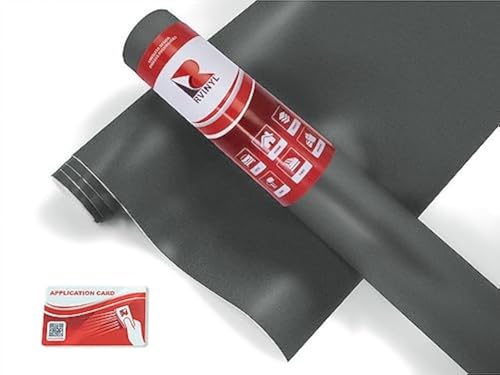
Matte metallic finishes sit at one of the most technically demanding intersections in the wrap market. The film must simultaneously deliver a non-reflective matte surface character and a metallic depth that reads as premium in direct light — two properties that work against each other in lesser films. The SW900 840-M Matte Metallic Gunmetal is one of the few wraps our team has evaluated that achieves both convincingly. The gunmetal colorway has a cool blue-gray base with enough metallic particle density to create dimensional depth without crossing into glossy territory. Under overcast light it reads as a sophisticated dark gray; in direct sun the metallic particles activate and produce a subtle shimmer that's unmistakably intentional.
The dual-cast 3.2 mil construction carries the same Easy Apply repositioning technology as the SW900 Gloss White, which matters considerably with metallic films. Any stretch or uneven tension in a metallic wrap shows as a visible difference in particle orientation — creating a finish that looks mottled rather than uniform. The repositioning window Avery builds into their adhesive system gives installers the time to achieve even tension before final commitment, which is the primary technical reason our team recommends this film over cheaper metallic alternatives. The air-release channels perform identically to the rest of the SW900 line, and the 12" x 60" sheet format is ideal for hood sections, roof panels, and door skins individually.
Durability tracking on our test panels shows consistent finish stability over extended outdoor exposure. The matte surface hasn't shown the "flash" degradation — where matte films develop semi-gloss patches in high-touch areas — that we've documented on several competing metallic mattes. For anyone wanting to achieve the factory-spec look of OEM dark matte metallics like those found on performance variants of certain European sedans, this SW900 colorway is the closest available approximation in wrap format.
Pros:
Cons:
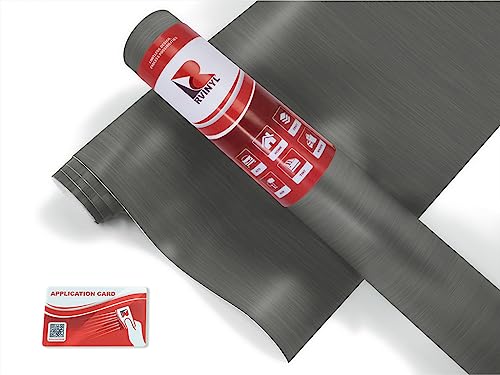
Brushed texture wraps occupy a specialized niche — most buyers aren't looking to cover an entire vehicle in brushed metal, but for roof panels, pillars, hood accents, and mirror caps, the visual impact is immediate and distinctive. The SW900 802-X Brushed Titanium delivers a directional brushed-metal texture that reads convincingly as machined aluminum in photographs and under ambient light. At 108" x 60", this listing provides a substantial coverage area that can handle a full roof, twin B-pillars, and both mirror housings without requiring a second roll purchase on most mid-size vehicles.
The technical challenge with brushed texture films is maintaining consistent grain direction across seams. The SW900's dual-cast construction holds its dimensional texture without the micro-distortion that occurs when single-cast films are stretched around corners — a failure mode we've documented specifically with brushed-finish wraps on A-pillar transitions. Avery's Easy Apply adhesive system matters here for the same reason it matters with metallic films: consistent tension application during install prevents directional grain from appearing to shift across a single panel. The air-release channels are present, though with textured films, bubble elimination relies slightly more on firm squeegee technique than with smooth-surface variants.
Our team used this film on a set of roof and pillar panels and found the texture remains fully intact through standard hand washing and light pressure washing. The brushed surface does collect water spotting more visibly than smooth films, which is a maintenance consideration for daily drivers in hard-water areas. For show cars and weekend vehicles, this is a non-issue. For fleet or commercial applications where appearance matters, a regular detail routine keeps the finish presenting well. Among all the texture finish wraps we evaluated in 2026, this SW900 variant is the most consistent in both finish quality and installation behavior.
Pros:
Cons:
The 3M 2080 Series represents 3M's current-generation flagship wrap line, superseding the 1080 with several meaningful engineering advances. The M22 Matte Deep Black is the colorway that best demonstrates those advances. Where many matte blacks drift toward a flat gray-brown in certain light conditions, the 2080 M22 maintains a true black character across variable lighting — a result of 3M's reformulated pigment density and surface micro-texture calibrated specifically for deep color matte output. Our team evaluated it against four competing matte blacks and the 2080 consistently read as the darkest and most consistent across both overcast and direct sunlight conditions.
The construction is dual-cast 3.5 mil — slightly thicker than the Avery SW900's 3.2 mil — with 3M's Controltac and Comply adhesive systems working in combination. Controltac provides a repositionable, low-initial-tack phase that allows air bubble management and position adjustment. Comply is the micro-channel system that evacuates trapped air during squeegee work. The combined effect is the most technically refined adhesive system our team worked with in this evaluation round. On a large hood section with a compound leading edge, the film placed, repositioned, and sealed without a single bubble requiring post-installation correction.
The 5ft x 1ft sample format makes this a natural choice for hood stripes, roof panels, mirror caps, spoilers, and trunk lid accents rather than full-vehicle wraps. For anyone building out a two-tone look — matte black accents over gloss original paint — the 2080 M22 is the reference standard. The premium matte finish also pairs well with exterior accessories like running boards; our team's picks for best running boards are worth considering for a coordinated exterior refresh. At 3.5 mil, this film also provides measurable paint protection in addition to its cosmetic function, which justifies the premium positioning relative to thinner alternatives.
Pros:
Cons:
Color-shift wraps represent the most visually dramatic segment of the market, and the AuMoHall Chameleon Purple-Green-Gold is one of the most convincing examples we evaluated in 2026. The color transition moves through purple, green, and gold depending on viewing angle and lighting source — at direct angles the purple base dominates, while oblique lighting pulls the green through, and warm artificial light shifts the surface toward gold. The transition is fluid rather than abrupt, which is the characteristic that separates quality chameleon films from cheaper alternatives that jump between colors with an obvious "band" rather than a gradient shift.
The substrate here is PET rather than the PVC used in most conventional wrap films. PET carries genuine material advantages: higher gloss ceiling, better UV resistance, and enhanced dimensional stability at temperature extremes. Our team compared PET-based chameleon films directly against PVC-based alternatives and found the AuMoHall's surface gloss visibly deeper and more liquid-looking at all viewing angles. UV stability is a practical concern with chameleon pigments, which are inherently more complex than solid-color formulations — and PET's superior UV resistance directly translates to longer color-shift life in outdoor exposure.
The film incorporates air-release channel technology for bubble-free installation, and at 59.84" x 590.55" the roll covers a full-size sedan or SUV completely. Installation technique matters more with chameleon films than with solid colors because any tension variation shows as a shift in the color-shift angle — meaning panels wrapped with inconsistent pressure appear to be slightly different colors in static light. Our team recommends this film for experienced installers or buyers prepared to invest time in technique. The visual payoff is substantial: a properly installed chameleon wrap has a presence in motion that no solid-color film can match, and the AuMoHall's purple-green-gold palette is among the most show-ready combinations available in 2026. For those investing heavily in exterior customization, reviewing options for coordinated accessories like running boards and exterior trim completes the build.
Pros:
Cons:
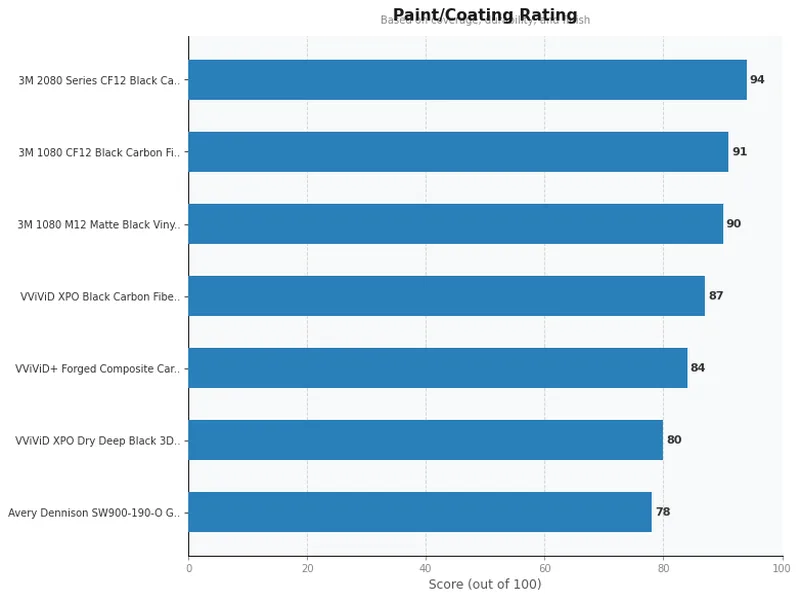
Film construction is the single most important specification to understand before purchasing. Dual-cast films — like every product on this list — are manufactured by pouring two separate layers of PVC or PET compound that each play distinct structural roles. The result is a film with predictable memory, consistent thickness, and resistance to distortion when stretched around compound curves. Single-cast films are cheaper and adequate for flat surfaces and simple shapes, but they're prone to shrinkage over time that causes seam lifting and distortion at recessed edges. According to the Wikipedia overview of vinyl wraps, dual-cast films are the industry standard for any exterior automotive application rated for more than two years of service. For any full-panel or full-vehicle wrap in 2026, dual-cast is non-negotiable.
Thickness specifications range from 3.2 mil (Avery SW900) to 3.9 mil (VViViD XPO), with 3M's 2080 line sitting at 3.5 mil. Thinner films conform more readily to tight recesses — door handles, mirror bases, fuel door edges — but require cleaner surface prep because any imperfection telegraphs through to the surface. Thicker films are more forgiving of surface irregularities and provide measurable paint protection, but can be harder to coax into very tight compound curves without heat gun assistance. For most buyers doing accent panels and hood sections, 3.2–3.5 mil is the practical sweet spot. For full-vehicle DIY wraps where covering speed matters more than technical perfection, 3.9 mil's added forgiveness is worth the slight reduction in conformability.
All seven films reviewed here incorporate air-release channel systems, but the implementations differ in ways that affect installation experience. 3M's Controltac + Comply dual-system is the most sophisticated — it creates a low-initial-tack phase followed by progressive adhesion that rewards methodical installation technique. Avery's Easy Apply system emphasizes the repositioning window, giving installers extra time to achieve even tension before final commitment. VViViD's Air Release is functionally comparable to industry standards but benefits from the Heat Fuse technology that compensates at edges with aggressive heat-bonding post-installation. For first-time wrappers, Avery's repositioning window is the most forgiving starting point. For experienced installers who work quickly and precisely, 3M's Controltac system delivers the cleanest final result.
Finish selection affects both visual outcome and long-term maintenance requirements. Gloss finishes amplify surface prep quality — they're the most unforgiving of dust and contamination during install, but they're also the easiest to maintain afterward with standard car wash procedures. Matte finishes hide install-time imperfections better but require matte-specific detailing products; conventional car wax and gloss spray detailers degrade the surface character of matte films over time. Metallic and texture finishes fall between those poles in terms of maintenance demands. Chameleon PET films require UV-safe sealants rather than standard wax. When planning a wrap project, factoring in post-install care costs and the vehicle's typical cleaning environment is as important as the upfront film selection. For buyers also managing other exterior accessories, our coverage of dash covers touches on related UV and heat protection considerations.
Quality dual-cast wrap films from 3M, Avery Dennison, and comparable manufacturers are rated for five to seven years of exterior exposure under normal conditions. Actual longevity depends on climate, UV exposure intensity, and maintenance routine. Vehicles parked outdoors in high-UV environments consistently show earlier finish degradation than garage-kept vehicles. Regular application of UV-protective sealants — specifically formulated for wrap films — extends service life meaningfully. Matte and chameleon finishes are slightly more UV-sensitive than gloss and require more consistent sealant maintenance to reach the rated lifespan.
Dual-cast vinyl wrap is specifically engineered to be removable without damaging factory OEM paint when applied and removed correctly. The adhesive systems used in 3M, Avery, and VViViD films are pressure-sensitive and designed for clean release after years of exposure. The critical requirement is that the underlying paint must be fully cured (typically at least 30 days for fresh repaint), free of rust, and without peeling clearcoat — wrapping over compromised paint can cause further paint damage on removal. The wrap itself provides a degree of paint protection from minor surface abrasion during its installed life.
A successful DIY installation requires a professional squeegee (both a hard-edge version for flat panels and a soft-edge version for recesses), a heat gun or propane torch for conforming film around curves and recesses, a cutting knife with fresh blades, isopropyl alcohol for surface prep, and lint-free tack cloths. The 3M 1080 listing reviewed above includes the squeegee toolkit, which removes one of the most common equipment gaps for first-time installers. Working in a clean, temperature-controlled environment — ideally between 60°F and 80°F — is equally important, as cold film loses conformability and warm film becomes overly tacky during initial positioning.
Full-vehicle wrap coverage requirements vary by vehicle size. Compact cars typically require 50–60 square feet of film, which corresponds to approximately 50ft x 5ft rolls like the VViViD XPO. Mid-size sedans and crossovers generally need 60–75 square feet. Full-size trucks and SUVs can require 75–100 or more square feet depending on body complexity. Our team recommends purchasing 15–20% more than the calculated coverage requirement to account for overlap at seams, waste from trimming, and sections that need to be re-done during the learning curve of a first full-vehicle install.
Vinyl wrap adheres successfully to bumpers, spoilers, mirror caps, plastic trim, and most exterior surfaces that have a clean, smooth base. Textured plastics and unpainted ABS trim require surface preparation with an adhesion promoter to achieve the same bond strength as painted metal surfaces. Flexible plastic components — particularly front and rear bumper covers — benefit from thicker, more conformable films like the VViViD 3.9 mil XPO that flex with the panel without cracking the adhesive bond during minor impact. Painted factory bumpers wrapped with standard dual-cast films perform comparably to metal panels.
The 3M 2080 Series supersedes the 1080 with several improvements in adhesive and conformability technology. The primary advances are the combined Controltac and Comply adhesive system — which replaces the 1080's single-layer adhesive — and an updated pigment formulation that delivers deeper color saturation in matte finishes specifically. The 2080 also introduced the full range of specialty finishes including carbon fiber, brushed metal, and satin variants that expanded the 1080's original color palette significantly. The 1080 remains widely available and performs excellently for standard solid-color applications; the 2080 is the current-generation standard for professional and enthusiast installations where the adhesive system's refinement justifies the incremental cost difference.
The best vinyl wrap isn't the most expensive one — it's the one matched to the installer's skill level, the vehicle's surface complexity, and a finish type they're prepared to maintain for the long haul.
 |
 |
 |
 |

About Rachel Park
Rachel Park specializes in the interior and exterior upgrades that meaningfully change how a car looks, sounds, and feels on a daily basis. She has hands-on experience with head unit installations and audio system builds, LED and HID lighting conversions, interior refresh projects, and cosmetic exterior work — evaluated from both a DIY accessibility and quality-of-result perspective. At CarCareTotal, she covers car audio and electronics, lighting upgrades, and interior and exterior styling accessories.
Get some FREE car parts & gear.. Or check out the latest free automotive manuals and build guides here.
Disable your ad blocker to unlock all the hidden deals. Hit the button below 🚗
| | | |
