Interior ›
by Rachel Park
Standing in the auto parts aisle, staring at a wall of shift knobs in every shape and material imaginable, it's easy to feel overwhelmed. The stock knob that came with the car has seen better days — the leather's peeling, the pattern's worn smooth, and every shift feels like gripping a bar of soap. A quality aftermarket shift knob transforms the entire driving experience, from the tactile feedback during spirited canyon runs to the visual impact every time someone glances at the cabin.
The shift knob market in 2026 spans everything from weighted steel units engineered for precise throws to eye-catching resin spheres that double as conversation starters. Material, weight, thread pitch compatibility, and ergonomic design all play critical roles in finding the right match. Whether upgrading a Honda Civic Si, a Nissan 370Z, or a classic Mustang, the knob sitting atop that shifter stick matters more than most drivers realize. Much like choosing the right car seat cushion for comfort during long drives, the shift knob is a point of constant physical contact — and getting it right pays dividends every single drive.
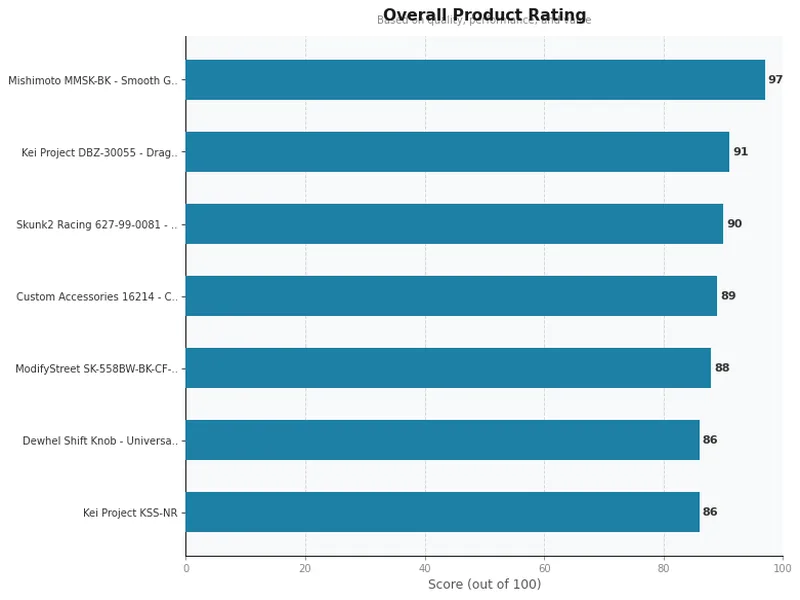
After evaluating dozens of options across weighted metals, leather-wrapped composites, and modern resin designs, these seven shift knobs stand out for their build quality, ergonomics, and overall value heading into 2026.

Contents









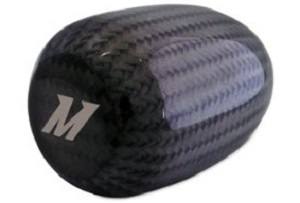
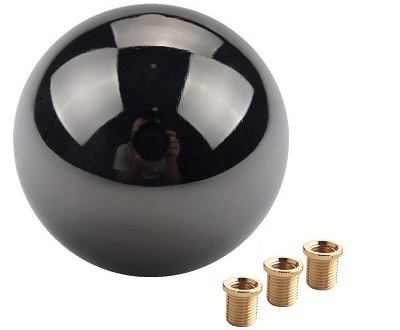
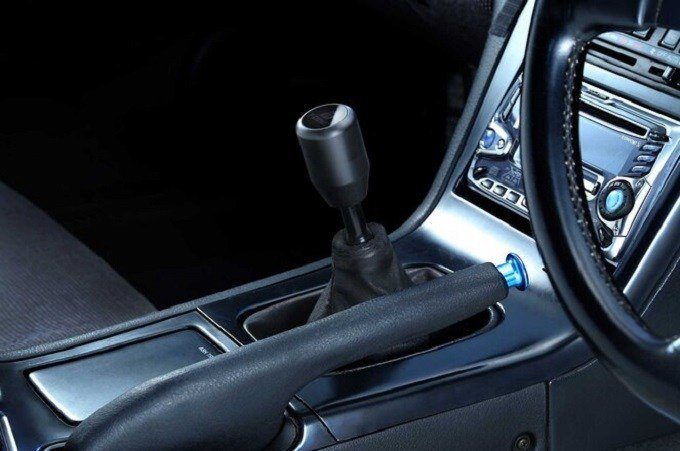
Mishimoto built its reputation on performance cooling parts, but the MMSK-BK shift knob proves the brand understands driver ergonomics just as well. At 12.8 ounces (360 grams) of premium steel, this knob adds meaningful heft to every gear change. That extra weight isn't just for show — it uses the momentum of the knob itself to help slot into gear, reducing the physical effort needed for each shift and creating a noticeably smoother, more mechanical feel through the entire gate.
The polished black finish looks sharp against virtually any interior color scheme, and the subtle embossed Mishimoto "M" logo adds a touch of brand identity without being flashy. Fitment is broadly covered thanks to the three included thread pitch adapters: M8 x 1.25, M10 x 1.5, and M12 x 1.25. That covers most Japanese, Korean, and many European manual transmission vehicles. The knob threads on securely with no wobble or play, which is essential for a weighted unit — any looseness would translate into an annoying rattle at highway speeds.
One consideration: the all-steel construction means this knob gets cold in winter and hot in summer if the car sits in direct sun. Drivers in extreme climates may want to keep a microfiber cloth handy for the first few shifts. That said, the thermal issue is inherent to all metal knobs, and the shift quality improvement makes the tradeoff worthwhile for most enthusiasts.
Pros:
Cons:
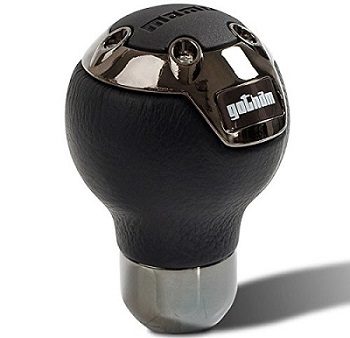
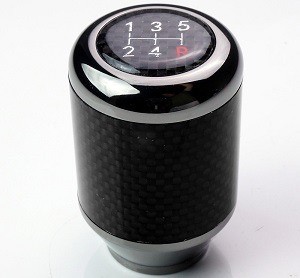
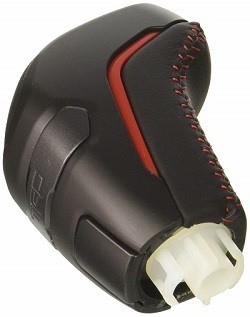
MOMO is synonymous with racing heritage — the Italian brand has been supplying steering wheels and accessories to Formula 1 teams for decades. The Combat Evo Carbon brings that motorsport DNA to the street in a tall, 92mm leather-wrapped knob with a carbon-fiber-look insert that gives it an unmistakably sporty character. The black leather wrapping provides excellent grip in all conditions, solving the temperature issues that plague bare metal knobs.
The taller profile changes the shift ergonomics in a meaningful way. Instead of palming a short sphere, the hand wraps around a more cylindrical shape that encourages precise, deliberate shifts. It's a design philosophy borrowed directly from race cars, where drivers need to find the knob without looking and execute shifts in fractions of a second. The carbon-look accent strip running down the side breaks up the all-black aesthetic and catches light in a way that looks genuinely premium, not tacked-on.
Fitment requires checking the specific thread pitch, as MOMO knobs typically ship with a single adapter. Buyers should verify their vehicle's shifter thread size before ordering. For those who also care about their car's exterior presentation, pairing interior upgrades like this with a proper car wax creates a cohesive attention-to-detail theme that fellow enthusiasts notice.
Pros:
Cons:
For drivers who want their shift knob to be a genuine focal point of the cabin, the UHANBUT resin sphere delivers. The translucent red resin body with embedded 6-speed gate pattern creates a striking visual — it almost looks like a crystal ball for gearheads. The smooth polished surface feels excellent in the palm, and the spherical ergonomic design distributes grip pressure evenly across the hand during aggressive shifting.
Practicality matches the aesthetics here. UHANBUT includes three thread adapters (M8x1.25, M10x1.5, and M10x1.25), covering a broad range of Japanese and Korean vehicles including popular platforms from Nissan, Honda, Acura, and Lexus. The resin construction is durable and fade-resistant, and unlike metal knobs, it stays temperature-neutral — no scorching palms in August or frozen fingers in January. The material resists daily wear and maintains its polished finish without requiring any special care.
Worth noting: this is designed exclusively for manual transmissions and push-buttonless automatic shifters. Vehicles with button-operated automatic shifters are not compatible. At this price point, it's remarkably well-built, and the bold red color adds genuine personality to otherwise bland factory interiors.
Pros:
Cons:

MUGEN — Honda's legendary performance partner — has been developing go-fast parts for Honda vehicles since 1973. This leather-wrapped 5-speed knob carries that legacy in a compact, purposeful package specifically dimensioned for Honda cockpits. At just 155 grams and 5.5 x 5.5 cm, it's intentionally lightweight and small — a design choice that prioritizes quick, flick-of-the-wrist shifts over the momentum-assisted approach of heavier knobs.
The M10x1.5 thread pitch is Honda's standard, making this a direct bolt-on for the Civic (EK9, EP3, FN2), Integra (DC2, DC5), S2000, and Accord (FD2, FA5) platforms. No adapters needed, no fitment guessing — it threads directly onto the shifter for a factory-tight connection. The black leather wrapping matches Honda's typically dark interior themes, and the MUGEN branding adds authentic JDM credibility that aftermarket stickers simply cannot replicate.
The limitation is obvious: this is a Honda-only part. The M10x1.5 thread pitch does appear on some other Japanese vehicles, but the compact sizing and branding make it a purpose-built Honda accessory. For Honda owners specifically, though, it's one of the most authentic upgrades available — a small detail that signals genuine enthusiast taste.
Pros:
Cons:
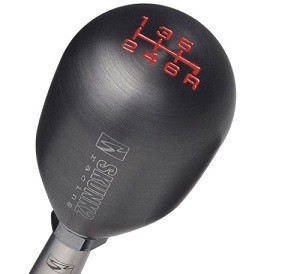
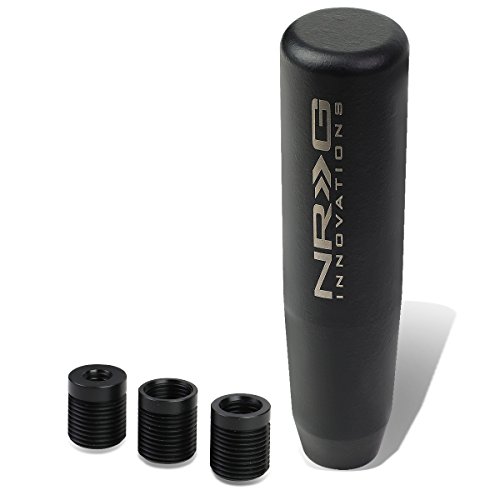
The NRG SK-480BK-P is built for drivers who've already installed a short throw shifter and want a knob that complements that setup. The billet aluminum construction delivers a solid, substantial feel without the extreme weight of steel options. The painted black metallic finish has a glossy quality that looks expensive — significantly more refined than its price point suggests. It's the kind of knob that makes onlookers assume the entire interior has been professionally customized.
Billet aluminum is a smart material choice for a shift knob. It's lighter than steel but significantly more rigid than plastic or resin, creating a direct mechanical connection between the hand and the transmission linkage. Every shift feels crisp and unfiltered. The included hardware kit makes installation straightforward on most manual transmission vehicles, and the universal design accommodates various shifter stalk diameters.
The glossy painted finish, while attractive, is the one durability concern. High-friction contact points — particularly where the palm rests during daily driving — may show wear patterns over months of aggressive use. A periodic application of clear coat can extend the finish life considerably. For drivers who also keep their car's exterior pristine with proper window tint and detailing, maintaining the knob's finish becomes part of the overall care routine.
Pros:
Cons:
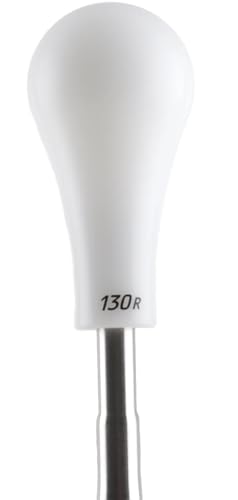
Hybrid Racing is a name that carries serious weight in the Honda and Acura performance community, known for precision-engineered parts that professional race teams trust. The 130R White Delrin shift knob exemplifies that philosophy — Delrin (polyoxymethylene) is an engineering-grade thermoplastic chosen specifically for its low friction coefficient, dimensional stability, and near-complete thermal neutrality. The knob won't burn hands in summer heat or feel like an ice cube in winter.
The "130R" designation references the legendary corner at Suzuka Circuit, and the design reflects that track-focused intent. The shape is optimized for rapid palm-over-top shifting — the motion competitive drivers use to minimize time between gears. The white color stands out dramatically against dark interiors, creating a cockpit focal point that's both functional and visually distinctive. The M10x1.5 thread pitch makes it a direct fit for Honda and Acura manual transmissions.
Delrin's lightweight nature means this knob won't add momentum to shifts the way a weighted steel unit does. That's a deliberate choice — Hybrid Racing's customer base generally prefers the faster, more connected feel of a light knob on an already-sorted short throw setup. For track day enthusiasts and autocross competitors, the 130R is one of the most purpose-driven options available in 2026.
Pros:
Cons:
B&M has been manufacturing performance drivetrain components since 1957, and the 80658 T-Handle brings that old-school American muscle car DNA into the modern aftermarket. The brushed aluminum finish has a timeless industrial quality — it looks equally at home in a classic Camaro as it does in a modern Challenger. The T-handle shape is fundamentally different from round or spherical knobs, offering a wraparound grip that distributes force across all four fingers for powerful, authoritative shifts.
The integrated button is a standout feature that most competitors lack. While it's non-functional on most manual transmission applications, it becomes critically important on vehicles with button-activated reverse lockout mechanisms or aftermarket automatic shifters that require a button press to shift out of park. B&M includes SAE thread inserts in four sizes (1/2-20, 3/8-24, 3/8-16, and 5/16-18), covering the vast majority of American-made vehicles and many aftermarket shifter stalks.
Note the SAE threading — this knob is designed primarily for domestic vehicles and aftermarket shifters. Japanese and European cars typically use metric threads, so compatibility should be verified before purchasing. The brushed aluminum does pick up fingerprints and hand oils over time, but a quick wipe with a microfiber cloth restores the finish instantly.
Pros:
Cons:
The single most impactful decision when choosing a shift knob is the material, because it directly determines weight, thermal behavior, and feel. The options break down into clear categories:
Heavier knobs smooth out shift action by using momentum to carry through the gate. Lighter knobs offer faster transitions but require more precision from the driver. Neither is objectively superior — the right choice depends on the transmission, the driving style, and whether the car sees more commuting or track time.
Thread pitch is the non-negotiable specification — get it wrong and the knob simply won't install. Most vehicles fall into one of these common sizes:
Universal knobs with multiple adapter inserts — like the Mishimoto and UHANBUT in this roundup — eliminate the guesswork. Vehicle-specific options from brands like MUGEN and Hybrid Racing use the exact OEM thread pitch for a guaranteed fit but limit compatibility to specific platforms.
Shift knob shape affects both comfort and shift technique. Spherical knobs are the most versatile — they accommodate palm shifting, finger-tip shifting, and side-grab shifting equally well. Cylindrical and teardrop shapes favor palm-over-top shifting techniques common in performance driving. T-handles provide maximum leverage for forceful shifts but don't accommodate as many grip styles.
Diameter matters too. Smaller knobs (under 45mm) suit drivers with smaller hands and those who prefer a delicate touch on the shifter. Larger knobs (50mm+) fill the palm completely and reduce the precision needed to find the knob during fast shifts. Most aftermarket knobs fall in the 45–50mm range, which works well for the majority of hand sizes.
The finish determines how the knob ages with daily use. Brushed metal develops a natural patina that many enthusiasts find appealing. Polished metal shows fingerprints but cleans easily. Painted finishes look sharp initially but are the most vulnerable to wear — high-contact areas will eventually show through to the base material. Leather wrapping provides the best initial grip but is the most maintenance-intensive over years of use.
For maximum longevity with minimum maintenance, Delrin and raw brushed aluminum are the strongest performers. Both develop character with age rather than simply deteriorating. Painted and glossy finishes look best when new but require the most care to maintain their appearance over the ownership period.

Yes. A heavier knob adds momentum to each shift motion, which helps carry the lever through the detent gates more smoothly. The difference is most noticeable on transmissions with stiffer synchros or notchy shift gates. Weighted knobs in the 300–500 gram range typically produce the most noticeable improvement over lightweight factory knobs. However, some performance drivers prefer lighter knobs for faster shift speed, trading smoothness for quickness.
The most reliable method is removing the existing shift knob and measuring the shifter stalk threads directly with a thread pitch gauge. Alternatively, the vehicle's owner manual or a quick search of the make, model, and year will reveal the thread size. Common pitches include M10x1.5 for Honda/Acura, M12x1.25 for Toyota/Subaru, and M10x1.25 for Nissan/Mazda. When in doubt, purchasing a universal knob with multiple adapter inserts eliminates the risk of ordering the wrong size.
In nearly all cases, no. Under the Magnuson-Moss Warranty Act in the United States, a dealer cannot void a vehicle warranty simply because an aftermarket part was installed. The dealer would need to demonstrate that the specific aftermarket part caused the failure being claimed. Since a shift knob is a simple threaded accessory with no connection to the vehicle's mechanical systems, it presents virtually zero warranty risk. Keeping the original knob for reinstallation before service visits is still recommended as a precaution.
It depends on the type of automatic shifter. Traditional gate-style automatic shifters with a threaded stalk can accept aftermarket knobs, provided the thread pitch matches. However, most modern automatics use button-integrated shifters, electronic dial selectors, or column-mounted levers that are not compatible with standard aftermarket knobs. The B&M T-Handle in this roundup is one of the few options designed to work with button-equipped shifters.
The most practical solution is a simple leather or silicone shift boot cover that slides over the knob when parked. Windshield sun shades also reduce cabin temperatures significantly, protecting the knob along with the rest of the interior. Some drivers apply a thin layer of ceramic coating to metal knobs, which provides modest thermal insulation. Alternatively, choosing a leather-wrapped or Delrin knob eliminates the temperature issue entirely — these materials remain near-ambient temperature regardless of conditions.
Installation is typically a five-minute job requiring no tools. Most manual transmission shift knobs simply unscrew counterclockwise from the shifter stalk, and the replacement threads on clockwise. Some vehicles have a retaining clip or set screw at the base of the factory knob that needs to be released first. Adapter inserts, when required, thread onto the stalk first, then the knob threads onto the adapter. A drop of medium-strength threadlocker on the threads prevents loosening from vibration during driving.
Match the knob to the transmission, not the look — weight, thread pitch, and material determine whether every shift feels like a reward or a chore.
 |
 |
 |
 |

About Rachel Park
Rachel Park specializes in the interior and exterior upgrades that meaningfully change how a car looks, sounds, and feels on a daily basis. She has hands-on experience with head unit installations and audio system builds, LED and HID lighting conversions, interior refresh projects, and cosmetic exterior work — evaluated from both a DIY accessibility and quality-of-result perspective. At CarCareTotal, she covers car audio and electronics, lighting upgrades, and interior and exterior styling accessories.
Get some FREE car parts & gear.. Or check out the latest free automotive manuals and build guides here.
Disable your ad blocker to unlock all the hidden deals. Hit the button below 🚗
| | | |
