by Joshua Thomas
You're standing in the auto parts aisle — or scrolling through Amazon at midnight — staring at a wall of 0W-20 synthetic oils, wondering which one is actually worth your money. They all make bold claims on the label, but your engine doesn't care about marketing copy. It cares about film strength, viscosity stability under heat, and how well the oil flows on a cold January morning. The right 0W-20 can meaningfully extend your engine's life and protect modern direct-injection engines from LSPI damage. The wrong one? You might not notice for 50,000 miles — until you do.
For 2026, we put together a focused list of the seven best 0W-20 full synthetic motor oils available on Amazon. We evaluated them across wear protection, thermal stability, fuel economy impact, additive packages, and value per quart. Whether you're driving a Toyota Camry, a Honda CR-V, or a Ford EcoBoost that calls for 0W-20, there's a right pick on this list. If you want to dig deeper into how different oils stack up head-to-head, check out our Castrol Edge vs. Mobil 1 comparison — it covers a lot of the technical ground behind our picks here.
One thing worth knowing upfront: 0W-20 is a multi-grade motor oil designed to flow like a 0-weight at cold start while maintaining 20-weight viscosity at operating temperature. Modern engines with tighter tolerances and variable valve timing systems are engineered specifically around this spec. Using it correctly — with the right change interval and the right formulation for your mileage — is one of the highest-return maintenance decisions you can make. For more on overall car performance upgrades and maintenance, explore our full category.

Contents









Mobil 1 has been the de facto standard in synthetic motor oil for decades, and the Advanced Fuel Economy 0W-20 formula is the clearest expression of why. The Triple Action Formula delivers on three simultaneous fronts: engine protection, performance, and internal cleanliness. What sets this formulation apart is its low-viscosity design that genuinely reduces internal friction — you'll notice slightly better fuel economy over several fill-ups, especially in stop-and-go conditions where cold-start cycling is frequent.
The oxidation control is strong enough to support up to 10,000-mile drain intervals under normal driving conditions. In practice, that means two oil changes a year for the average driver instead of three — real money saved over time. The additive package is well-balanced, with detergents that keep piston rings and valves clean over the long haul. It meets ILSAC GF-6 specs, which covers LSPI protection — critical for turbocharged and direct-injection engines that are increasingly common across Toyota, Honda, and Ford lineups in 2026.
If you're looking for one oil that covers the most ground — performance, protection, economy, and clean engine internals — this is the one to start with. It's the benchmark against which every other 0W-20 on this list is measured.
Pros:
Cons:
Castrol EDGE is built around one core technology: Fluid Titanium. This additive network reinforces the oil film under high-load, high-shear conditions — the kind of stress that happens when you're accelerating hard, towing, or pushing an engine near redline. The manufacturer claims 3X the strength of the leading full synthetic, and 10X better performance under high-stress conditions. Those aren't just marketing metrics — they reflect a different engineering philosophy centered on film durability rather than just viscosity grade compliance.
The headline claim for EDGE is the 20,000-mile drain interval. That's aggressive, and whether you push it that far depends on your driving conditions, engine type, and whether your manufacturer's OBD system signs off. But even at a conservative 15,000-mile interval, you're extending drain cycles significantly versus the old 5,000-mile conventional standard. The thermal stability is excellent — this oil holds its viscosity well into high operating temperatures, which matters if you're running a turbocharged engine or live in a hot climate.
For performance-oriented drivers, EDGE is the pick. It's also the oil that comes closest to bridging the gap between OEM synthetic recommendations and motorsport-grade protection. If you want to explore how EDGE stacks up against Mobil 1 in detail, our Castrol Edge vs. Mobil 1 deep-dive covers the chemistry and real-world performance differences.
Pros:
Cons:
Valvoline doesn't get the same hype as Mobil 1 or Castrol EDGE, but in 2026 it deserves serious consideration — especially if you're changing oil on multiple vehicles or running shorter intervals for peace of mind. The Advanced Full Synthetic formula addresses all four primary causes of engine breakdown: wear, friction, heat, and deposits. The 40% stronger wear protection claim versus industry standards isn't just posturing — Valvoline's additive package includes a robust ZDDP (zinc and phosphorus) blend that creates a durable anti-wear film on metal surfaces.
The 15% better deposit defense versus industry standards keeps combustion chamber deposits in check, which translates to smoother throttle response and more consistent fuel economy over time. This is particularly relevant for engines with port fuel injection plus direct injection (the dual-injection setups now common in many 2020–2026 vehicles), where intake valve deposits are an ongoing concern. Valvoline also includes MaxLife seal conditioners in this formula, which helps maintain gasket and seal flexibility — a quieter benefit that pays off in leak prevention.
At its price point, Valvoline Advanced is genuinely hard to beat. You're getting a spec-compliant, API-certified full synthetic that punches above its weight class on wear protection. If budget is a real factor and you want the peace of mind that comes from a major brand, this is your oil.
Pros:
Cons:
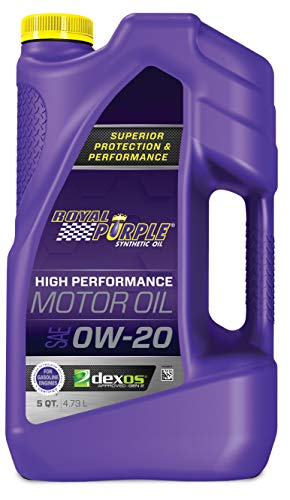
Royal Purple occupies a specific niche: it's the choice of drivers who treat their engine as a long-term investment and want every possible advantage in wear protection and efficiency. The Synerlec additive technology creates an exceptionally strong oil film that resists breakdown under heat and mechanical shear. The result is measurably better protection on critical surfaces — cam lobes, piston rings, and valve train components — versus standard API-certified oils.
The catalytic converter protection angle is one you don't hear enough about. Royal Purple's formulation is engineered to be catalyst-friendly, meaning the additive chemistry won't accelerate catalytic converter degradation the way some older, high-phosphorus formulas can. If you're driving a newer vehicle with tighter emissions controls, this matters. The API licensing means it meets current performance standards while delivering premium additive performance that exceeds the minimum bar.
Fuel efficiency improvements with Royal Purple are real but incremental — don't expect dramatic MPG swings. What you do get is a measurably cleaner, cooler-running engine over the long haul. The purple color is distinctive (and occasionally confusing during oil level checks), but the performance credentials are legitimate. This is a strong choice for enthusiasts, owners of higher-value vehicles, or anyone planning to keep their car running for 200,000+ miles.
Pros:
Cons:
AMSOIL Signature Series is the choice of the extended-drain crowd — and with good reason. This is an oil formulated from the ground up for extreme-service intervals, with a base oil purity and additive concentration that genuinely supports longer drain cycles than most competitors. The gallon format is telling: this is a product for people who know exactly what they're doing with their maintenance schedule and want to buy in volume.
The wear protection credentials are exceptional. AMSOIL's proprietary additive system combines multiple anti-wear mechanisms that work synergistically — not just ZDDP, but also friction-modifier packages and robust oxidation inhibitors that keep the oil from breaking down even as the drain interval extends. The oil consumption reduction is a real benefit for older engines that are borderline on sealing, and the lower emissions output over the life of the oil is a genuine environmental plus.
One important note for 2026: AMSOIL sells primarily through dealers and their own website, so the Amazon gallon listing may have pricing variability. The cost per quart at gallon volume is competitive with premium 5-quart bottles once you factor in the extended drain interval math. If you track your oil changes carefully and want maximum intervals between service, AMSOIL Signature Series is the most engineered solution on this list. Pair it with an AMSOIL Ea oil filter for the full extended-drain system.
Pros:
Cons:
Once your engine crosses 75,000 miles, its needs shift. Seals have cycled through heat expansion and contraction thousands of times. Clearances between moving parts have grown incrementally. The standard Advanced Fuel Economy formula is still technically fine, but the High Mileage version addresses these aging-specific factors directly. The formula includes seal conditioners that restore flexibility to hardened rubber components, reducing the risk of seeping gaskets — one of the most common complaints on higher-mileage vehicles. This is the kind of preventive chemistry that keeps you from dealing with a transmission leak repair bill down the road.
The Triple Action Formula carries over from the standard Mobil 1 line, which means you're still getting the same strong wear protection, cleanliness additives, and oxidation resistance. The difference is in the additional high-mileage chemistry layered on top. ILSAC GF-6 compliance means LSPI protection and timing chain wear protection are present — critical for high-mileage turbocharged engines that are more vulnerable to pre-ignition events as combustion chamber deposits accumulate.
The 10,000-mile drain interval holds for this formula, which is a meaningful benefit for high-mileage drivers who often feel they should be changing oil more frequently as their car ages. With Mobil 1 High Mileage, you don't have to shorten your interval — you just need the right formulation. This is the most specific tool on the list for a specific problem, and it does its job extremely well.
Pros:
Cons:
Costco's Kirkland Signature 0W-20 is one of the more interesting oil stories in recent years. The widely reported — and credible — claim is that Kirkland Signature motor oil is manufactured by Warren Distribution, the same company that produces several name-brand oils, using the same base stock quality standards. Whether or not you subscribe to that specific claim, what's verifiable is this: Kirkland Signature 0W-20 carries the API SN Plus certification and meets ILSAC GF-6 standards. Those certifications are not handed out casually. The oil meets every performance requirement that your modern vehicle's warranty demands.
For everyday drivers who change their oil on schedule — every 5,000 to 7,500 miles — Kirkland Signature is a rational choice. You get a certified, spec-compliant full synthetic at a price that's meaningfully lower than premium brands. The cold-flow properties are solid, and the basic additive package covers wear, oxidation, and deposit control within the GF-6 spec requirements. It's not going to out-perform Castrol EDGE under high-stress conditions, but that's not what it's for.
The availability on Amazon is convenient, though Costco in-store pricing is typically even better per quart. If you're buying for a fleet of family vehicles or simply want a no-drama full synthetic that meets OEM specs without the premium brand tax, Kirkland Signature delivers exactly what it promises — nothing more, nothing less.
Pros:
Cons:

Before anything else, open your owner's manual. If your manufacturer specifies 0W-20, that's the viscosity grade you need — full stop. Modern engines are engineered with tighter bearing clearances, more sophisticated variable valve timing systems, and cylinder deactivation technologies that depend on the correct viscosity to function properly. Running a heavier-weight oil in an engine specced for 0W-20 doesn't add protection; it reduces oil pump efficiency and can interfere with VVT solenoid response at cold start.
Look specifically for API and ILSAC certification marks. In 2026, the current standards are API SP and ILSAC GF-6. GF-6 added Low-Speed Pre-Ignition (LSPI) protection — a critical requirement for turbocharged gasoline direct injection (TGDI) engines, which now power a significant share of new vehicles. If your car has a turbocharged DI engine, GF-6 certification isn't optional.
This is where most buyers leave money on the table. A standard full synthetic is the right call for engines under 75,000 miles in good condition. Once you cross that threshold, the additives in a high-mileage formula — specifically seal conditioners and slightly different viscosity modifiers — address age-related wear patterns that standard oils don't target. Just as understanding the difference between DOT 4 and DOT 3 brake fluid matters for the right brake system fit, matching your oil formulation to your engine's life stage matters for optimal protection.
Extended drain intervals are one of the most marketed features in synthetic motor oil, and one of the most misunderstood. The 20,000-mile claim on Castrol EDGE and the 25,000-mile claim on AMSOIL are achievable under certain conditions — highway driving, moderate temperatures, no towing, no short-trip cold cycling. In real-world mixed driving, most enthusiasts settle on 10,000–12,000 miles as a practical extended interval with premium synthetics.
The most reliable approach is to use an oil analysis service (Blackstone Labs is the industry standard) to test a used oil sample and determine your specific engine's optimal interval. This is especially valuable if you're running extended intervals with AMSOIL or Castrol EDGE, and it pays for itself within one or two averted unnecessary changes. Your engine's wear metals tell you exactly how far you can push it.
0W-20 as a category is already fuel-economy-optimized compared to heavier viscosity grades. Within the 0W-20 family, oils with specific friction-modifier packages — like Mobil 1 Advanced Fuel Economy — deliver incremental MPG improvements versus oils focused purely on film strength. The difference is typically 0.5%–1.5% in real-world testing. That's not dramatic on its own, but across 15,000 miles of driving, it adds up to measurable savings — especially relevant as gas prices remain elevated through 2026.
If maximizing fuel economy is your primary goal, prioritize oils with explicit "fuel economy" or "advanced economy" labeling and friction-modifier-forward additive packages. If your priority is maximum protection for a performance or high-value engine, shift toward film-strength-first products like Castrol EDGE or Royal Purple. Keeping your car in top mechanical shape — from oil to other fluid checks — pairs well with staying on top of maintenance details like paint protection decisions that preserve your vehicle's long-term value.
The "0W" refers to the oil's cold-weather viscosity rating — how easily it flows when starting a cold engine. The "W" stands for winter. A 0W rating means the oil flows freely at very low temperatures, reducing wear during cold starts. The "20" refers to the oil's viscosity at normal operating temperature (100°C). Together, 0W-20 describes an oil that flows like a 0-weight at cold start and maintains 20-weight thickness at operating temperature — the ideal combination for modern fuel-efficient engines.
You should use the viscosity grade specified in your owner's manual. If your manufacturer specifies 5W-20, using 0W-20 is generally acceptable in cold climates since the cold-flow properties are even better — but you should confirm this with your owner's manual or dealership, as some engines are specifically tuned for 5W-20's slightly higher cold-temperature viscosity. Using 0W-20 in an engine that specifies 5W-30 is not recommended, as the thinner film at operating temperature may not provide adequate protection for that engine's design tolerances.
Most manufacturers that specify 0W-20 recommend intervals between 5,000 and 10,000 miles for full synthetic, depending on driving conditions. Premium synthetics like AMSOIL and Castrol EDGE are formulated to support 15,000–20,000-mile intervals in ideal conditions. The most accurate approach is to follow your vehicle's oil life monitoring system (if equipped), your owner's manual recommendation, or invest in a periodic oil analysis to determine your specific engine's optimal interval. Severe service — towing, short trips, extreme temperatures — always shortens the interval.
Yes, unambiguously — if your engine specifies 0W-20. Most vehicles that call for 0W-20 are modern engines with tight tolerances and complex systems like variable valve timing that require the consistent molecular structure of a full synthetic to function optimally. Synthetic blends and conventional oils in 0W-20 grades exist, but they can't maintain viscosity as consistently across temperature extremes or sustain the film strength of a full synthetic over extended intervals. The cost premium per oil change is typically $10–$20 — a fraction of the cost of premature engine wear.
This is a common concern, and it's partially founded. Older engines with hardened, shrunken seals may develop minor seeps when switching from a thicker conventional oil to a thinner full synthetic, because the thinner oil can penetrate gaps that the thicker oil effectively bridged. If your engine is over 75,000 miles, choose a high-mileage formula with seal conditioners — like Mobil 1 High Mileage or Valvoline MaxLife — which include chemistry specifically designed to restore seal flexibility and reduce this risk. If you're already using a thin synthetic and notice new seeps, have your seals inspected rather than switching to a heavier oil as a workaround.
Low-Speed Pre-Ignition (LSPI) is an abnormal combustion event that can occur in turbocharged gasoline direct injection (TGDI) engines — the type increasingly common in modern vehicles. It happens when the fuel-air mixture ignites before the spark plug fires, often triggered by oil droplets entering the combustion chamber. Severe LSPI events can cause catastrophic engine damage. ILSAC GF-6, the current motor oil specification as of 2026, specifically requires oils to pass LSPI prevention tests. When buying 0W-20 for a turbocharged DI engine, always verify the oil carries GF-6 or API SP certification — this is non-negotiable for these engine types.
Every engine on this list is protected by the right 0W-20 synthetic — the only question is which formulation fits your specific situation. Start with Mobil 1 Advanced Fuel Economy if you want a proven, well-rounded performer; step up to Castrol EDGE if your engine sees genuine stress; choose Mobil 1 High Mileage if you're over 75,000 miles; and go Kirkland Signature if you want a certified full synthetic without the brand premium. Pick the oil that matches your engine's needs, commit to your service schedule, and your engine will reward you with years of reliable, efficient performance.
 |
 |
 |
 |

About Joshua Thomas
Joshua Thomas holds a Bachelor of Science in Mechanical Engineering from San Diego State University and has spent years applying that technical foundation to hands-on automotive work — from routine maintenance to full mechanical repairs. He founded CarCareTotal in 2017 to give car owners the kind of clear, practical guidance that helps them understand what is happening under the hood and make smarter decisions about upkeep and repairs. At CarCareTotal, he oversees editorial direction and covers automotive fundamentals, maintenance guides, and troubleshooting resources for everyday drivers.
Get some FREE car parts & gear.. Or check out the latest free automotive manuals and build guides here.
Disable your ad blocker to unlock all the hidden deals. Hit the button below 🚗
| | | |
