by Liam O'Brien
You're stuck in stop-and-go traffic, windows closed, exhaust from the truck ahead seeping through your vents, and your allergies are already firing. If you've spent more than five minutes searching for the right car air purifier, you know how quickly the options multiply — HEPA, ionizers, activated carbon, passive bags — and how hard it is to separate genuine performance from marketing copy. In 2026, the best car air purifiers have gotten more effective, more compact, and more diverse in how they tackle the problem, which means finding the right fit for your specific situation matters more than ever.
The air inside your vehicle can carry pollutant concentrations several times higher than outside air, according to the U.S. Environmental Protection Agency — especially in heavy traffic where exhaust infiltration compounds with off-gassing from plastics, adhesives, and upholstery. A quality car air purifier directly addresses that problem, whether you're commuting through city smog, hauling your dog to the vet, or simply trying to keep the cabin fresh after years of use. The three picks below span the full range of available technologies, giving you a clear path to the right solution based on your actual needs and driving habits.
If you want to keep your car's interior in top shape beyond just the air quality, pairing a car air purifier with a good car vacuum cleaner covers both airborne and surface-level contamination in one practical maintenance routine. The reviews, buying guide, and FAQs below give you everything you need to make a confident decision today.
Contents
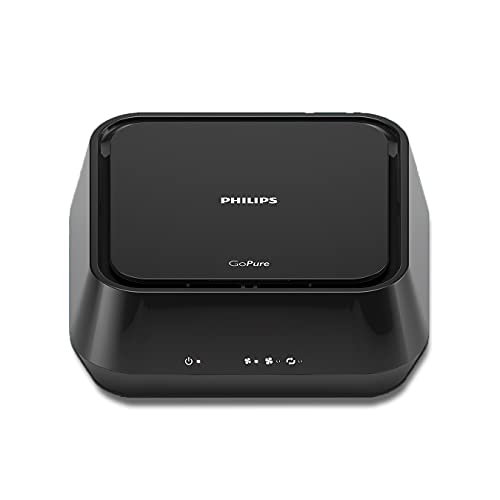




The Philips GoPure GP5212 is the most capable active car air purifier on this list, and it earns that distinction through a combination of certified filtration performance, meaningful CADR output, and a design that integrates cleanly into a compact car cabin. At its core is Philips' SelectFilter Plus technology, a three-layer system that includes a HEPA-class layer, an activated carbon layer for gases and odors, and a proprietary HESA layer specifically engineered to neutralize volatile organic compounds — formaldehyde, toluene, and other harmful gases that off-gas from dashboards, adhesives, and carpet in new and older vehicles alike. The unit is certified by Airmid Healthgroup, an independent allergen testing body, and that certification means the filtration claims are backed by third-party lab data rather than manufacturer self-reporting.
Performance is where the GP5212 genuinely separates itself from the competition. Its Clean Air Delivery Rate of 16 cubic meters per hour means it processes half a standard car interior in under ten minutes — a metric that matters enormously when you're driving through tunnel exhaust or sitting in parking structure smog. The unit plugs into your 12V cigarette lighter socket and draws minimal power, which means it stays on quietly in the background without taxing your electrical system or requiring its own battery. The form factor is compact and unobtrusive, sitting either on the seat or dashboard without blocking sightlines, and the filter replacement cycle is straightforward with no complicated maintenance requirements.
The GP5212 targets a wide spectrum of airborne threats simultaneously: pollen, bacteria, viruses, cigarette smoke, pet dander, PM2.5 particulate matter, and exhaust fumes all fall within its 100-plus pollutant removal claim. If you or your passengers have respiratory sensitivities, asthma, or seasonal allergies, this is the unit that delivers genuine clinical-grade performance in a car-sized package. It costs more than a passive absorber or a basic ionizer, but the performance differential justifies the price premium for anyone who spends significant time commuting in polluted urban environments. Explore our full automotive tools and accessories guide for more top picks across every product category.
Pros:
Cons:
The TNQDA 2-Pack takes a fundamentally different approach to in-car air quality — one that requires no power, no batteries, no refills, and no maintenance beyond occasional placement checks. These are passive odor absorbers built from eco-friendly materials that work through continuous natural absorption of airborne odor molecules, and the manufacturer's claim of up to five years of effective deodorizing puts them in a completely different cost-per-year category than any active purifier on the market. If your primary concern is persistent odor — pet smell, stale smoke, food odor, or general mustiness that has worked itself into your upholstery and carpet — the TNQDA units address that specific problem at a fraction of the cost and complexity of powered alternatives.
The two-pack format is deliberately practical: place one under the front seat and one in the trunk or rear cargo area to create full-coverage deodorizing across the entire cabin volume. The compact form factor means neither unit takes up usable interior space, and because there's no power cord or socket requirement, you're not sacrificing your 12V outlet or USB ports. The eco-friendly material composition makes these a genuinely sustainable choice compared to aerosol fresheners or synthetic fragrance options, and they operate silently — no fan noise, no ionizer crackle, no moving parts of any kind. For families with young children, people sensitive to artificial fragrance, or anyone who prefers a completely hands-off approach to cabin freshness, the TNQDA units are exactly the right tool.
Where you need to set clear expectations is filtration performance: passive absorbers do not capture PM2.5 particulates, bacteria, viruses, or exhaust gases the way a HEPA active purifier does. They absorb odor molecules effectively over time, but they are not air purifiers in the filtration-technology sense. If your primary issue is lingering smell rather than allergen or pollutant removal, these deliver outstanding value — especially at two units per purchase with a multi-year service life. If you're dealing with a child's car seat environment and want to complement these with interior air hygiene tools, check out our review of the best high back booster seats of 2026 for complementary cabin safety equipment recommendations.
Pros:
Cons:
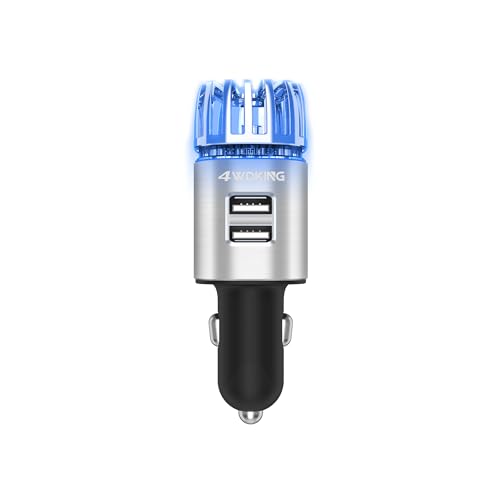
The 4WDKING Car Air Purifier Ionizer operates on ionic technology, releasing up to 5.6 million negative ions per cubic centimeter into your cabin environment and using those ions to neutralize airborne pollutants through charge-based attachment rather than physical filtration. When negative ions bond with positively charged particles — dust, pollen, bacteria, viruses, PM2.5 particulate — they cause those particles to become heavy and fall out of the breathing zone, effectively removing them from the air you're inhaling without requiring a replaceable filter element. The unit also emits a trace amount of ozone, which the manufacturer describes as similar in scent to a summer rain shower, and that ozone contributes to odor neutralization particularly in enclosed spaces like a sealed vehicle interior.
What sets this unit apart from a basic ionizer is the dual 2.1A USB charging integration built directly into the device body. You plug the purifier into your 12V socket, and you get two fast-charging USB ports back in return — meaning you're not giving up a charging port to run your air quality device, a genuinely practical engineering choice for anyone who relies on their car socket for device charging during commutes or road trips. The silver finish integrates cleanly with most modern car interiors, and the compact form factor keeps it unobtrusive in the center console or cupholders. For a breathalyzer or other compact car accessories you keep plugged in, check our best breathalyzer roundup to see what pairs well in a similar compact-device format.
The ionic technology approach does carry one important caveat that deserves clear treatment: ionizers work best over cumulative exposure periods rather than delivering immediate dramatic improvements the way a high-CADR active filter does. The ozone output, while low in this unit, is not recommended for extended use in completely sealed cabins for occupants with respiratory sensitivities, asthma, or ozone sensitivity. In normal daily commuting conditions with typical cabin air exchange, the unit performs well at neutralizing odors and reducing particulate load without filter replacement costs. If you want maximum particulate filtration performance, the Philips GP5212 above delivers more certifiable results — but for budget-conscious buyers who want an ionizer that also solves their USB charging problem, this is a strong pick in 2026.
Pros:
Cons:

The single most important buying decision is choosing the right filtration technology for the specific pollutant or problem you're trying to solve, because each technology type has a distinct strength profile and a real performance ceiling outside that profile.
Matching the technology to the problem — rather than buying the most expensive unit by default — is the fastest path to a satisfying result.
Clean Air Delivery Rate measures how quickly a purifier processes a defined volume of air, expressed in cubic meters per hour in metric systems. For a standard compact car interior of approximately 2–3 cubic meters, a CADR of 16 m³/hour (as on the Philips GP5212) means full air exchange several times per hour during normal operation — meaningful real-world performance rather than a theoretical maximum under ideal conditions.
Car air purifiers draw power from three primary sources, and the right choice depends on how you prioritize convenience, performance, and available power ports in your specific vehicle.
If you drive an EV or hybrid and actively manage your cabin electronics load, the passive or USB-integrated options give you air quality improvement without adding to your electrical overhead. For more comprehensive EV cabin management context, our review of the best Level 2 EV chargers for home of 2026 covers the broader EV accessory ecosystem.
Even the best-performing car air purifier fails its purpose if it's physically awkward to integrate into your daily driving setup or if the ongoing cost of maintenance creates friction over time. Consider these practical factors before finalizing your choice:
Yes — active car air purifiers with verified filtration technology deliver measurable improvements in cabin air quality. The Philips GoPure GP5212, for example, is independently certified by Airmid Healthgroup and achieves a CADR of 16 m³/hour, which is a real, testable performance metric. Passive absorbers work differently but are equally effective within their specific scope: they don't filter particles, but they do reduce organic odor compounds continuously over their service life. The key is matching the technology to your actual problem — particulate and allergen filtration requires an active HEPA-class unit, while persistent odor is better addressed by a passive absorber or ionic system.
For a compact or mid-size car interior (roughly 2–3 cubic meters of cabin volume), a CADR of 10–20 m³/hour is sufficient for meaningful air quality improvement during normal commuting. The Philips GP5212 hits 16 m³/hour, which covers 50% of a standard interior in under ten minutes — a strong real-world benchmark. For larger vehicles like full-size SUVs, minivans, or trucks with greater cabin volume, aim for the upper end of that range or consider running two smaller units simultaneously to achieve adequate coverage across both the front and rear cabin zones.
Ionic car purifiers are safe for most users under normal commuting conditions, but you need to be aware of the ozone component. Low-level ozone output — like that produced by the 4WDKING ionizer — is generally not a concern in typical use with normal cabin ventilation and daily drive cycles. However, if you or your passengers have asthma, COPD, or known ozone sensitivity, the California Air Resources Board (CARB) recommends avoiding ozone-generating devices in enclosed spaces. In those situations, a certified HEPA active purifier like the Philips GP5212 or a completely passive absorber is the appropriate choice.
Most active HEPA car air purifiers require filter replacement every three to six months, though the actual interval depends heavily on your local air quality, daily driving distance, and whether you frequently drive in high-pollution conditions like heavy traffic, tunnels, or near industrial areas. Some premium units include a filter life indicator that removes the guesswork from replacement timing. Passive absorbers and ionic units have no filter to replace — the TNQDA units are rated for up to five years of continuous use, making them significantly lower maintenance over the lifetime of the product.
Yes, but the technology matters. For pet dander and allergens — the airborne particles that trigger allergic reactions — an active HEPA or multi-layer purifier like the Philips GP5212 is the right tool, as it physically captures those particles in the filter medium. For pet odor specifically, a passive absorber like the TNQDA units or an ionic purifier both work effectively, since they target the chemical compounds that create the smell rather than the visible dander particles. For the most comprehensive coverage — both the allergen particles and the odor compounds — a multi-layer active purifier that combines HEPA with activated carbon addresses both vectors simultaneously.
Yes, and in many cases you should. Running an active car air purifier simultaneously with your climate control system actually improves overall cabin air quality — the purifier handles airborne pollutants and allergens while your AC or heater manages temperature and humidity. The two systems do not compete or interfere with each other. One practical tip: if your vehicle's climate system has a recirculation mode, using it while your purifier is running keeps the cabin air cycling through the purifier's filtration system rather than continuously drawing in fresh polluted air from outside, which maximizes the purifier's effective performance particularly during high-traffic commuting.
 |
 |
 |
 |

About Liam O'Brien
Liam O'Brien has spent over a decade buying, field-testing, and evaluating automotive tools with a focus on what actually performs in a real DIY garage rather than what markets well on a spec sheet. His hands-on experience spans hand tools, diagnostic equipment, floor jacks, socket sets, and specialty automotive gear across a wide range of brands and price points. At CarCareTotal, he covers automotive tool and equipment reviews, garage setup guides, and buying advice for home mechanics.
Get some FREE car parts & gear.. Or check out the latest free automotive manuals and build guides here.
Disable your ad blocker to unlock all the hidden deals. Hit the button below 🚗
| | | |
