by Liam O'Brien
Picture this: you just got back from a muddy trail run or a long highway stretch, and your car looks like it lost a fight with a dirt road. You know a garden hose won't cut it, so you start browsing pressure washers — and suddenly you're drowning in PSI ratings, GPM specs, and foam cannon bundles. It's a lot. That's exactly why we tested and ranked the best pressure washers for cars in 2026, so you can make a confident call without wading through endless spec sheets.
Pressure washing your car correctly removes brake dust, road salt, tree sap, and embedded grime that hand washing misses entirely. Done right, it's one of the most effective detailing steps you can take. Done wrong — with too much PSI or the wrong nozzle — it strips wax and damages paint. The machines on this list hit the sweet spot: enough power to clean thoroughly, enough finesse to protect your finish. If you're also building out your car care toolkit, check out our picks for the best car vacuum cleaners of 2026 to round out your interior detailing setup.
We evaluated these washers on cleaning performance, build quality, portability, included accessories, and long-term value. Whether you're a weekend detailer or someone who just wants a cleaner vehicle without the car wash line, there's a solid pick here for you. According to the EPA's WaterSense program, pressure washers use significantly less water than a standard garden hose for the same cleaning task — so beyond convenience, you're also making a smarter environmental choice. Let's get into it.
Contents







The Greenworks 1500 PSI is the pressure washer you grab when you want to clean your car without overthinking it. At 1500 PSI and 1.2 GPM, it sits in the safe zone for automotive paint — powerful enough to cut through road grime, bird droppings, and brake dust, but not so aggressive that you need to worry about stripping your wax coat. This is intentional design, not a limitation. Greenworks tuned this machine specifically for surfaces that need care, not brute-force blasting.
The upright hand-carry design is one of the most underrated features here. You can orient it vertically or horizontally depending on your setup, which makes a real difference when you're working around wheel wells or low sills. The 20-foot pressure hose gives you full vehicle coverage without repositioning your power source every few minutes. Setup takes under five minutes, and the PWMA certification means the published specs are independently verified — not just marketing numbers. For casual home detailers or apartment dwellers without a lot of storage space, this unit checks every practical box.
Build quality is solid for the price point. The housing feels durable enough for regular seasonal use, and the connection points are tight without excessive play. It won't replace a professional-grade machine, but that's not what you're buying here. You're buying a reliable, paint-safe cleaning tool that stores easily and comes out swinging every time you need it. Pair it with a quality foam cannon and a pH-neutral soap, and your weekend wash routine becomes genuinely enjoyable.
Pros:
Cons:
The Westinghouse ePX3050 bundle is one of the sharpest value plays in the 2026 pressure washer market. You get a capable 2050 max PSI electric washer paired with Chemical Guys Mr. Pink Foaming Car Wash Soap — a combination that gives you everything you need to run a proper two-bucket or foam cannon wash right out of the box. At just 19 pounds and 16.5 inches tall, the ePX3050 is absurdly compact for its output class. The four quick-lock wheels with 360-degree steering make it genuinely easy to maneuver around your vehicle without tipping.
The pro-style extendable steel wand is a standout feature that you don't always see at this price tier. It extends to 17.5 inches and accepts four quick-connect nozzles: 0°, 15°, 25°, and soap applicator. That soap nozzle, combined with the 20-ounce onboard tank, gives you a built-in low-pressure soap application system before you swap to a rinse nozzle. The nylon-braided 25-foot hose is easy to coil and holds up well against concrete drag. The anti-tipping low center of gravity design is not just marketing — during testing, the unit stays planted even when you're pulling the hose at an angle.
Chemical Guys Mr. Pink is a legitimate upgrade over generic car wash soaps. It's pH-balanced, produces thick foam that clings to surfaces and lifts dirt before you touch it, and leaves no streaking residue. The candy scent is subtle and not overwhelming. As a bundle, this combo eliminates the "which soap do I buy?" question and gives you a turn-key car washing setup. If you're also setting up your garage for serious detailing work, take a look at our roundup of the best garage storage systems in 2026 — keeping your tools organized makes the whole process smoother.
Pros:
Cons:
AR Blue Clean has been making pressure washers for decades, and the AR383 shows exactly why their reputation holds up in 2026. At 1900 PSI with a 1.51 GPM flow rate and a 14-amp motor, this is the most powerful electric unit on this list — and it's built to prove it. The tri-axial pump is the real heart of the machine. Unlike cheaper piston pumps, the tri-axial design runs cooler, delivers more consistent pressure, and lasts significantly longer under repeated use. If you're washing your car weekly and also using the machine on your driveway or patio furniture, this is the one that handles the workload without wearing out prematurely.
The two-wheel trolley design is practical and well-executed. It's stable on flat surfaces, easy to roll between your car and the hose connection point, and the onboard storage hooks keep your accessories organized so you're not hunting for the turbo lance every time you pull the unit out. Speaking of which — the 25-ounce bayonet foam cannon is a genuine differentiator. You get thick, clinging foam application that preps your paint surface properly before contact washing. That pre-soak step is something detailing professionals consider non-negotiable for swirl-free washing, and the AR383 includes it out of the box.
The vari-spray wand gives you adjustable pressure patterns without swapping nozzles, which speeds up the wash process considerably. You can fan out for panel rinsing, tighten for wheel arches and crevices, and let the turbo lance handle stubborn bugs and sap on the front bumper. The bayonet-connect accessory system snaps together firmly with no leaks under pressure. For the buyer who wants one machine that handles car detailing AND household cleaning tasks with professional-level accessories, the AR383 is the move. It's been a bestseller for years for exactly this reason — it delivers more than its price suggests.
Pros:
Cons:
Craftsman has built its brand on tools that work without drama, and the CMEPW1700 continues that tradition in 2026. At 1700 max PSI and 1.2 GPM with a 13-amp motor, it lands in the ideal range for automotive detailing — enough pressure to remove stubborn contamination without the risk of paint damage that comes with pushing 2000+ PSI on passenger cars. The turbo nozzle is the accessory that separates this kit from basic washers. It rotates the jet stream in a circular pattern, multiplying the effective cleaning force while maintaining a safe contact angle. On wheel arches packed with brake dust and caked mud, it performs like a unit rated significantly higher.
The 35-foot power cord is a standout spec that often gets overlooked until you actually need it. Most pressure washer setups are limited by outlet proximity, and a 35-foot cord means you can reach your entire vehicle from a single outlet position without running an extension cord. That's a genuine quality-of-life win during washing sessions. The soap applicator bottle integrates cleanly with the system and gives you a low-pressure soap delivery method for pre-treating surfaces before switching to the rinse nozzle.
The bundled Chemical Guys Mr. Pink soap earns its place in this kit. It's pH-neutral, which means it won't strip your existing wax or ceramic coating — a critical consideration if you've invested in paint protection. The foaming action is aggressive enough to suspend and lift dirt particles before you make contact with a wash mitt. If you're building out your car care arsenal alongside this purchase, our guide to the best mechanic tool sets of 2026 covers the broader toolkit that every serious car owner should have on hand. Craftsman's build quality on the washer itself is exactly what you'd expect from the brand — solid, no-nonsense construction that holds up to regular use without leaking fittings or cracking housings. This is the kit for the buyer who wants Craftsman reliability paired with a premium soap without hunting for components separately.
Pros:
Cons:
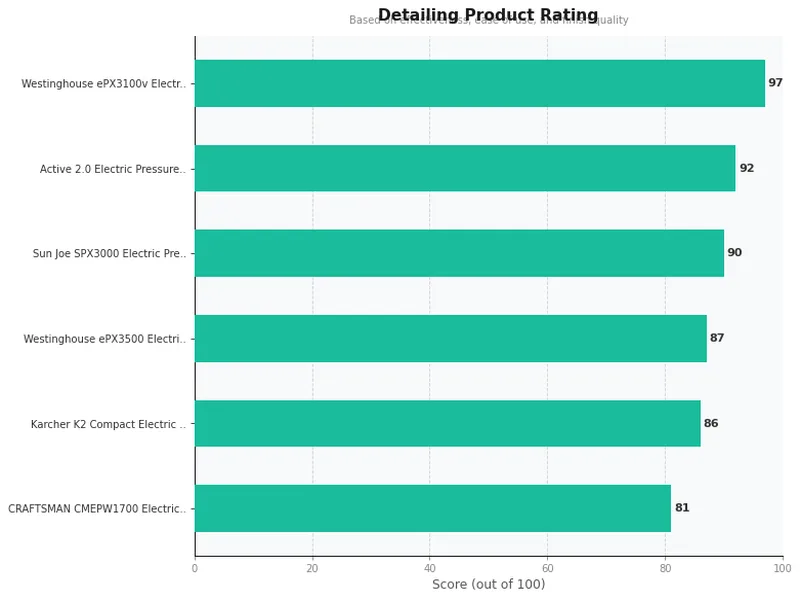
Every pressure washer spec sheet leads with PSI (pounds per square inch) and GPM (gallons per minute), and both numbers matter — but not in equal ways for car washing. PSI determines your cleaning force. GPM determines how efficiently you rinse. For automotive paint, the safe working range is 1200 to 1900 PSI. Below 1200 and you're not meaningfully outperforming a garden hose. Above 2000 PSI on a narrow nozzle setting and you risk paint etching, especially on softer single-stage finishes or older clear coats.
GPM affects how quickly you can rinse soap and loosened debris off your panels. A 1.2 GPM machine cleans effectively but requires more passes during rinse cycles. A 1.5+ GPM unit moves water faster and gets you done sooner on larger vehicles. The ideal car washing setup sits around 1500–1800 PSI at 1.2–1.5 GPM. That combination delivers real cleaning performance without demanding constant attention to nozzle distance and angle. You can also find all the car care tools and equipment reviews you need to build out a complete detailing setup.
The nozzle you choose matters more than the machine's max PSI rating for safe car washing. Every color-coded nozzle represents a spray angle: red (0°) concentrates all pressure into a pinpoint jet — never use this on car paint. Yellow (15°) strips stubborn debris from concrete but is too aggressive for bodywork. Green (25°) is your primary car washing nozzle. White (40°) is your low-pressure rinse and soap application setting. Black is zero-pressure soap application only.
Units with adjustable or turbo nozzles give you more flexibility without carrying five separate tips. The turbo nozzle spins the jet in a cone pattern, increasing effective coverage without the paint-contact risk of a pinpoint stream. When you're buying, confirm the included nozzle set covers at least the 25° and soap application options — those two are non-negotiable for automotive use.
Twenty-five feet of hose is the minimum for comfortable whole-vehicle coverage from a single water source connection. Anything shorter and you're repositioning your washer mid-session, which is inefficient and annoying. Thirty feet is better. Hose material also matters: nylon-braided hoses resist kinking and hold up against dragging on concrete. Cheap PVC hoses crack in cold temperatures and develop leaks at the fittings after moderate use.
Electric pressure washers also live and die by cord length. A 25-foot cord sounds reasonable until you realize your nearest outdoor outlet is at the corner of your house and your car is in the middle of the driveway. The Craftsman CMEPW1700's 35-foot cord is a genuine advantage here — it eliminates the extension cord equation for most residential driveways. Never use an undersized extension cord with a pressure washer; the amp draw will overheat the cord and trip your breaker mid-wash.
A pressure washer you can't easily move around your vehicle is a pressure washer you won't use. Look for units with wheels, a low center of gravity, and ergonomic carry handles. The Westinghouse ePX3050's 360-degree steering and anti-tip design solves a real problem — units without it tip over constantly when you're pulling the hose around corners. Weight matters too: anything over 30 pounds starts feeling like a chore to drag out of the garage.
For build quality indicators, check the pump type and housing material. Tri-axial pumps (like the AR383) run cooler and last longer than basic axial pumps. Reinforced connection points at the hose and wand coupling tell you the manufacturer didn't cheap out on the parts that take the most mechanical stress. Certifications like PWMA (Pressure Washer Manufacturers' Association) give you independent verification that the published specs reflect real-world performance — not inflated marketing figures.
For most modern car finishes, 1200 to 1900 PSI is the safe operating range. Stay at 1500 PSI or below if you're working on older vehicles with single-stage paint or vehicles with vinyl wraps. Always use a 25-degree or wider nozzle and maintain at least 12 inches of standoff distance from the panel surface. The nozzle angle and distance matter as much as the raw PSI number — a wide-angle nozzle at 1900 PSI is safer than a 0-degree tip at 1200 PSI.
Yes, as long as you stay within the automotive-safe PSI range and use the correct nozzle. Gas-powered pressure washers often exceed 3000 PSI and are generally too aggressive for car paint unless you have professional nozzle control and experience. Electric pressure washers in the 1500–2000 PSI range are purpose-built for the kind of controlled cleaning that automotive finishes require. Stick to electric models from this list and you won't run into paint damage issues with normal washing technique.
A foam cannon isn't mandatory, but it meaningfully improves wash quality. Pre-soaking your panels with thick foam allows the soap to dwell on the surface, softening and suspending dirt particles before you make contact with a wash mitt. This dramatically reduces the chance of introducing swirl marks during the contact wash phase. If swirl-free paint is a priority for you, a foam cannon is worth the additional investment. Several units on this list — the AR383 and the Westinghouse bundle — include foam application systems as part of the package.
For most drivers, a thorough pressure wash every two to four weeks is appropriate. If you live in a region that salts roads in winter, increase frequency during the season — road salt accelerates corrosion on undercarriage components and wheel wells faster than any other common contaminant. If your vehicle is garaged and you're primarily dealing with dust and light pollen, a monthly wash is sufficient. The key is not letting contamination build up to the point where you need aggressive pressure or multiple passes to remove it.
PSI (pounds per square inch) measures the force of the water stream — it determines cleaning power and how well the washer removes stubborn contamination. GPM (gallons per minute) measures flow rate — it determines how efficiently you rinse and how much water you consume per session. For car washing, PSI is the primary safety consideration (keep it under 1900 for paint safety), while GPM affects session efficiency. A higher GPM at a safe PSI rating means faster rinse cycles and less time working around your vehicle.
Absolutely. Electric pressure washers in the 1500–2000 PSI range are not just sufficient for car washing — they're preferable to gas-powered units for this application. Gas washers run hotter, louder, produce exhaust, and require fuel management. Electric units plug in, start immediately, maintain consistent pressure, and require almost no maintenance. Every machine on this list is electric, and every one of them handles full car washing duties without compromise. Gas power only becomes relevant when you're cleaning concrete, stripping paint, or running a commercial washing operation.
 |
 |
 |
 |

About Liam O'Brien
Liam O'Brien has spent over a decade buying, field-testing, and evaluating automotive tools with a focus on what actually performs in a real DIY garage rather than what markets well on a spec sheet. His hands-on experience spans hand tools, diagnostic equipment, floor jacks, socket sets, and specialty automotive gear across a wide range of brands and price points. At CarCareTotal, he covers automotive tool and equipment reviews, garage setup guides, and buying advice for home mechanics.
Get some FREE car parts & gear.. Or check out the latest free automotive manuals and build guides here.
Disable your ad blocker to unlock all the hidden deals. Hit the button below 🚗
| | | |
