Car Care ›
by Diego Ramirez
The Meguiar's Water Magnet Microfiber Drying Towel is our top pick for 2026 because its advanced microfiber construction absorbs up to twice the water of a standard terry towel in a single pass. If you have ever chased water spots around your hood with a cheap chamois, only to watch streaks appear minutes after you thought you were done, you already understand exactly why choosing the right drying towel matters more than most detailers admit. The final step of any wash routine is where paint protection either succeeds or gets undermined, and the towel dragging across your clear coat is the variable that determines the outcome.
Car drying towels have evolved dramatically over the past decade, moving from the waffle-weave basics of the early 2000s into a sophisticated category defined by GSM ratings, twisted-loop fiber engineering, edge construction, and coating compatibility. A good towel in 2026 does more than soak up water — it glides across paint without introducing micro-scratches, manages water weight without becoming unmanageable, and survives dozens of machine washes without losing performance. For anyone who invests in paint protection film, ceramic coatings, or even a quality wax, the drying towel is the last line of defense before those investments are tested by daily UV exposure. Understanding what separates an exceptional towel from a mediocre one is the difference between a showroom finish and a finish riddled with swirls that reveal themselves under a flashlight. You can pair a great drying towel with other essentials from our car care guides to build a complete wash routine that actually protects your investment.
To build this guide, we tested and compared seven of the highest-rated drying towels available in 2026, evaluating each one across absorbency, surface safety, edge construction, size, and real-world drying speed on vehicles ranging from daily drivers to weekend project cars. Whether you are maintaining a bare paint job, a fresh ceramic coating, or a daily-use truck, there is a towel in this lineup built specifically for your needs. We have also included a focused buying guide and a comprehensive FAQ section to help you make the most informed purchase possible.
Contents



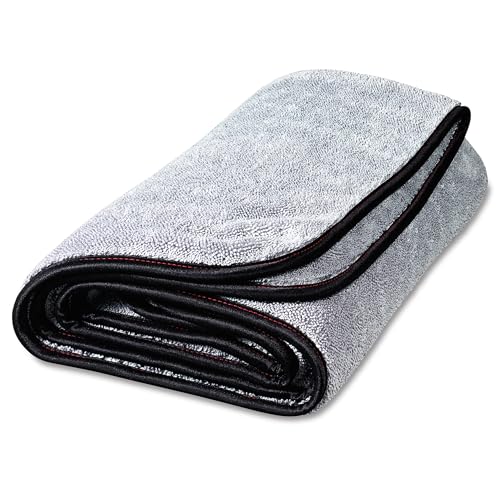




Meguiar's has been in the detailing business long enough to understand that a drying towel lives or dies by its fiber architecture, and the Water Magnet is the clearest demonstration of that philosophy the brand has ever produced. The advanced microfiber blend pulls water off paint surfaces with a decisiveness that you notice immediately — one slow, flat drag across a wet hood and the surface behind the towel comes up genuinely dry, not just damp enough to air-dry the rest of the way. That two-times absorption advantage over standard terry is not marketing copy; it translates into half the passes required across every panel, which directly reduces contact time and the cumulative risk of introducing swirl marks.
Where the Water Magnet particularly earns its reputation is on glass and trim, two surfaces where cheap microfiber leaves streaks almost immediately. The material's engineered fiber structure traps water molecules rather than redistributing them, so windows come out streak-free without any secondary buffing pass. The towel is generously sized for single-handed use on hoods and roofs, and the construction holds up through repeated machine washes without the fiber degradation that plagues budget alternatives. Meguiar's recommends washing it separately from other laundry, and following that advice extends the towel's useful life considerably — a detail worth noting for long-term value assessment.
For the everyday car owner who wants a single reliable towel from a brand with decades of proven detailing chemistry and tool expertise, the Water Magnet delivers exactly what it promises without overcomplicating the selection process. It is the drying towel we would hand to a first-time buyer without hesitation, and it is also the one that experienced detailers keep coming back to when they want a no-drama, reliable performer for daily wash sessions.
Pros:
Cons:
Griot's Garage built the PFM Terry Weave around one central engineering insight: holding more water per square inch means fewer trips back to the bucket or the wringing station, and a 1120 GSM rating backs that claim with real structural authority. At 25 by 35 inches, this towel covers more surface area per pass than almost any other option in this review, and the long-loop terry weave construction creates physical channels within the fiber matrix that capture and retain water even when the towel is moving quickly across curved body panels. The double-sided construction effectively doubles your working surface before you need to wring out the towel, which on a full-size SUV or truck means you can typically complete an entire drying session with a single towel without feeling like you are redistributing water rather than removing it.
The radiused corners with soft satin edging are one of the genuinely thoughtful design details that separate this towel from competitors priced similarly. Sharp-cornered towels create localized pressure points during drying, and on soft clear-coat finishes those pressure points are exactly where micro-marring starts to appear under harsh lighting. The satin edging on the PFM glides instead of catching, which means the edges of the towel are as safe as the center — a distinction that matters when you are pulling a towel over a door handle recess or along a body line where fabric bunching creates corner contact. Griot's designed this towel for professional use, and the build quality reflects that intent across every dimension you can measure.
If you are maintaining a vehicle with a fresh paint correction, a high-end wax, or a paint protection film that demands zero-compromise surface contact, the PFM Terry Weave is the towel that matches that level of commitment. The five-pound water capacity is not an exaggeration, and the construction holds that performance across dozens of wash cycles, making the higher price point a straightforward value proposition for serious detailers who understand the math of protecting a quality finish.
Pros:
Cons:
Waffle weave represents a fundamentally different approach to water capture than standard plush microfiber, and the Chemical Guys Gray Matter is the clearest example of why that geometry works so well on paint surfaces. The recessed grid pattern of a waffle weave creates surface area within the towel's face that acts like a series of small reservoirs, pulling water off paint and into the towel rather than simply pushing it around — a mechanism that makes the Gray Matter particularly effective on flat panels like hoods, roofs, and trunk lids where water tends to sheet rather than bead. The 25 by 36 inch dimensions give you a towel that folds into a manageable pad or unfolds for open draping across large surfaces, depending on your preferred drying technique.
Chemical Guys' premium blend construction ensures the fiber maintains its softness across multiple wash cycles, which is a real differentiator in the waffle weave category where lower-quality versions become stiff and rough after a handful of machine washes and start behaving more like a scouring pad than a drying aid. The soft-banded edges are specifically engineered to prevent the edge-scratch problem that plagues waffle weave towels with exposed stitch edges — a problem that becomes particularly visible on dark-colored vehicles with freshly polished paint. The Gray Matter is compatible with clear coat, glass, and chrome without any risk of surface interaction, which makes it a genuinely versatile tool across different vehicle surface types. If you want to explore the full science behind microfiber construction and why fiber density matters, Wikipedia's microfiber article offers a solid technical foundation that explains why GSM ratings and fiber split ratios translate into real performance differences.
The Gray Matter belongs in your detailing kit if you are working on vehicles with complex panel shapes where water tends to pool in recesses and body lines, because the waffle weave geometry is particularly effective at lifting standing water rather than just absorbing the surface film. Paired with a quality car duster for between-wash maintenance, this combination keeps your paint looking consistently clean without requiring a full wash cycle every time the car picks up light dust or pollen.
Pros:
Cons:
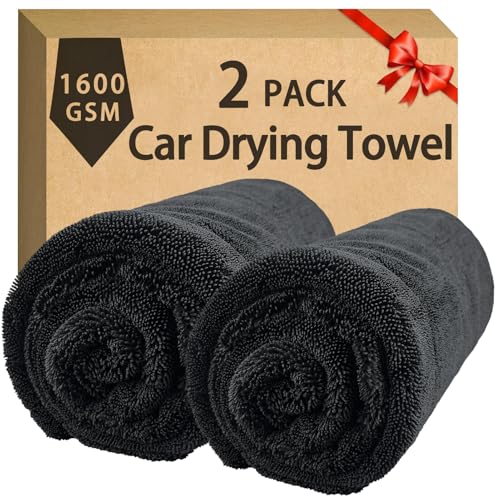
The BIBOKLTIY 2-Pack enters this list as the value leader, and it earns that position by delivering a 1600 GSM fiber density — higher than any other towel in this review — at a price point that includes two towels, which fundamentally changes the per-towel cost calculation for buyers who are equipping a garage rather than purchasing a single specialty item. The advanced twisting technology behind the fiber construction creates what the manufacturer describes as fine water-absorbing braids across the towel's surface, and in practice that translates into a contact texture that is both highly absorbent and genuinely gentle against paint — a combination that higher-priced competitors achieve through different engineering approaches but do not necessarily outperform on the basics.
At 28 by 36 inches, the BIBOKLTIY is one of the largest towels in this review, and the edge-free design eliminates the stitching-edge scratch risk that makes budget towels problematic on polished or newly detailed paint. The single braids measuring approximately 6mm in length create enough fiber height to prevent the base layer from making direct contact with paint during flat dragging, which is the moment when a low-quality towel introduces fine scratches that only become visible under direct sunlight. The machine-washable construction holds up well through repeated wash cycles, and having two towels in the kit means you can complete one towel's worth of drying, set it aside, and start fresh on the second half of the vehicle — a workflow that matters more than it might seem when you are working on a full-size truck or a large SUV in warm weather where the car is drying faster than your single towel can keep up.
Buyers who are outfitting a home detailing setup from scratch, or who maintain multiple vehicles and need reliable working stock without a premium price commitment, will find the BIBOKLTIY 2-Pack to be the most practical entry point in this category in 2026. The value proposition is straightforward: two large, high-GSM, edge-safe towels for less than most single premium options, with performance that punches well above the price point in real-world testing.
Pros:
Cons:
Gyeon is one of the most respected names in the ceramic coating space, and when a company that manufactures liquid coatings designed to protect paint at a molecular level builds a drying towel, the design specifications reflect exactly what those coatings demand during the wash-and-dry process. The Silk Dryer uses a premium twisted-loop silk-blend microfiber that the brand explicitly describes as having zero drag against delicate surfaces — and for anyone maintaining a ceramic-coated vehicle, drag is the primary enemy during drying because even slight surface friction can introduce micro-scratches that disturb the hydrophobic layer over time and eventually compromise the visual clarity that makes a ceramic coating worth the investment.
The ultra-soft construction pulls water from paint, glass, and trim quickly without becoming heavily saturated during the process, which keeps the towel manageable and effective through the entire drying sequence rather than requiring a mid-session wringing break. The streak-free and lint-free performance is verifiable — ceramic coatings bead water into tight droplets that are particularly unforgiving of any residual lint or fiber transfer, and the Silk Dryer leaves surfaces clean enough that you will not need a secondary wipe-down pass to address fiber residue. For vehicles wrapped in paint protection film, where surface sensitivity and chemical compatibility are paramount, the Silk Dryer's silk-blend construction is specifically appropriate and performs without the surface drag that lower-quality microfiber introduces on film surfaces.
Gyeon markets the Silk Dryer for cars, trucks, and SUVs, but the construction also makes it an excellent candidate for auto detailing applications that extend beyond basic drying — the softness and lint-free performance make it suitable as a final wipe-down cloth after applying quick detailers or ceramic coating boosters, which is a real secondary value for detailers who work with coating maintenance products regularly. If you are also interested in maintaining other performance components on your vehicle, our review of the best digital tire pressure gauges covers another essential tool in the committed detailer's maintenance kit.
Pros:
Cons:
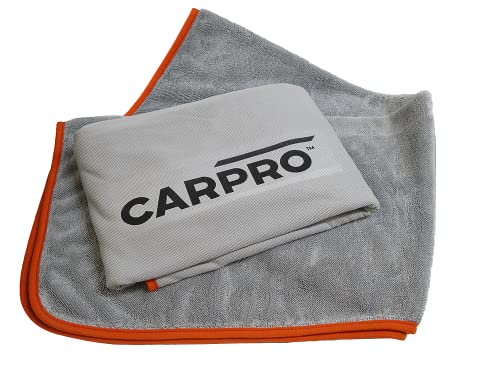
CARPRO designed the DHydrate with a specific operational philosophy: lay the towel flat across the surface and drag it slowly rather than pressing and wiping, and the result is a drying process that removes water without any meaningful surface contact pressure — a technique that is particularly well-matched to waxed, sealed, and coated finishes where the protective layer itself is doing the hydrophobic work and your job is simply to remove the standing water before it evaporates and leaves mineral deposits behind. The 28 by 40 inch dimensions make this the largest towel in this review by total surface area, and that scale is directly relevant to the dragging technique because a larger towel covers more ground per pass without the folding and repositioning that interrupts drying momentum on large vehicles.
The microfiber edge construction is lint-free and tag-free, which eliminates two of the most common sources of surface contamination during the drying step — loose label tags are a notorious scratch source on budget towels, and the DHydrate's construction decision to eliminate them entirely reflects CARPRO's professional-grade attention to surface safety. The glide performance across waxed and sealed surfaces is genuinely smooth in a way that distinguishes this towel from alternatives with a tackier microfiber surface, and that smoothness translates directly into faster drying with less physical effort, particularly on horizontal surfaces like hoods and roofs where gravity is already doing some of the water-removal work for you.
For detailers who apply sealants or waxes regularly and need a drying tool that complements those protective layers rather than working against them, the DHydrate occupies a well-defined niche in 2026. It is also worth noting that the DHydrate's large format and drag-style technique make it an excellent companion tool for use after a foam cannon pre-wash, where the goal is removing a high volume of water quickly rather than achieving the ultra-fine surface clarity required after a full two-bucket wash method. Keeping your wash routine sharp also means having the right support tools — our car duster guide covers the best options for maintaining clean paint between full washes, which complements what a quality drying towel accomplishes after each wash session.
Pros:
Cons:
Chemical Guys named this towel after the largest shark that ever lived, and the Megalodon's 24 by 36 inch format with twisted-loop fiber technology backs that ambition with genuine performance credentials designed specifically for large vehicle applications — trucks, SUVs, RVs, and full-size sedans where conventional towels require constant folding, repositioning, and wringing before you are halfway through the drying sequence. The twisted-loop fiber architecture is the key engineering detail here: conventional microfiber loops lay relatively flat against paint when wet, whereas twisted loops maintain their structural depth under water load, preserving the fiber-to-surface air gap that prevents base-layer contact and reduces scratch risk across the entire drying session.
The ultra-thick plush construction creates a tactile experience that is noticeably different from flat-face microfiber, and that thickness translates into a towel that holds significantly more water than its physical dimensions suggest — an important performance characteristic when you are drying a full-size pickup truck and need the towel to stay absorbent through an entire side panel without becoming a saturated weight that redistributes water rather than captures it. Chemical Guys engineered this towel to be gentle on paint, glass, and clear coat simultaneously, which means you do not need to switch tools between body panels and window glass — a workflow efficiency that matters when you are trying to complete a drying session before the car starts air-drying on its own and leaving water spots. For anyone who works on larger vehicles or maintains multiple vehicles regularly, pairing a quality drying setup with the right wrenching tools is part of a complete maintenance workflow — our roundup of the best cordless impact wrenches covers the mechanical side of that equation for readers who handle their own maintenance.
The Megalodon is Chemical Guys' premium flagship in the drying category for 2026, and it reflects the brand's design philosophy of engineering tools that work harder than their price point suggests they should, making professional-grade performance accessible to enthusiast-level buyers who demand results without requiring commercial detailing shop prices.
Pros:
Cons:

GSM — grams per square meter — is the single most informative specification when comparing drying towels because it directly measures how much fiber material is packed into each square inch of the towel's face, which correlates strongly with both absorbency and surface softness. Higher GSM ratings mean more fiber, more water-holding capacity, and a more cushioned contact surface against your paint. The towels in this review range from standard microfiber blends up to the BIBOKLTIY's 1600 GSM construction, and the practical difference is significant: a high-GSM towel allows water to travel deeper into the fiber structure before reaching saturation, which means more passes across paint before you need to wring the towel and resume drying. However, very high GSM also means more weight when saturated, so the tradeoff between absorbency and manageable working weight is a real consideration for buyers who are drying vehicles solo without a helper to manage the towel while you move around the car. For most enthusiast-level users in 2026, a GSM rating between 800 and 1200 represents the best balance of absorbency, manageability, and durability across a typical wash session.
The geometry of how fibers are arranged determines not just how much water a towel holds but how that water is captured and retained during the drying motion. Waffle weave creates a grid of recessed channels across the towel's face that actively lift water off flat surfaces, making it particularly effective on hoods, roofs, and trunk lids where water sheets rather than beads — but the geometry is less effective in body line recesses and around trim where the flat waffle face cannot conform tightly. Plush microfiber constructs a dense pile of upright fibers that absorbs water on contact and holds it within the depth of the pile, creating a more cushioned and forgiving contact surface that works across both flat and contoured surfaces. Twisted-loop technology, used in both the Megalodon and the DHydrate, builds on plush construction by twisting the individual fiber loops so they maintain structural depth under water load rather than collapsing flat — a meaningful performance advantage for extended drying sessions on large vehicles where towel compression under water weight can otherwise compromise surface safety mid-session.
Towel dimensions matter practically because a larger working surface reduces the number of repositioning moves required across a vehicle, each of which is a moment where a saturated, dripping towel can transfer mineral-rich water back to an already-dried panel and start the water-spot clock again. The towels in this review range from the Megalodon's 24 by 36 inches to the CARPRO DHydrate's 28 by 40 inches, and that size difference translates into measurably fewer passes across a full-size vehicle. Edge construction is equally important and often overlooked: exposed stitch edges on budget towels create concentrated pressure points during drying that introduce scratches specifically along the towel's perimeter — the exact location where most users do not expect scratch risk because they are focused on the face of the towel. Quality drying towels address this with soft satin edging (Griot's Garage), soft-banded edges (Chemical Guys), microfiber edging (CARPRO), or edge-free designs (BIBOKLTIY), each of which distributes contact pressure safely across the perimeter without creating localized scratch risk.
If your vehicle carries a ceramic coating, paint protection film, or a fresh paint correction, your drying towel needs to pass a higher standard of surface safety than a standard daily-driver wash requires. Ceramic coatings in particular demand low-drag contact because the hydrophobic layer that gives a coated car its water-beading performance can be microscopically disturbed by high-friction fiber contact over time, gradually degrading the contact angle that makes the coating visually impressive. The Gyeon Silk Dryer and CARPRO DHydrate are the two options in this review specifically engineered with coating compatibility as the primary design constraint, and both deliver the low-drag, lint-free performance that coated finishes require. For vehicles with standard wax or sealant protection, any of the plush microfiber options in this review will perform safely; the coating-specific options simply represent the highest level of paint safety available in the drying towel category today.
For most enthusiast-level users, a GSM rating between 800 and 1200 delivers the best balance of water absorption, surface softness, and manageable weight during drying. Higher ratings like the 1600 GSM BIBOKLTIY hold more water but become heavier when fully saturated. Professional detailers often prefer the 1120 GSM range of the Griot's Garage PFM, which provides one-pass capacity without excessive physical fatigue across a full-vehicle drying session. The key takeaway is that more GSM is generally better for absorbency up to a practical limit determined by how much weight you can comfortably work with on a large vehicle.
Yes, but you should use a towel specifically designed for coated surfaces. The Gyeon Silk Dryer and CARPRO DHydrate are the two options in this guide engineered explicitly for ceramic coating compatibility, using low-drag fiber constructions that do not disturb the hydrophobic layer that gives a ceramic coating its performance characteristics. Using a standard high-pile microfiber on a ceramic coating is not immediately damaging, but the higher friction contact over time can gradually degrade the coating's contact angle and reduce the visual impact of the beading effect that makes a ceramic coating worth the investment.
Wash microfiber drying towels separately from other laundry using a microfiber-safe detergent without fabric softener — fabric softener coats the fibers and permanently reduces absorbency. Use warm water and a gentle cycle, then air-dry or tumble dry on low heat without dryer sheets. Never wash microfiber with cotton towels, as cotton lint transfers into the microfiber and degrades both the surface contact quality and the absorbency of the towel. Store drying towels clean and dry in a sealed container to prevent airborne contamination from workshop dust or household fibers from settling into the pile between uses.
Waffle weave uses a grid pattern of recessed channels across the towel's face that actively lifts and channels water off flat surfaces like hoods and roofs, making it extremely effective on large panel drying where water sheets in thin films. Plush microfiber builds a dense upright fiber pile that absorbs water on contact and holds it within the pile depth, providing a more conforming and cushioned contact surface that works well across both flat panels and contoured surfaces like fender flares and door handles. Twisted-loop construction, used in options like the Megalodon, combines the depth of plush microfiber with structural fiber geometry that maintains performance under water load without collapsing flat during extended use on large vehicles.
For most passenger cars and smaller SUVs, a single high-quality large-format towel like the Griot's Garage PFM or CARPRO DHydrate provides enough water-holding capacity to complete the full vehicle in one session with one or two intermediate wring-outs. For full-size trucks, large SUVs, and vans, two towels are the practical minimum — one for the roof, hood, and trunk, and a second for the sides and lower panels where road grime and water volume are higher. The BIBOKLTIY 2-Pack is specifically well-suited for multi-vehicle households that need reliable working stock without managing a complex rotation of premium single-unit towels.
A quality drying towel is a critical factor in water spot prevention but not the only factor. You need to dry the vehicle before water droplets begin to evaporate and leave mineral deposits behind — which means working quickly in warm or sunny conditions and starting the drying sequence immediately after the rinse rather than letting the car sit. A high-absorbency towel like the Meguiar's Water Magnet or the Griot's Garage PFM removes water faster per pass, which directly reduces the window during which evaporation can start leaving mineral residue. However, if your rinse water is high in mineral content, a drying towel alone cannot fully prevent water spots — a filtered water rinse system or a final-rinse product that reduces surface tension is needed in combination with a quality towel to achieve truly spot-free results in hard-water areas.
Every towel in this guide represents a meaningful upgrade over the budget chamois or department-store microfiber that most people start with, and choosing the right one comes down to your specific vehicle, your surface protection setup, and how seriously you take the final step of your wash routine. Start with the Meguiar's Water Magnet if you want a reliable all-rounder, step up to the Griot's Garage PFM or Gyeon Silk Dryer if your paint demands the highest level of surface safety, or grab the BIBOKLTIY 2-Pack if you need to equip a full detailing setup without overextending your budget — every option here will protect your paint better than what you are probably using right now, and your finish will show the difference from the very first use.
 |
 |
 |
 |

About Diego Ramirez
Diego Ramirez has been wrenching on cars since his teenage years and has built a deep practical knowledge of automotive maintenance and paint protection through years of hands-on work. He specializes in fluid service intervals, preventive care routines, exterior protection products, and the consistent habits that extend a vehicle's lifespan well beyond average. At CarCareTotal, he covers car care guides, cleaning and detailing products, and exterior maintenance and protection reviews.
Get some FREE car parts & gear.. Or check out the latest free automotive manuals and build guides here.
Disable your ad blocker to unlock all the hidden deals. Hit the button below 🚗
| | | |
