Interior ›
by Rachel Park
Picture this: a daily commuter stuck in bumper-to-bumper traffic for over an hour, shifting uncomfortably every few minutes because the factory seat has gone flat after years of use. Or a rideshare driver logging 10-hour shifts who dreads the lower back stiffness that sets in by mid-afternoon. These are the exact scenarios that drive thousands of buyers toward aftermarket car seat cushions every year — and the options range from budget foam pads to specialized orthopedic designs with patented technology.
Our team spent weeks evaluating the top-selling car seat cushions of 2026, focusing on pain relief, material quality, fit across different vehicle types, and long-term durability. We narrowed the field to seven standout models that cover every need — from thick memory foam blocks that add driving height to ultra-thin travel cushions that fold into a carry-on. Whether the priority is interior comfort upgrades or genuine medical-grade support, this guide breaks down exactly what each cushion delivers and where it falls short.
Every cushion on this list was assessed for real-world use: daily commutes, road trips exceeding four hours, and office crossover capability. We also checked compatibility with common vehicle seat profiles, including bucket seats, bench seats, and SUV captain's chairs. Here is what we found.
Contents
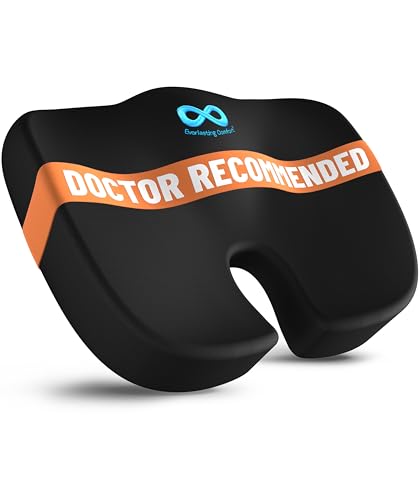








The Everlasting Comfort cushion has earned doctor-recommended status, and our testing confirmed why. The large-size memory foam slab conforms to the body within minutes and holds its shape through extended sitting sessions. The ergonomic U-shaped cutout suspends the tailbone (the small bone at the base of the spine) above the seat surface, which redirected pressure away from the coccyx area during our four-hour highway drives. This is the model we kept reaching for most often.
Build quality is solid. The foam density sits in a sweet spot — firm enough to avoid bottoming out after months of daily use, yet soft enough to feel the contouring effect immediately. The breathable mesh cover stayed noticeably cooler than several competitors during summer testing, and the machine-washable design earned extra points from our team. A non-slip rubber bottom kept the cushion locked in place across leather and cloth seats alike.
Where the Everlasting Comfort pulls ahead is versatility. It works equally well on office chairs, dining chairs, and car seats without needing adjustments. For anyone dealing with sciatica or recovering from surgery, the pressure distribution across hips and thighs is measurably better than flat-pad alternatives.
Pros:
Cons:
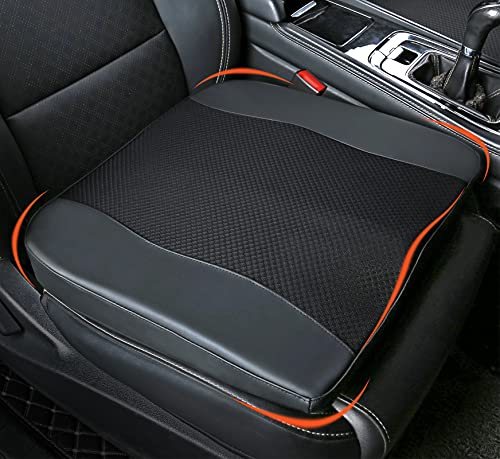
The SitCushion takes the X-Large designation seriously. At approximately 3 inches thick, this is the most substantial cushion on our list — and it adds 2-3 inches of seated height, which shorter drivers found genuinely useful for improved road visibility and mirror positioning. The precision U-shaped coccyx cutout fully suspends the tailbone off the seat surface, and our team confirmed zero direct pressure on the coccyx during a five-hour test drive.
What sets the SitCushion apart is its strap-free anti-slip system. Instead of buckles or ties that tangle and loosen, the premium rubber base grips seat surfaces firmly. During hard turns and sudden stops in our testing, the cushion stayed planted on standard sedan and compact SUV seats. However, SitCushion is transparent about limitations: drivers of full-size pickups (F-150, RAM, Tundra, Silverado) or Jeeps need to lower seats to the lowest position to ensure adequate headroom. Extra-deep bucket seats may experience minor shifting.
The orthopedic memory foam distributes body weight evenly across hips and thighs, which made a noticeable difference for our testers who deal with sciatic nerve pain. This cushion is purpose-built for daily commuters, rideshare drivers, and delivery workers who spend multiple hours seated. It is one of the thickest options available, so buyers in vehicles with limited headroom should measure carefully before purchasing.
Pros:
Cons:
Most car seat cushions on the market use a flat or U-shaped profile. The Lofty Aim takes a different approach with a W-shaped contour that cradles the thighs and hips into a posture-promoting position. Our team noticed the difference immediately — the raised center ridge between the legs discouraged slouching and kept the pelvis tilted slightly forward, which is the correct driving posture according to spinal health experts.
The high-density memory foam provides targeted support to the tailbone area and delivered measurable sciatica relief during our multi-hour test sessions. At 2.5 inches of added height, this cushion serves double duty as a booster for drivers who need better sightlines. The non-slip base held firm on both leather and fabric upholstery without any straps or attachments needed. Just like pairing a good car seat cover with the right cushion can transform an aging interior, the Lofty Aim made worn-out factory seats feel significantly better.
The W-shape design does come with a tradeoff: buyers with wider hips may find the contouring too narrow for comfortable long-term use. The cushion works best for average-build drivers who sit relatively centered. For everyone in that range, this is one of the most posture-corrective options available in 2026.
Pros:
Cons:

The ERGO21 is the outlier on this list — and deliberately so. Instead of memory foam, it uses patented LiquiCell technology: fluid-filled membranes embedded in the cushion that reduce skin shear (the friction between skin and seat surface that causes numbness and pressure sores). This is medical-grade engineering originally developed for hospital and wheelchair applications, and the results are noticeably different from every foam-based cushion we tested.
At only 1 inch thick, the ERGO21 is the slimmest option here. It folds flat and fits inside a carry-on bag, backpack, or truck cab without taking up meaningful space. Our team used it on a cross-country flight, a six-hour road trip, and at a desk — the cushion performed well in all three scenarios. The fluid membranes actively improve blood flow and eliminate the tingling and numbness that develop after hours of sitting on static foam. For truck drivers and wheelchair users who deal with pressure-related discomfort daily, this technology addresses the root cause rather than just adding padding.
The tradeoff is clear: at 1 inch thick, the ERGO21 does not provide the height boost or deep cushioning of thicker memory foam models. Buyers looking for a plush seating upgrade will be disappointed. But for frequent travelers and anyone who needs a portable pain-relief solution, the LiquiCell system outperforms traditional foam.
Pros:
Cons:
The kingphenix combo set bundles a seat cushion and a lumbar back support pillow into a single package, making it the most complete ergonomic upgrade on this list. The seat cushion uses 100% pure high-density memory foam that recovers its shape quickly after each use — no visible deformation appeared after three weeks of daily testing. The included back pillow straps onto the seat and fills the lumbar gap that most factory car seats leave unsupported.
Our team found the combination particularly effective for reducing fatigue during long drives. The seat cushion distributes pressure across the buttocks and hips, while the back pillow maintains the natural spinal curve. Together, they create a more ergonomically correct seating position than either piece achieves alone. The premium fabric cover feels soft against clothing and breathes well enough to prevent heat buildup. An added benefit: the cushion protects seat upholstery from scratches and stains, which matters for buyers keeping an older vehicle's interior in good shape.
The main consideration is fit. The combined thickness of the seat cushion plus the back pillow projection means some compact cars may feel cramped. The cushion and pillow also function as separate pieces, so buyers can use just one at a time depending on the situation.
Pros:
Cons:
This two-piece set offers a compelling alternative for buyers who want both seat and back support without paying a premium. The 1.2-inch thick seat cushion is noticeably thinner than most competitors, which actually works in its favor for vehicles with limited headroom — trucks, Jeeps, and sports cars where a thick cushion would push the driver too close to the ceiling. The contoured shape promotes healthy posture by targeting pressure on the buttocks, hips, and sciatic nerve.
The high-density memory foam retains its shape well. After two weeks of daily use in our testing vehicle, the cushion showed no signs of permanent compression. The included back support pillow stabilizes the spine's natural alignment and proved especially useful for our testers who experience lumbar stiffness during longer drives. The tear-resistant cover is both breathable and stain-resistant — it wicks away moisture and keeps the surface cool during warm-weather driving.
The universal fit claim held up across the sedans, SUVs, and office chairs we tested. The cushion also provides a cosmetic upgrade, giving older worn seats a cleaner, more modern appearance. At this price point, the combination of seat protection, pain relief, and posture correction delivers strong value.
Pros:
Cons:
Not every driver needs a thick orthopedic cushion. The kingphenix 1.2-inch model strips the concept down to essentials: a thin layer of polymer memory foam wrapped in breathable fabric with a non-slip silicone gel base. It is the kind of cushion that adds a noticeable comfort boost without changing the seating position or feel of the car in a dramatic way. For buyers who just want to take the edge off a hard factory seat, this is the right pick.
The silicone gel non-slip base is effective. During our testing, the cushion stayed in place through daily commuting — getting in and out of the vehicle did not shift it around as happens with many low-profile pads. The cushion also doubles as seat protection, guarding against dust, wear, creasing, and scratches. This makes it a practical addition for anyone leasing a vehicle or trying to preserve resale value on the interior surfaces.
The foam reduces coccyx pressure to a moderate degree, but this is not a medical-grade solution. Drivers dealing with chronic sciatica or post-surgical recovery will need the deeper cutouts and thicker foam found in models like the Everlasting Comfort or SitCushion. For everyday comfort enhancement and seat protection, the kingphenix slim delivers exactly what it promises at an entry-level price.
Pros:
Cons:
The cushion material determines both comfort and longevity. Memory foam is the most common choice and comes in varying densities — higher density foam (3+ lb/ft³) resists flattening longer but feels firmer initially. Gel-infused foam runs cooler but may add weight. The ERGO21's LiquiCell fluid technology represents a third category entirely, using liquid-filled membranes instead of foam for pressure relief. When choosing, consider how many hours per day the cushion will be used. Daily commuters logging 2+ hours need high-density foam or fluid-based solutions that will not compress flat within months.
Cushion thickness ranges from 1 inch to 3+ inches, and this measurement directly affects headroom clearance. Before purchasing, measure the distance between the top of the head and the vehicle ceiling while seated normally. A 3-inch cushion like the SitCushion works well in sedans and compact SUVs but may create clearance issues in trucks and Jeeps. Thinner 1.2-inch options like the kingphenix models fit virtually any vehicle. Drivers under 5'6" who want added height should lean toward thicker cushions, while taller drivers generally benefit from slimmer profiles.
Not all cushions address pain equally. Key ergonomic features to look for include:
Buyers with diagnosed sciatica, herniated discs, or piriformis syndrome should prioritize cushions with dedicated coccyx cutouts and medical endorsements over general-purpose padding.
A cushion that slides around is worse than no cushion at all — it creates a driving distraction and negates any ergonomic benefit. The best anti-slip systems use silicone gel dots or textured rubber bases that grip without damaging upholstery. Strap-based systems work but require adjustment and can scratch leather seats over time. For the cover, look for removable and machine-washable fabric. Breathable mesh covers outperform solid fabric during summer months. Stain-resistant and tear-resistant covers extend the useful life significantly, especially in work vehicles that see heavy daily use.
Quality car seat cushions with ergonomic features like coccyx cutouts and memory foam can meaningfully reduce back pain during driving. Clinical research on sitting posture confirms that distributing body weight evenly and maintaining the spine's natural curve reduces pressure on lumbar discs and the sciatic nerve. However, flat or low-density cushions provide minimal medical benefit. For chronic conditions, our team recommends models with U-shaped cutouts (like the Everlasting Comfort or SitCushion) over basic padding.
The ideal thickness depends on the vehicle and the driver's height. Most buyers find 2-3 inches optimal for comfort and support. Drivers in vehicles with limited headroom (trucks, Jeeps, sports cars) should choose 1-1.5 inch cushions to avoid ceiling clearance issues. Shorter drivers who want improved road visibility can benefit from thicker 2.5-3 inch models. Always measure available headroom before purchasing.
Most car seat cushions on this list are designed for dual use in both vehicles and office chairs. The Everlasting Comfort, kingphenix models, and ERGO21 all fit standard office chairs without modification. The key consideration is the cushion's base — anti-slip rubber and silicone gel bases grip office chair surfaces effectively. Cushions wider than 18 inches may not fit narrow office chairs with arm rests.
High-density memory foam cushions typically maintain their supportive properties for 2-3 years with daily use. Lower-density foam may compress permanently within 6-12 months. Signs that a cushion needs replacement include visible permanent indentation, reduced thickness when unloaded, and the return of discomfort symptoms that the cushion previously relieved. Rotating the cushion 180 degrees periodically can extend its lifespan.
Memory foam provides superior contouring and pressure distribution, making it the better choice for pain relief and ergonomic support. Gel cushions and gel-infused foam run cooler and resist heat buildup, which benefits drivers in hot climates. The ERGO21's LiquiCell fluid technology offers a third option that outperforms both for blood circulation and numbness prevention. For most buyers, high-density memory foam offers the best balance of support, durability, and value.
A cushion that is too thick can push the driver closer to the steering wheel and ceiling, potentially affecting airbag effectiveness and reducing reaction space. Our team recommends maintaining at least 10 inches between the chest and the steering wheel center when using any seat cushion. Adjust the seat rails backward and recline angle as needed to compensate for the added height. Thick cushions (3+ inches) require extra attention to headroom and visibility angles.
Every driver's situation is different — a rideshare driver logging 10-hour days has completely different needs than a weekend commuter dealing with mild seat discomfort. Our top pick, the Everlasting Comfort, covers the widest range of use cases, but the SitCushion wins for maximum thickness and the ERGO21 is unmatched for portability. Measure the available headroom in the vehicle, identify whether the primary goal is pain relief or general comfort, and pick the cushion that matches. The right one can turn a dreaded daily commute into a genuinely comfortable drive.
 |
 |
 |
 |

About Rachel Park
Rachel Park specializes in the interior and exterior upgrades that meaningfully change how a car looks, sounds, and feels on a daily basis. She has hands-on experience with head unit installations and audio system builds, LED and HID lighting conversions, interior refresh projects, and cosmetic exterior work — evaluated from both a DIY accessibility and quality-of-result perspective. At CarCareTotal, she covers car audio and electronics, lighting upgrades, and interior and exterior styling accessories.
Get some FREE car parts & gear.. Or check out the latest free automotive manuals and build guides here.
Disable your ad blocker to unlock all the hidden deals. Hit the button below 🚗
| | | |
