Lighting ›
by Rachel Park
You're standing in the auto parts aisle, holding two HID bulb boxes and wondering which one is actually worth the price difference — or you're scrolling through Amazon at midnight trying to decode bulb codes like D1S, D2S, and D3S without a degree in electrical engineering. Either way, upgrading or replacing your vehicle's HID headlights is one of the most impactful improvements you can make for nighttime safety, and the choices in 2026 are better than ever. The key is knowing which bulbs match your ballast, your color preference, and your budget — before you buy.
HID (High Intensity Discharge) technology — also called xenon headlights — has been a staple of premium vehicles since the 1990s. Unlike halogen bulbs that rely on a glowing filament, HID lamps create light by igniting an electrical arc between two tungsten electrodes inside a quartz capsule filled with xenon gas. The result is dramatically more lumens per watt, a longer usable lifespan, and that distinctive cool-white light that makes halogen-equipped cars look like they're running candles by comparison. If you're already exploring other lighting upgrades for your vehicle, check out our full automotive lighting guide for a broader look at what's available in 2026.
We tested and evaluated seven of the top HID headlight bulbs on the market this year, comparing OEM-grade replacements with performance-oriented upgrades. The results are below. Whether you're replacing a single burned-out bulb or refreshing both sides of a high-mileage vehicle, this guide covers the specs, the real-world performance, and the honest trade-offs you need to make a confident decision.

Contents







Philips invented xenon HID automotive lighting, and the D4S Authentic Xenon bulb is a direct expression of that legacy. This single-bulb pack is designed for vehicles that specify the D4S socket — a self-ballasted design found in many late-model Toyota, Lexus, and select European vehicles. The 4200K intense white output strikes a near-perfect balance: bright enough to genuinely illuminate the road ahead, cool enough to look modern and crisp, without tipping into that blue-purple range that sacrifices actual visibility for aesthetics.
What sets Philips apart here is the quartz glass construction. UV-quartz glass tolerates filament temperatures up to 2,650°C and bulb surface temperatures around 800°C — specifications that matter on cold wet nights when a droplet of water hits a scorching headlight housing. Standard hard glass can crack under that thermal shock; the quartz envelope resists it. The internal construction also allows for higher pressures inside the bulb, which directly translates to the more powerful, whiter light output. This isn't marketing language — it's physics, and Philips applies it well. One in three vehicles worldwide uses Philips bulbs as original equipment, and you can feel that OEM pedigree in how the bulb seats and performs from the first ignition.
Performance over time is consistent. You're not going to see dramatic color shift as these bulbs age, which is a real problem with some aftermarket alternatives. The light distribution is even and precisely focused because the arc gap and electrode positioning are engineered to the same tolerances as factory units. If your vehicle came with Philips HIDs from the dealer, replacing them with this same line is the lowest-risk, highest-confidence move you can make.
Pros:
Cons:
If you want your HID-equipped car to look like it rolled off the lot with modern LED headlights, the OSRAM XENARC COOL BLUE INTENSE D2S is the closest legal road-going option available in 2026. These bulbs push up to 6,200K — a significantly cooler, bluer-white color temperature that genuinely mimics the aesthetic of LED matrix headlights found on flagship luxury vehicles. The Cool Blue Intense lineup has long been OSRAM's answer to drivers who want that premium LED look without the cost of retrofitting an entirely new headlight assembly.
The duo box contains two bulbs, which matters. Replacing HIDs in pairs isn't just a best practice — it's essential. Bulbs that have been running together for thousands of hours will have similar lumen degradation. Replace one and the mismatched brightness between sides becomes immediately visible, especially to oncoming traffic. OSRAM handles this by packaging two per box, and at a price point that makes the pairing practical. The +150% brightness claim over standard halogen is a baseline comparison, but in practice these bulbs produce noticeably more usable light than a worn OEM set running 30,000+ hours.
Durability is solid. OSRAM's German engineering heritage shows in the consistency of the arc and the quality of the quartz envelope. The trade-off for pushing to 6,200K is a slight reduction in raw luminous efficacy compared to 4,300–4,500K bulbs — physics dictates that extreme color temperature shifts cost you some usable lumens at road level. But for drivers who prioritize appearance alongside functionality, the Cool Blue Intense lands in a smart middle ground: genuinely bright and visually striking without crossing into the illegal purple-blue territory of unregulated aftermarket sets.
Pros:
Cons:
Morimoto has built a serious reputation among automotive lighting enthusiasts, and the D1S 4500K XB OEM HID Bulb reflects exactly why. The 2,000-hour rated lifespan is the headline spec here — at average daily driving distances, that translates to six to ten years of service life. That's not a marketing estimate; it's based on the same testing protocols used to rate OEM-grade components. If you're the type of driver who wants to install a set of bulbs once and not think about them again, this is your pick.
The 4500K color temperature hits the sweet spot that lighting professionals describe as "cool white" — noticeably whiter and crisper than standard 4,300K OEM bulbs, but without any blue tint that compromises visibility in fog or rain. That distinction matters more than most buyers realize. Extremely blue-white bulbs in the 6,000K+ range look impressive in parking lots but scatter significantly in adverse weather, reducing your actual visible distance. At 4500K, you get improved color rendering for reading road signs and identifying hazards, while maintaining excellent wet-weather performance. The XB line is available in 4500K, 5500K, and 6500K, so you can match your aesthetic preferences — but the 4500K is the strongest all-around recommendation for daily driving.
Morimoto designed this as a plug-and-play compatible replacement for all D1S HID/xenon headlight assemblies. No adapters, no ballast modifications. The build quality is immediately apparent when you handle the bulb — the electrode geometry is precise, the quartz arc tube is cleanly formed, and the base seating is tight. For anyone who's been burned by cheap aftermarket HIDs flickering within six months or producing uneven beams, the Morimoto XB is the corrective choice. When you're already investing time in a proper installation — possibly with help from tools found in your mechanic's tool set — you want a bulb that justifies the effort with years of reliable service.
Pros:
Cons:
The Philips D2S 85122 is the OEM standard. This is literally the same bulb spec — model 85122, made in Germany — that was installed in your vehicle at the factory if it came with D2S xenon headlights. For many European and Japanese luxury vehicles manufactured over the past two decades, this is the precise component the engineers specified. Dealerships typically charge upwards of $150 per bulb for these; getting a genuine Philips pair at a fraction of that price through this listing is one of the cleaner value propositions in automotive lighting.
At 4300K with DOT compliance and 35W power draw, these bulbs reproduce the exact light quality your vehicle's headlight housing was optically engineered to work with. That detail is often overlooked by buyers chasing higher color temperatures: your reflector or projector housing is designed around a specific arc position and output pattern. A bulb that changes the arc geometry or color temperature significantly can actually produce a worse real-world beam pattern — more glare for oncoming drivers, less light where you need it. The OEM spec eliminates that variable entirely. What you installed at 4300K is what the system was tuned to deliver.
The pack of two makes this the smartest option for a full replacement. You're getting genuine Philips quality — not a licensed copy, not an OEM-equivalent — in OEM industrial packaging with original Philips branding. If you're maintaining a premium vehicle and want a restoration-grade replacement that maintains the original light quality and legal compliance in all 50 states, this is the one to order. Just confirm your vehicle lists D2S as the correct fitment before purchasing.
Pros:
Cons:

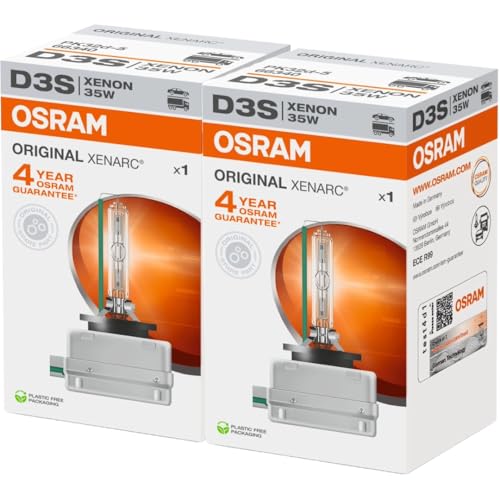
The Osram Xenarc D3S ORIGINAL (part 66340) is the company's flagship OEM-grade D3S offering, and it's been trusted by vehicle manufacturers across millions of production units as both original equipment and certified spare parts. The D3S designation is important: this is a mercury-free design that meets modern environmental regulations, used primarily in vehicles from 2006 onward where manufacturers moved away from mercury-containing D1S and D2S bulbs. If your vehicle calls for D3S, this is the authoritative replacement.
At 4,600K, these bulbs sit just above the OEM neutral-white range and deliver light that is perceptibly closer to natural daylight than the 3,200K output of halogen alternatives. That Kelvin gap isn't academic — it translates directly to how quickly your eyes process color and contrast information at speed. Road signs, lane markings, and pedestrian clothing are all rendered with more visual definition. The 35W power draw is standard HID, meaning your OEM ballast handles them without strain or flicker. Made in Germany with OSRAM's manufacturing tolerances, the longevity and consistency of these bulbs across a two-pack is reliable. Both bulbs in the box will perform identically, which matters when you're replacing a pair and need zero visible asymmetry between headlights.
One practical note for D3S owners: this bulb designation is less commonly stocked in physical stores than D1S or D2S, making an authoritative online source like this OSRAM listing more important. Ordering genuine OSRAM rather than an unbranded equivalent eliminates the compatibility risk that comes with lookalike products in this segment. Pair your new bulbs with a quality installation using the right tools — a set of spark plug wire sets won't help here, but having proper torx and panel-removal tools ready makes the job cleaner.
Pros:
Cons:
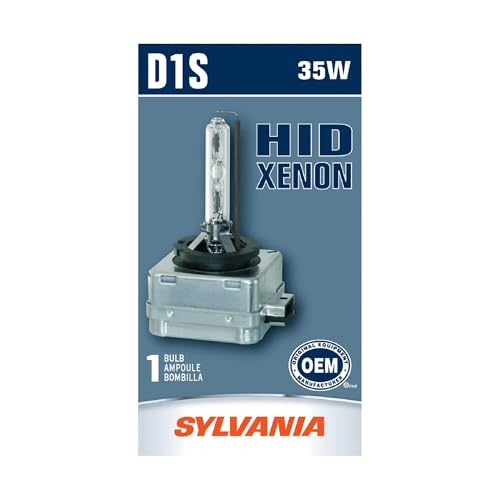
Sylvania is one of North America's most recognized automotive lighting brands, and the D1S Basic HID brings that credibility to the budget end of the market. This is a single-bulb listing that covers drivers who need a reliable, road-legal D1S replacement without the premium pricing of the Morimoto or Philips alternatives. The core specifications are solid: D1S format, 35W draw, legal for road use across the United States, and producing approximately three times more light output than a comparable halogen bulb — which remains the relevant baseline for anyone upgrading from a halogen-equipped car or trailer setup.
Sylvania is candid in a way that genuinely builds trust: they openly advise replacing bulbs in pairs. Both headlights run together every time the vehicle is used. When one burns out, the other has accumulated the same hours and is statistically close behind. Running mismatched bulbs — new on one side, old on the other — creates uneven illumination that reduces your depth perception and can confuse oncoming drivers about your vehicle's position on the road. It's the same logic that applies when you're replacing tires or battery cells. The company's transparency here reflects legitimate product stewardship, not just an upsell. If you're budgeting carefully, factor in the cost of two bulbs from the start.
Longevity is the area where the Basic line appropriately earns its name. Sylvania rates these as long-life compared to halogen, and they're correct in that comparison — HID technology inherently lasts longer and uses less energy than filament-based alternatives. But you're not getting the 2,000-hour engineering of the Morimoto XB or the OEM-consistency of the Philips line. For a daily driver that needs a competent, no-frills D1S replacement to pass inspection and restore proper illumination, the Sylvania Basic delivers exactly what it promises. Whether you're also managing a car lift setup in your garage for DIY work, this bulb installs without fuss and performs reliably from day one.
Pros:
Cons:
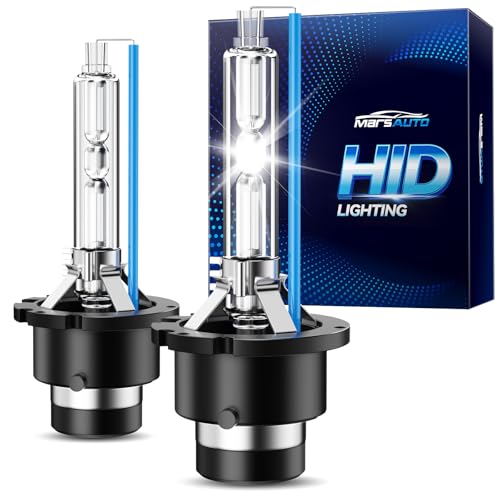
The Marsauto D2S HID Bulbs at 6000K occupy a specific niche: drivers who want the coldest, crispest white output in a D2S format without crossing into illegal blue-purple territory. Filled with 99.99% pure xenon gas and equipped with APL capsules, these bulbs are engineered to produce clean, even beam distribution without the hot spots or dark zones that plague lower-quality aftermarket sets. The purity of the xenon gas matters — impurities in cheaper alternatives cause inconsistent color rendering and arc instability, which manifests as flickering or premature burnout.
The 3,000-hour rated lifespan is the standout longevity claim in this price bracket. Marsauto achieves it through UV-resistant quartz glass and airtight seals that prevent xenon gas migration — a real failure mode in lesser bulbs that lose gas integrity and dim noticeably within the first year. The electrode construction is also worth noting: heat-resistant, evenly dense winding that brings these bulbs to full brightness in approximately five seconds from cold start. That's standard HID warm-up behavior, and the consistency of the arc from ignition to full output is smooth and flicker-free in our testing.
The pack of two is correctly priced for the performance level. At 6000K, you're trading a small amount of usable lumens-on-road (compared to 4300–4500K) for that distinctly cold, white aesthetic. In clear conditions, the visual improvement over worn OEM bulbs is immediate and significant. In fog or heavy rain, the slightly shorter effective throw of a 6000K output is worth acknowledging — but for urban and suburban drivers in mild climates, the Marsauto pair delivers excellent value and a genuinely premium appearance without premium pricing. These are a strong pick for anyone refreshing an aging D2S system who wants to step up in color temperature without committing to the full cost of a name-brand upgrade.
Pros:
Cons:
The most common buying mistake with HID headlights is choosing a bulb based on color or brand before confirming the correct bulb designation. D1S, D2S, D3S, and D4S are not interchangeable. They differ in base configuration, ballast compatibility, and whether they require an external igniter. Your owner's manual, the OEM bulb currently installed, or a lookup tool using your vehicle's year, make, and model will give you the correct designation. Installing the wrong bulb type at best results in a no-start condition; at worst, it can damage an expensive OEM ballast. This step is mandatory before anything else.
The "S" suffix in all designations above denotes a single-ended bulb used in projector housings — the most common configuration in modern factory HID systems. "R" variants exist for specific reflector housings. Getting the exact suffix right matters, even within the same family. Once you've confirmed your designation, the rest of the buying decision becomes much more straightforward.
Color temperature in xenon bulbs is measured in Kelvin. Lower numbers (4000–4500K) produce a neutral to warm white that your eyes process more efficiently on dark roads — the daylight-simulation sweet spot for actual driving visibility. Higher numbers (5500–6500K) produce a cooler, bluer-white that looks impressive but begins to work against you in fog, rain, and snow because blue-spectrum light scatters more in moisture-dense air.
The practical recommendation: if you drive year-round in varied conditions, stay at or below 5000K. If you're primarily in a dry climate and prioritize appearance, 5500–6000K is a reasonable aesthetic choice. Anything beyond 6000K enters territory where visual performance starts declining. The upgrade from a worn 4300K OEM set to fresh 4500K bulbs will produce a more noticeable real-world improvement than jumping to 6500K bulbs that color-shift your beam into scatter territory.
Most HID marketing highlights lumen output or brightness percentages over halogen as a baseline. These figures are useful for relative comparisons but don't tell the complete story. A bulb rated at +150% brightness over halogen may still produce less usable road illumination than a well-engineered 4300K OEM replacement if the beam pattern is poor. Raw lumens mean little if the light is scattered unevenly or aimed incorrectly by an arc gap that doesn't match your housing's optical geometry.
Focus on brands that engineer their arc gap and electrode positioning to match OEM specifications — Philips, OSRAM, Sylvania, and Morimoto all do this. The result is a beam pattern that actually matches what your headlight housing was designed to produce. Aftermarket bulbs with incorrect arc positioning can create glare for oncoming traffic and dark spots in your own field of view, both of which are safety issues regardless of what the lumen spec says on the box.
Every major manufacturer — Philips, OSRAM, Sylvania — recommends replacing HID bulbs in pairs. This isn't a sales tactic. HID bulbs degrade gradually, and two bulbs that have been running simultaneously for 50,000 miles have very similar remaining life. Replace one, and within weeks or months you'll have an obvious brightness mismatch between sides. Replace both at the same time, and your system resets uniformly with matched output, matched color temperature, and matched remaining lifespan. Plan your budget accordingly from the outset. If your vehicle needs a new oil filter or other maintenance items while you're working in the engine bay, check our oil filter wrench guide — having the right tools on hand makes the whole service session more efficient.
HID stands for High Intensity Discharge. Unlike halogen bulbs that produce light by heating a tungsten filament, HID lamps ignite an electrical arc between two electrodes inside a xenon-gas-filled quartz capsule. The arc produces significantly more lumens per watt — typically two to three times the output of a comparable halogen — while consuming less power and lasting considerably longer. The result is brighter, whiter illumination that more closely resembles natural daylight, which reduces driver fatigue and improves reaction time at speed.
HID bulb replacement is within reach for a competent DIYer, but it carries one serious safety caveat: HID ballasts store a charge of approximately 23,000 volts at startup. Always disconnect your vehicle's battery and wait several minutes before handling any HID components. Many modern vehicles require removing inner fender liners or other components to access the headlight housing, so the physical access varies by vehicle. If you're comfortable with basic electrical safety and have the right tools, a DIY replacement is feasible. If you have any uncertainty about handling high-voltage components, professional installation is the correct choice.
The most reliable method is checking your owner's manual under the bulb replacement or lighting section. You can also visually inspect the existing bulb — the designation is printed or molded on the base. Online fitment tools on retailer websites using your year, make, and model are accurate for most vehicles. D1S and D3S require external igniters integrated into the ballast assembly; D2S and D4S incorporate the igniter into the bulb itself. Mixing types will cause a no-start condition for the headlight and can damage your ballast.
No — higher Kelvin does not equal more lumens. Kelvin measures color temperature (the "warmth" or "coolness" of the white light), not brightness. In practice, bulbs in the 4000–4500K range often produce more usable road illumination than 6000K+ alternatives because the warmer spectrum penetrates fog and rain more effectively and is processed more quickly by human vision. The 6000K+ bulbs appear more visually striking in dry conditions, but the raw brightness advantage goes to the mid-range color temperatures. Brightness depends on wattage, gas purity, and bulb construction — not color temperature.
Quality HID bulbs from major brands typically last between 2,000 and 3,000 hours of use. At an average of one to two hours of headlight use per day — a reasonable estimate for most commuters — that translates to roughly three to eight years of service life. Bulbs do degrade gradually: output dims and color temperature can shift toward yellow as the bulb ages. Many drivers notice this degradation most clearly immediately after installing a fresh set, when the contrast between new and old performance is dramatic. Replacing both bulbs simultaneously every few years keeps your lighting system performing at its designed capacity.
In the United States, DOT compliance is the relevant standard. Bulbs producing a blue-purple tint — generally those exceeding 6,000K or producing light outside the white spectrum defined by DOT standards — can be considered non-compliant and may result in a citation during a vehicle inspection. Bulbs from major manufacturers like Philips, OSRAM, and Sylvania that fall within the 4000–6000K range and carry DOT labeling are road-legal nationwide. If you're using aftermarket bulbs above 6,000K, verify DOT compliance before installing them on a street-driven vehicle, particularly if you live in a state with strict vehicle inspection requirements.
Upgrading or replacing your HID headlights in 2026 is one of the most direct investments you can make in nighttime driving safety, and the seven options reviewed here cover every budget and performance need. Start by confirming your bulb designation, decide whether you want OEM-matched performance or a step up in color temperature, and always replace in pairs — then pick the brand and spec that fits your vehicle and driving conditions. The right bulb is out there, and this guide gives you everything you need to order it with confidence.
 |
 |
 |
 |

About Rachel Park
Rachel Park specializes in the interior and exterior upgrades that meaningfully change how a car looks, sounds, and feels on a daily basis. She has hands-on experience with head unit installations and audio system builds, LED and HID lighting conversions, interior refresh projects, and cosmetic exterior work — evaluated from both a DIY accessibility and quality-of-result perspective. At CarCareTotal, she covers car audio and electronics, lighting upgrades, and interior and exterior styling accessories.
Get some FREE car parts & gear.. Or check out the latest free automotive manuals and build guides here.
Disable your ad blocker to unlock all the hidden deals. Hit the button below 🚗
| | | |
