Lighting ›
by Rachel Park
Nearly 40 percent of all nighttime vehicle accidents in the United States occur during fog, rain, or snow — conditions where factory halogen fog lights fall short. Upgrading to LED fog light bulbs is one of the most cost-effective safety improvements you can make to your vehicle in 2026. The technology has advanced rapidly: today's best H11, H8, and H16 LED bulbs deliver up to 900 percent more light output than the halogens they replace, last tens of thousands of hours, and install in under ten minutes with no wiring modifications.
But the sheer number of options on the market makes choosing difficult. Lumen claims vary wildly. Some bulbs run hot and fail early. Others produce scattered beams that blind oncoming drivers instead of illuminating the road ahead. After evaluating brightness, beam pattern quality, thermal management, fitment compatibility, and long-term reliability, we narrowed the field to seven standout LED fog light bulbs for 2026. Whether you need a crisp 6000K white beam for maximum visibility or a warm 3000K amber output for cutting through dense fog, this guide covers the best options across every budget and use case.

If you have been putting off this upgrade because you were unsure which bulb fits your vehicle or whether LEDs are worth the investment, this is the guide that will answer those questions definitively. We also cover the key factors in our lighting buying guide section below, including color temperature, heat dissipation, and beam pattern — the three specifications that separate a genuinely good LED fog light from a cheap disappointment.
Contents







The JDM ASTAR 881 LED fog light bulb is a straightforward, no-frills upgrade for drivers who want brighter fog lights without spending a lot of money. Each package includes two bulbs, and the 881 base fits a wide range of compatible sockets including 889, 898, 886, 896, 894, and 862. At 50 watts per bulb, these produce a noticeably brighter white output compared to stock halogens. The build quality is solid for the price point, with an aluminum heat sink body that handles thermal management adequately during normal driving conditions.
Where the JDM ASTAR excels is in pure value. These bulbs deliver a meaningful visibility improvement for a fraction of what premium brands charge. The beam pattern is reasonably focused, producing minimal scatter. However, they do not match the raw lumen output of higher-end options on this list. If you drive frequently in heavy fog or severe weather, you may want to consider one of the more powerful options below. For light fog, drizzle, and general low-visibility conditions, these get the job done reliably.
Installation is simple plug-and-play. The 881 base locks into place with a quarter turn, and most drivers complete the swap in under five minutes per bulb. The bright white color temperature provides a modern look that pairs well with LED or HID headlights.
Pros:
Cons:
The FAHREN 2026 Upgraded H11 is the best overall LED fog light bulb you can buy right now. It combines massive brightness — 40,000 lumens per set at 6500K cool white — with a genuinely compact 1:1 form factor that fits inside tight housings where bulkier LED bulbs simply will not work. The ultra-thin 0.03-inch chip pitch is the standout engineering detail here. That narrow chip spacing produces a beam pattern that closely replicates the focal point of the original halogen filament, which means your fog light projector or reflector housing can focus the light correctly instead of scattering it everywhere.
FAHREN has eliminated the external driver box that plagues many LED conversions. Everything is integrated into the bulb body itself, resulting in a true plug-and-play experience. The non-polarity design means you cannot install it incorrectly — it works regardless of which way you insert it. This bulb is also CANbus-ready, so it will not trigger error codes or dashboard warning lights on vehicles with sensitive onboard computer systems. That alone sets it apart from cheaper alternatives that require additional resistors or decoders.
In real-world testing, the FAHREN produces a tightly focused beam with crisp cutoff lines and no noticeable glare for oncoming traffic. The 6500K color temperature is a pure white that pairs exceptionally well with factory LED headlights. The IP68 waterproof rating means these can handle direct water exposure, including pressure washing and deep puddle splashes. For drivers who want the brightest, cleanest fog light output with zero installation hassle, this is the bulb to buy.
Pros:
Cons:

SYLVANIA is a name that has been in the automotive lighting industry for over a century, and the H11 LED Ultra reflects that heritage. This is not the flashiest bulb on the list — it does not boast the highest lumen numbers or the most aggressive marketing claims. What it does offer is precision engineering from a manufacturer that understands automotive lighting standards at a fundamental level. The 6000K cool white output is clean and consistent, providing excellent clarity for identifying road hazards, lane markings, and obstacles in low-visibility conditions.
The thermal management system deserves special mention. SYLVANIA has invested heavily in keeping these LEDs running at optimal temperatures, which directly translates to maximum lifespan. Overheating is the number one killer of LED bulbs, and the advanced heat dissipation design in the LED Ultra addresses this aggressively. The compact, no-polarity design means installation is genuinely effortless — pull out the old halogen, push in the new LED, and you are done.
This bulb is also marketed as a headlight replacement for off-road powersports applications, which speaks to its durability and output. For fog light use in cars and trucks, the SYLVANIA H11 LED Ultra is the choice for drivers who prioritize proven reliability from an established manufacturer over raw lumen specifications. If your vehicle's air filter and other maintenance items come from trusted brands, this fog light follows the same philosophy.
Pros:
Cons:
The SEALIGHT F1 Series takes a different approach than most LED fog light bulbs on this list. Instead of concentrating light in one direction, it uses 54 LED chips arranged in a full 360-degree configuration with an enhanced top convex lens. This design floods the fog light housing with light from every angle, allowing the reflector to capture and project maximum output. The result is a 400% brightness improvement over halogens with a uniform, well-distributed beam pattern that covers both distance and width effectively.
Fitment versatility is another strong point. The SEALIGHT F1 works as a direct replacement for H11, H16, H8, and H9 sockets, making it compatible with a huge range of vehicles. The near 1:1 compact size ratio closely matches original halogen bulb dimensions, so it fits inside tight fog light housings without any modification. SEALIGHT specifically designed this bulb for easy installation, and that promise holds up — the entire swap takes about five minutes with no tools beyond what you need to access the fog light housing.
Durability is solid. The 6063 aviation-grade aluminum body with integrated heat sink provides excellent cooling without requiring a fan. Fanless designs are inherently more reliable because there are no moving parts to fail. SEALIGHT rates these at 30,000 hours of lifespan, which translates to years of daily use. The 6000K color temperature delivers a crisp daylight-white beam. For drivers who want broad, even illumination from their fog lights rather than a tightly focused spot, the SEALIGHT F1 is the strongest option.
Pros:
Cons:
If raw brightness is your top priority, the HIKARI WINGS H11 claims the crown with an extraordinary 80,000-lumen output per set. That figure dwarfs every other bulb on this list. The secret is the Titanova 7mm x 4mm chip — a larger LED die that pushes 65 watts of power through each bulb. The resulting 6000K cool white beam is blindingly bright in the best possible sense, providing visibility in conditions where lesser bulbs simply cannot penetrate the fog, rain, or snow.
The engineering challenge with extremely high-output LEDs is always heat management, and HIKARI addresses this with a dual copper tube cooling system. Copper conducts heat far more efficiently than aluminum alone, and the dual-tube design reduces surface temperatures by 25 to 35 percent compared to single-pipe competitors. This aggressive cooling is what enables HIKARI to claim a staggering 100,000-hour lifespan — more than three times the rated life of most competing bulbs. The IP68 waterproof rating ensures the internals remain sealed against moisture intrusion.
There is a practical consideration to keep in mind. At 65 watts per bulb, the HIKARI draws significantly more power than the 25 to 35 watt range that most LED fog lights operate in. You should verify that your vehicle's fog light circuit and wiring can handle the increased load. For most modern vehicles this is not an issue, but older cars with thinner gauge wiring may benefit from adding a relay harness. If you frequently drive through severe weather conditions and need absolute maximum visibility, the HIKARI WINGS is the most powerful option available in 2026. Keeping your vehicle in peak condition — from the battery connections to the lighting — makes a real difference in winter driving safety.
Pros:
Cons:
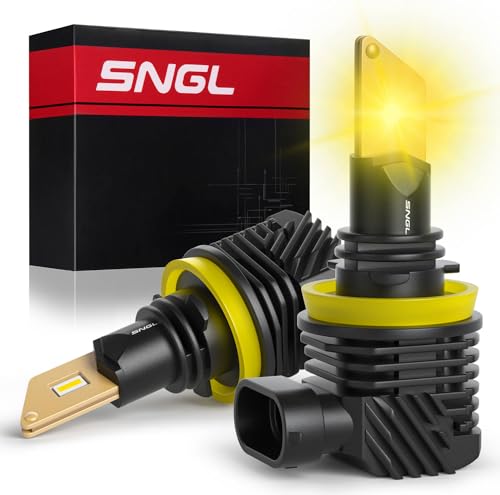
Every other bulb on this list produces white light. The SNGL H11 breaks from the pack with a 3000K amber yellow output — and there is a strong scientific reason to consider it. Yellow light has a longer wavelength than white or blue light, which means it scatters less when it hits water droplets in fog, rain, or snow. In truly dense fog conditions, a 3000K amber bulb will often outperform a brighter 6000K white bulb because the yellow beam cuts through the moisture instead of reflecting back into your eyes. This is why professional rally cars and European vehicles have historically used yellow fog lights.
The SNGL uses six high-power CSP LED chips to deliver 13,000 lumens per set, which is 500% brighter than stock halogen fog lights. While that number is lower than the white LED options on this list, lumen comparisons across different color temperatures are misleading. The human eye perceives amber light differently in low-visibility conditions, and the SNGL's focused beam pattern — which replicates the halogen filament position precisely — maximizes usable road illumination without creating glare for oncoming traffic.
Thermal management relies on a copper circuit board paired with an aviation aluminum body and constant-current intelligent IC technology. This combination enables fanless operation with a 50,000-hour rated lifespan. The SNGL fits H11, H8, and H16 sockets and installs as a direct plug-and-play replacement. If you live in an area with frequent fog, heavy rain, or winter storms, the SNGL amber is the smartest choice. Pair it with white LED headlights for the ultimate combination of distance visibility and close-range fog penetration. It is a meaningful safety upgrade — similar to how choosing the right electrical diagnostics approach protects your vehicle's systems.
Pros:
Cons:
The OXILAM Q36 Series delivers the same 40,000-lumen, 900% brightness improvement as the FAHREN but with a particular emphasis on durability and ease of installation. OXILAM claims a five-minute installation time, and the design supports that promise. The bulb body is compact with a well-engineered locking mechanism that seats securely on the first attempt. There are no external drivers, no polarity concerns, and no adapters required. You remove the old bulb and insert the OXILAM — done.
Where the OXILAM distinguishes itself is in construction quality. The IP68 fully sealed design goes beyond standard water resistance. This bulb is engineered to withstand direct high-pressure water jets, road salt spray, and heavy dust exposure. The plastic-free construction means there are no cheap components that could crack or degrade from engine bay heat and UV exposure over time. For drivers who park outdoors, drive on gravel roads, or live in regions with harsh winters, this level of environmental sealing matters.
The Q36's cooling system combines an aviation aluminum body with a solid copper board for heat dissipation. This fanless design is rated at 60,000 hours — effectively a lifetime of use for most drivers. The 6500K cool white output is sharp and clean, with a well-defined beam pattern that does not produce excessive scatter. The OXILAM is not the absolute brightest or the cheapest option on this list, but it arguably offers the best combination of strong performance, superior build quality, and effortless installation. If you want to install fog light bulbs once and never think about them again, this is the one.
Pros:
Cons:
This is the single most important decision you will make. LED fog light bulbs come in two primary color temperatures:
Some drivers install both colors and switch between them seasonally — white for spring and summer, amber for fall and winter. If you can only pick one, choose based on the weather conditions you face most often.
Lumen ratings from LED fog light manufacturers should be taken with a healthy dose of skepticism. A bulb rated at 80,000 lumens will not produce four times the usable road illumination of a 20,000-lumen bulb. What matters more is the beam pattern — how effectively the LED chip layout replicates the position and size of the original halogen filament. A well-designed 20,000-lumen bulb with a proper beam pattern will outperform a poorly designed 50,000-lumen bulb that scatters light in every direction.
Look for bulbs that specifically mention chip pitch (the distance between LED chips) and filament-position replication. Thinner chip pitch generally means better focus. The FAHREN's 0.03-inch chip pitch, for example, is among the thinnest available and produces an exceptionally clean beam.
Heat is the enemy of LED longevity. Every LED fog light bulb will eventually dim and fail, and the rate of that degradation is directly proportional to how hot the LED chips run during operation. There are two primary cooling approaches:
Look for bulbs that use copper in their thermal path. Copper conducts heat roughly twice as efficiently as aluminum. The HIKARI WINGS and SNGL both use copper circuit boards, which contributes to their longer lifespan ratings.
Before purchasing, verify the exact bulb type your vehicle requires. Most modern cars and trucks use one of these fog light socket types:
H11, H8, and H16 are cross-compatible — a bulb designed for one will fit all three. The 881 socket is completely different and requires a 881-specific bulb like the JDM ASTAR on this list. Check your vehicle owner's manual or pull out the existing fog light bulb to verify the socket type before ordering.
LED fog light bulbs occupy a gray area in most U.S. states. Fog lights are auxiliary lights, not primary headlights, and most states do not have specific regulations prohibiting LED fog lights as long as they are properly aimed and do not produce excessive glare. However, LED fog lights are technically not DOT-approved as direct replacements for halogen bulbs in most cases. The FAHREN H11 is one of the few that claims FMVSS No. 108 compliance. For practical purposes, a properly installed LED fog light that is correctly aimed will not attract law enforcement attention.
Some vehicles with CANbus electrical systems (common in European cars like BMW, Audi, and Volkswagen) will detect the lower power draw of LED bulbs and display a "bulb out" warning on the dashboard. Look for bulbs specifically labeled as "CANbus-ready" or "anti-flicker" to avoid this issue. The FAHREN H11 includes built-in CANbus compatibility. If your chosen bulb triggers an error, you can add an external CANbus decoder or LED resistor for around five to ten dollars per pair.
For dense fog specifically, 3000K amber yellow is the superior choice. The longer wavelength of yellow light scatters less when it hits water droplets, which means more of the light reaches the road and less reflects back into your eyes. However, for all-around visibility in mixed conditions — light fog, rain, dusk, and dark roads — 6000K white provides higher overall brightness. If you only face occasional fog, go with 6000K white. If you deal with frequent heavy fog or snow, choose 3000K amber.
Most quality LED fog light bulbs are rated between 30,000 and 100,000 hours. Even at the low end of 30,000 hours, that translates to roughly 15 years of use if you run your fog lights for about five or six hours per day. In practice, LED fog lights will outlast the vehicle in most cases. The key to achieving maximum lifespan is proper thermal management — bulbs with copper cooling components and efficient heat sink designs will maintain their brightness longer than cheap all-aluminum alternatives.
No. Fog light bulbs and headlight bulbs serve fundamentally different purposes. Fog lights are designed to cast a wide, flat beam close to the ground to illuminate the road surface directly in front of the vehicle. Headlights project a focused beam much further down the road. Using fog light bulbs in headlight housings — or vice versa — will produce a dangerous beam pattern that either blinds oncoming drivers or fails to illuminate the road ahead. Always use the correct bulb type for each application.
No — the opposite is true. LED fog light bulbs consume significantly less power than the halogen bulbs they replace. A typical halogen fog light bulb draws 55 watts, while most LED replacements draw between 20 and 40 watts for equivalent or greater light output. The HIKARI WINGS at 65 watts is the exception on this list, but even that draws more efficiently per lumen than halogen technology. LED fog lights will actually reduce the electrical load on your vehicle's charging system slightly compared to stock halogens.
 |
 |
 |
 |

About Rachel Park
Rachel Park specializes in the interior and exterior upgrades that meaningfully change how a car looks, sounds, and feels on a daily basis. She has hands-on experience with head unit installations and audio system builds, LED and HID lighting conversions, interior refresh projects, and cosmetic exterior work — evaluated from both a DIY accessibility and quality-of-result perspective. At CarCareTotal, she covers car audio and electronics, lighting upgrades, and interior and exterior styling accessories.
Get some FREE car parts & gear.. Or check out the latest free automotive manuals and build guides here.
Disable your ad blocker to unlock all the hidden deals. Hit the button below 🚗
| | | |
