Exterior ›
by Rachel Park
Wheel theft costs American car owners an estimated $1.4 billion in losses every year, and a single set of premium alloy wheels can vanish from a parking lot in under two minutes with the right tools. If you've invested in aftermarket rims or just want peace of mind wherever you park, wheel locks are one of the simplest and most cost-effective deterrents you can buy. They won't stop a determined professional thief with unlimited time, but they will absolutely make your car the less appealing target on any given street — and that's the whole point.

Wheel locks replace one standard lug nut on each wheel with a specially keyed fastener that requires a matching socket to remove. Without the key, even an air impact wrench can't budge them. The challenge is sorting through a crowded market — some sets are genuinely robust OEM-grade hardware, while others look the part but fail at the thread or finish within a season. After testing and researching the top options available in 2026, we've put together this guide to help you find the right set for your specific vehicle and threat level. Whether you're protecting a daily driver, a show car, or a fleet of trailers, there's a lock here that fits your situation.
This guide covers the seven best wheel locks across different thread sizes, seat styles, and security tiers. We've focused on products from the brands that consistently deliver — McGard, Gorilla Automotive, Dorman, and a solid universal option for non-threaded applications like trailers and motorcycles. You'll also find a detailed buying guide and FAQ section to help you make the right call the first time. While you're thinking about vehicle security upgrades, check out our exterior car accessories section for more ways to protect and improve your ride.
Contents









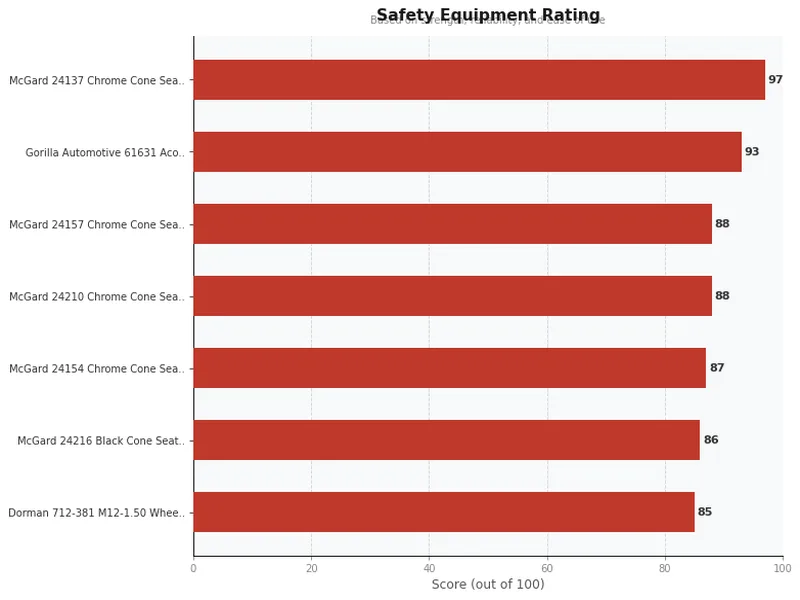
McGard has been the benchmark in wheel lock technology for decades, and the 24157 Chrome Wheel Lock Set is the clearest evidence of why. These are manufactured in the USA to meet or exceed OEM specifications, and that's not marketing language — McGard is literally the supplier that major automakers call when they need factory-installed wheel security. The company currently sells to over 30 car lines worldwide, which tells you everything about the confidence major manufacturers have in their engineering. The M12x1.5 thread size and 13/16-inch key hex make this set compatible with a huge range of vehicles, particularly popular Japanese and European models.
The build quality here is immediately apparent when you hold one of these locks in your hand. The chrome plating goes through multiple layers of nickel before the final microporous chrome coat, giving you rust protection that holds up through years of salt, water, and temperature swings. Every lock is through-hardened and tempered — the hardening isn't just surface treatment, it goes all the way through the steel. This matters when you consider that a thief using an extractor socket will be trying to bite into the outer surface of the lock. McGard's hardening process makes that significantly harder, and the unique key design means standard socket sets simply won't get traction.
Installation is exactly as straightforward as a standard lug nut replacement. You torque them to your vehicle's spec using the included key, store the key somewhere safe (not in the car), and you're done. The cone seat design provides a secure, rattle-free fit across the vast majority of OEM and aftermarket wheels. If you're working on wheel maintenance at home alongside other upgrades, pairing these with quality jack stands for safe lifting is the right approach before swapping any lug hardware.


Pros:
Cons:
Gorilla Automotive has built a strong reputation in the aftermarket wheel hardware space, and the 71631N Acorn Wheel Locks represent solid, dependable security at a price that won't make you wince. These locks use a 12mm x 1.50 thread size with a 13/16-inch hex — an extremely common configuration that fits a wide range of domestic and import vehicles including most Honda, Toyota, Nissan, and Chevrolet models. The 1.40-inch overall length keeps the profile trim so they sit flush and don't interfere with wheel covers or caps on most stock rim designs.
The acorn seat style creates a conical contact point that centers perfectly in standard tapered lug holes, making installation clean and rattle-free. You get four locks per pack, which is the standard — one per wheel, replacing one lug nut on each corner. The key is proprietary to your set, so it won't be found in a basic socket set at any parts store. While these aren't through-hardened to the same degree as McGard's premium line, they provide a meaningful deterrent against opportunistic theft and casual attempts, which covers the vast majority of real-world scenarios. For a daily driver parked in a typical suburban or urban environment, the 71631N does exactly what you need it to do.
The chrome finish is clean and holds up well under normal conditions. Salt exposure over multiple winters may show more wear than McGard's multi-coat process, but at this price point, the value proposition is clear. If you're budget-conscious but still want reliable wheel security, these are the ones to buy without hesitation.
Pros:
Cons:
Standard cone seat wheel locks won't fit every wheel out there. If you've upgraded to flush-mounted tuner-style rims with close-tolerance lug holes, you need hardware specifically engineered for that geometry — and that's exactly what the McGard 25110 delivers. This set uses an M14 x 1.5 thread size and a tuner cone seat design that's built to slide cleanly into the tighter, deeper lug recesses common in aftermarket performance and import tuner wheels. The 1-inch hex size and 1.935-inch overall length are calibrated to work where standard acorn or ball-seat locks simply can't go.
McGard weight-matches these tuner locks to their SplineDrive lug nuts, which matters more than most buyers realize. Uneven weight distribution across your lug hardware can introduce minor vibration at highway speeds on performance setups — it's a small thing, but it's the kind of detail that separates purpose-built hardware from generic alternatives. The set includes four locks and one unique key, and like all McGard products, the key pattern is proprietary and not catalogued in standard socket assortments. The chrome finish goes through McGard's signature multi-layer nickel and microporous chrome process, and these are through-hardened and tempered throughout — the same USA manufacturing standard as the rest of their lineup.
One important note: these are designed for alloy wheels only. The tuner seat geometry assumes a specific rim material tolerance that doesn't apply to steel wheels. If you're running stock steel rims, look at the 24157 above instead. But if you've invested in a quality set of aftermarket alloys, these are the locks that will protect them correctly without forcing incompatible hardware into a close-tolerance hole.

Pros:
Cons:
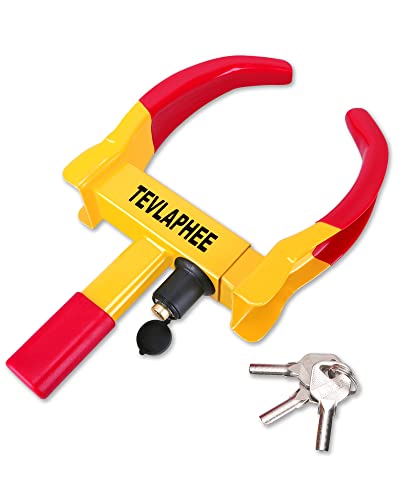
Not every security situation involves threaded lug nuts. If you're protecting a trailer, an RV, a motorcycle, a camper, or any vehicle that parks stationary for extended periods, a boot-style clamp lock is the right tool — and the Tevlaphee Universal Wheel Lock is one of the most practical options in this category. This isn't a lug nut replacement; it's a physical clamp that wraps around your wheel and locks in place using a crescent-shaped lock cylinder, which the manufacturer specifically notes offers stronger anti-picking resistance than standard cylindrical cores.
The body is built from high-strength steel plate, and the clamping surface has a soft coating that protects your rim finish from scratches during installation and removal. The adjustable design fits wheel widths from 7 to 11 inches, giving it genuine universal application across cars, trucks, SUVs, boats, ATVs, motorcycles, and trailers. The bright red and yellow color scheme is a deliberate design choice — high visibility is part of the deterrent strategy. A thief scoping a parking lot targets the vehicle that looks easiest to take. A wheel with a bright boot on it signals "this will cost you time," and time is what thieves don't want to spend.
You get three keys included in the pack, which is practical — keep one on your keychain, one in the house, one as a spare. The lock mechanism is straightforward to operate once you've done it a few times, though first-time setup takes a minute to figure out the clamping angle. This type of lock works on a completely different principle than the other products in this guide, so if you're protecting a vehicle that doesn't get regularly driven — a stored camper, a seasonal trailer, a parked motorcycle — this is the appropriate security solution. According to the National Highway Traffic Safety Administration (NHTSA), vehicle theft prevention starts with visible deterrents, and few are more visible than a bright wheel boot.
Pros:
Cons:
The open-end design of the Gorilla 78631N addresses a problem that many buyers don't realize exists until they go to install standard closed-end locks: extended thread bolts. Some aftermarket wheels and lift kit setups run longer wheel studs that protrude past a standard closed lug nut. A closed-end lock will bottom out on the stud before fully seating, leaving you with improperly torqued hardware — a safety issue, not just an annoyance. The 78631N's open-end design eliminates that problem entirely, allowing the lock to thread all the way onto any stud length.
The specs match Gorilla's standard acorn line: 12mm x 1.50 thread size, 13/16-inch hex, and a 60-degree conical seat that mates cleanly with the tapered holes in the overwhelming majority of steel and alloy wheels. Four locks per pack, one key included. The conical seat provides the same centered, secure fit as the closed-end version — the open end doesn't compromise the seating geometry or torque retention. These are particularly valuable if you're running a lifted truck or Jeep where extended studs are common, or if you've installed aftermarket spacers that push the wheel outward and expose more thread.
For anyone doing serious wheel work, having the right lift equipment matters too — our guide to the best 3-ton floor jacks covers the safest options for getting your vehicle properly elevated before you swap lug hardware. The chrome finish on the 78631N is solid for the price, and the Gorilla key pattern offers genuine protection against casual theft attempts. If you know you have extended studs or plan to add spacers, this is the version to buy over the standard 71631N.

Pros:
Cons:
Dorman's 711-656 is a different kind of product from everything else on this list — it comes as a 20-pack, which makes it the obvious choice for fleet applications, multi-vehicle households, or anyone who wants complete wheel coverage rather than just one lock per wheel. Standard practice is one lock per wheel (four per car), but some security-conscious owners or fleet managers prefer to run two or even all locks on high-value vehicles. With 20 pieces, you have genuine flexibility, plus enough extras for a second vehicle or to cover spares and replacements.
The M14-1.50 thread size targets a specific application set — primarily larger domestic vehicles, trucks, and certain European platforms that run M14 fasteners. Dorman designed these as direct replacements that match the fit, function, and performance of the original equipment hardware, which means there's no guesswork about compatibility if your vehicle came with M14 lug hardware. The spline drive design requires the included key socket to remove — there's no hex or torx surface that a standard wrench can grip, which is a genuine security advantage over acorn-style designs where the outer profile is still accessible.
The black chrome finish gives these a distinctive look that works particularly well on dark or gunmetal wheels. Dorman manufactures to strict specifications, and the direct-replacement engineering means proper torque retention and no thread interference. The 20-pack quantity also makes this a cost-effective solution when you're outfitting an entire fleet — fleet and commercial operators facing high-risk parking situations will find this pack format significantly more practical than buying four-piece sets repeatedly.

Pros:
Cons:
The Gorilla Guard designation on the 61631 signals something specific: this is Gorilla's higher-security tier within their wheel lock lineup. The dual hex key design — 3/4-inch and 13/16-inch — means you need the exact matching socket for removal. Even if a thief has a set of standard sockets, the non-standard outer profile of the lock body ensures they can't get purchase. The 12mm x 1.50 thread size and 1.50-inch overall length are standard and widely compatible, covering the same broad vehicle range as Gorilla's basic acorn line.
What elevates the 61631 above the 71631N is the guard design on the outer shell. Gorilla engineered the exterior geometry specifically to defeat the removal socket attacks that have become increasingly common. As lock designs become more widely known, determined thieves acquire compatible extraction sockets — the Gorilla Guard design counters this by creating a lock profile that those generic extraction tools simply can't bite into cleanly. It's an arms race, and Gorilla has stayed ahead of the curve with this design.
Installation is the same as any acorn-style lug nut — thread on by hand, torque with the included key socket to your vehicle's specification. The acorn seat handles the standard tapered lug hole geometry across steel and alloy wheels without issue. This pack also comes with four locks and one key, which is the standard configuration. If you want Gorilla quality with an elevated security profile, this is the one to pick over the basic 71631N — the price difference between them is minor, and the added protection is meaningful. For anyone building out their vehicle security systematically, check out our roundup of the best air impact wrenches — a quality wrench is essential when it's time to safely install or remove wheel hardware with proper torque.


Pros:
Cons:
This is the single most important specification to get right, and it's also the one most buyers skip without thinking. Your wheel lock must match both the thread size of your existing lug nuts and the seat style of your wheel's lug holes. Thread sizes vary by manufacturer and region — M12x1.5 and M12x1.25 are common on Japanese vehicles, M14x1.5 is common on American trucks and many European models, and M14x2.0 appears on certain German platforms. Get this wrong and the locks either won't thread on at all or, worse, will cross-thread and damage your wheel studs. The seat style — cone (tapered), ball (radius), or flat — determines how the lock contacts the wheel. Your new lock must match the geometry of your existing lug nuts or you'll get an improper seat that allows movement and potential loss at speed. Check your current lug nuts or your vehicle's owner manual before ordering anything.
The key pattern is your actual security layer — the more unique and harder to replicate it is, the better your protection. Standard acorn or hex lug nuts can be removed with a common socket. Wheel lock keys use patterns — splines, irregular hex shapes, or completely custom profiles — that aren't found in standard socket sets. McGard's keys are registered and traceable, meaning replacements require verification of ownership. Gorilla's Gorilla Guard design goes further by making the lock exterior incompatible with extraction sockets. Spline drive designs, like Dorman's 711-656, eliminate any exterior grippable surface entirely. Whatever you choose, store the key somewhere accessible to you but not inside the vehicle — losing access to your own wheels is a real inconvenience that many buyers don't plan for until it happens.
A wheel lock that corrodes, seizes, or weakens within a year isn't providing security — it's a liability. Chrome plating quality varies enormously across the market. Budget options use thin single-coat chrome that starts pitting within one or two winters of salt exposure. Premium options like McGard use multiple nickel undercoats with a final microporous chrome layer that resists rust significantly better. The steel hardness matters too: through-hardened locks resist extraction attacks and drilling much better than surface-hardened alternatives. If you live in a salt-belt state or regularly park near coastal environments, investing in a better finish pays for itself in longevity. Check that any set you consider specifies the coating process, not just the final appearance.
The six lug nut replacement locks in this guide work by replacing one standard lug nut on each wheel with a keyed fastener. This is seamless, permanent, and works for any daily-driven vehicle. But for trailers, stored vehicles, motorcycles, ATVs, and RVs that sit parked for extended periods, a boot-style clamp like the Tevlaphee is the better fit. Boot locks don't require thread compatibility at all — they clamp around the tire and physically prevent the wheel from rolling. They're more visible, which adds psychological deterrence, and they don't require matching your wheel's lug specifications. The trade-off is that you install and remove them every time the vehicle moves, which makes them impractical for daily drivers but perfect for storage or long-term parking situations.
Wheel locks are an effective deterrent against opportunistic theft — the kind that happens when a thief sees an easy target and wants to move fast. They won't stop a professional with the right tools and unlimited time, but they don't need to. The goal is to make your car the harder target on the street, which wheel locks accomplish reliably. Most wheel theft is fast and opportunistic. Adding even two to three minutes of resistance is enough to make a thief move on to an easier vehicle.
The standard is one wheel lock per wheel, so four locks for a four-wheeled vehicle. Some owners go further and run two locks per wheel on high-value rim sets, but one per wheel is the widely accepted standard for daily driver protection. Each wheel lock replaces one of your existing lug nuts, so a five-lug wheel gets four standard lug nuts and one lock. Your remaining four lug nuts still fully secure the wheel — the lock is the one that can't be removed without the key.
This is the scenario you want to plan for before it happens. If you lose the key, your options are: contact the manufacturer directly (McGard maintains customer records and can provide replacement keys with ownership verification), take it to a dealership or locksmith that can attempt a removal, or in worst cases, have the lock drilled out — which can damage the wheel stud. Store a photo of the key code (usually stamped on the lock or packaging) somewhere accessible. McGard's key registration system is specifically designed to handle this, which is one reason their products are worth the premium for many buyers.
Your current lug nuts carry the thread size stamped on them, or you can find it in your vehicle's owner manual. Common sizes: M12 x 1.5 and M12 x 1.25 for most Japanese brands (Honda, Toyota, Nissan, Subaru); M14 x 1.5 for most American trucks and many European vehicles (BMW, Audi, Mercedes-Benz); M14 x 2.0 for some German platforms and older Volkswagen models. Never guess — an incorrectly threaded lock installed under torque will damage your wheel studs, which is expensive to repair.
You install wheel locks yourself in under 30 minutes with no special training required. Remove one lug nut from each wheel, thread the lock on by hand until snug, then torque to your vehicle's specified lug nut torque using the provided key socket. A standard torque wrench handles the job. If you want to do it right, lifting the vehicle safely first with proper equipment is recommended — our guide to the best car ramps covers the right way to get your vehicle elevated for wheel work at home.
Wheel locks work at the lug nut position and have no interaction with TPMS (Tire Pressure Monitoring System) sensors, which are mounted inside the wheel or on the valve stem. Run-flat tires are also unaffected — the lock secures the wheel to the hub the same way a standard lug nut does. The one thing to verify with TPMS is that the wheel lock isn't a style that adds significant length to the lug position, which in rare cases on tight-clearance designs can interfere with brake caliper clearance. Check your specific vehicle's clearance specs if you're running a custom or very close-fitting wheel and caliper setup.
 |
 |
 |
 |

About Rachel Park
Rachel Park specializes in the interior and exterior upgrades that meaningfully change how a car looks, sounds, and feels on a daily basis. She has hands-on experience with head unit installations and audio system builds, LED and HID lighting conversions, interior refresh projects, and cosmetic exterior work — evaluated from both a DIY accessibility and quality-of-result perspective. At CarCareTotal, she covers car audio and electronics, lighting upgrades, and interior and exterior styling accessories.
Get some FREE car parts & gear.. Or check out the latest free automotive manuals and build guides here.
Disable your ad blocker to unlock all the hidden deals. Hit the button below 🚗
| | | |
