by Marcus Chen
Standing in an auto parts aisle staring at a wall of brake pad boxes, each promising "best stopping power" and "zero dust," is enough to make any driver second-guess their choice. The wrong pick means squealing brakes, black-coated wheels, or worse — compromised stopping distance when it matters most. This 2026 roundup cuts through the marketing noise with hands-on analysis of seven top-rated brake pads across ceramic, semi-metallic, and performance compound categories.
Brake pad technology has evolved significantly over the past decade. According to the Wikipedia entry on disc brakes, modern friction materials must balance stopping power, heat dissipation, noise suppression, and rotor wear — a set of competing demands that no single compound handles perfectly. The pads reviewed here represent the best solutions available in 2026 for daily drivers, trucks, and performance vehicles alike.
Whether the priority is whisper-quiet commuting, heavy-duty towing, or spirited weekend driving, one of these seven pads will fit the bill. Each review below covers real-world performance characteristics, material composition, and compatibility — along with honest assessments of where each pad falls short. For drivers also looking to upgrade other wear items, the best synthetic oils of 2026 guide pairs well with a brake pad refresh as part of a complete maintenance overhaul.
Contents
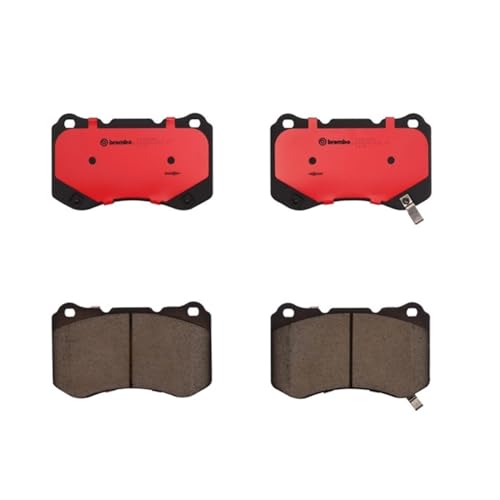








Brembo needs no introduction in the braking world. The Italian manufacturer supplies OEM calipers and pads for Ferrari, Porsche, and Corvette — and the P28059N brings that same engineering rigor to the aftermarket replacement segment. This front disc pad set uses Brembo's proprietary ceramic compound, one of over 100 friction formulations the company has developed for different driving conditions and vehicle platforms. The result is a pad that stops cleanly without coating wheels in dark brake dust.
Where the P28059N truly separates itself is in NVH (noise, vibration, harshness) control. Brembo machines chamfers and slots directly into the friction material surface — not just the backing plate. These features allow expanding gases and fine debris to escape the pad-rotor interface, eliminating the harmonic vibrations responsible for brake squeal. During cold-weather starts and low-speed parking lot maneuvers — situations where many ceramic pads produce an initial groan — the Brembo stays silent. The ACURA OE# 45022SEPA60 fitment means this set drops directly onto Honda and Acura models without modification.
The trade-off is cost. Brembo commands a premium over budget-tier ceramic pads, and availability for some vehicle applications can be limited compared to broader-fitment competitors like Bosch or Wagner. But for drivers who want OEM-equivalent braking with virtually zero dust, the P28059N is the pad to beat in 2026.
Pros:
Cons:
Bosch has been manufacturing braking components for over 77 years, and the QuietCast line represents the culmination of that institutional knowledge. The BC905 rear pad set is engineered for a broad roster of Nissan and Infiniti models — including the 350Z, 370Z, Altima, Maxima, Murano, Pathfinder, Rogue, and Sentra — making it one of the most versatile rear pad options on the market for Japanese-brand vehicles.
The headline feature is Bosch's proprietary Molded Shim Technology (MST). Unlike conventional stick-on or clip-on shims that can degrade or detach over time, MST integrates a multilayer rubber-core shim directly into the backing plate during the molding process. This creates a permanent mechanical bond between rubber and steel that absorbs vibration before it reaches the caliper and bracket. The practical result: virtually silent braking under all conditions, including the light pedal applications at low speed that tend to expose noise issues in lesser pads.
The ceramic friction compound itself is Bosch-formulated for low dust output and smooth pedal modulation. It delivers consistent stopping power through a wide temperature window, though it is not designed for track use or repeated high-speed stops. For everyday commuting and highway driving on Nissan or Infiniti platforms, the BC905 is the quietest rear pad available at its price point.
Pros:
Cons:
Wagner's ThermoQuiet line has been a go-to value pick for years, and the QC465 continues that tradition in 2026. The pad uses an application-specific design philosophy — meaning Wagner engineers the friction shape, slot pattern, and compound differently for each vehicle fitment rather than using a one-size-fits-all approach. This tailored engineering, combined with laser-shaped friction edges, spreads heat and vibration across a wider contact area to suppress noise at the source.
Heat management is the QC465's strong suit. The proprietary compound dissipates thermal energy efficiently, which translates to reduced brake fade during sustained downhill descents or repeated stop-and-go traffic. The pad also produces noticeably less dust than semi-metallic alternatives, though it does not match the near-zero dust output of the Brembo or Bosch ceramic offerings reviewed above. Rotor wear is low, which extends the service life of both components and keeps total brake system maintenance costs down.
The QC465 represents an excellent balance of performance and affordability. It may lack the OEM pedigree of Brembo or the advanced shim technology of Bosch, but for budget-conscious drivers who want reliable ceramic braking without compromise, Wagner delivers. Drivers upgrading multiple vehicle systems on a budget may also appreciate the best windshield wipers guide for another cost-effective maintenance win.
Pros:
Cons:

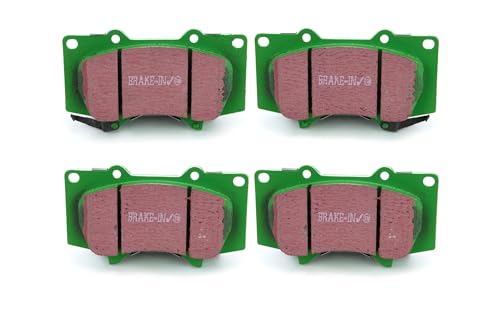
EBC's Greenstuff 6000 Series is purpose-built for heavier vehicles. Where most ceramic pads optimize for sedans and crossovers, the DP61657 uses EBC's proprietary organic-blend compound engineered specifically for the increased mass and higher braking loads of full-size trucks and SUVs. The compound delivers noticeably improved stopping power over factory pads — a critical upgrade for vehicles that frequently tow trailers, haul heavy payloads, or navigate mountain roads.
The "Greenstuff" name refers to the distinctive green color of the friction material, which serves as a visual wear indicator. As the pad surface wears past the green layer, drivers know it is time for replacement without removing the wheel. Dust output is lower than semi-metallic truck pads, though higher than the ceramic passenger-car pads in this roundup. That is an acceptable trade-off for the significant bite improvement the compound provides.
One limitation: the Greenstuff compound requires a proper bedding-in procedure. EBC recommends 30 moderate stops from 60 mph to transfer an even layer of friction material onto the rotor surface. Skipping this step can result in uneven deposits, vibration, and reduced pad life. For truck and SUV owners who follow the break-in protocol, though, the DP61657 is a transformative upgrade over mushy factory pads — especially when towing or carrying a loaded bed. Those who also haul recreational vehicles may find the best roll-up tonneau covers guide useful for protecting cargo during long trips.
Pros:
Cons:
The Hawk HPS is the original performance street pad — and it remains the benchmark in 2026. Hawk's proprietary ferro-carbon compound delivers 20 to 40 percent more stopping power than standard OEM replacement pads, a claim that has been independently validated by automotive publications and track-day instructors for over a decade. This is not a subtle improvement. Drivers feel the difference on the first pedal application.
What makes the HPS special is its ability to deliver aggressive initial bite without sacrificing daily-driver manners. The compound operates effectively from cold, meaning there is no warm-up period required for safe driving in traffic. Pedal feel is progressive and predictable — firm at the top of the stroke with linear force buildup through the full range of travel. Brake release is equally clean, with no grabbing or drag that could unsettle a car during spirited cornering.
Dust is moderate. The ferro-carbon compound produces more residue than any of the ceramic pads in this roundup, and it tends to be darker and more adhesive. Weekly wheel cleaning is a realistic expectation. Noise is well-controlled for a performance compound, though cold-morning groans can occur during the first few stops of the day. For enthusiasts who push their cars on canyon roads or attend occasional track days but still need a street-legal pad, the Hawk HPS is the clear choice. Pairing these pads with a quality cold air intake system can further elevate the driving experience for performance-oriented builds.
Pros:
Cons:
StopTech's Sport Pads occupy a unique niche: genuine track capability in a pad that remains civilized on public roads. The 309.10780 uses para-aramid composite reinforcement — the same class of synthetic fiber found in Kevlar body armor — to deliver a linear, predictable braking response that does not change character as temperatures climb. Where most street pads begin to fade after two or three hard laps, the StopTech compound maintains consistent bite well into the temperatures generated during aggressive track sessions.
The kit ships with pre-attached stainless steel shims and all necessary hardware, eliminating the need to source anti-squeal components separately. This is a thoughtful inclusion that saves time and ensures proper NVH control from the first installation. Pedal feel is firm and direct, with excellent modulation — the driver can precisely meter braking force through a corner without the pad grabbing or releasing unpredictably. StopTech calls this characteristic "actuation, modulation, and release," and it is the defining trait of the pad.
The compromise is cold-bite. Para-aramid compounds perform best when warm, and the StopTech pads take a few stops to reach their optimal operating window on cold mornings. Dust output is also higher than ceramic alternatives. For drivers who split their time between daily commuting and track days — and want a single pad that handles both without swapping — the StopTech 309 is the smartest buy in the 2026 market.
Pros:
Cons:
ACDelco is the OEM parts supplier for General Motors, and the Gold 17D1367ACH represents a factory-grade replacement engineered to meet or exceed the original equipment specifications. The pad is tested to SAE J2784 — the Society of Automotive Engineers' standardized braking effectiveness protocol — covering braking performance, noise, vibration, harshness, and durability. This level of certification provides objective assurance that the pad meets defined performance thresholds, not just marketing claims.
The friction material is integrally molded directly to the backing plate rather than bonded with adhesive. This manufacturing process creates superior bond integrity, which prevents delamination under extreme heat — a failure mode that can occur with adhesive-bonded pads during aggressive braking. ACDelco offers the Gold line in ceramic, semi-metallic, and organic formulations, giving buyers the flexibility to match the compound to their specific driving conditions and priorities.
The ceramic formula reviewed here is a straightforward, no-surprises pad. It stops cleanly, runs quietly, produces moderate dust, and wears predictably. It does not attempt to be a performance pad or a zero-dust showpiece — it aims to replicate the factory braking experience at an aftermarket price point. For GM vehicle owners (Chevrolet, GMC, Buick, Cadillac) who want to maintain OEM braking characteristics without paying dealer parts-counter prices, the ACDelco Gold is the obvious choice.
Pros:
Cons:
The friction compound is the single most important decision. Ceramic pads (Brembo, Bosch, Wagner, ACDelco in this roundup) produce less dust, run quieter, and wear more gently on rotors — ideal for daily commuting. Semi-metallic and performance compounds (Hawk HPS, StopTech Sport) deliver stronger bite and higher heat tolerance but generate more dust and can accelerate rotor wear. Organic blends (EBC Greenstuff) split the difference with good bite and moderate dust. Match the compound to driving style: ceramic for commuters, performance compounds for enthusiasts, organic blends for truck and SUV owners who need stopping power without the metallic noise.
Brake pads are not universal. Each set is engineered for a specific range of caliper brackets, rotor diameters, and piston configurations. Always verify fitment by entering the exact vehicle year, make, model, and trim before purchasing. Some manufacturers like Bosch and Wagner offer extremely broad fitment catalogs; others like Brembo and ACDelco focus on specific OEM applications. Buying the wrong fitment is not just inconvenient — it is dangerous. An ill-fitting pad can cause uneven braking, premature wear, and caliper damage.
Every brake pad involves a trade-off between stopping power and livability. Buyers who park in shared garages, drive luxury vehicles, or simply despise cleaning wheels should prioritize ceramic pads with integrated shim technology (Bosch MST, Brembo chamfered surfaces). Buyers who value maximum stopping power and accept the maintenance overhead should look at Hawk HPS or StopTech Sport. There is no pad that delivers zero dust and maximum bite — anyone claiming otherwise is misleading buyers.
Some pad kits include shims, anti-squeal hardware, wear sensors, and lubricant. Others ship friction material only. The StopTech 309 kit, for example, includes stainless steel shims and all mounting hardware — a genuine cost savings over purchasing these components separately. ACDelco and Bosch pads often include pre-attached shims but no additional hardware. Budget accordingly: a $40 pad set that requires $15 in additional hardware and lubricant is not cheaper than a $50 complete kit.
Ceramic brake pads typically last between 40,000 and 70,000 miles under normal driving conditions. The exact lifespan depends on driving habits, vehicle weight, terrain, and climate. Aggressive city driving with frequent hard stops will reduce pad life significantly compared to highway-dominant commuting. Most ceramic pads in this roundup will outlast semi-metallic alternatives by 15–25 percent under identical conditions.
Yes. Performance pads like the Hawk HPS and StopTech Sport are designed for street use and meet all DOT requirements for road-legal vehicles. The primary trade-off is increased dust and slightly higher noise levels compared to ceramic pads. The Hawk HPS specifically is engineered to work from cold without requiring a warm-up cycle, making it suitable for daily commuting even in cold climates.
All new brake pads benefit from proper bedding, but some compounds require it more than others. The EBC Greenstuff specifically mandates 30 moderate stops from 60 mph to transfer an even friction layer onto the rotor. Ceramic pads like Brembo and Bosch have shorter and more forgiving break-in procedures. Skipping the bedding process can result in vibration, noise, uneven wear, and reduced stopping power for the entire life of the pad.
Mixing brands between front and rear axles is generally acceptable, as the braking system applies independent hydraulic pressure to each axle. Many vehicles use different pad compounds front and rear from the factory. However, never mix different pads on the same axle — both the left and right pads on a given axle must be identical to ensure even braking force and prevent the vehicle from pulling to one side during stops.
Brake squeal is caused by high-frequency vibration at the pad-rotor interface. Common causes include glazed pad or rotor surfaces, missing or degraded anti-squeal shims, improper bedding, contamination from road debris or brake fluid, and worn pads reaching their minimum thickness. Ceramic pads with integrated shim technology (like the Bosch QuietCast MST system) are engineered specifically to dampen these vibrations before they produce audible noise.
The most reliable indicator is a visual inspection — most brake pads should be replaced when the friction material wears to 3mm or less. Audible wear indicators (metal tabs that contact the rotor) produce a high-pitched screech when the pad reaches its minimum safe thickness. Other signs include increased stopping distance, a pulsating brake pedal, the vehicle pulling to one side during braking, and visible dust buildup that is heavier than normal — which can indicate uneven pad wear.
 |
 |
 |
 |

About Marcus Chen
Marcus Chen has over twelve years of hands-on experience modifying cars across a range of platforms — from commuter builds to track-focused setups — with deep expertise in suspension tuning, wheel and tire fitment, and performance upgrades that improve driving dynamics without sacrificing day-to-day reliability. He has worked with both bolt-on and engineered modifications and brings a methodical, results-focused approach to evaluating performance parts. At CarCareTotal, he covers performance upgrades, suspension and handling, and wheel, tire, and drivetrain modifications.
Get some FREE car parts & gear.. Or check out the latest free automotive manuals and build guides here.
Disable your ad blocker to unlock all the hidden deals. Hit the button below 🚗
| | | |
