by Marcus Chen
The Brembo 09.7379.11 UV Coated Vented Front Brake Rotor earns the top spot in 2026 because its high-carbon construction delivers measurably reduced vibration and noise compared to standard cast-iron alternatives. Brake rotors are among the most safety-critical components on your vehicle, and selecting the wrong set can compromise stopping distances, increase pad wear, and introduce dangerous brake fade under high-temperature conditions. Whether you drive a daily commuter sedan, a performance-oriented sports car, or a heavy-duty truck that regularly hauls loads, your rotor choice directly determines how confidently your vehicle sheds speed in every driving scenario.
The performance parts market in 2026 offers a broader selection of brake rotor designs than ever before, spanning basic OE-replacement blanks, slotted sport rotors, cross-drilled and slotted combinations, and fully coated corrosion-resistant variants engineered to survive salt-belt winters and coastal humidity without premature surface rust. Each design philosophy involves genuine engineering trade-offs between heat dissipation efficiency, pad compatibility, rotor longevity, and noise characteristics, and understanding those trade-offs is what separates a confident purchase from a costly mistake. According to the Wikipedia overview of disc brake systems, vented rotor designs specifically address thermal management by allowing airflow between the two friction faces, a feature that becomes critical during repeated hard stops. Pairing your rotors with the right brake fluid also ensures your entire braking system performs as intended under thermal stress.
This guide evaluates seven leading brake rotor products available in 2026, covering OEM-grade replacements from ACDelco and Bosch, sport-slotted options from StopTech and Hawk Performance, and premium coated rotors from Brembo, EBC, and Raybestos. Each product has been assessed on metallurgy, coating quality, fitment precision, heat management, and value relative to its target use case, so you can make a definitive, informed decision for your specific vehicle and driving demands.
Contents
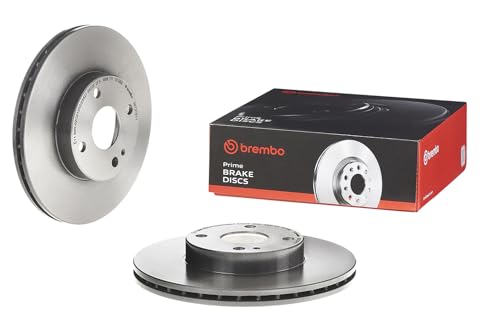








Brembo's 09.7379.11 is a direct OE-replacement rotor engineered specifically to match Mazda OE number N0263325XC, delivering factory-level fitment without any modification or shimming required. The high-carbon iron content in its construction is the defining performance advantage: carbon-alloyed cast iron damps vibration more effectively than standard gray iron, which translates to quieter braking and reduced steering wheel judder during deceleration, a measurable benefit that drivers notice immediately after installation. Brembo developed the anti-corrosion coating in direct collaboration with OE manufacturers, meaning the treatment chemistry was validated against the same durability standards that production vehicles must meet before leaving the factory.
The UV coating applied across the hat and non-friction surfaces provides meaningful protection against surface oxidation during storage and in the first weeks after installation before the pad bed-in process naturally cleans the friction faces. All required hardware ships in the box, so your installation proceeds without a separate trip to the parts counter for bolts or clips. Brembo's reputation as a Tier 1 OE brake supplier to multiple European and Japanese automakers lends additional credibility to the engineering claims made on this rotor's packaging.
Pros:
Cons:
EBC Brakes built the RK7236 around G3000-specification gray iron castings, the same material grade that most North American OE rotor manufacturers specify for passenger vehicle applications, ensuring the metallurgy meets established Society of Automotive Engineers hardness and tensile strength benchmarks. Every unit undergoes 100 percent run-out factory testing, a quality-control step that confirms lateral rotor wobble remains within acceptable tolerances before the part leaves the manufacturing facility, which directly prevents the brake pedal pulsation that is one of the most common complaints associated with budget rotor brands. EBC's UK-based engineering heritage in the brake aftermarket lends the RK Series a level of product development rigor that generic offshore rotor producers rarely match.
The OEM-style vane configuration on the vented variant maintains the thermal management geometry that the vehicle's original brake system was designed around, so your brake fluid and caliper hardware experience the same heat load envelope as specified by the vehicle manufacturer. For drivers who want a reliable, no-compromise OE replacement that meets stringent quality check standards without paying for unnecessary performance upgrades, the RK7236 represents a sound engineering choice backed by a well-regarded brand's reputation for consistent quality control.
Pros:
Cons:
ACDelco's 18A2635AC carries the backing of General Motors' parts engineering division, making it a logical first-choice replacement rotor for GM vehicle owners who prioritize OE-level metallurgical validation and dimensional accuracy over performance enhancements. The multi-alloy construction is specifically engineered to improve heat dissipation compared to single-alloy iron compositions, an important characteristic for rear rotors on front-wheel-drive platforms where thermal load distribution varies significantly from front axle behavior. Mill balancing eliminates the need for adhesive counterweights, which can loosen over time on competing products and introduce the very vibration they were meant to counteract.
ACDelco validates brake plate thickness to ensure the rotor ships within the minimum and maximum thickness specifications that GM engineering established for safe operation over the rotor's service life, a quality step that cheaper alternatives frequently skip. If your vehicle originally came equipped with ACDelco or Delphi brake components, this replacement maintains the same system-level engineering assumptions that GM's brake engineers used when calibrating ABS thresholds and proportioning valve behavior. For a reliable, cost-effective rear disc replacement on eligible GM applications, this rotor delivers factory-grade confidence without an inflated price tag.
Pros:
Cons:
StopTech engineered the 126.62113SR specifically around the higher-friction European-style brake pad compounds that many performance vehicle owners migrate to when they find OEM pad bite inadequate for spirited driving or track day events. The precision-machined slots serve two distinct functions simultaneously: they continuously clean the brake pad's friction surface by wiping away the thin layer of crystallized material that forms at high temperatures, and they provide an escape path for gas and debris that would otherwise create a boundary layer between the pad and rotor, reducing bite. The premium e-coating applied across the hat and non-friction surfaces provides corrosion protection that is visually clean and chemically effective, keeping your wheel wells presentable behind open-spoke wheels where corrosion is immediately visible.
StopTech's advanced metallurgy formulation is designed to reduce pad squeal, which is a particular concern when pairing high-friction European compounds with slotted rotors, where the combination of aggressive pad chemistry and slot geometry can produce objectionable noise under light braking at low speeds. As a direct one-piece rear right replacement, the 126.62113SR installs without modification, maintaining the vehicle's original brake bias geometry while delivering a meaningful performance upgrade over a blank OE rotor. If you are building a street-performance brake system around high-quality pads and performance-grade fluid — as outlined in our guide to the best brake fluids — StopTech's slotted option belongs in your planning.
Pros:
Cons:
Bosch named its QuietCast line for a reason: the 25010570 is engineered as a complete noise-reduction package, incorporating factory mill precision balancing, OEM-style vane configuration, and an aluminum-zinc alloy corrosion coating that together address the three most common sources of brake noise and vibration on the front axle of eligible Chevrolet, Pontiac, and Saturn applications. The factory mill precision balancing distributes rotational mass evenly around the friction face, eliminating the micro-vibrations that unbalanced rotors transmit through the caliper and into the suspension, which drivers experience as a faint shimmy or pedal pulse during low-speed stops. Bosch's OEM-style vane configuration matches the original airflow geometry of the vehicle's brake cooling system, maintaining the thermal efficiency the vehicle's engineers intended rather than introducing a mismatch that could accelerate rotor warping under sustained city driving cycles.
The aluminum-zinc coating offers dual benefits: it prevents the surface rust that accumulates on bare iron rotors during overnight parking in humid conditions, and it provides a visually clean appearance through open wheel designs without requiring the owner to apply aftermarket rust inhibitors. For commuters who drive stop-and-go urban routes where brake temperatures cycle repeatedly through moderate heat ranges and whose primary concern is quiet, confident stopping power without the additional cost of performance-oriented upgrades, the Bosch QuietCast represents the most refined OE-replacement solution in this category. Bosch's global Tier 1 OE supplier status for braking components on major European and American platforms adds meaningful credibility to the engineering claims behind the QuietCast's noise-reduction design.
Pros:
Cons:
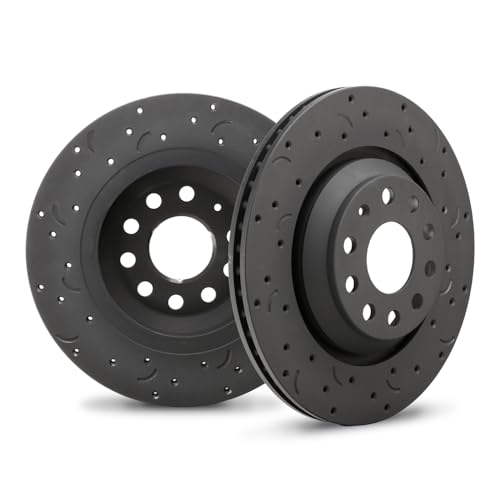
Hawk Performance designed the HTC5383 Talon Rotor to deliver the maximum combination of cooling performance and pad-surface maintenance available in a direct-fitment replacement rotor package, making it the definitive choice for drivers who operate their vehicles at the upper boundary of street-legal thermal demands. The cross-drilled holes reduce the thermal mass of the rotor, which accelerates heat shedding between braking events — a meaningful advantage on mountain road descents and spirited canyon driving — while the CNC precision-milled DTC Curved Slot design continuously abrades the pad surface to prevent glazing and evacuate combustion gas from the pad-to-rotor contact zone. Hawk specifies advanced G3000 high-carbon iron metallurgy, which provides the tensile strength and vibration damping necessary to prevent the cracking around drill holes that is a well-documented failure mode on lower-quality cross-drilled rotors that use inferior casting grades.
The OE-Spec Direct Fitment engineering ensures your vehicle's brake bias, caliper clearance, and ABS calibration remain unaffected by the upgrade, which matters when you are installing performance components without recalibrating the vehicle's electronic braking systems. Hawk's product line also pairs naturally with their own brake pad compounds, giving you a validated system-level performance combination rather than a rotor specification optimized in isolation. For truck owners who regularly tow loads and need enhanced deceleration capability, and for daily drivers who occasionally explore the vehicle's performance envelope, the HTC5383 delivers a compelling combination of thermal management, durability, and direct-fit installation convenience. Just as upgrading your car care toolkit improves your maintenance capability, investing in a performance-grade rotor elevates your vehicle's fundamental safety margin.
Pros:
Cons:
Raybestos built the 980523FZN around the most comprehensive corrosion-resistance engineering in this entire product comparison, applying their proprietary Grey Fusion 4.0 coating across the entire rotor surface — including the friction faces during storage — and validating that protection through more than 300 hours of continuous salt spray testing, a durability benchmark that exceeds what most competing aftermarket rotor manufacturers publicly disclose. That level of corrosion testing directly addresses the real-world concern for drivers in salt-belt states and coastal regions where rotor surface rust forms overnight on bare-iron units and can produce brake judder and vibration during the first several stops of the morning until the pad friction burns the oxide layer off. The full-surface coating application also means the rotor arrives in pristine visual condition, presenting well behind open-spoke wheel designs without requiring any pre-installation surface preparation from the installer.
Raybestos markets the 980523FZN as a best-in-class performer within the corrosion-prevention segment, and the Grey Fusion 4.0 chemistry represents the fourth generation of a proprietary formulation the company has refined over multiple product cycles rather than a generic zinc wash applied as an afterthought. The ultra-smooth braking character that Raybestos attributes to this rotor is consistent with a well-balanced, properly coated unit that eliminates the thickness variation and lateral runout issues that cause pulsation during the critical first weeks of a rotor's service life. For drivers in high-humidity environments, coastal areas, or northern climates where road salt use is extensive from November through March, the Raybestos 980523FZN's corrosion protection credentials make it the most relevant technical specification when choosing a replacement rotor in 2026.
Pros:
Cons:

The surface geometry of a brake rotor determines how it manages heat, debris, and gas at the pad-to-rotor interface, and your selection should match your actual driving conditions rather than an aspirational use case. Blank rotors are the quietest, longest-lasting option for standard street driving because they maintain a continuous friction surface without edges or holes that can accelerate pad wear or generate noise. Slotted rotors continuously resurface the pad's friction material by wiping it against the slot edges, which prevents glazing under sustained moderate heat loads and improves bite consistency — a practical advantage for drivers who tow trailers or drive mountain roads regularly. Cross-drilled rotors shed heat quickly by reducing thermal mass, but the holes create stress concentration points in the casting, which means rotor cracking is a documented risk if the metallurgy is not upgraded accordingly — as Hawk Performance addresses with G3000 high-carbon iron in the HTC5383. Combination cross-drilled and slotted designs maximize both benefits while requiring the highest-quality castings to perform reliably over a full service interval.
The iron alloy grade used in a brake rotor casting directly governs its hardness, tensile strength, vibration damping capacity, and resistance to heat-induced warping, making metallurgy the most technically significant specification when comparing rotors across price tiers. G3000 gray iron is the established North American OE standard that most reputable aftermarket brands, including EBC and Hawk, specify as their baseline, providing consistent hardness that resists pad bite-induced scoring while maintaining adequate ductility to survive road vibration. High-carbon iron, which Brembo uses in the 09.7379.11, adds graphite content to the alloy matrix, which acts as an internal damper to reduce the resonant vibration that travels through the caliper and into the steering column during braking. Multi-alloy formulations, as used by ACDelco in the 18A2635AC, blend iron with other metallic constituents to optimize heat dissipation properties for specific vehicle applications where rear rotor thermal management is a particular engineering concern.
Brake rotor corrosion is one of the most visible maintenance concerns for vehicle owners in humid, coastal, and salt-belt environments, and the coating approach each manufacturer uses determines how quickly surface rust forms on new rotors and how well the rotor's hat and non-friction surfaces survive years of exposure to road chemicals and moisture. E-coating, used by StopTech on the 126.62113SR, involves electrochemical deposition of an epoxy-based primer layer that achieves excellent adhesion to complex geometries including vane passages inside vented rotors, providing consistent coverage without the thickness variations associated with spray-applied coatings. Aluminum-zinc alloy coatings, used by Bosch on the QuietCast line, provide sacrificial galvanic protection where the zinc content oxidizes preferentially in the presence of moisture rather than allowing the underlying iron to rust, extending rotor appearance and hat integrity over the full service life. Raybestos Grey Fusion 4.0 represents a full-surface proprietary formulation, validated against 300-plus hours of salt spray testing, that sets the highest corrosion-resistance standard in this comparison group. Understanding the differences between brake fluid grades alongside your rotor coating selection helps you build a complete braking system optimized for your environment and driving demands.
Brake rotor fitment is vehicle-specific to a degree that no other suspension or brake component matches, because the rotor must accommodate the vehicle's hub bearing diameter, lug bolt pattern, hat offset dimension, outer diameter, and minimum thickness specification simultaneously, and a mismatch in any single parameter creates either an installation failure or a dangerous braking deficiency that may not manifest immediately. Your first step before purchasing any rotor from this list is to confirm the manufacturer's fitment guide against your vehicle's year, make, model, submodel, and engine code, because the same vehicle nameplate often spans multiple brake configurations across production years — particularly on platforms like the Chevrolet Cobalt and Malibu where Bosch specifies the 25010570. Installation of rotors also involves proper torqueing of wheel fasteners to specification using a calibrated torque wrench, correct brake caliper bracket bolt torque and thread-locker application, and a structured bed-in procedure using progressive brake applications to transfer an even layer of friction material across the rotor surface — skipping the bed-in process is the most common cause of premature pulsation on otherwise correctly selected and installed rotors.
Brake rotor service life varies between 30,000 and 70,000 miles depending on the rotor's material grade, the aggressiveness of the brake pad compound paired with it, the driver's braking habits, and the driving environment. City driving with frequent hard stops accelerates rotor wear significantly compared to highway-dominated driving profiles where braking events are less frequent and lower in intensity. Most manufacturers recommend measuring rotor thickness at every pad change and replacing any rotor that has worn to or below its minimum thickness specification — a value stamped or cast onto the hat of every rotor in this comparison.
Replacing rotors and brake pads simultaneously is strongly recommended, because installing new pads on worn rotors — or worn pads on new rotors — prevents proper surface-to-surface contact geometry from forming during the bed-in process, which leads to uneven friction material transfer, brake judder, and reduced stopping power. New pads carry a slightly convex contact profile from the manufacturing process, and new rotors provide a flat, unworn friction surface with consistent thickness — the two conditions together enable the progressive bed-in procedure to work as the manufacturer intends. Pairing a new rotor with an old pad also risks contaminating the fresh rotor surface with crystallized friction material from the old pad's glazed face.
Lateral runout is the side-to-side wobble of the rotor's friction face as it rotates around the hub centerline, measured in thousandths of an inch using a dial indicator pressed against the rotor surface while the assembly is turned by hand. When runout exceeds the manufacturer's specified tolerance — typically 0.002 to 0.004 inches depending on the application — the rotor's high spot contacts the stationary brake pad once per revolution, depositing a thin band of friction material at that location through a process called disc thickness variation. That uneven material deposit creates a thickness difference that the caliper piston must accommodate during braking, which the driver experiences as a rhythmic pulse through the brake pedal and sometimes the steering wheel. EBC's 100 percent run-out factory testing directly addresses this failure mode before the rotor reaches the consumer.
Cross-drilled rotors are safe for street driving when manufactured from sufficiently high-grade iron alloys — specifically G3000 or higher-carbon formulations — that resist the cracking propagation that can initiate at drill hole edges under repeated thermal cycling. Inferior castings using lower-grade gray iron are the source of the rotor-cracking incidents that have given cross-drilled designs a negative reputation in some enthusiast communities, and those failures are attributable to metallurgical quality rather than the drilling concept itself. Hawk Performance's G3000 high-carbon iron specification in the HTC5383 directly addresses this concern. For drivers who do not operate their vehicles on race tracks or in sustained high-temperature brake scenarios, a quality cross-drilled and slotted rotor from a reputable manufacturer provides enhanced performance without meaningful additional cracking risk over the rotor's normal service interval.
Slotted rotors do increase brake pad wear rate compared to blank rotors, because the slot edges continuously abrade the pad's friction surface as the rotor turns against the stationary pad during braking events and, to a lesser degree, during normal driving rotation. The trade-off is deliberate and beneficial in the context of performance driving: the continuous surface refresh prevents the glazing and gas buildup that would otherwise reduce bite under sustained moderate heat loads, so pad bite remains consistent rather than fading progressively during demanding driving cycles. For daily commuter drivers who prioritize pad longevity over performance bite, a blank OE-replacement rotor from Brembo, Bosch, or Raybestos delivers lower total ownership cost over the service interval than slotted alternatives.
The bed-in procedure transfers an even, microscopic layer of brake pad friction material across the full rotor friction face, establishing the consistent pad-to-rotor interface geometry that produces smooth, pulse-free braking throughout the rotor's service life. Begin with eight to ten moderate stops from 40 mph to approximately 5 mph without allowing the vehicle to come to a complete halt between stops, which allows the rotor and pad surfaces to reach operating temperature and begin material transfer. Follow those with three to five harder stops from 60 mph to approximately 10 mph, again without complete stops, then allow the system to cool with the vehicle in motion for five to ten minutes without holding the brakes stationary. Holding the brakes while the rotor is hot deposits an uneven concentration of friction material at the pad's contact point, which creates the disc thickness variation responsible for brake pedal pulsation immediately after installation.
 |
 |
 |
 |

About Marcus Chen
Marcus Chen has over twelve years of hands-on experience modifying cars across a range of platforms — from commuter builds to track-focused setups — with deep expertise in suspension tuning, wheel and tire fitment, and performance upgrades that improve driving dynamics without sacrificing day-to-day reliability. He has worked with both bolt-on and engineered modifications and brings a methodical, results-focused approach to evaluating performance parts. At CarCareTotal, he covers performance upgrades, suspension and handling, and wheel, tire, and drivetrain modifications.
Get some FREE car parts & gear.. Or check out the latest free automotive manuals and build guides here.
Disable your ad blocker to unlock all the hidden deals. Hit the button below 🚗
| | | |
